
Politics
EXCLUSIVE ! How Ibrahim Babangida annulled 1993 election over MKO Abiola’s Vice + The Three backbone behind Abiola’s victory revealed

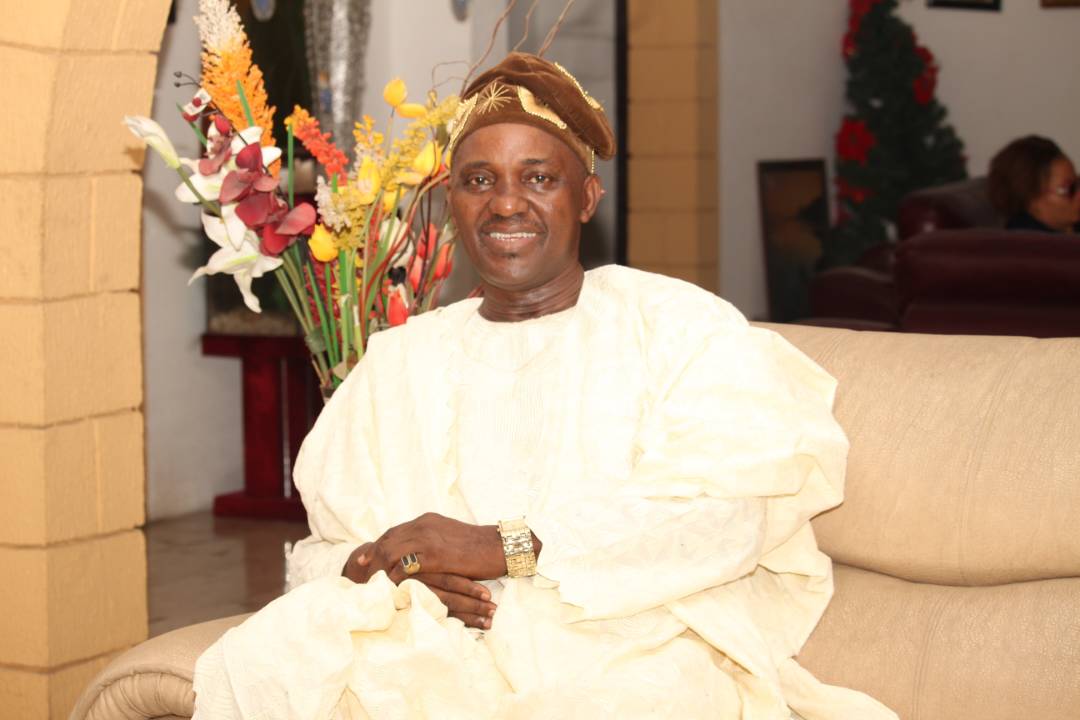

The June 12 1993 Election has come and gone but the memories of that year will forever linger around in the heart of Nigerians. The outcome of the election led to the death of Nigeria’s most celebrated democrat, MKO Abiola.
The election results came out and MKO Abiola won but due to some reasons, it was annulled by General Ibrahim Babangida. This brought about a lot of reactions and in a bid to reclaim victory, some died in the process.
On the 12th of June, 2018, MKO Abiola was honoured with the GCFR Title with his Vice by President Buhari but further researches carried out by Sahara weekly revealed that those who actually fought for Abiola, those who were with him even before election weren’t mentioned.
In an interview with one of them, Chief Abimbola Aboderin, the elder brother of Deceased Punch MD, Wale Aboderin, he revealed a lot of things that weren’t known to the public.
Excerpts below :

Q – Can we meet you?
R – My name is Chief Abimbola Aboderin, I’m an industrialist, .Although I studied Banking and finance in California, , I also do property business.
Q – We understand you have a strong relationship with the late MKO Abiola, how did it all started?
R – Late Abiola was a very close friend of mine, it all started when I came from US In 1980. I came to the house to see my father who was an industrialist and a politician at the beginning With the likes of Late Adegoke Adelabu and Awolowo. So that day when I came to see my late father, I saw Abiola on the floor because my father was sitting at the Water front house.

I saw someone lying there, I didn’t know who he was and I asked my father. He said his name was Abiola, I didn’t know who he was. He saw me and greeted me and asked me to come see him later. He wanted my father to convince the Yorubas to be on his side and that Was in the early 80s. So, I went to see him and we discussed. We didn’t see again for a while until the day I met him again in Ibadan at the late Chief Lamidi Adedibu’s home who happened to be living in one of the properties my father gave him. I was like his landlord. My father gave him little of the property when he came to request for help from him but he put me in control of it. Adedibu was anxious to see me so I met Abiola there for the second time. He greeted me and told me he is afraid of the convention towards his nomination that he knows he will win the general election but the convention is his problem.
We became friends, Also I got to know General Ibrahim Babaginda through the armed forces. He introduced Yaradua to me and General Alimi,. The three of them were my friends. I was one of the special Monitory group and while we were canvassing for votes, it was obvious that Kingibe and Atiku were leading, Atiku was using Yaradua’s structure so we didn’t know what to do again and Adedibu suggested we go to Yaradua’s house., He took a few people there and at the end of the day, he was able to convince him to ask Atiku to step down so all his delegates now voted for MKO and that was how he won the convention.

He only beat Kingibe with few delegates. so we were all happy and jubilated. I didn’t stay with them but ayed in a hotel with a doctor and Abiola’s lawyer, Chief Abimbola. We were close and they call us President’s men. After the victory, Adedibu suggested we visit Yaradua to show appreciation. We got there and as Abiola’s right hand, I was given a package to give Yaradua to thank him, sincerely, Adedibu played a key role in Abiola’s political journey. As we came out of Yaradua’s home, I was throwing some cash and everyone was jubulating but some people were not happy and wanted to kill Adedibu. They started shooting . Luckily, I had my car with Lagos number escaped the assassination attempt. If not for the game we played during the convention, Abiola would have lost that election.
it was very crucial because he told me personally. Afterwards, we formed a committee towards the general election and we started raising money for the Late MKO because no matter how rich you are, you must raise money for politics. Thus, the day we commenced preparation towards the election, , Abiola came with his wife, Bisi. He organised his three wives into three zones. Bisi was for West, Soyinka handles the East and Kudi was North. We raised about 360 Million cash and some few cheques. The money was in my custody from 6 o’clock till the next morning, if I had removed N50Million then I would have bought a house at GRA then ( smile) but iI’m not desperate becaise am comfortable. The next morning, the lawyer came, we handed the money to Chief Adedibu and all of us drove to Lagos to see Abiola at home.
We jubilated again and said we will win the general election by God’s grace. Everything was in our favour and you can see that Abiola was winning all over the country. The election was very peaceful, the best so far in Nigeria. We then drove to Abiola’s house after the election and went up stairs where we normally have our meetings
Even before that, lets talk about the issue of Vice Presidential candidate. IBB and Abiola were good friends. They were always talking, it wasn’t a tribal thing., What happened was that when two people were nominated from what Abiola told us, Bafau and Matama Sule. They were the credible people. Bafau was head of the labour at that time, so we said if we choose those people, kingibe will not be happy because he was the party chairman and he can play games.
We asked the lawyer to go to Abiola and tell him Ambassador Babagana Kingibe was the man we chose., That’s how he got there,. He used to sit down very quietly at Abiola’s place , he didn’t know how his nomination has Vice president came about. But I think when Abiola told IBB, about the choice of Kingibe as Vice president, he was not happy.
Q – So IBB Preferred either of those two to Ambassador Babagana Kingibe ?
R – Yes,! It’s ts not as if the doesn’t like him but he prefers those people. Back to the election, While we were all jubilating, we just suddenly heard the election was cancelled. We were shocked.
Abiola asked us what’s the solution? His lawyer started a legal action. We were the first to start the legal action against the Government. We went to Mr Afe Babalola to discuss, people were ready to fight but to me it wasn’t a war issue. It was just an issue between two friends.
Q – When the election was annulled, what was MKO’S Reaction and did he try to reach IBB?
R – At that time, they were not really talking on phone again., Abiola was angry too so we got some people from Ibadan to protect Abiola. Another issue is that some people betrayed Abiola by divulging what we discussed to Babangida and vice versa., Some people were like that because they wanted money. They were political jobbers . They came between the two of them,l. Our plan was that Abiola should go abroad and declare so they can call him over to be president but unfortunately, the struggle was hijacked by NADECO. I know you cant declare king in a cabinet of Lion, and Abacha was already in power., That was the beginning of the problem
He was locked up. We tried our best to get him out. We went to Abacha and Adedibu tried to convince him to release Abiola but they took it seriously and I can’t blame him. If there was diplomacy, they could have settled the issue between two friends. At the end of the day, Abiola died. it was a very painful day for me especially for a man who has worked so hard for him.
Q – As someone who was close to IBB, Did you at any point in time during or after the annulment tried to get IBB’s Opinion?
R – Unfortunately, when I was with Abiola, IBB didn’t know. I didn’t see him for a while. When he became president, I only saw him once.
Q – During the Annulment, How did Abiola react and what did he say about IBB? IBB Said he annulled the election because of his own life, do you believe?
R – I believe Abiola had issues with some people in the armed forces. He made a mistake by calling them Bad dogs., Probably they were not happy that a man that could abuse them is coming in but Abiola meant well for the people. I believe it is possible that IBB was scared because some soldiers might not want Abiola to be there. They were good friends.
Q – Would it be right to say MKO Was betrayed by people close to him?
R – Yes, some of them took words from Abiola and told IBB. Sincerely, if we have engaged diplomacy as planned and getting him to declare his mandate abroad, it would have been better. It wasn’t a tribal thing but NADECO hijacked it and it spiral out of control. I can’t blame them. Everybody was angry with government.
Q – Talking about President Buhari’s honour of Abiola 25 years after, what is your take on that? Do you believe its the right time or it’s politically motivated?
R – Actually, he is right because it’s been a long period, it’s never too late to do justice. The man won the election. I think Buhari did a good thing.
Q – There was a story that Abiola said Kingibe was part of the people that betrayed him that he even started giving him salary as a vice-president immediately he picked him, how true is this?
R – I don’t know. That is between him and kingibe. He didn’t tell me that.
Q – Before the annulment, did late MKO Abiola have the premonition that such will happen?
R – No, because we were all happy. He was sure of victory and was shocked when it was annulled
Q – During the struggle, Kudirat lost her life too, were you still part of the struggle then or you decided to leave them because you didn’t agree with the way they were going with the struggle?
R – I didn’t agree with the radical approach. Even when Abacha took over from Ernest Sonekan, everyone rushed to Kudirat’s place and we were hoping Abacha would do something because he was talking with MKO too then. We were not happy with the struggle, because with little tact and diplomacy, it would have been different today. I commend Buhari for what he has done but most people honoured were not part of the real story. Adedibu, myself and the lawyer were the backbone behind the struggle because all decision were made by us.
Q- What did the lawyer say about the honour?
R – I called him. He was one of the Oba’s that were chosen to be at the event. His name is Oba Abimbola Jibola.
Q – Was he happy with the radical approach?
R – He wasn’t happy because it was annoying.




Politics
APC Group Endorses Fubara for 2027, Calls on Tinubu and APC to Prioritise Performance Over Politics in Backing Governor’s Second Term Ambition
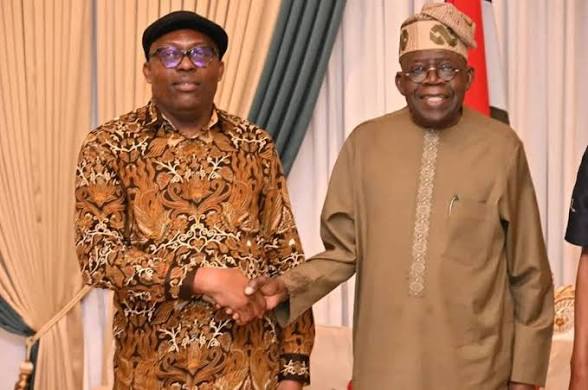
*APC Group Endorses Fubara for 2027, Calls on Tinubu and APC to Prioritise Performance Over Politics in Backing Governor’s Second Term Ambition*
The APC National Vanguard has appealed to President Bola Ahmed Tinubu and the leadership of the All Progressives Congress (APC) to support a second term in office for Siminalayi Fubara, citing what it described as “impressive and verifiable developmental strides” across Rivers State.
In a statement issued on Thursday by its National President, Dr Gbenga Salam (JP), the group said its position followed an extensive assessment tour of key infrastructure and public service projects executed under the Fubara administration.
The APC National Vanguard said the appeal was based strictly on performance, arguing that governance outcomes should outweigh partisan considerations, particularly in a state as economically significant as Rivers.
“We respectfully urge President Bola Ahmed Tinubu and the leadership of the All Progressives Congress to support the continuity of Governor Siminalayi Fubara beyond his current tenure, in recognition of his commitment to development, prudent resource management, and people-focused governance,” the statement read.
According to the group, its delegation visited multiple project sites across the state, observing ongoing and completed works spanning road construction, urban renewal, and public infrastructure upgrades.
It noted that the scale and distribution of these projects reflect a deliberate effort by the state government to extend development beyond traditional urban centres and into underserved communities.
“Our findings from the tour reveal a government that is not only active but intentional in its development agenda. The execution of capital projects across various parts of Rivers State demonstrates a clear understanding of the needs of the people and a commitment to addressing them,” Dr Salam said.
The group particularly commended what it described as prudent financial management by the administration, noting that the projects reviewed showed evidence of careful planning and efficient allocation of resources.
“At a time when economic pressures are evident across the country, it is commendable that the Rivers State government has managed its resources in a way that delivers visible and impactful development without signs of fiscal recklessness,” the statement added.
The APC National Vanguard further observed that despite political tensions in the state, the Fubara administration has maintained focus on governance, ensuring continuity in project execution and service delivery.
The group argued that such stability is critical for sustained development and should be encouraged rather than disrupted.
“Leadership must ultimately be judged by results. In Rivers State, there is clear evidence of progress—projects that are not only announced but executed, and policies that translate into real benefits for citizens,” Dr Salam noted.
The group warned that discontinuity in leadership could stall ongoing projects and reverse gains already recorded, stressing the importance of allowing a performing administration to consolidate its achievements.
“Rivers State is at a pivotal stage where continuity will allow for the completion of ongoing initiatives and the deepening of development gains. Supporting Governor Fubara for a second term is, therefore, a decision in the best interest of the people,” the statement said.
In addition to its call on the APC leadership, the group reaffirmed its support for President Tinubu, expressing confidence in his administration’s broader economic and governance reforms.
The APC group urged Nigerians to remain supportive of efforts aimed at stabilising the economy and strengthening public institutions.
“We reiterate our endorsement of President Bola Ahmed Tinubu for a second term in office, in recognition of his leadership and commitment to national development. With sustained support, the administration can consolidate its reform agenda for the benefit of all Nigerians,” Dr Salam added.
The APC National Vanguard concluded by calling on political actors to prioritise development and public interest over partisan divides, insisting that governance should always be guided by performance and accountability.
“Where leadership demonstrates prudence, delivers development, and remains focused on the welfare of the people, it deserves continuity. This is the position we have reached after a careful and independent assessment of Rivers State,” the statement added.
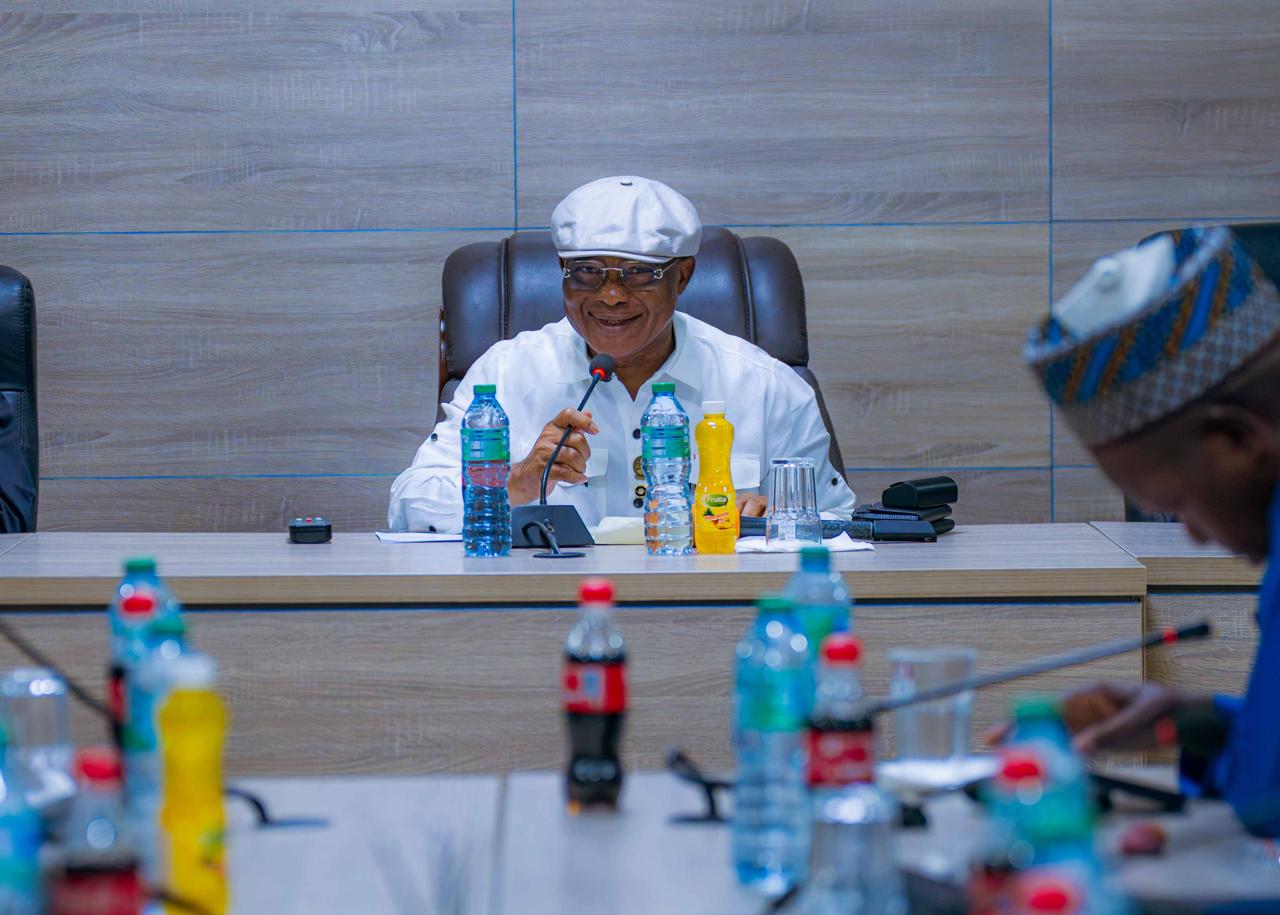
*Renewed Hope Ambassadors Step Into the Next Phase
Fresh from the successful APC 2026 National Convention, the Renewed Hope Ambassadors National, Zonal, and State leadership gathered in Abuja over the weekend, for its fourth strategic meeting, setting the tone for nationwide grassroots activation ahead of 2027.
Chaired by Governor Hope Uzodinma (Imo State) the Director General and National Coordinator of the Renewed Hope Ambassadors, alongside Deputy Director-General, Governor Uba Sani of Kaduna State, and Governor Inuwa Yahaya of Gombe State as Secretary, the session reinforced one clear direction: One Party. One Message. One Mobilization whilst also laying out a strategic roadmap for the activation of the network across all communities in Nigeria.
Backed by the strength of 31 APC-led states, the Renewed Hope Agenda is taking Bola Ahmed Tinubu’s message of progress and reform to every corner of Nigeria.
From bold economic restructuring to initiatives like NELFUND, the increase in the national minimum wage from ₦30,000 to ₦70,000, and strategic investments in critical sectors, including PNiCGI, the mission remains clear: helping Nigerians understand both the purpose and the progress of the Renewed Hope vision.
This is coordination at scale. This is grassroots engagement with purpose. This is the next phase of Renewed Hope with One Party, One Message, and One Mobilisation framework
#RenewedHopeAmbassadors #APC #WeAreAPC


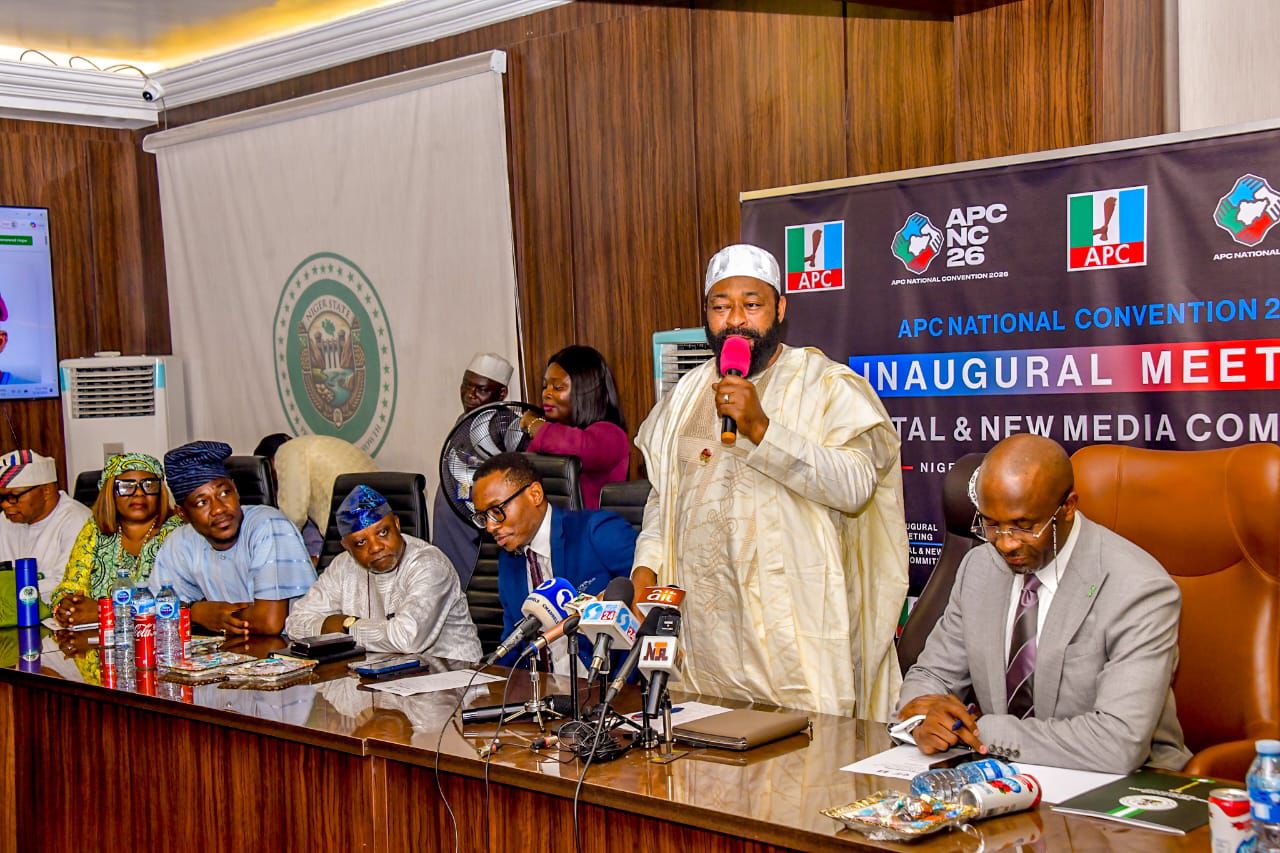
Governor Bago Inaugurates APC Digital Media Sub-Committee Ahead of National Convention.
Governor Umaru Bago has inaugurated the Digital Media Sub-Committee for the forthcoming National Convention of the All Progressives Congress (APC), scheduled to hold on March 27 and 28, 2026 in Abuja.
Chairing the sub-committee, Governor Bago tasked members with the responsibility of effectively communicating the party’s manifesto to the public.
He emphasized the need to leverage social media platforms to highlight the achievements and ongoing efforts of President Bola Ahmed Tinubu, noting that communication gaps have posed challenges that must now be decisively addressed.
The Co-Chair of the sub-committee, Hon. Benjamin Kalu, Deputy Speaker of the House of Representatives, echoed the Governor’s position, urging members to project the activities of both the party and the government to a broader audience.
He called for a deliberate and coordinated effort to showcase the party’s achievements and policy direction, stressing the importance of shaping a compelling and consistent narrative across all digital platforms.
Delivering a presentation to the committee, Otega Ogra, SSA to the President on New Media, who serves as Secretary of the sub-committee, outlined strategic focus areas to guide the team’s operations.
His presentation highlighted communication priorities and actionable steps to achieve the committee’s mandate and strengthen the party’s digital engagement.


-

 society6 months ago
Religion: Africa’s Oldest Weapon of Enslavement and the Forgotten Truth
-

 news4 months ago
WHO REALLY OWNS MONIEPOINT? The $290 Million Deal That Sold Nigeria’s Top Fintech to Foreign Interests
-

 society6 months ago
“You Are Never Without Help” – Pastor Gebhardt Berndt Inspires Hope Through Empower Church (Video)
-

 celebrity radar - gossips2 months ago
Dr. Chris Okafor Returns with Power and Fire of the Spirit -Mounts Grace Nation Altar with Fresh Anointing and Restoration Grace on February 1, 2026
You must be logged in to post a comment Login
You must log in to post a comment.