Connect with us

celebrity radar - gossips

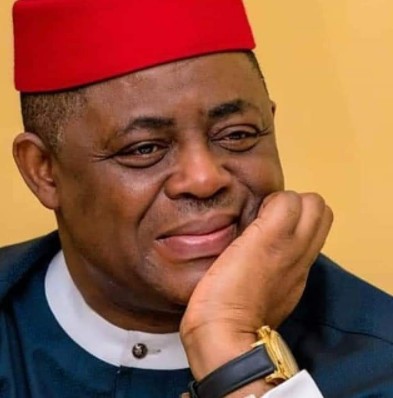
Femi Fani-Kayode Sends Strong Warning To Governor Ganduje,Others

Published

on

THE ISRAEL OF SHAITAN
A WARNING TO GOVERNOR GANDUJE AND THOSE THAT THINK LIKE HIM
 
“It is a glaring fact that Northerners occupy over 80 percent of Nigeria population and that is primarily why other minority tribes like Igbo and Yoruba should respect them for that. The insecurity everybody is talking about is everywhere. Before Nigerians particularly Igbos and Yorubas use to think that insecurity exist only in the North but today, insecurity in those tribes today is on the increase. Igbos and Yorubas are busy agitating for freedom, thereby creating their own insecurity with the establishment of IPOB and Oduduwa Republic which are now terrorizing the entire nation. My advice to every Nigerian is to support President Muhammadu Buhari in moving this country forward. He has achieved so much for the country and must be commended”- Governor Abdullahi Ganduje.
This is one of the most shameful, insulting, specious, irresponsible, pernicious, perfidious and disrespectful statements that I have heard in years. It is also reflective of the author’s debilitating, deafening, gut-wrenching and mind-blowing ignorance.
Governor Ganduje is nothing but a decrepit old relic from the distant past and a fading and toothless old dinosaur who has not only lost touch with reality but who has also lost touch with common sense. Simply put he is either totally and completely insane or he is suffering from strong delusions of grandeur.
To him Southerners are like the Lilliputians from Gulliver’s Travels that are little better than field hands, slaves and serfs whilst Northerners are the “master race” who “own Nigeria” and who are “born to rule”.
Yet to Southerners he and the tiny group of little monkeys and excitable chimpanzees that think like him are nothing but a vulgar, primitive and crass dying breed of vandals, vagabonds, barbarians, bozals and lazy thinkers who believe that the shedding of human blood, brute force, conquest and violence is the answer to everything and who have no culture, no history, no heritage, no decency and no humanity.
Thankfully he does not represent anyone in the North but himself and this small handful of irritants and primitive thinkers and even more thankfully few of those that think like him still remain on the earthly plain.
He says Northerners own Nigeria and that they constitute 80% of the Nigerian people! Permit me to ask, which “North” is he talking about?
Is it the North West, the North East or the Middle Belt because these are three distinct and separate entities which are all manned and filled with people from different tribes and religious faiths.
The old North that Ganduje craves for and appears to be trying to invoke and resurrect is long gone, dead and buried.
For the last few weeks and months I have been at the forefront of those advocating for the building of bridges and understanding between the regions, zones, tribes, religious faiths and political parties in Nigeria. However statements like Ganduje’s make this appear to be an exercise in futility.
That we want to keep the peace, build bridges, enhance national unity, re-establish national cohesion and ensure that our country does not end up fighting a second civil war or engage in a second round of fratricidal butchery does not mean that we are weak, cowardly, scared, perturbed or living in trepidation of the North and neither does it mean that we have lost our testicular fortitude and capitulated to the archaic, anachronistic, godless and unacceptable philosophy and irreverent logic of ‘born to rule’.
It just means we are decent, civilised, restrained, mature and responsible leaders and people who hate bloodshed, who value peace, who seek to avoid conflict, who insist on ensuring that good sense prevails and who recognise the fact that war is the greatest evil that one can possibly imagine and that we must avoid it at all costs.
Despite our pacifist disposition it must also be clearly understood that there is a limit to our sense of restraint, patience and understanding and that limit is a clear understanding and acknowledgement of the fact that peace cannot come at the expense of Southern and Middle Belt liberty, dignity, self-respect, freedom and pride. Simply put we will not sacrifice our civil liberties, human rights and right to exist as freeborn citizens on the alter of one Nigeria.
It is either that Nigeria regards us as equals before God and the law and as freeborn and independent citizens or to hell with her and her much-touted, vainglorious and illusionary unity which cannot possibly be sustained into the distant future without making the necessary changes, sacrifices and concessions.
The slightest suggestion or suspicion that Southerners and Middle Belters are slaves, are a minority or are second class citizens in this country will deafen the ears and silence the tongues of even the moderates in our ranks and ultimately result in a brutal, violent and protracted conflict in which millions of people on both sides of the regional divide will die.
This is the sad and bitter truth and I see it coming so clearly unless we work hard to avoid it. This is why we need to be careful what we say and do these days because tempers are running high and the lid is about to blow off. In the South particularly people are just fed up and are no longer prepared to be restrained or reasonable.
They believe that they are under siege and they are facing an existential threat from hordes of barbarous, bloodthirsty and savage terrorists from outside our shores who seek to steal, kill and destroy and whose sole objective is to establish a permanent army of occupation and colonise the entire region.
Those of us that have been appealing to them to be restrained and not to perceive every Hausa Fulani person as an enemy are having a very hard time indeed and are more often than not viewed with suspicion and described as collaborators.
Whilst we are not deterred or concerned about such erroneous and absurd characterisations which are clearly not rooted in truth any further provocation may have the effect of setting aside reason and rationality and ultimately result in the eruption of a massive cauldron of fire and the release of death, destruction and the dogs of war.
Governor Ganduje has stoked the fire, increased the temperature, shaken the fragile table and added to the palpable tension that already exists in the nation by articulating his self-serving and nonsensical diatribe and his words have proved to be not only irresponsible but also utterly reprehensible.
Worse still this is the second attack by a prominent northern leader on Southerners in the last one week and this has not gone unnoticed in many quarters.
Is it all being orchestrated in order to push the South to the brink or bully us into submission? I really do wonder but if that is the idea it will not work. As a matter of fact it will have the opposite effect and it will provoke us to rise up to the occassion, pick up the gauntlet and resist the attempt to silence, subjugate and intimidate us.
Let me serve notice to Governor Ganduje and all those that think like him. If you continue to talk like this we will not attempt to build that bridge of peace anymore but rather we will burn it and damn the consequences.
Every day we receive insults from our own people in the South and Middle Belt for not going on the offensive and for urging  them to remain calm and sheath their swords.
Instead of respecting and reciprocating our efforts Ganduje and a few others in the North are provoking our people all the more with their nonsensical, puerile and infantile statements.
We worked with some prominent and responsible northerner and Middle Belt leaders, like Governor Yahaya Bello of Kogi state and Comrade Awwal Abdullahi of the Northern Consensus Movement, just a few weeks ago during the food embargo against the South and together we ensured that our country pulled back from the brink and did not end up in war.
That was a great achievement and it proved that if we all choose to be reasonable, treat each other with respect and work together we can make things work in Nigeria and get rid of these divisions.
As a consequence of those efforts and the patriotic stance if many of the stakeholders that were involved in the discussions and negotiations lives were saved and we found a way forward. And the fact that President Buhari directed, backed and commended that effort says a lot for him.
Governor Ganduje and those that share his primitive and antedelluvian mindset should not spoil all that good work by insulting Southerners and compelling us to go back to the trenches. If he does both he and those that think like him do will ultimately regret it deeply.
The South is NOT occupied territory, she is NOT conquered land and she is NOT your vassal state. Southerners are NOT slaves, Nigeria is not owned by Northerners and neither can Southerners or Middle Belters be treated with levity, contempt and disdain any longer.
The Nigeria of 2021 is very different to the Nigeria of 1966 and the leaders and youths of the South are not as accommodating or pliant as the leaders and youths of yesteryear.
The calls for Biafra and Oduduwa are compelling and they have massive support in their respective zones. This cannot be wished away or easily dismissed and it cannot be underestimated.
The Igbo and the Yoruba particularly will be your worse nightmare if you continue to call us out, push us to the wall, insult us with reckless abandon, kill our people or spit in our faces.
I advise you and those that that think like you to mind  your words or prepare for a cataclysmic and jaw-breaking response and reaction which may ignite our country into the greatest display of lethal fireworks in the history of Africa.
I also advise you to borrow a leaf from the millions of  Northerners and the new generation of respectable and responsible northern leaders, like Shettima Yerima and Nastura Ashir Sharif, who do not share your shameful views and who see themselves as equal partners with their counterparts from the South.
We can be friends and brothers and we can work together to enhance national unity and better the collective future of our people but there is one condition: the South will NEVER be your slaves. Rather than that we will go our separate ways.
(FFK)

celebrity radar - gossips

Why Babangida’s Hilltop Home Became Nigeria’s Political “Mecca”

Published

on

Why Babangida’s Hilltop Home Became Nigeria’s Political “Mecca”. By George Omagbemi Sylvester | Published by SaharaWeeklyNG.com

Why Babangida’s Hilltop Home Became Nigeria’s Political “Mecca”.

By George Omagbemi Sylvester | Published by SaharaWeeklyNG.com


Former President Goodluck Jonathan’s birthday visit to Gen. Ibrahim Badamasi Babangida (IBB) in Minna (where he hailed the octogenarian as a patriotic leader committed to national unity) was more than a courtesy call. It was a reminder of a peculiar constant in Nigerian politics: the steady pilgrimage of power-seekers, bridge-builders and crisis-managers to the Hilltop mansion. Jonathan’s own words captured it bluntly: IBB’s residence “is like a Mecca of sorts” because of the former military president’s enduring relevance and perceived nation-first posture.

Babangida turned 84 on 17 August 2025. That alone invites reflection on a career that has shaped Nigeria’s political architecture for four decades; admired by some for audacious statecraft, condemned by others for controversies that still shadow the republic. Born on 17 August 1941 in Minna, he ruled as military president from 1985 to 1993, presiding over transformative and turbulent chapters: the relocation of the national capital to Abuja in 1991; the creation of political institutions for a long, complex transition; economic liberalisation that cut both ways; and the fateful annulment of the 12 June 1993 election. Each of these choices helps explain why the Hilltop remains a magnet for Nigerians who need counsel, cover or calibration.


A house built on influence; why the visits never stop.


Let’s start with the obvious: access. Nigeria’s political class prizes proximity to the men and women who can open doors, soften opposition, broker peace and read the hidden currents. In that calculus, IBB’s network is unmatched. He cultivated a reputation for “political engineering,” the reason the press christened him “Maradona” (for deft dribbling through complexity) and “Evil Genius” (for the strategic cunning his critics decried). Whether one embraces or rejects those labels, they reflect a reality: Babangida is still the place where many politicians go to test ideas, seek endorsements or secure introductions. Even the mainstream press has described him as a consultant of sorts to desperate or ambitious politicians, an uncomfortable description that nevertheless underlines his gravitational pull.

Though it isn’t only political tact that draws visitors; it’s statecraft with lasting fingerprints. Moving the seat of government from Lagos to Abuja in December 1991 was not a cosmetic relocation, it re-centred the federation and signaled a symbolic neutrality in a country fractured by regional suspicion. Abuja’s founding logic (GEOGRAPHIC CENTRALITY and ETHNIC NEUTRALITY) continues to stabilise the national imagination. This is part of the reason many leaders, across party lines, still defer to IBB: he didn’t just rule; he rearranged the map of power.


Then there’s the regional dimension. Under his watch, Nigeria led the creation and deployment of ECOMOG in 1990 to staunch Liberia’s bloody civil war, a bold move that announced Abuja as a regional security anchor. The intervention was imperfect, contested and costly, but it helped define West Africa’s collective security posture and Nigeria’s leadership brand. When neighboring states now face crises, the memory of that precedent still echoes in diplomatic corridors and Babangida’s counsel retains currency among those who remember how decisions were made.

Jonathan’s praise and the unity argument.
Jonathan’s tribute (stressing Babangida’s non-sectional outlook and commitment to unity) goes to the heart of the Hilltop mystique. For a multi-ethnic federation straining under distrust, figures who can speak across divides are prized. Jonathan’s point wasn’t nostalgia; it was a live assessment of a man many still call when Nigeria’s seams fray. That’s why the parade to Minna continues: the anxious, the ambitious and the statesmanlike alike seek an elder who can convene rivals and cool temperatures.

The unresolved shadow: June 12 and the ethics of influence.


No honest appraisal can skip the hardest chapter: the annulment of the 12 June 1993 election (judged widely as free and fair) was a rupture that delegitimised the transition and scarred Nigeria’s democratic journey. Political scientist Larry Diamond has repeatedly identified June 12 as a prime example of how authoritarian reversals corrode democratic legitimacy and public trust. His larger warning (“few developments are more destructive to the legitimacy of new democracies than blatant and pervasive political corruption”) captures the moral crater that followed the annulment and the years of drift that ensued. Those wounds are part of the Babangida legacy too and they complicate the reverence that a steady stream of visitors displays.

Max Siollun, a leading historian of Nigeria’s military era, has observed (provocatively) that the military’s “greatest contribution” to democracy may have been to rule “long and badly enough” that Nigerians lost appetite for soldiers in power. It’s a stinging line, yet it helps explain the paradox of IBB’s status: the same system he personified taught Nigeria costly lessons that hardened its democratic reflexes. Today’s generation visits the Hilltop not to revive militarism but to harvest hard-won insights about managing a fragile federation.

What sustains the pilgrimage.
1) Institutional memory: Nigeria’s politics often suffers amnesia. Babangida offers a living archive of security crises navigated, regional diplomacy attempted, volatile markets tempered and power-sharing experiments designed. Whether one applauds or condemns specific choices, the muscle memory of governing a complex federation is rare and urgently sought.

2) Convening power: In a season of polarisation, the ability to sit warring factions in the same room is not small capital. Babangida’s imprimatur remains a safe invitation card few refuse it, fewer ignore it. That convening power explains why movements, parties and would-be presidents keep filing up the long driveway. Recent delegations have explicitly cast their courtesy calls in the language of unity, loyalty and patriotism ahead of pivotal elections.

3) Signals to the base: Visiting Minna telegraphs seriousness to party structures and funders. It says: “I have sought counsel where history meets experience.” In Nigeria’s coded political theatre, that signal still matters. Outlets have reported for years that many aspirants treat the Hilltop as an obligatory stop an unflattering reality, perhaps, but a revealing one.

4) The man and the myth: The mansion itself, with its opulence and aura, has become a set piece in Nigeria’s story of power, admired by some, resented by others, but always discussed. The myth feeds the pilgrimage; the pilgrimage feeds the myth.

The balance sheet at 84.
To treat Babangida solely as a sage is to forget the costs of his era; to treat him only as a villain is to ignore the architecture that still holds parts of Nigeria together. Abuja’s relocation stands as a stabilising bet that paid off. ECOMOG, for all its flaws, seeded a habit of regional responsibility. Conversely, June 12 remains a national cautionary tale about elite manipulation, civilian marginalisation and the brittleness of transitions managed from above. These are not contradictory truths; they are the double helix of Babangida’s place in Nigerian memory.

Jonathan’s homage tried to distill the better angel of IBB’s record: MENTORSHIP, BRIDGE-BUILDING and a POSTURE that (at least in his telling) RESISTS SECTIONAL ISM. “That is why today, his house is like a Mecca of sorts,” he said, praying that the GENERAL continues to “mentor the younger ones.” Whether one agrees with the full sentiment, it accurately describes the lived politics of Nigeria today: Minna remains a checkpoint on the road to relevance.

The scholar’s verdict and a citizen’s challenge.
If Diamond warns about legitimacy and Siollun warns about the perils of soldier-politics, what should Nigerians demand from the Hilltop effect? Three things.

First, use influence to open space, not close it. Counsel should tilt toward rules, institutions and credible elections not kingmaking for its own sake. The lesson of 1993 is that subverting a valid vote haunts a nation for decades.

Second, mentor for unity, but insist on accountability. Unity cannot be a euphemism for silence. A truly patriotic elder statesman sets a high bar for conduct and condemns the shortcuts that tempt new actors in old ways. Diamond’s admonition on corruption is not an abstraction; it’s a roadmap for rebuilding trust.

Third, convert nostalgia into institutional memory. If Babangida’s house is a classroom, then Nigeria should capture, publish and debate its lessons in the open: on peace operations (what worked, what failed), on capital relocation (how to plan at scale), and on transitions (how not to repeat 1993). Only then does the pilgrimage serve the republic rather than personalities.

At 84, Ibrahim Babangida remains a paradox that Nigeria cannot ignore: a man whose legacy straddles NATION-BUILDING and NATION-BRUISING, whose doors remain open to those seeking power and those seeking peace. Jonathan’s visit (and his striking “Mecca” metaphor) reveals a simple, stubborn fact: in a country still searching for steady hands, the Hilltop’s shadow is long. The task before Nigeria is to ensure that the shadow points toward a brighter constitutional daybreak, where influence is finally subordinated to institutions and where mentorship hardens into norms that no single mansion can monopolise. That is the only pilgrimage worth making.


Why Babangida’s Hilltop Home Became Nigeria’s Political “Mecca”.
By George Omagbemi Sylvester | Published by SaharaWeeklyNG.com

Continue Reading

celebrity radar - gossips

Ajadi Celebrates Juju Legend Femolancaster’s 50th Birthday in the UK

Published

on

Ajadi Celebrates Juju Legend Femolancaster’s 50th Birthday in the UK

Ajadi Celebrates Juju Legend Femolancaster’s 50th Birthday in the UK

Nigerian Juju music legend, Otunba Femi Fadipe, popularly known as FemoLancaster, is being celebrated today in London as he clocks 50 years of age.

Ambassador Olufemi Ajadi Oguntoyinbo, a frontline politician and businessman, led tributes to the Ilesa-born maestro, describing him as a timeless cultural icon whose artistry has enriched both Nigeria and the world.

“FemoLancaster is not just a musician, he is a legend,” Ambassador Ajadi said in his birthday message. “For decades, his classical Juju sound has remained a reminder of the beauty of Yoruba heritage. Today, as he turns 50, I celebrate a cultural ambassador whose music bridges generations and continents.”

While FemoLancaster is highly dominant in Oyo State and across the South-West, his craft has also taken him beyond Nigeria’s borders.

FemoLancaster’s illustrious career has seen him thrill audiences across Nigeria and beyond, with performances in the United Kingdom, Canada, United States of America, and other parts of the world. His dedication to Juju music has projected Yoruba traditional sounds to international stages, keeping alive the legacy of icons like King Sunny Ade and Chief Ebenezer Obey while infusing fresh energy for younger audiences
He further stressed the significance of honoring artistes who have remained faithful to indigenous music while taking it global. “In an era where modern sounds often overshadow tradition, FemoLancaster stands as a beacon of continuity and resilience. He has carried Yoruba Juju music into the global space with dignity, passion, and excellence,” he added.

Ajadi Celebrates Juju Legend Femolancaster’s 50th Birthday in the UK
The golden jubilee celebration in London has drawn fans, friends, and colleagues, who all describe FemoLancaster as a gifted artist whose contributions over decades have earned him a revered place in the pantheon of Nigerian music legends.

“As FemoLancaster marks this milestone,” Ajadi concluded, “I wish him many more years of good health, wisdom, and global recognition. May his music continue to echo across generations and continents.”

Continue Reading

celebrity radar - gossips

Gospel Songstress Esther Igbekele Marks Birthday with Gratitude and Celebration

Published

on

Gospel Songstress Esther Igbekele Marks Birthday with Gratitude and Celebration By Aderounmu Kazeem Lagos

Gospel Songstress Esther Igbekele Marks Birthday with Gratitude and Celebration

By Aderounmu Kazeem Lagos


Lagos, Nigeria — The gospel music scene is aglow today as the “Duchess of Gospel Music,” Esther Igbekele, marks another milestone in her life, celebrating her birthday on Saturday, August 16, 2025.

Known for her powerful voice, inspirational lyrics, and unwavering dedication to spreading the gospel through music, Esther Igbekele has become one of Nigeria’s most respected and beloved gospel artistes. Over the years, she has graced countless stages, released hit albums, and inspired audiences across the world with her uplifting songs.

Today’s celebration is expected to be a joyful blend of music, prayers, and heartfelt tributes from family, friends, fans, and fellow artistes. Sources close to the singer revealed that plans are in place for a special praise gathering in Lagos, where she will be joined by notable figures in the gospel industry, church leaders, and admirers from home and abroad.

Speaking ahead of the day, Igbekele expressed deep gratitude to God for His mercy and the opportunity to use her gift to touch lives. “Every birthday is a reminder of God’s faithfulness in my journey. I am thankful for life, for my fans, and for the privilege to keep ministering through music,” she said.

Gospel Songstress Esther Igbekele Marks Birthday with Gratitude and Celebration
By Aderounmu Kazeem Lagos

From her early beginnings in the Yoruba gospel music scene to her rise as a celebrated recording artiste with a unique fusion of contemporary and traditional sounds, Esther Igbekele’s career has been marked by consistency, excellence, and a strong message of hope.

As she adds another year today, her fans have flooded social media with messages of love, appreciation, and prayers — a testament to the profound impact she continues to make in the gospel music ministry.

For many, this birthday is not just a celebration of Esther Igbekele’s life, but also of the divine inspiration she brings to the Nigerian gospel music landscape.

Continue Reading

Cover Of The Week

Trending