
Politics
Five-star Retirement: Matawalle, Wike, Okowa, Umahi, Ganduje To Get Mouthwatering Perks (Details)

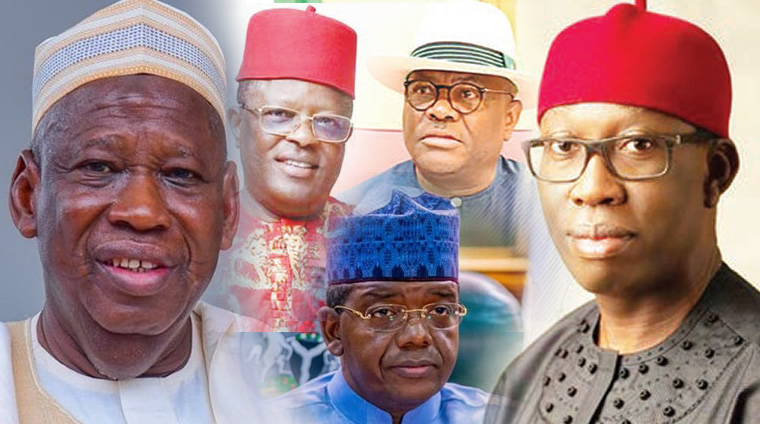
Five-star Retirement: Matawalle, Wike, Okowa, Umahi, Ganduje To Get Mouthwatering Perks (Details)
Five-Star Retirement– Seventeen state governors will hand over to their successors on May 29, 2023, and retire into lives of luxury with generous benefits for their services to their respective states even amidst economic crises, mounting debts, and unhappy and underpaid workers and pensioners.

Governors Nyesom Wike, Ifeanyi Okowa, Udom Emmanuel, Abdullahi Ganduje, Badaru Abubakar, Bello Matawalle, Ben Ayade, Okezie Ikpeazu and David Umahi of Rivers, Delta, Akwa Ibom, Kano, Jigawa, Zamfara, Cross River, Abia and Ebonyi states are set to benefit from generous retirement/pension benefits.

Others outgoing governors who will benefit from the largesse are Ifeanyi Ugwuanyi, Samuel Ortom, Darius Ishaku, Abubakar Bello, Abubakar Bagudu, Nasir El-Rufai, Simon Lalong, Aminu Masari and Aminu Tambuwal of Enugu, Benue, Taraba, Niger, Kebbi, Kaduna, Plateau, Katsina, and Sokoto states, respectively.
The outgoing governors, most of who will be completing two terms of eight years in office on May 28, will be entitled to generous monetary pensions, mansions to be built in locations of their choice, luxury vehicles, and domestic as well as security aides, among others, based on laws passed by their respective state houses of assembly.
Rivers
Wike and his deputy, Dr. Ipalibo Banigo, will enjoy generous benefits after leaving office as provided in the Rivers State Pensions for Governor and Deputy Governor Law, 2012.
The law provides that three new vehicles should be purchased for former governors, and the vehicles are to be changed every four years. This is in addition to the payment of 100 percent of their basic salaries, 300 percent of their annual basic salary for furniture, free medical services, and provision for entertainment. Their deputies also enjoy certain perks.
The pension law for former governors and their deputies was enacted by the administration of former governor Rotimi Amaechi and made other provisions such as two choice houses in any area of their choice in Rivers State and Abuja and three cars replaceable every three years for the governor.
The law also provides that 20 percent, 10 percent, and 10 percent of the annual salary of the incumbent governor should be earmarked for utility, accommodation maintenance, and entertainment, respectively. Wike will be entitled to all these except if he decides otherwise.
Delta
Okowa is entitled to a furnished duplex in Delta State or any other state in the country; medical treatment for him and members of his immediate family; two vehicles, including a utility vehicle, every two years; two armed policemen and one Department of State Security officer; 15 days’ annual vacation in any place of his choice and other benefits. The deputy governor is also entitled to similar perks.
The Delta State Governor and Deputy Governor Pension Rights and Other Benefits Law, 2005 was signed into law by former governor James Ibori, who ruled the state between 1999 and 2007.
The law was later amended in 2009 as the Delta State Governor and Deputy Governor Pension Rights and Other Benefits (Amendment) Law, 2009.
The law makes provision for ex-governors to be paid allowances and other benefits pegged at N50m yearly.
Such perks include one duplex in any city of their choice within Nigeria, one sport utility vehicle and a backup car replaceable every two years, an office with four aides, two security personnel and monthly salaries, among others. Each of the four domestic workers will earn N100,000 monthly.
Akwa Ibom
Akwa Ibom reportedly spends an average of N267.78m yearly on ex-governors and their deputies and Governor Emmanuel and his deputy are expected to enjoy the same as the state’s Pension Act, 2014 provides.
They are also entitled to the replacement of official and utility vehicles every four years.
A former governor of the state, Godswill Akpabio, drew the ire of Nigerians in 2014 when he allegedly sought to draw N100m as medical allowance as provided for in the law.
Kano
Governor Ganduje and his deputy are entitled to 100 percent of their basic salaries, a six-bedroom house, and free medical treatment for themselves and members of their families upon handover on May 29, 2023.
The law guiding pension rights for former governors and deputy governors also states that they will get well-equipped offices.
Jigawa
The Jigawa State ‘Former Public Officers Pension and Other Benefits Law No. 15 of 2015’ stipulate that a governor, who successfully completes his term without impeachment will be entitled to a monthly pension equivalent to the current salary of the current governor, two brand new vehicles to be provided by the state government and to be replaced after every four year, six-bedroom fully furnished house, two personal assistants not below grade level 10, two drivers selected by the governor and to be paid by the state, a fully furnished office in any location of choice and fully paid medical treatment within Nigeria and abroad.
The deputy governor is also to get a monthly pension equivalent to the incumbent’s salary, one assistant not below level eight, one brand new vehicle, a four-bedroom flat, and an office in a location of his choice.
Zamfara
Governor Bello Matawalle lost his re-election bid and will complete his four-year tenure on May 28, 2023.
The ‘Grant of Pension to Governor or Deputy Governor (Amendment Law), 2006’ made provisions for pension and other benefits to former governors. It provided a pension for life equivalent to the salary of the incumbent, two personal staff members, two vehicles replaceable every four years, two drivers, and free medical for former governors, their deputies, and their immediate family members in Nigeria or abroad.
It stipulated N7m monthly for former governors and N2m for former deputy governors, but former governor Abdul-Aziz Yari reviewed it to N10m and N5m monthly, respectively. However, the law was repealed by the state House of Assembly on November 26, 2019.
Sokoto
Governor Tambuwal is expected to inherit the Sokoto State Pension Law, which makes provision for N200m every four years for former governors, while his deputy is entitled to perks amounting to N180m, being monetization for other entitlements, including domestic aides, residences, and vehicles that can be renewed after every four years.
Section 2 (2) of the Sokoto State Grant of Pension (Governor and Deputy Governor) Law, 2013 states, “The total annual pension to be paid to the governor and deputy governor shall be at a rate equivalent to the annual total salary of the incumbent governor or deputy governor of the state, respectively.”
Abia
Governor Ikpeazu is entitled to 100 percent of his salary and official vehicles worth N20m to be replaced every four years, a police orderly, two operatives of the Department of State Service, two policemen for the security of his house, as well as allowances for cooks, stewards, driver, and gardener, while his deputy will enjoy similar benefits.
The law also made provisions for medical attention for the former governors and their deputies.
The Pension Law for former governors and deputy governors of the state also provides that former governors are entitled to “the sum of money as may from time to time be granted by the state government by way of pensions, allowances, and privileges in accordance with this law.”
Niger
Governor Abubakar Sani Bello will vacate the Government House in Minna to the Senate to represent the Niger North Senatorial District and will be a beneficiary of a pension scheme introduced by the Abdulkadir Kure administration, which provides for the payment of pension to former governors and deputy governors and the provision of two drivers on GL 07, two personal assistants on Grade Level 08, security aides and an SUV renewable every year. He will also get a mansion in a location of his choice.
Katsina
Governor Masari will complete his second term on May 28. He served as the Speaker of the House of Representatives before becoming the governor.
The Katsina State Pension Law, 2011 as amended provides pensions for all former governors of the state, including those who served in the old Kaduna State from which Katsina was carved out.
The governor, just like his predecessors, is to enjoy free houses and medical services under the law as well as pension benefits of N2.22m monthly, vehicles, and personal aides.
Ebonyi
The Ebonyi State Political Office Holders Amendment Law, 2011 makes provision for the payment of pension to Governor Umahi, who is set to move to the Red Chamber of the National Assembly. The law also made provisions for vehicles and personal aides, among others, for the governor and his deputy.
However, the pension laws for former governors and their deputies in Cross River, Enugu, Taraba, Kebbi, Kaduna, and Plateau states could not be obtained as of the time of going to press.




Politics
APC Group Endorses Fubara for 2027, Calls on Tinubu and APC to Prioritise Performance Over Politics in Backing Governor’s Second Term Ambition
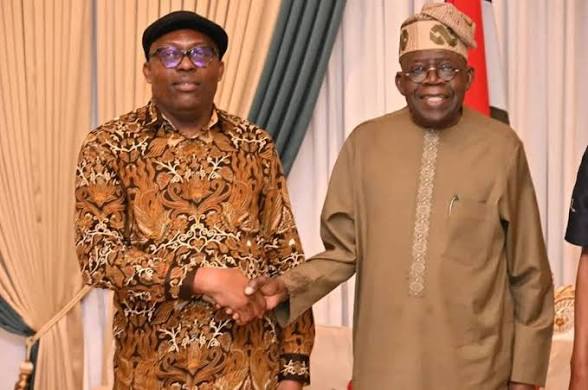
*APC Group Endorses Fubara for 2027, Calls on Tinubu and APC to Prioritise Performance Over Politics in Backing Governor’s Second Term Ambition*
The APC National Vanguard has appealed to President Bola Ahmed Tinubu and the leadership of the All Progressives Congress (APC) to support a second term in office for Siminalayi Fubara, citing what it described as “impressive and verifiable developmental strides” across Rivers State.
In a statement issued on Thursday by its National President, Dr Gbenga Salam (JP), the group said its position followed an extensive assessment tour of key infrastructure and public service projects executed under the Fubara administration.
The APC National Vanguard said the appeal was based strictly on performance, arguing that governance outcomes should outweigh partisan considerations, particularly in a state as economically significant as Rivers.
“We respectfully urge President Bola Ahmed Tinubu and the leadership of the All Progressives Congress to support the continuity of Governor Siminalayi Fubara beyond his current tenure, in recognition of his commitment to development, prudent resource management, and people-focused governance,” the statement read.
According to the group, its delegation visited multiple project sites across the state, observing ongoing and completed works spanning road construction, urban renewal, and public infrastructure upgrades.
It noted that the scale and distribution of these projects reflect a deliberate effort by the state government to extend development beyond traditional urban centres and into underserved communities.
“Our findings from the tour reveal a government that is not only active but intentional in its development agenda. The execution of capital projects across various parts of Rivers State demonstrates a clear understanding of the needs of the people and a commitment to addressing them,” Dr Salam said.
The group particularly commended what it described as prudent financial management by the administration, noting that the projects reviewed showed evidence of careful planning and efficient allocation of resources.
“At a time when economic pressures are evident across the country, it is commendable that the Rivers State government has managed its resources in a way that delivers visible and impactful development without signs of fiscal recklessness,” the statement added.
The APC National Vanguard further observed that despite political tensions in the state, the Fubara administration has maintained focus on governance, ensuring continuity in project execution and service delivery.
The group argued that such stability is critical for sustained development and should be encouraged rather than disrupted.
“Leadership must ultimately be judged by results. In Rivers State, there is clear evidence of progress—projects that are not only announced but executed, and policies that translate into real benefits for citizens,” Dr Salam noted.
The group warned that discontinuity in leadership could stall ongoing projects and reverse gains already recorded, stressing the importance of allowing a performing administration to consolidate its achievements.
“Rivers State is at a pivotal stage where continuity will allow for the completion of ongoing initiatives and the deepening of development gains. Supporting Governor Fubara for a second term is, therefore, a decision in the best interest of the people,” the statement said.
In addition to its call on the APC leadership, the group reaffirmed its support for President Tinubu, expressing confidence in his administration’s broader economic and governance reforms.
The APC group urged Nigerians to remain supportive of efforts aimed at stabilising the economy and strengthening public institutions.
“We reiterate our endorsement of President Bola Ahmed Tinubu for a second term in office, in recognition of his leadership and commitment to national development. With sustained support, the administration can consolidate its reform agenda for the benefit of all Nigerians,” Dr Salam added.
The APC National Vanguard concluded by calling on political actors to prioritise development and public interest over partisan divides, insisting that governance should always be guided by performance and accountability.
“Where leadership demonstrates prudence, delivers development, and remains focused on the welfare of the people, it deserves continuity. This is the position we have reached after a careful and independent assessment of Rivers State,” the statement added.
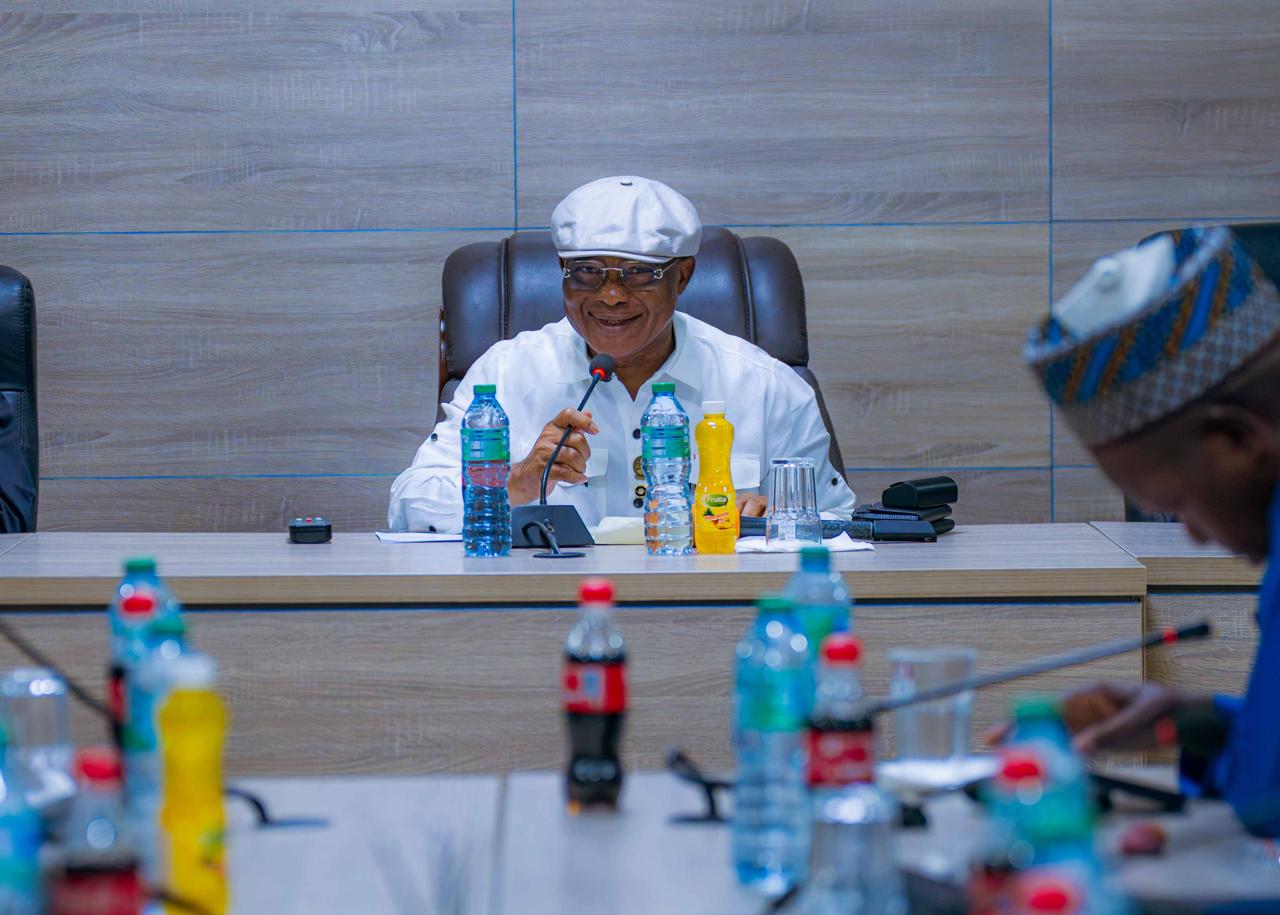
*Renewed Hope Ambassadors Step Into the Next Phase
Fresh from the successful APC 2026 National Convention, the Renewed Hope Ambassadors National, Zonal, and State leadership gathered in Abuja over the weekend, for its fourth strategic meeting, setting the tone for nationwide grassroots activation ahead of 2027.
Chaired by Governor Hope Uzodinma (Imo State) the Director General and National Coordinator of the Renewed Hope Ambassadors, alongside Deputy Director-General, Governor Uba Sani of Kaduna State, and Governor Inuwa Yahaya of Gombe State as Secretary, the session reinforced one clear direction: One Party. One Message. One Mobilization whilst also laying out a strategic roadmap for the activation of the network across all communities in Nigeria.
Backed by the strength of 31 APC-led states, the Renewed Hope Agenda is taking Bola Ahmed Tinubu’s message of progress and reform to every corner of Nigeria.
From bold economic restructuring to initiatives like NELFUND, the increase in the national minimum wage from ₦30,000 to ₦70,000, and strategic investments in critical sectors, including PNiCGI, the mission remains clear: helping Nigerians understand both the purpose and the progress of the Renewed Hope vision.
This is coordination at scale. This is grassroots engagement with purpose. This is the next phase of Renewed Hope with One Party, One Message, and One Mobilisation framework
#RenewedHopeAmbassadors #APC #WeAreAPC


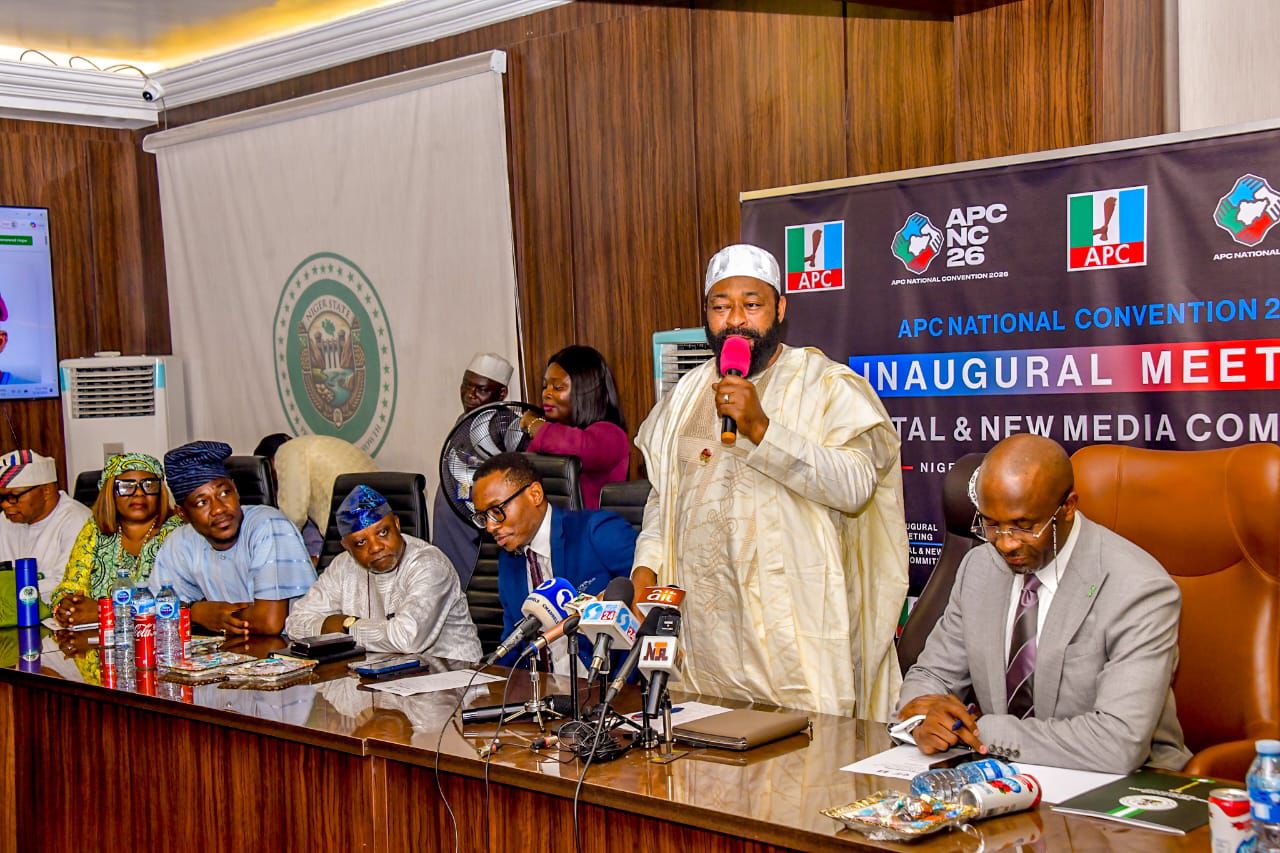
Governor Bago Inaugurates APC Digital Media Sub-Committee Ahead of National Convention.
Governor Umaru Bago has inaugurated the Digital Media Sub-Committee for the forthcoming National Convention of the All Progressives Congress (APC), scheduled to hold on March 27 and 28, 2026 in Abuja.
Chairing the sub-committee, Governor Bago tasked members with the responsibility of effectively communicating the party’s manifesto to the public.
He emphasized the need to leverage social media platforms to highlight the achievements and ongoing efforts of President Bola Ahmed Tinubu, noting that communication gaps have posed challenges that must now be decisively addressed.
The Co-Chair of the sub-committee, Hon. Benjamin Kalu, Deputy Speaker of the House of Representatives, echoed the Governor’s position, urging members to project the activities of both the party and the government to a broader audience.
He called for a deliberate and coordinated effort to showcase the party’s achievements and policy direction, stressing the importance of shaping a compelling and consistent narrative across all digital platforms.
Delivering a presentation to the committee, Otega Ogra, SSA to the President on New Media, who serves as Secretary of the sub-committee, outlined strategic focus areas to guide the team’s operations.
His presentation highlighted communication priorities and actionable steps to achieve the committee’s mandate and strengthen the party’s digital engagement.


-

 society7 months ago
Religion: Africa’s Oldest Weapon of Enslavement and the Forgotten Truth
-

 news4 months ago
WHO REALLY OWNS MONIEPOINT? The $290 Million Deal That Sold Nigeria’s Top Fintech to Foreign Interests
-

 society6 months ago
“You Are Never Without Help” – Pastor Gebhardt Berndt Inspires Hope Through Empower Church (Video)
-

 celebrity radar - gossips2 months ago
Dr. Chris Okafor Returns with Power and Fire of the Spirit -Mounts Grace Nation Altar with Fresh Anointing and Restoration Grace on February 1, 2026