
Politics
Global Storm: South Africa Demands UN Action After U.S. Strikes Venezuela. A Demand for Justice, Sovereignty & African Agency.

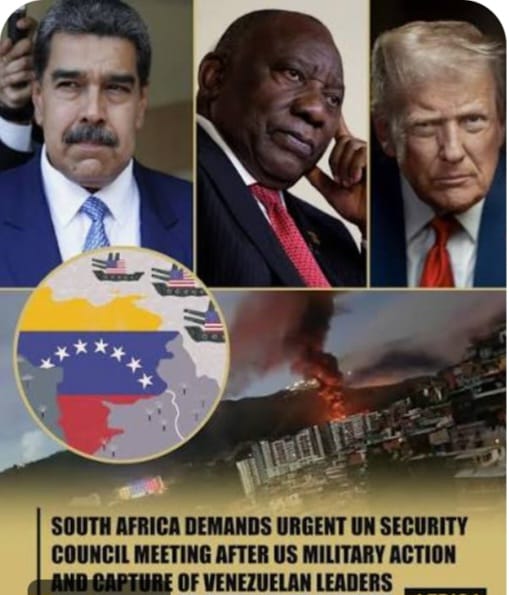
Global Storm: South Africa Demands UN Action After U.S. Strikes Venezuela. A Demand for Justice, Sovereignty & African Agency.
George Omagbemi Sylvester
“Geo-Political Upheaval, Sovereign Rights, and the Mandate of International Law. With Reflections on Human Welfare, Governance and the African Moment.”
In a world roiled by geopolitical tension and fraught with bitter contests over power and principle, the recent unilateral U.S. military strike on Venezuela has sparked an unprecedented diplomatic crisis, compelling South Africa to urgently urge a meeting of the United Nations Security Council and the very body vested with the solemn responsibility of maintaining international peace and security.
This call from Pretoria represents more than procedural politicking; it is a forceful rebuke against what many perceive as a reckless disregard for the Charter of the United Nations and the sanctity of sovereign statehood. The implications (legally, morally and politically) are vast.

The U.S. Strike on Venezuela: What Happened and Why It Matters.
In early January 2026, the United States conducted a “large-scale military strike” on Venezuela, hitting targets near Caracas and other regions and culminating in the reported capture of Venezuelan President Nicolás Maduro and his wife. The operation was justified by U.S. authorities on grounds of a supposed counter-narcotics mission and alleged criminality involving Venezuela’s leadership, but reaction from around the globe was swift and powerful.
To many observers, this was not a surgical law-enforcement action but a dramatic military intervention into the sovereign affairs of a nation, raising immediate questions about compliance with international law and Article 2(4) of the UN Charter, which prohibits the use of force against the territorial integrity or political independence of any state.
South Africa, already wary of unilateral interventions by global powers, did not mince words. The Department of International Relations and Cooperation (DIRCO) described the strikes as a “manifest violation of the Charter of the United Nations” and warned that such actions undermine the stability of the international order and the principle of equality among nations.
DIRCO spokesperson Chrispin Phiri emphasized that the UN Charter does not authorise external military intervention in matters that are essentially within the domestic jurisdiction of a sovereign nation. This point (legal in form and democratic in substance) goes to the heart of why South Africa felt compelled to demand urgent UN action.
Global Outrage: A Broad Chorus of Concern.
South Africa’s protest echoes a broader pattern of global criticism. Brazilian President Luiz Inácio Lula da Silva condemned the strikes as “a serious affront to Venezuela’s sovereignty,” warning that such acts represent a threat to regional peace. European and Asian powers (from France to China) also warned that no lasting political solution can be imposed from the outside, and many referred to international law as the only legitimate arbiter of disputes between states.
Even non-Western voices, historically wary of hegemonic intervention, registered intense concern. Latin American governments, Russia, and Cuba voiced condemnation, with human rights groups denouncing the violence and civilian impact. Collectively, these reactions underscore a broader anxiety: if one state can strike another without UN authorisation, then the legal framework that protects smaller nations is dissolved.

South Africa’s Stance: A Defence of Sovereignty and Rule of Law.
South Africa’s call for the Security Council to convene is rooted in principles formed from a painful history of colonialism, apartheid, and externally imposed domination. Pretoria’s position affirms that no nation (great or small) should be subject to military incursions without collective authorisation. As Dirco put it, “unlawful, unilateral force of this nature undermines the stability of the international order and the principle of equality among nations.”
Political analysts in South Africa, however, offer caution. Professor Andre Duvenhage of North-West University warned that while the call to convene the Council is legally sound, it carries potential economic and diplomatic costs, possibly straining Pretoria’s relations with major powers and exposing South Africa to geopolitical backlash.
Yet this is precisely the kind of moral leadership that defines nations that refuse to be cowed by power politics. South Africa’s stance is thus not merely defensive of Venezuela, it is a defence of the very legal fabric that gives voice to the Global South.
The Broader Lesson: Africa’s Moment to Uphold International Law.
For many scholars of international relations, South Africa’s position illuminates a critical moment in African diplomacy. As Professor Ifeoma Nwoye, a noted expert in international law, has argued: “Upholding the Charter protects all nations, especially those with limited capacity to respond to violations. To remain silent today is to invite arbitrary force tomorrow.”
Her point is simple but powerful: international law is only as strong as the willingness of states to defend it. In an era where might often masks itself as right, South Africa’s bold invitation to the UN Security Council to act is a call to resist the tyranny of power and defend the rule of law.
From Caracas to Gusau: The Human Cost of Leadership Failures.
While global capitals argue over geopolitics, ordinary citizens pay an incalculable price. In Venezuela, the spectre of war and foreign intervention threatens to upend civilian life, exacerbate humanitarian crises, and ripple into neighbouring regions. In the African context, we can reflect on a parallel crisis close to home: the ongoing struggle for peace and welfare in Nigeria’s Zamfara State.
Governor Dauda Lawal, the democratically elected Governor of Zamfara State, grapples daily with insecurity that has left communities terrorised and destabilised. Despite his administration’s repeated assurances to protect lives and livelihoods, insecurity persists as a defining challenge in the region.
Lawal has publicly committed to the welfare of the people, insisting that his government will “leave no stone unturned” to ensure justice and support for all residents, regardless of political affiliation. His promise to uplift education, security, and economic empowerment resonates with the aspirations of the state’s citizens.
Yet critics argue that persistent banditry and rising violence are evidence of leadership shortcomings. Local civic groups have accused the governor of inefficacy, claiming that insecurity in Zamfara continues to worsen under his watch — a sobering reminder that governance must be measured by results, not rhetoric.
Still, supporters highlight Lawal’s welfare programmes and recognition from labour unions for compassionate leadership, pointing to policies that have improved worker conditions and livelihood support.
Whether in Pretoria or in Gusau, the core issue is unchanged: people yearn for peace, dignity, and protection under accountable leadership. Governments must ensure that human welfare (not power projection) remains the cornerstone of policy.
What Lies Ahead: A Time for Principle Over Power.
The crisis ignited by U.S. military action in Venezuela and South Africa’s forceful appeal to the United Nations encapsulates a fundamental tension in the 21st century: the struggle between might and right, unilateral power and collective responsibility.
South Africa’s demand for a Security Council meeting is not an empty gesture. It is a principled stand for the rule of law, respect for sovereignty, and protection of international norms. It is also a reminder that in a world of shifting alliances and strategic interests, the voices of nations committed to justice and equality must be heard and loudly and without compromise.
As global leaders reckon with the fallout, the lessons echo across continents: peace cannot be imposed by force, rights cannot be guaranteed by bullets, and development cannot flourish in the soil of fear. Whether the United Nations heeds South Africa’s call will determine not just the fate of Venezuela but the fate of international order itself.
For the people of Zamfara and countless others who beleaguered by violence and insecurity, leadership (at all levels) must be anchored in accountability, compassion, and unyielding commitment to human welfare. Only then can we speak of true sovereignty and true peace.





Politics
APC Group Endorses Fubara for 2027, Calls on Tinubu and APC to Prioritise Performance Over Politics in Backing Governor’s Second Term Ambition
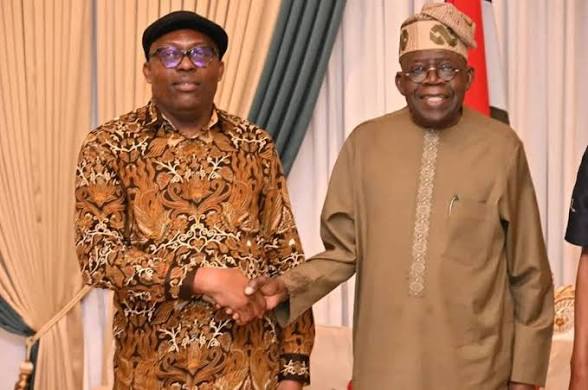
*APC Group Endorses Fubara for 2027, Calls on Tinubu and APC to Prioritise Performance Over Politics in Backing Governor’s Second Term Ambition*
The APC National Vanguard has appealed to President Bola Ahmed Tinubu and the leadership of the All Progressives Congress (APC) to support a second term in office for Siminalayi Fubara, citing what it described as “impressive and verifiable developmental strides” across Rivers State.
In a statement issued on Thursday by its National President, Dr Gbenga Salam (JP), the group said its position followed an extensive assessment tour of key infrastructure and public service projects executed under the Fubara administration.
The APC National Vanguard said the appeal was based strictly on performance, arguing that governance outcomes should outweigh partisan considerations, particularly in a state as economically significant as Rivers.
“We respectfully urge President Bola Ahmed Tinubu and the leadership of the All Progressives Congress to support the continuity of Governor Siminalayi Fubara beyond his current tenure, in recognition of his commitment to development, prudent resource management, and people-focused governance,” the statement read.
According to the group, its delegation visited multiple project sites across the state, observing ongoing and completed works spanning road construction, urban renewal, and public infrastructure upgrades.
It noted that the scale and distribution of these projects reflect a deliberate effort by the state government to extend development beyond traditional urban centres and into underserved communities.
“Our findings from the tour reveal a government that is not only active but intentional in its development agenda. The execution of capital projects across various parts of Rivers State demonstrates a clear understanding of the needs of the people and a commitment to addressing them,” Dr Salam said.
The group particularly commended what it described as prudent financial management by the administration, noting that the projects reviewed showed evidence of careful planning and efficient allocation of resources.
“At a time when economic pressures are evident across the country, it is commendable that the Rivers State government has managed its resources in a way that delivers visible and impactful development without signs of fiscal recklessness,” the statement added.
The APC National Vanguard further observed that despite political tensions in the state, the Fubara administration has maintained focus on governance, ensuring continuity in project execution and service delivery.
The group argued that such stability is critical for sustained development and should be encouraged rather than disrupted.
“Leadership must ultimately be judged by results. In Rivers State, there is clear evidence of progress—projects that are not only announced but executed, and policies that translate into real benefits for citizens,” Dr Salam noted.
The group warned that discontinuity in leadership could stall ongoing projects and reverse gains already recorded, stressing the importance of allowing a performing administration to consolidate its achievements.
“Rivers State is at a pivotal stage where continuity will allow for the completion of ongoing initiatives and the deepening of development gains. Supporting Governor Fubara for a second term is, therefore, a decision in the best interest of the people,” the statement said.
In addition to its call on the APC leadership, the group reaffirmed its support for President Tinubu, expressing confidence in his administration’s broader economic and governance reforms.
The APC group urged Nigerians to remain supportive of efforts aimed at stabilising the economy and strengthening public institutions.
“We reiterate our endorsement of President Bola Ahmed Tinubu for a second term in office, in recognition of his leadership and commitment to national development. With sustained support, the administration can consolidate its reform agenda for the benefit of all Nigerians,” Dr Salam added.
The APC National Vanguard concluded by calling on political actors to prioritise development and public interest over partisan divides, insisting that governance should always be guided by performance and accountability.
“Where leadership demonstrates prudence, delivers development, and remains focused on the welfare of the people, it deserves continuity. This is the position we have reached after a careful and independent assessment of Rivers State,” the statement added.
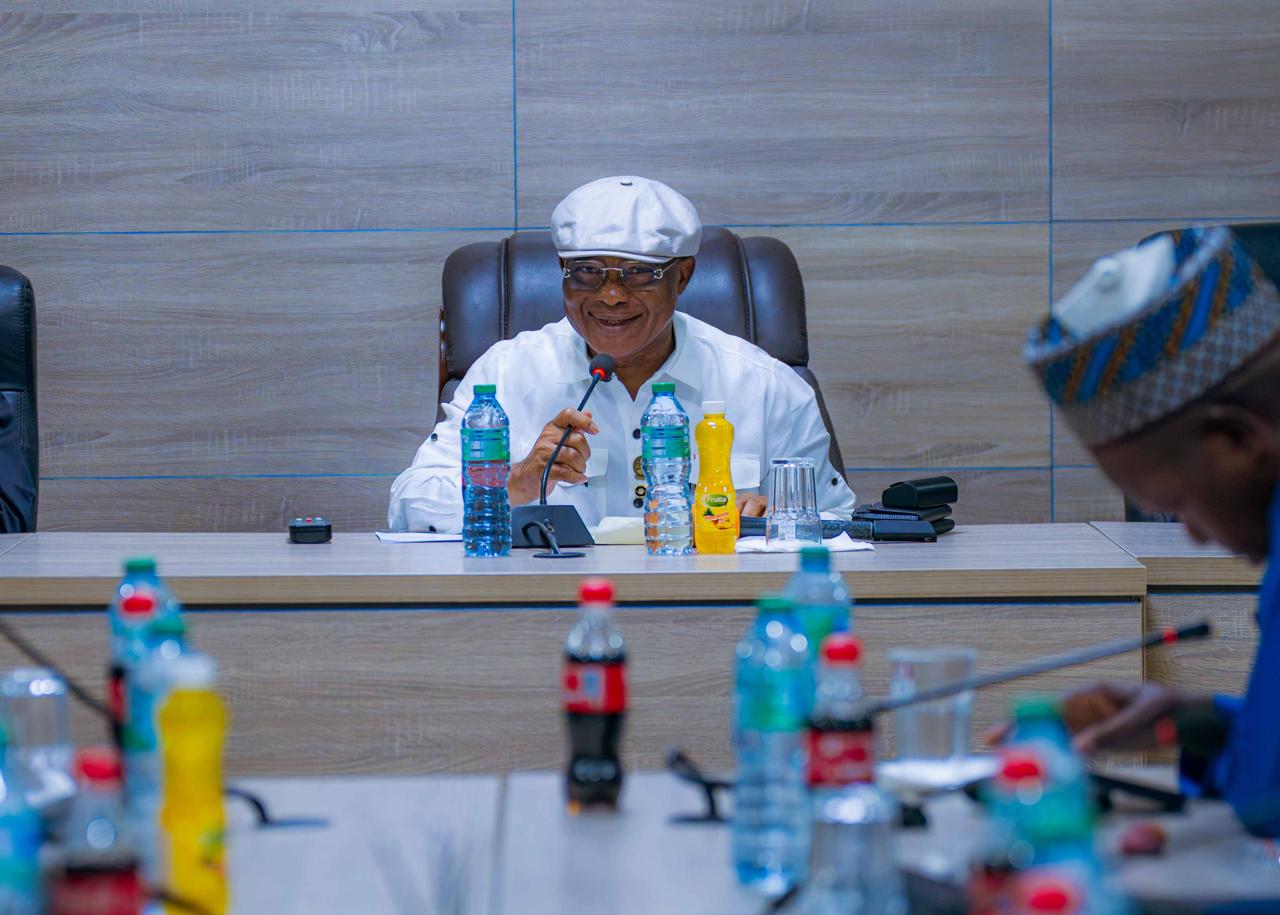
*Renewed Hope Ambassadors Step Into the Next Phase
Fresh from the successful APC 2026 National Convention, the Renewed Hope Ambassadors National, Zonal, and State leadership gathered in Abuja over the weekend, for its fourth strategic meeting, setting the tone for nationwide grassroots activation ahead of 2027.
Chaired by Governor Hope Uzodinma (Imo State) the Director General and National Coordinator of the Renewed Hope Ambassadors, alongside Deputy Director-General, Governor Uba Sani of Kaduna State, and Governor Inuwa Yahaya of Gombe State as Secretary, the session reinforced one clear direction: One Party. One Message. One Mobilization whilst also laying out a strategic roadmap for the activation of the network across all communities in Nigeria.
Backed by the strength of 31 APC-led states, the Renewed Hope Agenda is taking Bola Ahmed Tinubu’s message of progress and reform to every corner of Nigeria.
From bold economic restructuring to initiatives like NELFUND, the increase in the national minimum wage from ₦30,000 to ₦70,000, and strategic investments in critical sectors, including PNiCGI, the mission remains clear: helping Nigerians understand both the purpose and the progress of the Renewed Hope vision.
This is coordination at scale. This is grassroots engagement with purpose. This is the next phase of Renewed Hope with One Party, One Message, and One Mobilisation framework
#RenewedHopeAmbassadors #APC #WeAreAPC


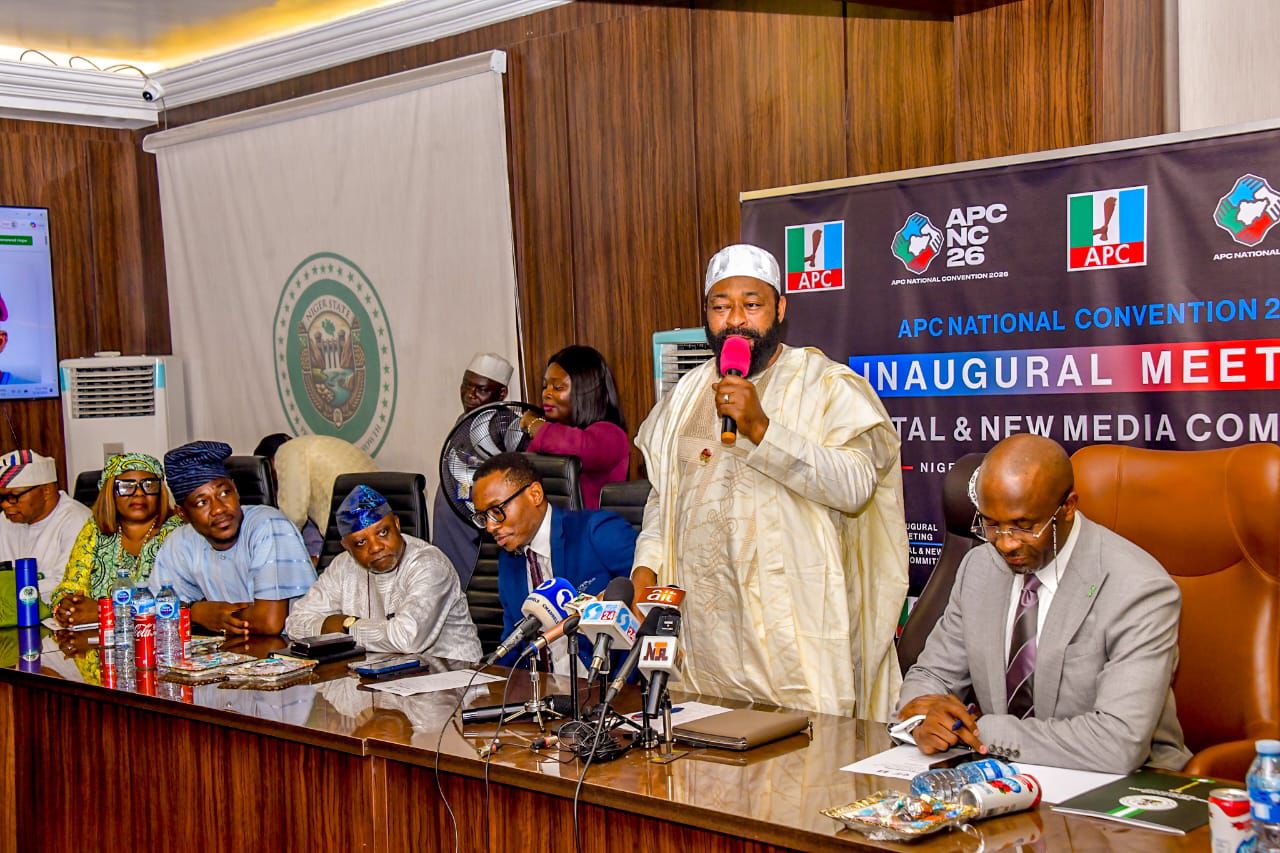
Governor Bago Inaugurates APC Digital Media Sub-Committee Ahead of National Convention.
Governor Umaru Bago has inaugurated the Digital Media Sub-Committee for the forthcoming National Convention of the All Progressives Congress (APC), scheduled to hold on March 27 and 28, 2026 in Abuja.
Chairing the sub-committee, Governor Bago tasked members with the responsibility of effectively communicating the party’s manifesto to the public.
He emphasized the need to leverage social media platforms to highlight the achievements and ongoing efforts of President Bola Ahmed Tinubu, noting that communication gaps have posed challenges that must now be decisively addressed.
The Co-Chair of the sub-committee, Hon. Benjamin Kalu, Deputy Speaker of the House of Representatives, echoed the Governor’s position, urging members to project the activities of both the party and the government to a broader audience.
He called for a deliberate and coordinated effort to showcase the party’s achievements and policy direction, stressing the importance of shaping a compelling and consistent narrative across all digital platforms.
Delivering a presentation to the committee, Otega Ogra, SSA to the President on New Media, who serves as Secretary of the sub-committee, outlined strategic focus areas to guide the team’s operations.
His presentation highlighted communication priorities and actionable steps to achieve the committee’s mandate and strengthen the party’s digital engagement.


-

 society6 months ago
Religion: Africa’s Oldest Weapon of Enslavement and the Forgotten Truth
-

 news4 months ago
WHO REALLY OWNS MONIEPOINT? The $290 Million Deal That Sold Nigeria’s Top Fintech to Foreign Interests
-

 society6 months ago
“You Are Never Without Help” – Pastor Gebhardt Berndt Inspires Hope Through Empower Church (Video)
-

 celebrity radar - gossips2 months ago
Dr. Chris Okafor Returns with Power and Fire of the Spirit -Mounts Grace Nation Altar with Fresh Anointing and Restoration Grace on February 1, 2026