
society
I Better Pass My Neighbour: The Toxic Superiority Complex Destroying the Nigerian Social Fabric

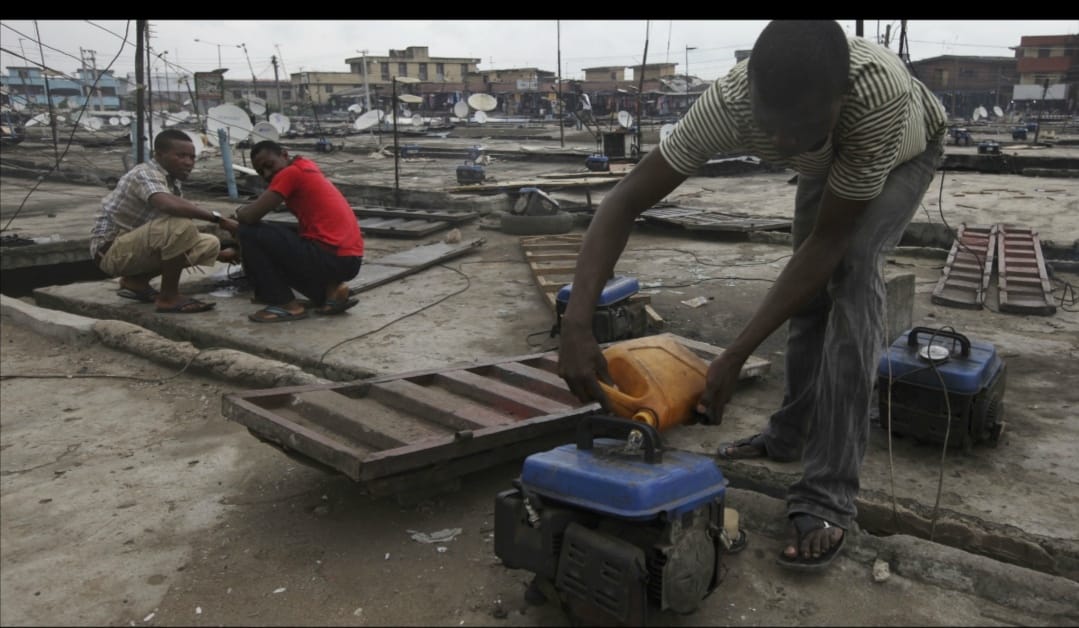
I Better Pass My Neighbour: The Toxic Superiority Complex Destroying the Nigerian Social Fabric.
By George Omagbemi Sylvester | Published by SaharaWeeklyNG.com
In Nigeria, the societal obsession with “I better pass my neighbour” is no longer just a joke tied to a noisy portable generator. It has become a deeply entrenched cultural mindset, festering across economic classes and bleeding into every corner of our interactions. From the university campus to the corridors of political power and even in the dusty streets of Ajegunle or the polished parlours of Ikoyi, this mentality thrives; silently yet destructively.
The average Nigerian isn’t interested in community progress as much as they are obsessed with individual advancement; not for survival, but for status. Status, in this context, doesn’t mean achievement through merit; it means appearing to be doing better than the next man. In a country where poverty, unemployment and insecurity are rife, many Nigerians have resorted to comparison as a means of self-validation. And what’s more tragic? This mindset has become generational.
A Society Obsessed with Appearances, Not Substance
The infamous phrase “I better pass my neighbour,” associated with a low-cost power generator, wasn’t just a brand gimmick; it was a mirror of Nigerian society. We laugh at it, but its popularity reflects the larger societal mindset: as long as I’m better off than you, I’m winning. No concern for collective good. No solidarity. No empathy. Just one goal ~ to appear more successful, even if it means going into debt, lying or oppressing others.
A few months ago, shortly after President Bola Ahmed Tinubu assumed office, a popular slogan emerged from many Nigerians: “ _This government will favour me and my family_.” That single statement, echoed in countless WhatsApp groups and street corners, revealed a chilling truth: _we no longer care about national good; all that matters is personal gain._
How can a country grow when its citizens only think in terms of “ _me and mine_”? How do we demand accountability when the average voter supports looters simply because they belong to the same tribe, party or religion?
Classism in Everyday Life
Let’s not deceive ourselves; Nigerians are deeply classist. We respect people based on their financial worth or material possessions. You can be wise, moral or kind, but in Nigeria, if you don’t drive a flashy car or have a prestigious job title, YOU’RE NOT RESPECTED. This toxic culture plays out in the smallest things, like when someone insists on walking you to the gate after a visit. Not out of hospitality, but to PEEP at your CAR and MEASURE your STATUS.
A wealthy man gets away with fraud and we say, “ _At least he helps people_.” A poor man commits the same crime, and he’s crucified. HYPOCRISY wears a Nigerian jersey.
Even among peers, standards are selectively enforced. A person from a lower socio-economic background is mocked for speaking poor English or dressing modestly. But if the same mistake is made by a rich person or someone of similar social standing, we look the other way.
The Uber Example: Misplaced Arrogance
Consider a 25-year-old lady, fresh out of NYSC, who hasn’t held a proper job, yet she sits in an Uber and speaks down at the driver like he’s trash. Why? Because society has taught her that being a passenger puts her above the driver (never mind that he’s probably more hardworking and better educated. In another setting, where social roles are reversed, say she’s on foot and he’s in a private car) she would suddenly find her manners.
As Chinua Achebe once said, ” _The trouble with Nigeria is simply and squarely a failure of leadership._” But one might add, it’s also a failure of character, widespread across the citizenry. Leadership doesn’t exist in a vacuum; it reflects the people. The leader is often the loudest echo of the society that produced him.
Cultural Hypocrisy and the Nigerian Middle Class
The middle class (supposedly the moral compass of any democratic society) is no better. Rather than pushing for reforms, they engage in ostentatious displays of wealth, from social media brags to naming their kids after luxury cars. They rent expensive outfits for weddings, borrow money to fund birthdays and are obsessed with outshining their friends. Conversations in many Nigerian homes are filled with phrases like:
_“My friend just bought a Benz.”_
_“Why is your cousin still living in that area?”_
_“We can’t send our kids to that school; it’s for poor people.”_
Meanwhile, these same individuals will remain silent on governance failures, injustice or even inflation as long as they can still afford _SUYA,_ _DSTV_ and _WEEKEND DRINKS._
A Nation Divided by Petty Competition
This unhealthy rivalry isn’t limited to the elite or the educated. From the mechanic in Ibadan to the petty trader in Aba, everyone is competing, often against invisible enemies. Instead of lifting one another, we ridicule. Instead of mentoring, we mock. Nigerians build fences taller than their houses not just for security, but to hide what’s going on inside. It’s not just about being safe, it’s about being mysterious and envied.
According to a report by the World Inequality Database, Nigeria is one of the most unequal societies on earth, with the top 1% earning disproportionately more than the bottom 50%. Yet, even within the bottom 50%, the quest to “ _APPEAR BETTER_ ” persists, a sign that our value system is not just broken but dangerously inverted.
How Did We Get Here?
Post-colonial Nigeria inherited a distorted social structure, but what we’ve done with it is far worse. Decades of bad governance, corruption and social instability have made many Nigerians see survival as a game of one-upmanship. The social contract has broken down. Nobody trusts the system, so everyone looks out for themselves, even at the expense of others.
As Fela Kuti famously sang, “ _Suffer, suffer for world… enjoyment for heaven_!” Nigerians have been told to endure, aspire and dream (but the dreams are no longer about dignity or justice. They’re about owning iPhones, buying plots in Banana Island and being invited to exclusive weddings. The average man no longer dreams of a better Nigeria) he dreams of escaping it or at least looking like he already has.
The Way Forward: Reorienting Our Value System
It’s time we had difficult conversations. WHAT KIND OF SOCIETY DO WE WANT TO BUILD? DO WE WANT A NIGERIA WHERE SELF-WORTH IS MEASURED BY HOW MANY PEOPLE WE’RE BETTER THAN, OR ONE WHERE WE LIFT EACH OTHER UP?
As former Nigerian President Goodluck Jonathan once said, “ _If you don’t value education, you will be ruled by ignorance._” Similarly, if we don’t value humility, empathy and collective progress, we will continue to be ruled by greed, classism and moral emptiness.
This is a call for social introspection. Let’s teach our children that drivers, cleaners and artisans are not beneath them. Let’s celebrate hard work over handouts, values over valuables. Let’s walk each other to the gate not to assess, but to appreciate. Let us normalize treating everyone with dignity not because of what they own, but because they are human.
Until then, _“I better pass my neighbour”_ will remain more than a noisy generator. It will continue to be the anthem of a decaying society.


Published by SaharaWeeklyNG.com
Written by George Omagbemi Sylvester
For inquiries, feedback, or republishing rights, contact [email protected]




NASRE: Building A Safety Net For Nigeria’s Journalists
At a time when Nigeria’s media industry is strained by economic uncertainty, job instability, and shrinking newsroom resources, the Nigerian Association of Social and Resourceful Editors (NASRE) is redefining professional solidarity. More than a network of editors, it is emerging as a critical support system for journalists navigating an increasingly precarious landscape.
Founded on the principles of welfare, solidarity, and professional growth, NASRE has positioned itself as a responsive and forward-looking body within the media ecosystem. While many professional associations remain focused on advocacy and training, NASRE distinguishes itself by combining these roles with direct and practical support for journalists and their families.
At the core of its mission is a clear proposition that no journalist should be abandoned in times of need. Through financial assistance, targeted outreach, and sustained engagement, the association has supported members facing hardship, as well as widows and families of deceased practitioners. These largely understated interventions have steadily earned NASRE credibility and respect across the industry.
The organisation’s approach reflects a keen awareness of the pressures confronting media professionals, including irregular pay, job insecurity, and limited institutional backing. In such an environment, NASRE’s welfare initiatives are not merely charitable, they are essential.
Beyond welfare, the association is investing in professional resilience. Through collaboration, networking, and knowledge-sharing platforms, it is equipping editors and practitioners to remain competitive in a rapidly evolving digital media space, where adaptability is no longer optional.
Headquartered in Lagos, NASRE continues to broaden its reach, attracting a growing membership united by the need for a more responsive and supportive professional community. Its expansion signals a shift in expectations within the industry, away from symbolic affiliations towards institutions that deliver measurable value.
For many observers, NASRE represents a necessary evolution, a professional body anchored not just in ideals, but in impact. By combining empathy with structure, it offers a model of what media associations can become in challenging times.
As the industry continues to evolve, organisations like NASRE may prove indispensable. In a profession devoted to telling society’s stories, it is ensuring that the storytellers themselves are not left behind.
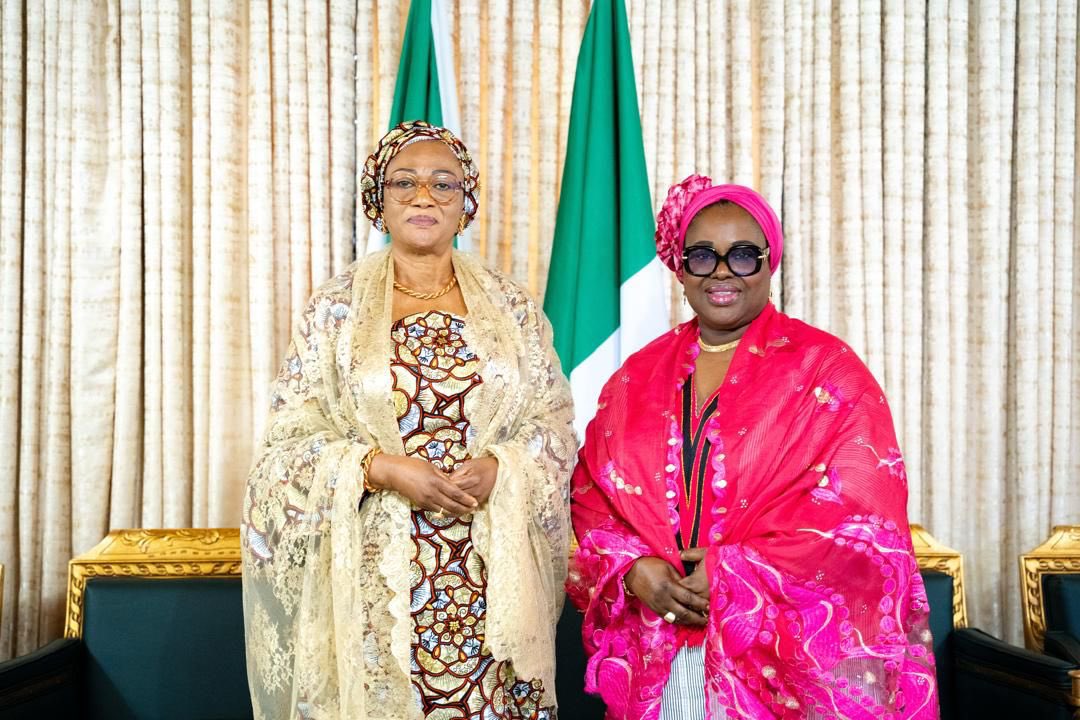
Oluremi Tinubu Hosts Wife of New IGP, Talks Welfare, Empowerment for Police Families
The First Lady of the Federal Republic of Nigeria, Senator Oluremi Tinubu, today welcomed Mrs. Mutiat Disu, wife of the Inspector General of Police, at the State House in Abuja.

During the meeting, the First Lady encouraged Mrs. Disu to continue championing the welfare and wellbeing of police officers’ families, especially through impactful support for their wives.
Speaking after the meeting, Mrs. Mutiat Disu shared her excitement about partnering with the First Lady’s Renewed Hope Initiative (RHI), noting that she is ready to leverage its programs to empower police officers’ wives across the country.
Mrs. Disu, who also serves as the National President of the Police Officers’ Wives Association (POWA), described the meeting as insightful and inspiring. She emphasized her commitment to using RHI platforms to improve healthcare, welfare, and economic empowerment for POWA members nationwide.
“The purpose of this visit is to tap into her wealth of experience and explore how POWA can benefit from her programs,” she said.
She added that her engagement with the First Lady has already provided valuable direction, especially in areas of social intervention and healthcare support for police families.
“I’m ready to work closely with Mama to ensure our women benefit fully, especially since RHI focuses on uplifting women, and POWA is largely made up of women.”
Mrs. Disu assumed leadership of POWA following the appointment of Tunji Disu as Inspector General of Police on February 24, 2026, succeeding Kayode Egbetokun.
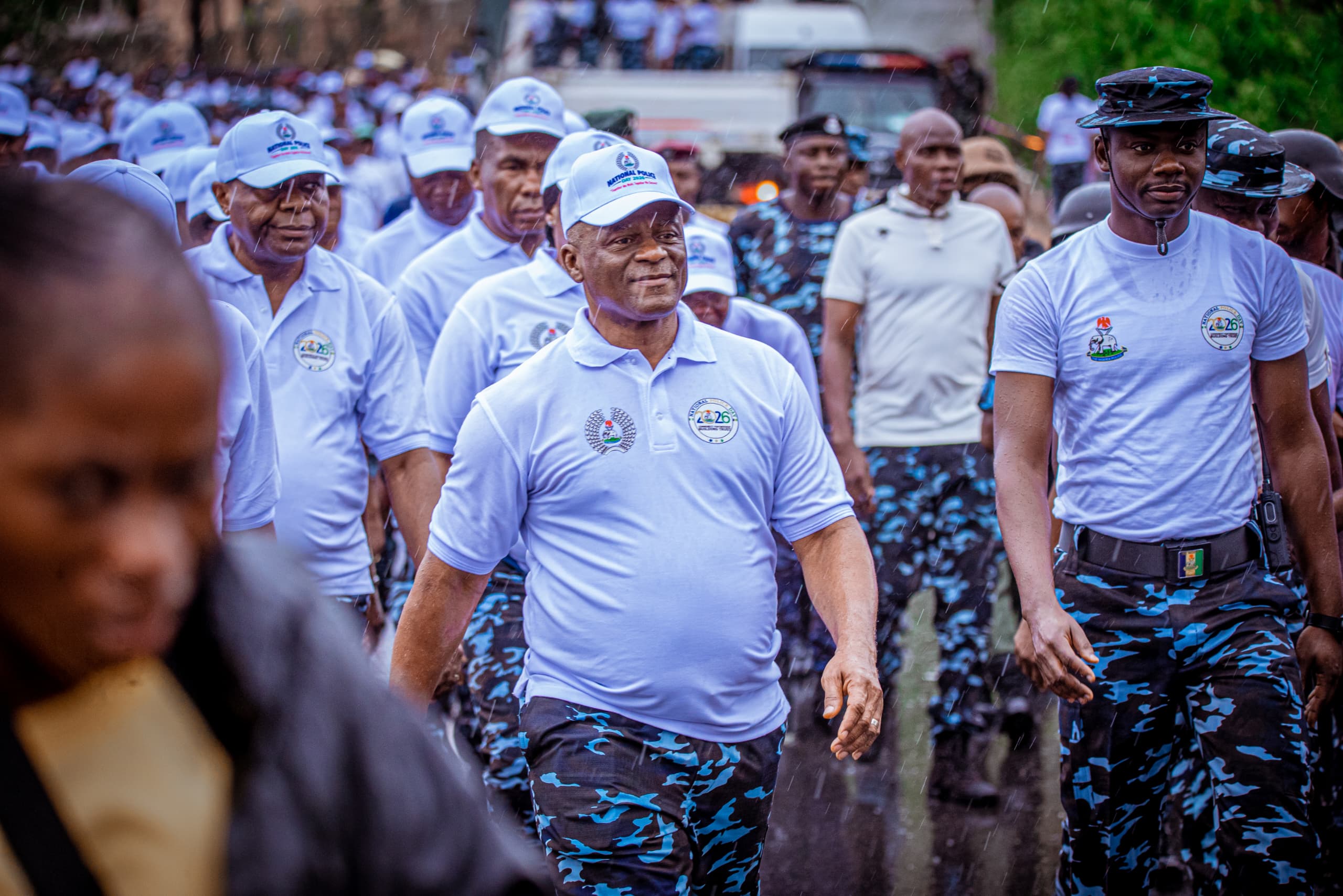
Police Day 2026: IGP Disu Leads Nationwide Walkathon To Strengthen Community Trust
The Inspector-General of Police, Olatunji Disu, on Tuesday led the management team, alongside officers and personnel of the Nigeria Police Force, in a nationwide walkathon to commemorate the 2026 National Police Day.
The event, held across state capitals and the Federal Capital Territory, formed part of activities marking Day Two of the annual celebration, themed “Community Partnership: Building Trust.”
The symbolic exercise, which drew participation from both police personnel and members of the public, was aimed at showcasing unity, discipline, and a renewed commitment to community policing and public safety.
According to the Force leadership, the walkathon underscores the Nigeria Police Force’s resolve to strengthen public trust, deepen engagement with citizens, and enhance collaboration in tackling security challenges across the country.
Participants described the initiative as a practical step toward bridging the gap between law enforcement and the communities they serve, while also promoting physical fitness and mental well-being among officers and civilians alike.
With the theme reflecting a shared responsibility for safety, the Police reiterated that sustainable security can only be achieved through active partnership with the public.
The event concluded with a renewed call for collective action under the banner: “Together We Walk, Together We Secure,” emphasizing unity of purpose in building a safer and more secure society for all Nigerians.


-

 society6 months ago
Religion: Africa’s Oldest Weapon of Enslavement and the Forgotten Truth
-

 news4 months ago
WHO REALLY OWNS MONIEPOINT? The $290 Million Deal That Sold Nigeria’s Top Fintech to Foreign Interests
-

 society6 months ago
“You Are Never Without Help” – Pastor Gebhardt Berndt Inspires Hope Through Empower Church (Video)
-

 celebrity radar - gossips2 months ago
Dr. Chris Okafor Returns with Power and Fire of the Spirit -Mounts Grace Nation Altar with Fresh Anointing and Restoration Grace on February 1, 2026