
society
Nigeria’s Silent Conquest: The Fulani Invasion That Outsmarted the State. By George Omagbemi Sylvester

Nigeria’s Silent Conquest: The Fulani Invasion That Outsmarted the State.
By George Omagbemi Sylvester | Published by SaharaWeeklyNG.com
“Why America may not need to INVADE; because Nigeria has already been CONQUERED from within.”
For years, Nigerians have debated the hypothetical scenario of a United States invasion and how it would unfold, what it would mean for our sovereignty and how we would resist it. While we argue about imaginary wars, we ignore the cold truth before our eyes, Nigeria has already been invaded and conquered in SLOW MOTION.
This conquest did not arrive in fighter jets or tanks; it crept through our forests and farmlands, disguised as “HERDERS,” protected by POLITICAL POWER and empowered by GOVERNMENT SILENCE. The invaders are not American soldiers, they are foreign Fulani terrorists, many from NIGER, MALI, CHAD and SENEGAL, who have established enclaves within Nigerian territory and now operate like an occupying force.

The Slow-Motion Conquest of Nigeria. For more than a decade, these armed Fulani militias have seized farmlands, destroyed villages, imposed local rule, collected illegal taxes and even hoisted their own flags. In Zamfara state, gold and other precious minerals are mined and smuggled daily under the nose of the state. In Benue, Plateau and Nasarawa state, entire communities have been wiped out in coordinated attacks. From Southern Kaduna to parts of Kwara and Kogi state, the march continues; METHODICAL, SILENT and STRATEGIC.
A 2024 report by the Global Terrorism Index listed Nigeria among the world’s most terrorized nations, largely due to Fulani militant attacks, which now outnumber Boko Haram’s operations. The International Crisis Group has confirmed that many of these fighters are foreign elements, recruited and armed across the Sahel.
Shockingly, no administration has confronted them with the seriousness required. Why? Because many of their sponsors allegedly sit within the corridors of power. Even former Kaduna governor Nasir El-Rufai admitted in 2012 that “foreign Fulani fighters were brought in” before the 2015 elections, an admission that should have SPARKED OUTRAGE and ACCOUNTABILITY. Instead, SILENCE FOLLOWED.

Government Complicity and Northern Elite Silence. Every rational Nigerian should ask: Why have successive governments, both led by Muslim presidents, refused to act decisively against Fulani terrorism?
The answer is painfully clear: what began as a pastoral conflict has evolved into a grand political and religious agenda. As far back as 1804, Usman dan Fodio’s Jihad sought to Islamize the entire region, with the symbolic goal of “DIPPING THE Qur’an INTO THE ATLANTIC OCEAN.” That mission was halted only by British colonization. Today, the same ideology is being advanced through terror, land grabs and political control and this time, with government complicity.
The late historian Prof. Ali Mazrui once warned that “when a state chooses ethnic loyalty over national interest, it ceases to be a government and becomes a tribe with an army.” Nigeria today fits that description perfectly.
Our leaders have treated FULANI TERRORISM as “FARMER-HERDER CLASHES,” downplaying massacres as mere communal disputes. What do you call it when killers impose taxes, occupy villages, and establish their own laws? That is not a clash; it is occupation.
The Price of Fulani Political Domination. History has already delivered its verdict. Wherever Fulani political domination thrives, poverty, illiteracy and stagnation follow like a curse. According to the National Bureau of Statistics (NBS, 2023), the 10 poorest states in Nigeria are predominantly in the north, where the Fulani elite have governed for decades. Despite controlling political power, the region remains the least educated and most impoverished.
Compare that to the southern regions that experienced greater exposure to Western education and governance under British rule. Despite the injustices of colonialism, the South developed faster in LITERACY, COMMERCE and INDUSTRY. The South-East and South-West became engines of innovation, producing thinkers like Chinua Achebe, Chike Obi, Philip Emeagwali, Wole Soyinka and political icons like Obafemi Awolowo.
Now imagine if the Fulani Jihad of the 1800s had succeeded. Achebe might never have written Things Fall Apart. Chimamanda Adichie could have been married off as a child. Lagos, the commercial heartbeat of Africa, might have been a dusty emirate ruled by a district head. The vibrant cities of Aba and Onitsha might have been replaced by almajiri colonies.
As Prof. Wole Soyinka once said, “When you silence education, you amplify poverty.” The Fulani-dominated north has done exactly that and weaponized ignorance as a political tool to preserve domination.

Between Two Invaders: A Brutal Comparison. It may sound controversial, but Nigeria’s reality demands honesty. Between British colonialism and Fulani domination, the former produced far better results. While the British built schools, roads and systems of administration (ALBEIT FOR THEIR BENEFIT) the Fulani system has entrenched FEUDALISM, ILLITERACY and UNDERDEVELOPMENT.
Even Dr. Nnamdi Azikiwe, Nigeria’s first president, acknowledged in 1943 that “colonialism brought a paradox; it enslaved our bodies but freed our minds.” The same cannot be said of the internal Fulani invasion, which enslaves both body and mind.
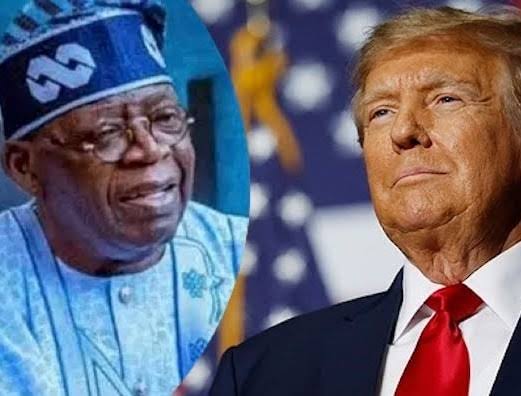
Thus, before dismissing the idea of a U.S. intervention, Nigerians must reflect. America, for all its imperial flaws, could not possibly inflict a deeper wound than the silent genocide already consuming us from within. If Trump’s alleged warning to capture Tinubu within 24 hours sounds threatening, ask yourself: what threat is greater—the possibility of U.S. intervention or the certainty of internal annihilation?
The Real Question: Which Future Do You Choose?
Would you rather have the chance to be educated, empowered and capable of resisting oppression?
Or would you prefer to live as an illiterate almajiri, begging for scraps in your own land?
Nigeria must decide whether it wants sovereignty without safety or foreign help that restores peace. History shows that, painful as interventions can be, they have sometimes prevented far worse outcomes. If foreign involvement can halt the genocide of innocent farmers and reclaim stolen lands, is it truly worse than the Fulani conquest we live under?
As George Orwell once wrote, “The most effective way to destroy a people is to deny and obliterate their own understanding of their history.” Nigeria is already halfway there.
Final Reflection: This argument is not against ISLAM or the FULANI ETHNICITY; it is against TYRANNY and HYPOCRISY. The Fulani are as human as every other group, but the POLITICAL MACHINERY that uses their name to dominate Nigeria must be dismantled.
Our nation is bleeding. Villages are burning. Citizens are dying. While we debate imaginary invasions, our REAL INVADERS dine with those in power.
Foreign intervention may be undesirable, but sometimes a BITTER MEDICINE is NEEDED to CURE a FATAL DISEASE. The truth is simple: Nigeria does not need an American invasion; it needs liberation from its own internal conquerors.




society
Liberian Leaders, Citizens Bear Witness as Apostle Suleman Hosts Two-Day Power-Packed Crusade
Liberian Leaders, Citizens Bear Witness as Apostle Suleman Hosts Two-Day Power-Packed Crusade
It was testimonies galore on Tuesday, March 31, the first day of the famous servant of God and founder of the Omega Fire Ministries (OFM) worldwide, Apostle Johnson Suleman’s power-packed two-day crusade. The event documented impactful moments with the Gospel and miracles, emphasizing the power of faith and the tangible confirmation of God’s Word through signs and wonders. It was equally an atmosphere of miraculous healing, restoration of lives, and the strengthening of faith.
At the crusade, which was held at the SKD Sports Stadium in Paynesville City, and themed, “Liberia Outpouring Crusade” witnessed testimonies of impact and miracles with participants experiencing instant healing of various kinds of challenges.
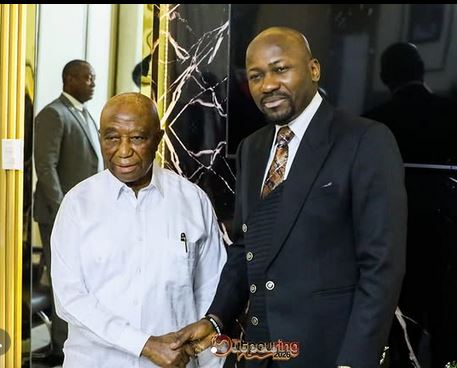
Apostle Suleman’s first port of call was Paynesville, the office of Liberian government’s president, Mr. Joseph Nyuma Boakai, who received him in an audience with his junior ministers. Apostle Suleman, who also met with the vice-president, Mr. Jeremiah Kpan Koung, was welcomed by the Liberian leader’s office as part of the president’s ongoing engagements with religious leaders aimed at fostering spiritual support for national development.
The president expressed profound appreciation to Apostle Suleman for the visit and continued prayers and intercessions by men and women of God on behalf of Liberia, emphasizing his firm belief that sustained spiritual guidance and prayer remain vital to the transformation and progress of the nation.
During the visit, Apostle Suleman offered prayers for President Boakai, his cabinet and the Liberian nation, invoking divine alignment, wisdom, and insight in Liberia’s path toward growth and stability. He prayed that the Almighty God would position Liberia for relevance and fulfillment of its national destiny.
Apostle Johnson Suleman, an evangelist who knows no bounds of where preaching the gospel comes to a stop, visited Liberia prepared with the message, compelling power of the Gospel and the work of the Holy Spirit, and bringing people to a point of decision where they surrendered their lives to Christ.
Aside from being prophetic and timely, OFM sources disclosed that the servant of God’s visit underscores the importance of faith-based partnerships in supporting governance and national renewal efforts.
society
Middle Belt Forum Hails Tinubu’s Jos Visit, Calls for United Civil-Military Effort to Restore Lasting Peace
*Middle Belt Forum Hails Tinubu’s Jos Visit, Calls for United Civil-Military Effort to Restore Lasting Peace
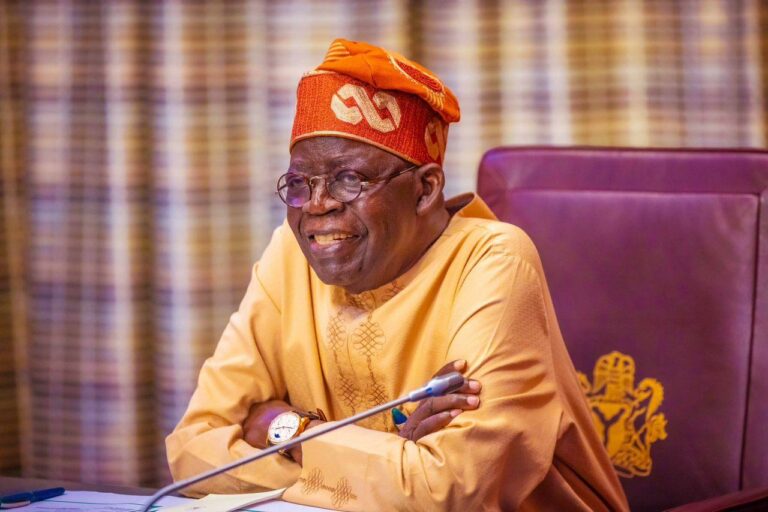
The Middle Belt Peace Forum (MBPF) has commended President Bola Ahmed Tinubu for his profound demonstration of empathy and responsive leadership following his decision to postpone an official engagement in Iperu in order to visit victims of the recent attacks in Jos.
In a statement signed by its National Coordinator, Pastor Bulus Garba, in Jos on Friday, the Forum said the President’s decision to personally identify with grieving communities sends a powerful message of solidarity and reinforces public confidence in the commitment of the Federal Government to the protection of lives and property.
“The Middle Belt Peace Forum warmly commends President Bola Ahmed Tinubu for prioritising compassion over ceremony. At a time of deep sorrow for the people of Plateau State, his decision to visit Jos stands as a mark of true leadership—one that listens, responds, and stands with the people in their moment of pain,” the statement read.
The Forum described the perpetrators of the recent attacks as “cowards who prey on innocent and defenceless citizens,” stressing that such acts of violence are not only inhumane but also a direct assault on the unity and peace of the nation.
“We condemn in the strongest terms the actions of these cowardly attackers whose only aim is to instil fear and destabilise peaceful communities. Their actions must be met with firm and decisive resistance from all arms of the state,” Pastor Garba said.
The MBPF further used the opportunity to salute the courage, gallantry, and sacrifices of the Armed Forces of Nigeria under the leadership of the Chief of Defence Staff, General Olufemi Oluyede, noting that their continued efforts remain central to restoring stability across troubled parts of the country.
According to the Forum, the Armed Forces have demonstrated resilience and professionalism in the face of complex security challenges, often operating under difficult conditions to safeguard communities and defend Nigeria’s territorial integrity.
“We salute the Armed Forces of Nigeria for their unwavering commitment and sacrifices. Their gallantry in confronting criminal elements and reclaiming territories is a testament to their dedication to national service. We recognise that the path to peace is demanding, and we honour those who stand daily in defence of our nation,” the statement added.
The Forum pledged its full support to ongoing military operations and called for strengthened collaboration between security agencies and local communities as a critical factor in achieving lasting peace.
It also urged citizens across the Middle Belt to cooperate with security forces by providing timely information and fostering unity within their communities.
The MBPF, however, expressed concern over the need for greater synergy among security agencies, particularly the role of the Nigeria Police in consolidating gains made by the military.
“We call on the Nigeria Police Force to rise fully to its constitutional responsibility by effectively supporting the Armed Forces in stabilising and securing areas that have been cleared of criminal elements. Holding and policing such territories is essential to preventing a resurgence of violence,” Pastor Garba stated.
The Forum emphasised that sustainable peace requires a coordinated approach in which the military clears and secures areas, while the police maintain law and order to enable displaced communities to return and rebuild their lives.
The MBPF concluded by reiterating its commitment to peacebuilding efforts across the Middle Belt and expressed optimism that with sustained leadership, coordinated security efforts, and active citizen participation, lasting peace can be achieved.
“Together, through unity, vigilance, and collective resolve, we can overcome these challenges and build a safer and more peaceful Middle Belt,” the statement added.
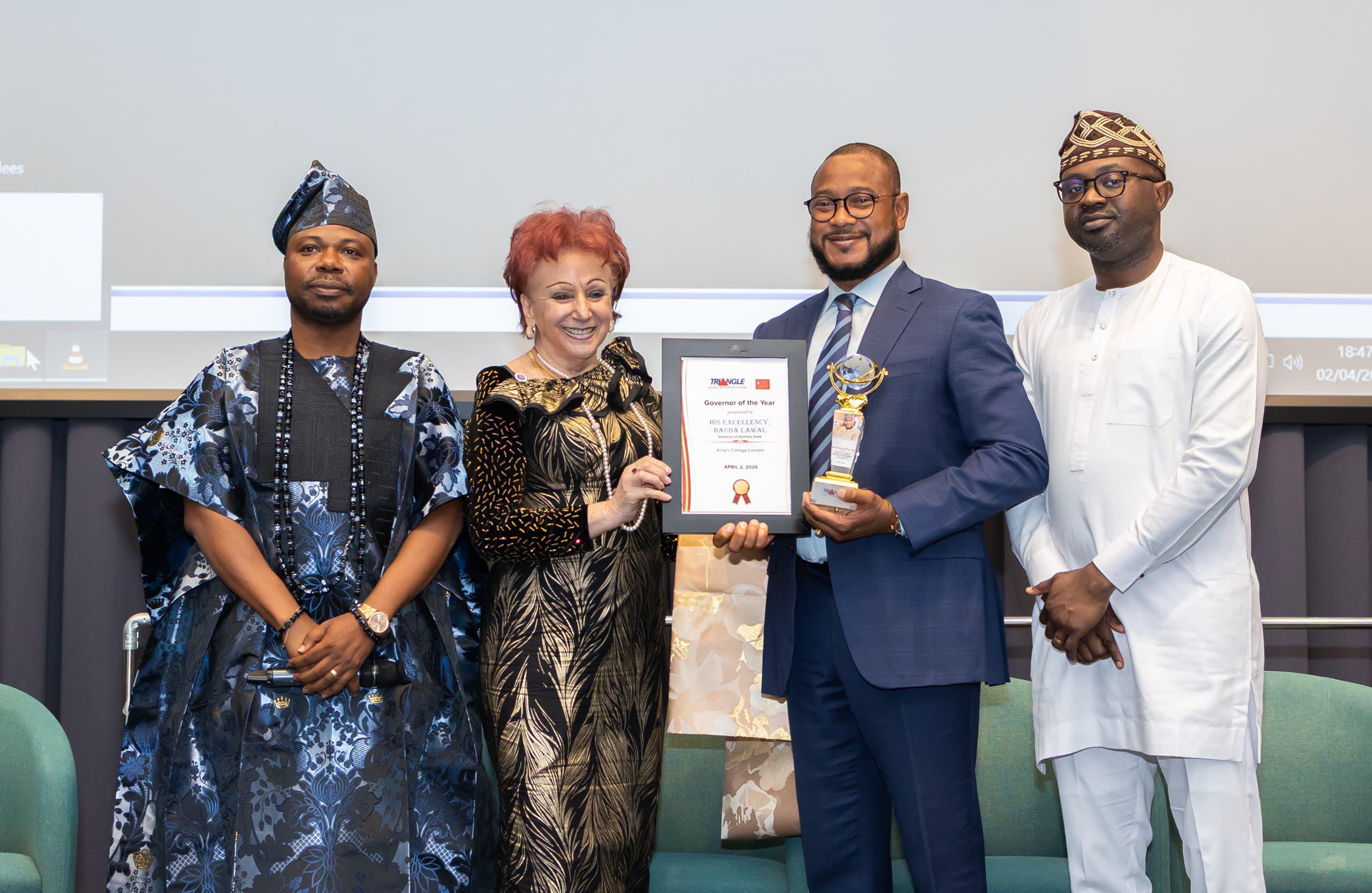
Governor Dauda Lawal Wins Face of Africa Governor of the Year Award in London
Governor Dauda Lawal has been honored with the Outstanding Governor of the Year award by Triangle Media International Magazine.
The award was presented during the magazine’s 10th annual lecture and award ceremony, held on Thursday at the Grand Hall of King’s College, London, United Kingdom.
According to a statement by the governor’s spokesperson, Sulaiman Bala Idris, the awards recognize public and private sector leaders whose leadership positively impacts governance and service delivery.
He added that the lecture, themed “Harnessing the Roles of Nigerians in Diaspora for National Development,” brought together stakeholders from both the public and private sectors.
The statement read in part: “Yesterday, in London, Governor Dauda Lawal received the 2026 Face of Africa Leadership Award for Outstanding Governor of the Year.
“The 2026 edition coincides with the 10th anniversary of Triangle International Magazine, which has over the years celebrated notable Africans across diverse fields.
“The award recognizes the Zamfara State Government under Governor Lawal’s leadership for achieving remarkable milestones in service delivery since his inauguration on 29 May 2023.
“The board of Triangle International noted that, despite inheriting an empty treasury, Governor Dauda Lawal has remained true to the Rescue Agenda’s campaign promise: to rescue and rebuild Zamfara.
“The award also reflects the state government’s innovative approach to indirectly curbing insecurity through educational advancement, demonstrated by the declaration of a state of emergency in the education sector.
“This includes the state government’s swift payment of the outstanding N3.4 billion for WAEC and NECO examinations, as well as the reconstruction and rehabilitation of schools across all 14 Local Government Areas of Zamfara State.
“The international magazine finds these initiatives to be strategic interventions toward long-term efforts to make Zamfara State better.”
The colourful event was attended by the Minister of Interior, Olubunmi Tunji-Ojo, and Sahara Group’s Group Managing Director, Kola Adesina, among others.


-

 society7 months ago
Religion: Africa’s Oldest Weapon of Enslavement and the Forgotten Truth
-

 news4 months ago
WHO REALLY OWNS MONIEPOINT? The $290 Million Deal That Sold Nigeria’s Top Fintech to Foreign Interests
-

 society6 months ago
“You Are Never Without Help” – Pastor Gebhardt Berndt Inspires Hope Through Empower Church (Video)
-

 celebrity radar - gossips2 months ago
Dr. Chris Okafor Returns with Power and Fire of the Spirit -Mounts Grace Nation Altar with Fresh Anointing and Restoration Grace on February 1, 2026