
society
Nigeria’s Triple Plague: Tribalism, Nepotism & Favoritism; A Nation Held Hostage by Its Own Fault Lines

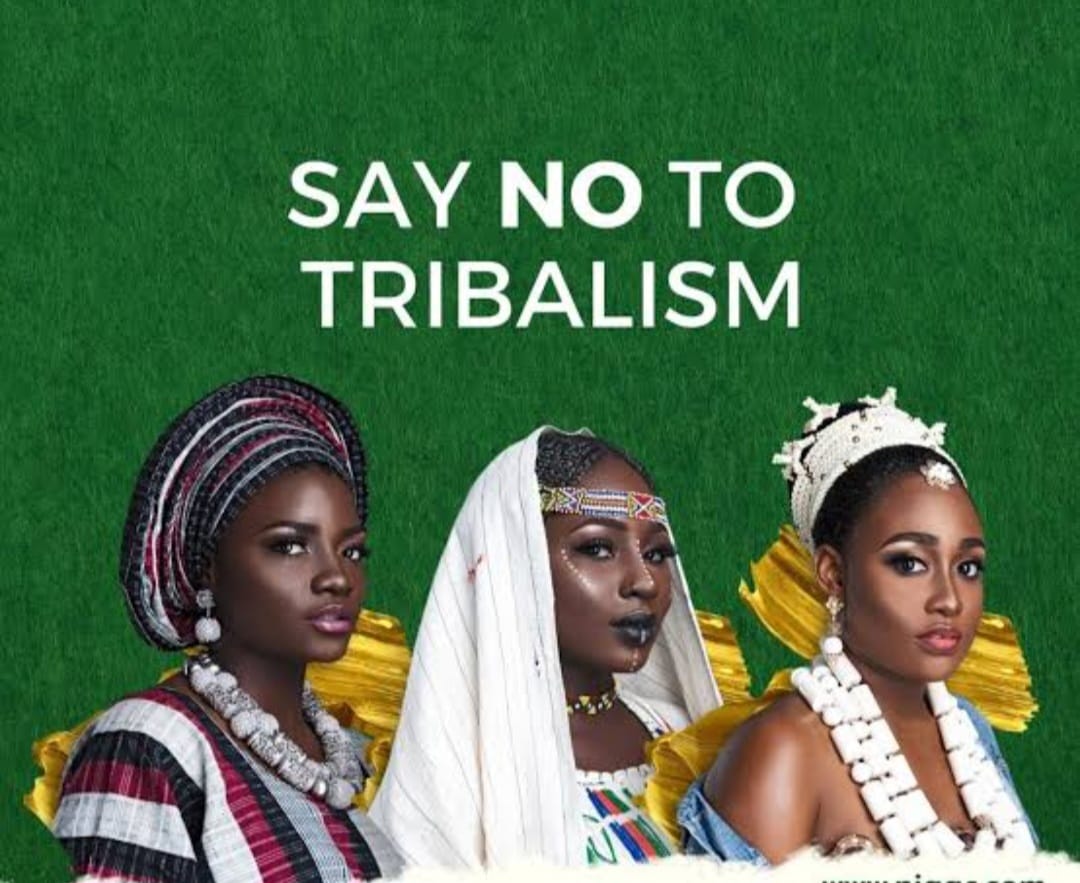
Nigeria’s Triple Plague: Tribalism, Nepotism & Favoritism; A Nation Held Hostage by Its Own Fault Lines.
By George Omagbemi Sylvester | Published by saharaweeklyng.com
“How Ethno-Centric Loyalties and Crony Networks Undermine Unity, Meritocracy, and National Development.”

Nigeria, Africa’s most populous nation, boasts an extraordinary tapestry of cultures, languages and histories. Yet beneath the surface of this diversity lie deep-seated fissures that have repeatedly sabotaged aspirations for national unity, inclusive governance and sustainable development. TRIBALISM, NEPOTISM and FAVORITISM (intertwined and mutually reinforcing) have become the anti-thesis to meritocracy and national cohesion. These twin vices rob Nigeria of competent leadership, breed inequality and fracture the social compact between the state and its citizens.
At its core, tribalism is loyalty to one’s ethnic group, often at the expense of commitment to a wider nation. It manifests in politics, public appointments, economic opportunity and social relations. When coupled with nepotism (the granting of preferences and privileges to relatives and close associates) and favoritism based on personal or communal loyalties, the result is a governance culture that privileges identity over competence. The ultimate victims of this toxic mix are ordinary Nigerians whose talents, aspirations and futures are depersonalized by a system that values connections over contribution.
I. Tribalism: The “Us vs. Them” that Undermines One Nigeria. Contrary to celebratory narratives about Nigeria’s diversity, tribalism has been repeatedly identified as a profound obstacle to nation-building. Scholars and public commentators alike warn that ethnic loyalties often eclipse commitment to the Nigerian state, eroding trust and fostering resentment. Excessive tribalism weakens national unity by promoting “US versus THEM” mentalities that prioritize the interests of ethnic constituencies above the collective good.

A 2025 report on employment discrimination in Nigeria revealed that tribal identity continues to affect job opportunities, with hiring decisions frequently influenced by ethnic considerations rather than professional qualifications. Indigeneity policies and cultural biases create systemic barriers for non-indigenes, entrenching inequality within the labor market.
Renowned Nigerian scholar Professor K. I. Nnoli described ethnic politics as “a struggle among the various ethnic groups for a division of national resources,” a dynamic that has entrenched inequality and undermined democratic processes. Ethnic racism, in his analysis, has “exacerbated corruption in governance, undermined democracy, promoted inefficiency and created false hierarchies in the way we regard and treat each other.”
II. Nepotism & Favoritism: Crony Networks That Starve Meritocracy. Tribalism naturally morphs into nepotism and favoritism when ethnic loyalties dictate access to opportunity. Nepotism (the assignment of jobs, contracts, or privileges to family and cronies) corrodes confidence in public institutions and erodes merit as the measure of competence.
Elder statesman Chief Edwin Clark has publicly condemned nepotism in successive Nigerian administrations, noting that appointments based on ethnicity and personal networks deepen marginalization and erode public trust. According to Clark, such practices have “undermined national unity” by sidelining qualified Nigerians who do not belong to favored groups.

This malign influence is not limited to public administration. Academic analyses describe how clan-centered social structures in Nigeria normalise favoritism, creating fertile ground for corruption. In such environments, officials often gain tacit support from their ethnic networks regardless of the morality or efficacy of their actions, thus weakening accountability.
The consequences are palpable: positions of influence become monopolised by those with the right connections, while the competent but unconnected are systematically excluded. The culture of “YOU MUST KNOW SOMEONE” before securing a job or a contract has become so pervasive that even former President Goodluck Jonathan acknowledged it as a recurring tradition in the Nigerian polity, where ministries are regarded as “big and juicy” spoils to be parceled out among insiders.
III. The Human and Economic Cost. The combined effects of tribalism, nepotism and favoritism extend far beyond politics and they actively cripple national development. Nigeria, despite vast human and natural resources, continues to lag behind global peers in numerous socioeconomic indices.
A troubling academic analysis shows how corruption (often reinforced by tribal and nepotistic networks) has sapped Nigeria’s resource base and retarded growth. Despite more than half a century of oil wealth, Nigeria remains unable to translate its resource endowments into broad-based prosperity. According to research on corruption’s economic impact, decades of graft could have cost the nation the equivalent of tens of billions of dollars that might otherwise have funded infrastructure, healthcare and education.
When access to opportunity, jobs and services is mediated by tribal affiliation or personal networks, Nigeria’s human capital is devalued. Talented professionals, young entrepreneurs, and innovators are often sidelined because they lack the “CORRECT” identity card or patronage, creating a drain on national potential and stoking frustration among youth.

IV. Social Fragmentation and Political Instability. Equally troubling is the social fragmentation that arises from these practices. Tribalism engenders discrimination, marginalization and envy among groups, laying fertile ground for conflict and distrust. Where people feel excluded from the prosperity of their own country because of their ethnic identity, social cohesion unravels.
Scholars have pointed out that tribalism does not merely divide opinion; it entrenches inequalities in education, employment, and access to public services, reinforcing a vicious cycle of exclusion and insecurity. These divisions have, at times, fueled political unrest and violent clashes, as competing groups vie for control of resources deemed essential for survival.
V. Voices of Reason: What Experts and Leaders Say
Professor K. I. Nnoli, a prominent Nigerian academic, warned that “ETHNIC RACISM” and ethnic competition distort access to national resources and social opportunities, creating false hierarchies and inequality within the polity.
Chief Edwin Clark has repeatedly decried the prioritisation of tribal loyalty over merit, arguing that it corroded trust in Nigeria’s institutions and limited the nation’s capacity for inclusive progress.
Traditional leader Wellington Bobo articulated a timeless admonition: “The moment you take an oath of office, you cease to be a tribal champion and become a servant of the entire people.” This statement highlights the moral imperative for leaders to transcend narrow loyalties and embrace national stewardship.
VI. The Path Forward: Reform, Accountability, and National Consciousness
Nigeria’s journey toward an inclusive, merit-based society begins with confronting these ugly realities head-on. Structural reforms must prioritise:
Merit-based Appointments: Institutional safeguards to ensure that jobs, contracts, and opportunities are awarded based on competence, not lineage.
Inclusive Policies: Policies that protect minorities and non-indigenes from discrimination based on tribal identity.
Civic Education: Renewed emphasis on national consciousness that uplifts common identity over sectional loyalties.
Institutional Integrity: Strengthening civil service codes, anti-corruption bodies, and judicial independence to withstand pressures of favoritism.
Above all, it demands moral courage from leaders and citizens alike to reject the politics of division and embrace governance anchored in fairness, justice, and shared prosperity.
Final Note: A Nation at the Crossroads. Nigeria stands at a crossroads. The persistent specters of TRIBALISM, NEPOTISM and FAVORITISM threaten to tear apart the delicate fabric of a nation that should (by virtue of its diversity) be a beacon of unity. These vices have stunted Nigeria’s development, eroded confidence in public institutions, and perpetuated cycles of poverty and exclusion.
Yet, as leaders like Chief Edwin Clark and community voices like Wellington Bobo remind us, identity must never trump nationality. The true liberation of Nigeria lies in creating a society where MERIT is honoured, DIVERSITY is celebrated, and EVERY CITIZEN (regardless of origin) can CONTRIBUTE to and BENEFIT from the nation’s progress.
Only then can Nigeria finally silence the destructive chorus of tribalism and nepotism and fulfill its promise as a united, thriving republic.




society
Liberian Leaders, Citizens Bear Witness as Apostle Suleman Hosts Two-Day Power-Packed Crusade
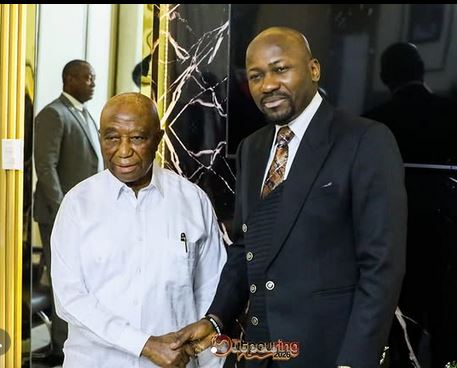
Liberian Leaders, Citizens Bear Witness as Apostle Suleman Hosts Two-Day Power-Packed Crusade
It was testimonies galore on Tuesday, March 31, the first day of the famous servant of God and founder of the Omega Fire Ministries (OFM) worldwide, Apostle Johnson Suleman’s power-packed two-day crusade. The event documented impactful moments with the Gospel and miracles, emphasizing the power of faith and the tangible confirmation of God’s Word through signs and wonders. It was equally an atmosphere of miraculous healing, restoration of lives, and the strengthening of faith.
At the crusade, which was held at the SKD Sports Stadium in Paynesville City, and themed, “Liberia Outpouring Crusade” witnessed testimonies of impact and miracles with participants experiencing instant healing of various kinds of challenges.
Apostle Suleman’s first port of call was Paynesville, the office of Liberian government’s president, Mr. Joseph Nyuma Boakai, who received him in an audience with his junior ministers. Apostle Suleman, who also met with the vice-president, Mr. Jeremiah Kpan Koung, was welcomed by the Liberian leader’s office as part of the president’s ongoing engagements with religious leaders aimed at fostering spiritual support for national development.
The president expressed profound appreciation to Apostle Suleman for the visit and continued prayers and intercessions by men and women of God on behalf of Liberia, emphasizing his firm belief that sustained spiritual guidance and prayer remain vital to the transformation and progress of the nation.
During the visit, Apostle Suleman offered prayers for President Boakai, his cabinet and the Liberian nation, invoking divine alignment, wisdom, and insight in Liberia’s path toward growth and stability. He prayed that the Almighty God would position Liberia for relevance and fulfillment of its national destiny.
Apostle Johnson Suleman, an evangelist who knows no bounds of where preaching the gospel comes to a stop, visited Liberia prepared with the message, compelling power of the Gospel and the work of the Holy Spirit, and bringing people to a point of decision where they surrendered their lives to Christ.
Aside from being prophetic and timely, OFM sources disclosed that the servant of God’s visit underscores the importance of faith-based partnerships in supporting governance and national renewal efforts.
society
Middle Belt Forum Hails Tinubu’s Jos Visit, Calls for United Civil-Military Effort to Restore Lasting Peace
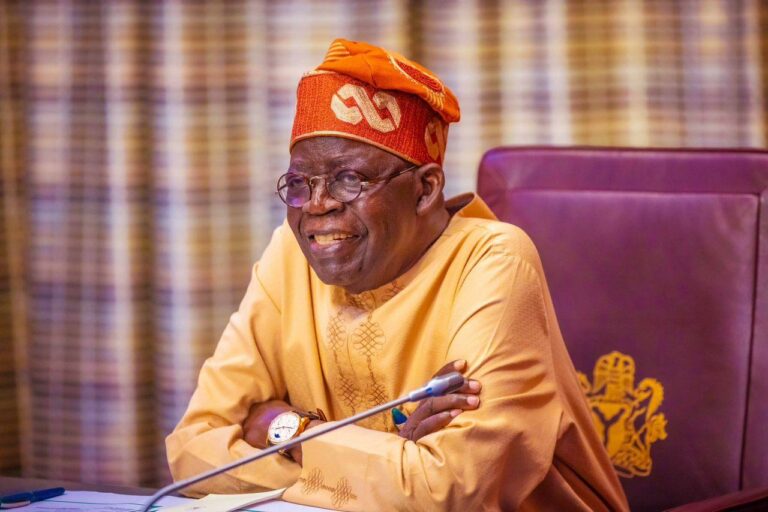
*Middle Belt Forum Hails Tinubu’s Jos Visit, Calls for United Civil-Military Effort to Restore Lasting Peace
The Middle Belt Peace Forum (MBPF) has commended President Bola Ahmed Tinubu for his profound demonstration of empathy and responsive leadership following his decision to postpone an official engagement in Iperu in order to visit victims of the recent attacks in Jos.
In a statement signed by its National Coordinator, Pastor Bulus Garba, in Jos on Friday, the Forum said the President’s decision to personally identify with grieving communities sends a powerful message of solidarity and reinforces public confidence in the commitment of the Federal Government to the protection of lives and property.
“The Middle Belt Peace Forum warmly commends President Bola Ahmed Tinubu for prioritising compassion over ceremony. At a time of deep sorrow for the people of Plateau State, his decision to visit Jos stands as a mark of true leadership—one that listens, responds, and stands with the people in their moment of pain,” the statement read.
The Forum described the perpetrators of the recent attacks as “cowards who prey on innocent and defenceless citizens,” stressing that such acts of violence are not only inhumane but also a direct assault on the unity and peace of the nation.
“We condemn in the strongest terms the actions of these cowardly attackers whose only aim is to instil fear and destabilise peaceful communities. Their actions must be met with firm and decisive resistance from all arms of the state,” Pastor Garba said.
The MBPF further used the opportunity to salute the courage, gallantry, and sacrifices of the Armed Forces of Nigeria under the leadership of the Chief of Defence Staff, General Olufemi Oluyede, noting that their continued efforts remain central to restoring stability across troubled parts of the country.
According to the Forum, the Armed Forces have demonstrated resilience and professionalism in the face of complex security challenges, often operating under difficult conditions to safeguard communities and defend Nigeria’s territorial integrity.
“We salute the Armed Forces of Nigeria for their unwavering commitment and sacrifices. Their gallantry in confronting criminal elements and reclaiming territories is a testament to their dedication to national service. We recognise that the path to peace is demanding, and we honour those who stand daily in defence of our nation,” the statement added.
The Forum pledged its full support to ongoing military operations and called for strengthened collaboration between security agencies and local communities as a critical factor in achieving lasting peace.
It also urged citizens across the Middle Belt to cooperate with security forces by providing timely information and fostering unity within their communities.
The MBPF, however, expressed concern over the need for greater synergy among security agencies, particularly the role of the Nigeria Police in consolidating gains made by the military.
“We call on the Nigeria Police Force to rise fully to its constitutional responsibility by effectively supporting the Armed Forces in stabilising and securing areas that have been cleared of criminal elements. Holding and policing such territories is essential to preventing a resurgence of violence,” Pastor Garba stated.
The Forum emphasised that sustainable peace requires a coordinated approach in which the military clears and secures areas, while the police maintain law and order to enable displaced communities to return and rebuild their lives.
The MBPF concluded by reiterating its commitment to peacebuilding efforts across the Middle Belt and expressed optimism that with sustained leadership, coordinated security efforts, and active citizen participation, lasting peace can be achieved.
“Together, through unity, vigilance, and collective resolve, we can overcome these challenges and build a safer and more peaceful Middle Belt,” the statement added.
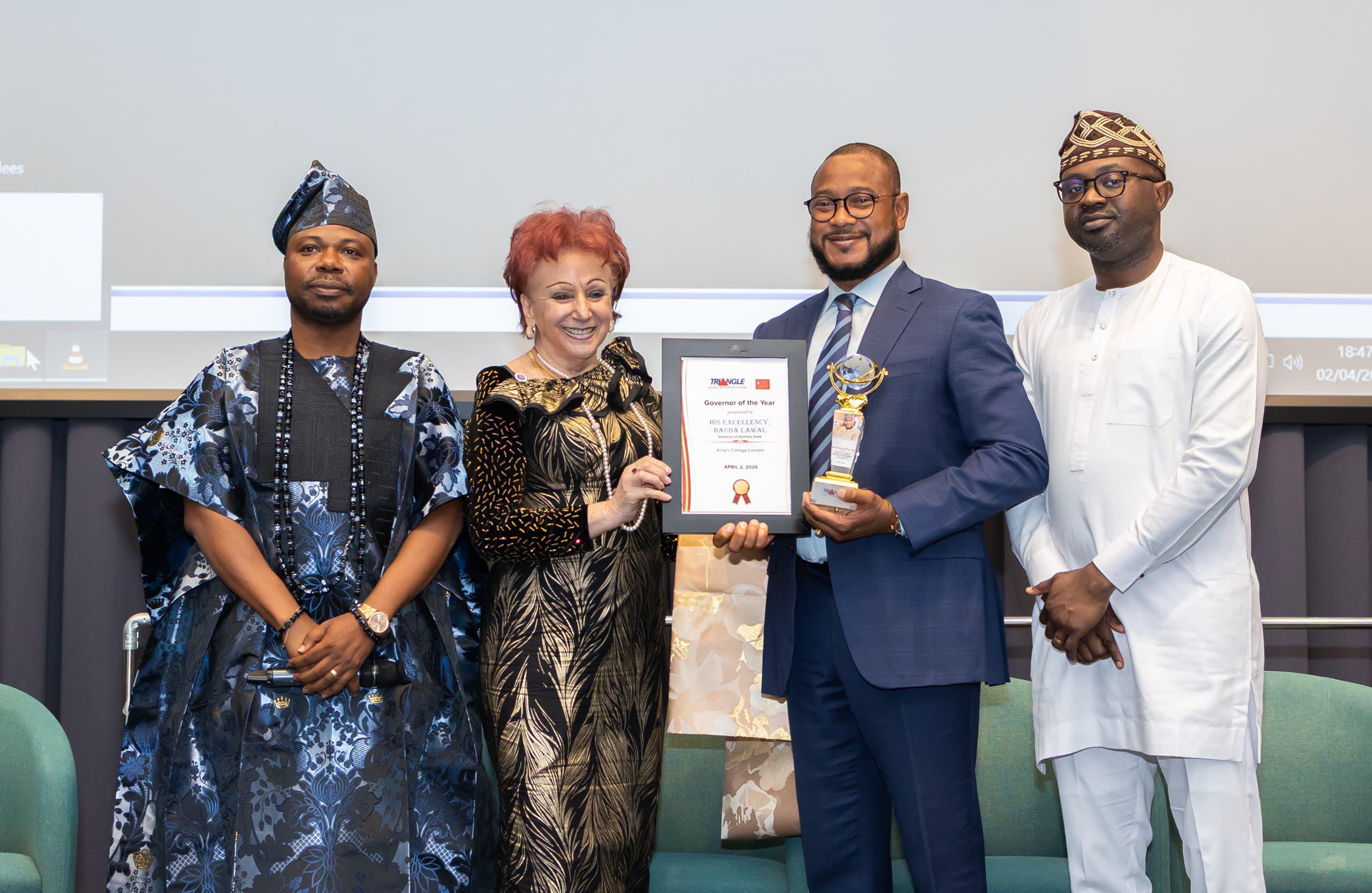
Governor Dauda Lawal Wins Face of Africa Governor of the Year Award in London
Governor Dauda Lawal has been honored with the Outstanding Governor of the Year award by Triangle Media International Magazine.
The award was presented during the magazine’s 10th annual lecture and award ceremony, held on Thursday at the Grand Hall of King’s College, London, United Kingdom.
According to a statement by the governor’s spokesperson, Sulaiman Bala Idris, the awards recognize public and private sector leaders whose leadership positively impacts governance and service delivery.
He added that the lecture, themed “Harnessing the Roles of Nigerians in Diaspora for National Development,” brought together stakeholders from both the public and private sectors.
The statement read in part: “Yesterday, in London, Governor Dauda Lawal received the 2026 Face of Africa Leadership Award for Outstanding Governor of the Year.
“The 2026 edition coincides with the 10th anniversary of Triangle International Magazine, which has over the years celebrated notable Africans across diverse fields.
“The award recognizes the Zamfara State Government under Governor Lawal’s leadership for achieving remarkable milestones in service delivery since his inauguration on 29 May 2023.
“The board of Triangle International noted that, despite inheriting an empty treasury, Governor Dauda Lawal has remained true to the Rescue Agenda’s campaign promise: to rescue and rebuild Zamfara.
“The award also reflects the state government’s innovative approach to indirectly curbing insecurity through educational advancement, demonstrated by the declaration of a state of emergency in the education sector.
“This includes the state government’s swift payment of the outstanding N3.4 billion for WAEC and NECO examinations, as well as the reconstruction and rehabilitation of schools across all 14 Local Government Areas of Zamfara State.
“The international magazine finds these initiatives to be strategic interventions toward long-term efforts to make Zamfara State better.”
The colourful event was attended by the Minister of Interior, Olubunmi Tunji-Ojo, and Sahara Group’s Group Managing Director, Kola Adesina, among others.


-

 society7 months ago
Religion: Africa’s Oldest Weapon of Enslavement and the Forgotten Truth
-

 news4 months ago
WHO REALLY OWNS MONIEPOINT? The $290 Million Deal That Sold Nigeria’s Top Fintech to Foreign Interests
-

 society6 months ago
“You Are Never Without Help” – Pastor Gebhardt Berndt Inspires Hope Through Empower Church (Video)
-

 celebrity radar - gossips2 months ago
Dr. Chris Okafor Returns with Power and Fire of the Spirit -Mounts Grace Nation Altar with Fresh Anointing and Restoration Grace on February 1, 2026