
society
Odi: Anatomy of a Massacre.

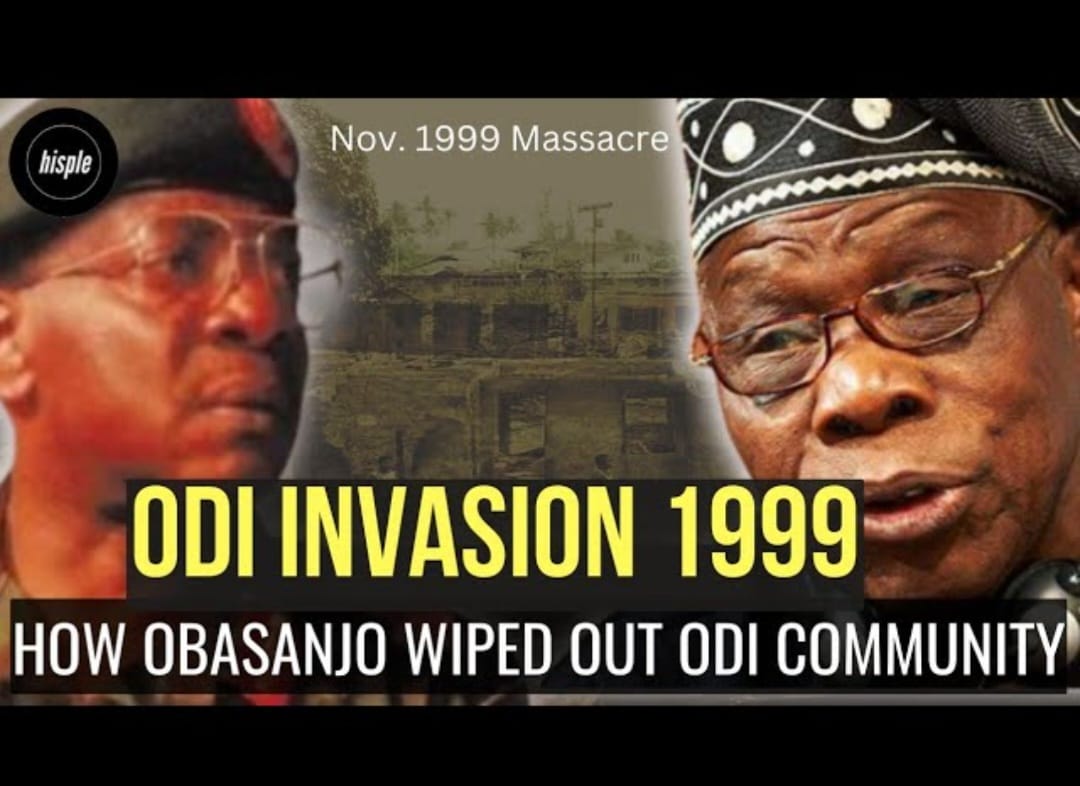
Odi: Anatomy of a Massacre.
By George Omagbemi Sylvester | Published by saharaweeklyng.com
How a Town Was Razed, Lives Erased and Justice Delayed.
On 20 November 1999 the Nigerian state executed a punishment that resembled collective vengeance more than lawful policing. The small Ijaw town of Odi, in Kolokuma/Opokuma Local Government Area of Bayelsa State, was invaded by elements of the Nigerian Armed Forces after the killing of policemen in the area. In a matter of hours soldiers razed whole neighbourhoods, drove survivors from homes and (WITNESSES, HUMAN-RIGHTS INVESTIGATORS and CIVIL SOCIETY WOULD LATER CONCLUDE) killed scores, perhaps hundreds, of unarmed civilians. What happened in Odi was not the chaotic excess of a firefight but a punitive operation with consequences that still HEMORRHAGE through the Niger Delta’s memory and politics.

The immediate provocation was gruesome: in early November 1999 an armed group killed a number of policemen (INITIAL ACCOUNTS MOST COMMONLY RECORD 12). The federal government, under President Olusegun Obasanjo, demanded swift action and publicly warned state authorities to apprehend the perpetrators. Within weeks, soldiers were deployed to Odi. According to a meticulous Human Rights Watch investigation, troops engaged in a brief exchange of fire with young men alleged to have killed police officers and then proceeded to raze the town—burning houses and markets, destroying property and, according to multiple eyewitness accounts, shooting civilians.
Human-rights organisations that visited Odi in the weeks that followed produced chilling findings. Human Rights Watch concluded that “the soldiers must certainly have killed tens of unarmed civilians and that figures of several hundred dead are entirely possible.” Amnesty International described large-scale killings in Odi as part of a pattern of reprisal operations by security forces across the Niger Delta and warned that such actions “CAN ONLY BE DESCRIBED AS A KILLING SPREE.” Those words matter: they move the event from a contested battlefield incident into the territory of extrajudicial atrocity.

Estimates of the death toll remain contested and politically charged. Official figures released in the aftermath were tiny (reportedly in the dozens) while local leaders, activists and some environmental and human-rights campaigners have given far higher numbers. Veteran environmental activist Nnimmo Bassey has claimed that nearly 2,500 civilians died; Human Rights Watch considered “SEVERAL HUNDRED” a plausible range based on interviews and ON-THE-GROUND OBSERVATION. The divergence of these figures is not a trivial statistical quarrel: it is a symptom of the opacity that cloaked state action, the absence of credible independent inquiry at the time and the subsequent failure to account publicly for the scale of violence inflicted on a civilian population.

Beyond deaths, the qualitative testimony from survivors is devastating and consistent: entire compounds were set ablaze, shops and boats destroyed and families plunged into sudden, permanent displacement. The Human Rights Watch report also documented allegations of sexual violence in nearby locations and recounted how access for journalists and human-rights observers was restricted; an obstruction that compounded the difficulty of independent verification and allowed impunity to calcify. The imagery of Odi (smouldering roofs, gutted houses, children made homeless) became for many a symbol of the Nigerian state’s willingness to use overwhelming force against its own citizens rather than pursue accountable law enforcement.
Years later the Nigerian courts provided a measure of juridical recognition of the harm done. In February 2013 a Federal High Court in Port Harcourt ordered the Federal Government to pay N37.6 billion in compensation to the people of Odi for the destruction of lives and property during the 1999 invasion. The judgment condemned the government for brazen violations of the victims rights to life, movement and property. That ruling was a formal acknowledgement that something grievously wrong had occurred and that the state bore responsibility. Yet even that legal breakthrough was followed by delay, partial payment and controversy: the government later negotiated an OUT-OF-COURT SETTLEMENT and paid N15 billion, a figure the community and observers regarded as inadequate relative to the court award and to the scale of loss.
Why Odi matters today is not only a matter of historical memory. The massacre sits at the intersection of three abiding pathologies in the Niger Delta and in Nigerian governance: RESOURCE PREDATION, MILITARIZED responses to social unrest, and the ritual of impunity. The Delta’s oil wealth has created both ENORMOUS NATIONAL REVENUE and LOCAL EXCLUSION; when communities demand accountability or protest environmental ruin, the response too often has been securitisation rather than DIALOGUE. Where policing fails or is seen to fail, the military’s intervention (ostensibly to restore order) has been used in ways that punish whole communities for the crimes of a few. Odi is an emblem of that pattern.
Scholars and activists have framed Odi not as an aberration but as a flashpoint in a broader crisis. Human-rights groups warned at the time that unchecked military reprisals would deepen grievances, spur cycles of revenge and radicalise parts of a region already suffering environmental collapse and economic marginalisation. That prediction proved accurate: the years after Odi saw the escalation of militant, criminal and protest activity in the Delta, including attacks on pipelines, kidnapping for ransom and the rise of organised militant groups; responses that have cost lives, damaged Nigeria’s oil economy and made a stable political settlement more remote.
What, then, is justice in the Odi story? A court order and a monetary settlement address part of the harm, but they do not RESTORE LOST LIVES, return the DEAD or compensate the LONG TAIL of social and psychological damage. Justice would also require transparent criminal investigations and prosecutions of those who gave and carried out unlawful orders, full reparations that are community-led and accountable, memorialisation that affirms the victims dignity, and institutional reforms to prevent recurrence. Human-rights organisations in 1999 urged such reforms; fourteen years later the court’s verdict validated the claim that the state had violated rights and owed redress. Yet the state’s partial payment and the absence of robust accountability for perpetrators have left a scar that official rhetoric cannot heal.

Odi’s lesson is blunt and uncomfortable: a democratic government that tolerates or obscures large-scale abuses by its security forces weakens the moral and legal foundations of democracy itself. If citizens (especially the poorest and most marginalised) are treated as dispensable, the social contract frays. The Niger Delta’s continued restiveness is a reminder that neither oil nor court rulings alone will buy peace; political inclusion, genuine development and institutions that answer to law are indispensable. As Human Rights Watch warned at the turn of the century: unchecked reprisals encourage further abuses and radical responses.
The memory of Odi persists in SONG, POETRY and TESTIMONY; it is invoked by activists demanding accountability and by families who still live with the aftermath. True closure requires more than commemoration: it requires a commitment from the Nigerian state to truth, accountability and systemic reform. The court’s 2013 judgment was a step—but steps without direction are merely gestures. The people of Odi deserve the full measure of justice: reckoning with what happened, prosecutions where warranted, truthful public record and reparations that rebuild the physical and moral fabric of the community. Anything less would be a betrayal of democracy and a testament to a brutality we pretended to have outgrown.
As we remember Odi, we must demand that the state confront its past. It is not enough to pay a portion of a judgment or to tuck atrocity into legalese and move on. If Nigeria is to be a nation that protects its citizens, it must be willing to investigate the crimes committed in its name—and punish them without favour. Only then will Odi’s burned houses and silenced families be honoured by more than memory: they will be honoured by the knowledge that the state learned, changed and guarded the sanctity of every civilian life.





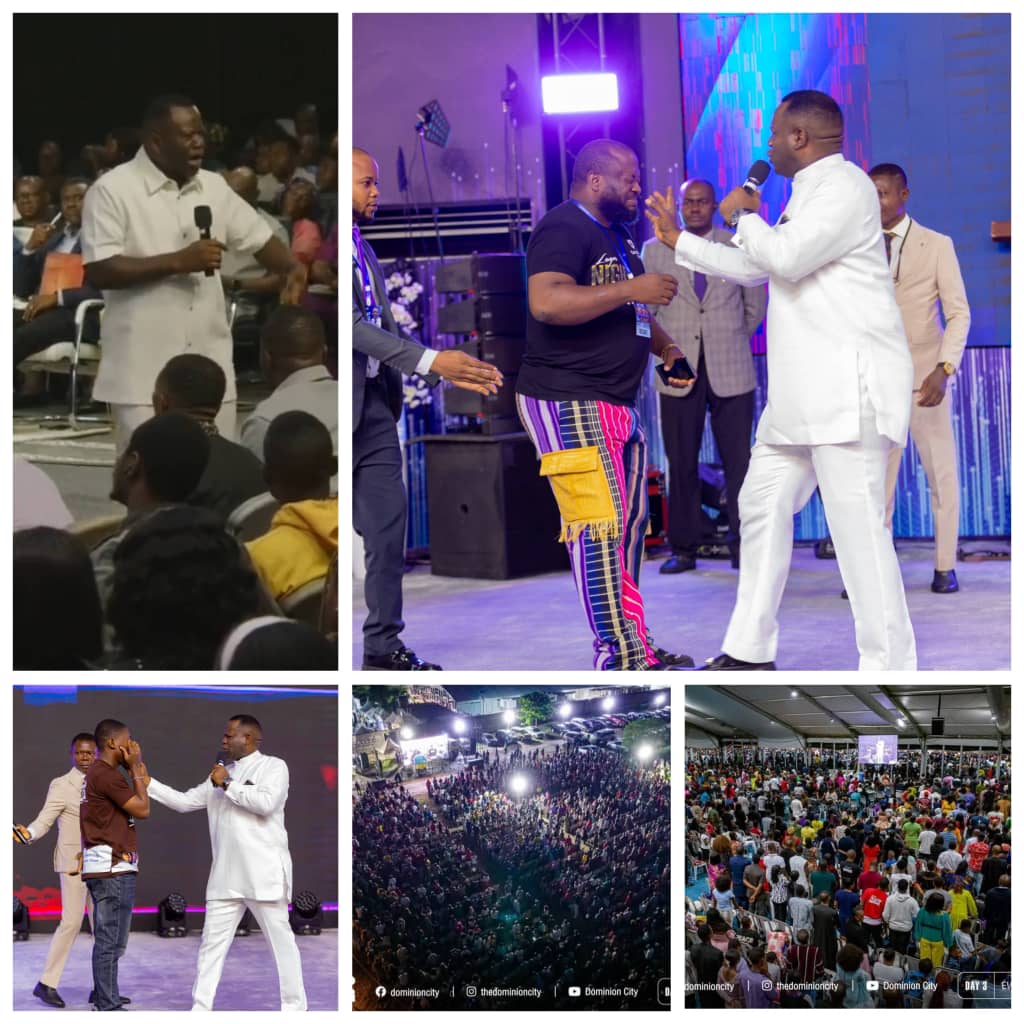
Revival Atmosphere as Dominion City Launches Night of Glory 2026.
Lagos – The atmosphere was charged with faith, worship, and expectancy as Dominion City’s Global Camp Meeting 2026 entered its peak with the first day of the “Night of Glory,” drawing thousands of worshippers to Lagos and Enugu in a powerful display of spiritual revival.
Held at the Golden Heart Place, Ajah, Lagos, the Friday evening gathering marked a significant moment in the ongoing six-day conference themed “Redigging the Wells of Our Fathers.” Participants from across Nigeria and beyond converged both physically and online, united by a shared hunger for divine encounter and transformation.
From the outset, the meeting was characterised by intense worship sessions led by gospel ministers, creating an atmosphere many attendees described as “tangible with God’s presence.” The night quickly transitioned into sessions of fervent prayers, prophetic ministrations, and teachings centred on restoration, healing, and spiritual awakening.
Presiding over the meeting, Dr. David Ogbueli, founder of Dominion City, charged participants to reconnect with foundational truths and spiritual disciplines necessary for personal and societal transformation. He emphasised that the “Night of Glory” was designed as a moment of divine visitation where destinies could be reshaped.
“As we redig the wells of our fathers, we are reconnecting with ancient graces and covenant realities that produce undeniable results,” he declared.
As the night unfolded, several remarkable testimonies were shared, reinforcing the theme of supernatural intervention. Among them was the case of a 14-year-old girl who was reportedly delivered from a seven-year struggle with pornography addiction, an experience that drew emotional reactions from the congregation.
Other testimonies included reported healing from cancer, recovery from a severe skin infection attributed to spiritual affliction, the healing of a heart-related condition, and three years of a non-menstrual period. Attendees also recounted instances of restored hearing and sight, with individuals testifying to improvements from partial deafness and blindness, among others.
Fathers of faith present were Barrister Emeka Nwankpa, Pastor Yemi Ayodele, Rev. Pade Tokun, Apostle Gbenga Adegbenro, Rev. Mike Adegbile, and others. Other Ministers present, including Pastor Dr. Charles Ndifon, Pastor Randy Mitchell, Apostle Ikechukwu Nnajiofor, and others, reinforced messages of faith and the power of God to intervene in human situations. They encouraged worshippers to remain steadfast and receptive, noting that miracles often spring from an atmosphere of unwavering belief.
Beyond the miraculous, the gathering also underscored a broader call to moral and spiritual renewal. Church leaders reiterated the need for believers to embody values that can positively influence society, especially in a time of perceived moral decline.
The “Night of Glory” is part of the larger Global Camp Meeting, which began on April 1 and will run through April 6, featuring daily teachings, leadership sessions, and specialized programmes for youths and families.
Organisers say expectations remain high for the second night, with many believing that the wave of miracles and transformation witnessed on the first night is only the beginning.
For many attendees, however, the message was clear beyond the signs and wonders; the true essence of the gathering lies in a renewed commitment to live transformed lives and impact society. //END.//
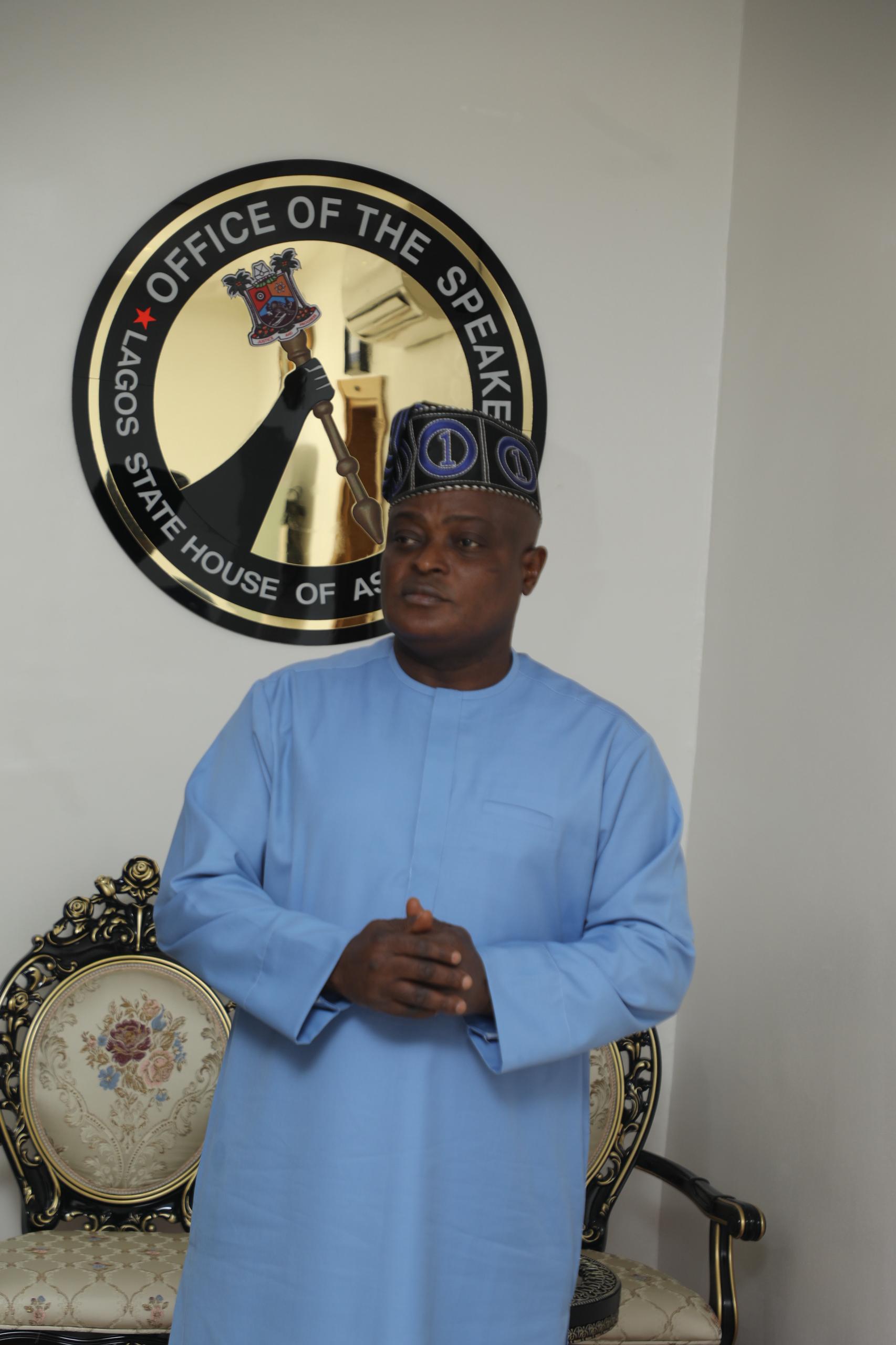
Easter: Obasa Urges Christians To Embrace Hope, Unity, Renewal
The Speaker of the Lagos State House of Assembly, Rt. Hon. Mudashiru Obasa, has congratulated Christian faithful in Lagos and across Nigeria on the celebration of Easter, urging them to draw strength from the lessons of Christ’s resurrection.
In his Easter message, released by his Chief Press Secretary, Mr. Dave Agboola, Obasa described the season as a reminder of victory over despair, renewal after trials, and the triumph of light over darkness. He noted that just as Christ overcame death, Nigeria can overcome its current challenges if citizens remain steadfast, prayerful, and committed to unity.
“Easter is a season of hope and renewal. As a nation, we face economic pressures and security concerns, but the resurrection teaches us that no situation is beyond redemption. Let us roll away the stones of division and despair, and work together for peace, justice, and prosperity,” the Speaker said.
He called on Lagosians to continue to show love and compassion to one another, stressing that collective effort is key to building a stronger Lagos and a better Nigeria.
Obasa prayed that the joy of Easter would fill homes with renewed faith and guide both leaders and citizens toward a brighter future.

*PDP CHIEFTAIN, ONIRETI RESIGNS FROM PARTY, CITES PERSONAL REFLECTION
A former House of Representatives candidate, Olufemi Onireti, has formally resigned his membership of the Peoples Democratic Party (PDP) in Oyo State.
His resignation was conveyed in a letter addressed to the Chairman of PDP Osupa Ward 9, Ogbomoso North Local Government, on Thursday.
Onireti described the decision as a difficult but necessary step after what he termed a period of “deep personal reflection.”
“I hereby formally resign my membership of the Peoples Democratic Party (PDP), effective immediately,” he wrote.
He acknowledged his years of active involvement in the party, including contesting for the House of Representatives in the last general election, noting that the PDP had offered him a platform for political participation, service, and growth.
Despite his exit, Onireti expressed appreciation to party leaders and members for the support he enjoyed over the years.
“I remain grateful for the opportunity to serve and for the relationships and experiences I gained during my time in the party.
I wish the party well in its future endeavours,” he added.
The development is expected to generate discussions within the Ogbomoso North political circle, as observers await his next political move.


-

 society7 months ago
Religion: Africa’s Oldest Weapon of Enslavement and the Forgotten Truth
-

 news4 months ago
WHO REALLY OWNS MONIEPOINT? The $290 Million Deal That Sold Nigeria’s Top Fintech to Foreign Interests
-

 society6 months ago
“You Are Never Without Help” – Pastor Gebhardt Berndt Inspires Hope Through Empower Church (Video)
-

 celebrity radar - gossips2 months ago
Dr. Chris Okafor Returns with Power and Fire of the Spirit -Mounts Grace Nation Altar with Fresh Anointing and Restoration Grace on February 1, 2026