
Politics
PDP in Crisis: The Political Exodus That May End Africa’s Largest Party

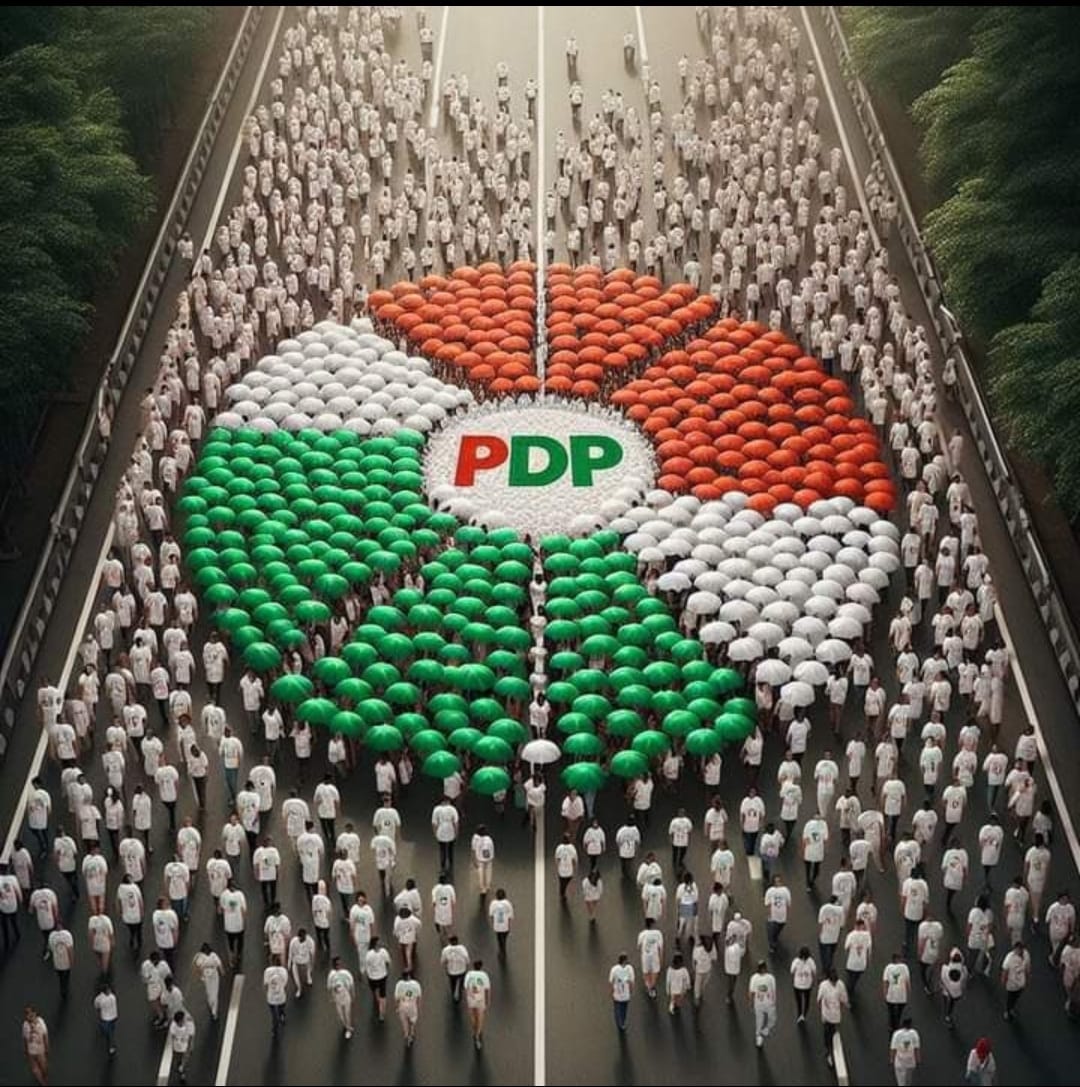
PDP in Crisis: The Political Exodus That May End Africa’s Largest Party
By George Omagbemi Sylvester
Never did we imagine that the People’s Democratic Party (PDP), once hailed as Africa’s largest political coalition, would witness such dramatic erosion from within. But in today’s Nigeria, where political loyalty is as volatile as the economy, the PDP is now hanging by a thread. What was once a formidable machinery that ruled Nigeria for 16 unbroken years has become a political shadow, limping from one internal crisis to another, gasping under the weight of ambition, betrayal and irrelevance.

This is no longer mere speculation. This is a full-blown political exodus.
The warning signs have long been in the air, but the silence of the party’s leadership only emboldened the defections. More PDP governors, senators and influential political actors are preparing to “throw in the dirty towel” to use a common Nigerian parlance and “get a change of toiletries” from a more promising political vehicle. The All Progressives Congress (APC), despite its governance failures, has remained the dominant force. Meanwhile, Labour Party (LP) and its ideological frontmen have seized the imagination of Nigeria’s politically conscious youth. Where is the PDP in all this? Nowhere near the pulse of the nation.
The Collapse of a Giant
Once upon a time, PDP stood like a colossus, commanding national attention and holding sway across all six geopolitical zones. In 2007, it controlled 28 out of 36 state governorships. By 2015, that number had dropped to 21. Today in 2025, the PDP controls just 9 states, an embarrassing decline that reveals the party’s waning appeal and fractured internal unity. Analysts have blamed this on the party’s failure to manage its primaries democratically, an outdated power-sharing formula and the overbearing influence of godfathers.
“Power is not something you hold forever. You must constantly renew your legitimacy through the people,” said late President Umaru Musa Yar’Adua, a former PDP leader known for his integrity. The party has clearly forgotten this principle.

The Atiku Albatross
The PDP’s 2023 presidential campaign was marred by one fatal error: the insistence of fielding Atiku Abubakar, a serial contestant whose political capital has been dwindling with each election cycle. The PDP’s inability to learn from its past mistakes and reinvent itself through younger, credible candidates shows how deeply the party has lost touch with contemporary realities.
Even within the party, Atiku is increasingly seen not as a unifier but a divider. His constant grip on the presidential ticket has frustrated younger aspirants and caused internal blockades that push members away.
“One man cannot hold a whole party to ransom,” said former Senate President Bukola Saraki in a private meeting leaked last year. That message reflects what many insiders are saying in hushed tones.

The Shockwaves of 2027
As the 2027 election cycle begins to take shape, permutations are in full gear. And while Atiku may be warming up for a record-breaking sixth attempt at the presidency, his influence is anything but stable. The PDP is already seeing rebellion from within, particularly from southern blocs who believe it is time the North stopped dominating the party’s presidential ambition.
Key political actors are already exploring alternative alliances. Rumours abound of secret talks between PDP governors and Tinubu’s men. Some are also aligning quietly with Peter Obi’s Labour Party, hoping to hedge their bets.
A recent poll by SBM Intelligence showed that 61% of PDP voters in the South-East and South-South are “open to switching allegiance” if the party fails to restructure before 2026. That’s a political red flag.
Why Governors Are Jumping Ship
What exactly is triggering this mass departure? The reasons are numerous, but four stand out:
Self-Preservation: Most Nigerian governors operate in a transactional political environment. Their loyalty lies not with ideology but with continuity of power. With the PDP unlikely to win the presidency in 2027, many are seeking new alliances to protect their political future.
Lack of Internal Democracy: The PDP has failed repeatedly to conduct transparent and fair primaries. Recent gubernatorial primaries in states like Delta, Rivers and Abia were marred by allegations of imposition and backdoor deals.
Atiku’s Grip: The feeling that Atiku is determined to contest in 2027, regardless of public sentiment, is unsettling. Many believe that as long as he remains a central force in the party, others have no space to thrive.
Tinubu’s Strategic Poaching: The current APC-led administration is systematically targeting opposition strongholds. Governors are being enticed with promises of federal appointments, project funding and legal shields from EFCC investigations.
Can the PDP Survive?
This is the pressing question. The answer lies in whether the party is willing to undergo painful introspection and renewal. It must adopt a bottom-up approach, re-engage with the grassroots, purge itself of godfatherism and allow credible young candidates to emerge.
It also needs to redefine its ideology. The APC may have failed economically, but it succeeded politically by branding itself as a party of change, regardless of how false that branding turned out to be. The PDP has no distinct narrative today.
What the Experts Say
Prof. Ayo Olukotun, a leading political scientist at Obafemi Awolowo University, recently argued: “The PDP is a classic case of political entropy. Without internal reform, it will disintegrate not by collapse, but by irrelevance.”
Similarly, Dr. Remi Adekoya, political analyst and author of “Politics of Identity in Nigeria”, notes: “The PDP has become a party for political pensioners. It is not inspiring to young voters nor innovative in its messaging.”
A Last Chance
If Atiku and the old guard truly care about the future of PDP, they must step back and allow a new leadership to emerge. Nigeria is moving on. The PDP must do the same. The 2027 ticket cannot be an inheritance. It must be earned. And it must reflect the shifting demographics of Nigerian voters, 65% of whom are under the age of 35.
This is not just about Atiku. It is about the soul of the PDP and whether it can reclaim its place in Nigerian political history or fade into obscurity like the National Republican Convention (NRC) and the Social Democratic Party (SDP) of the 1990s.
Furthermore
History is not kind to political parties that fail to evolve. The PDP has been served many warnings. The defections we see today are not just acts of betrayal; they are symptoms of decay. If the party does not reinvent itself quickly and decisively, it will not survive the coming storm.
The words of Chinua Achebe ring truer than ever: “A man who brings home ant-infested firewood should not be surprised when lizards come to feast.” The PDP brought this upon itself. The only question now is: will it learn, or will it perish?





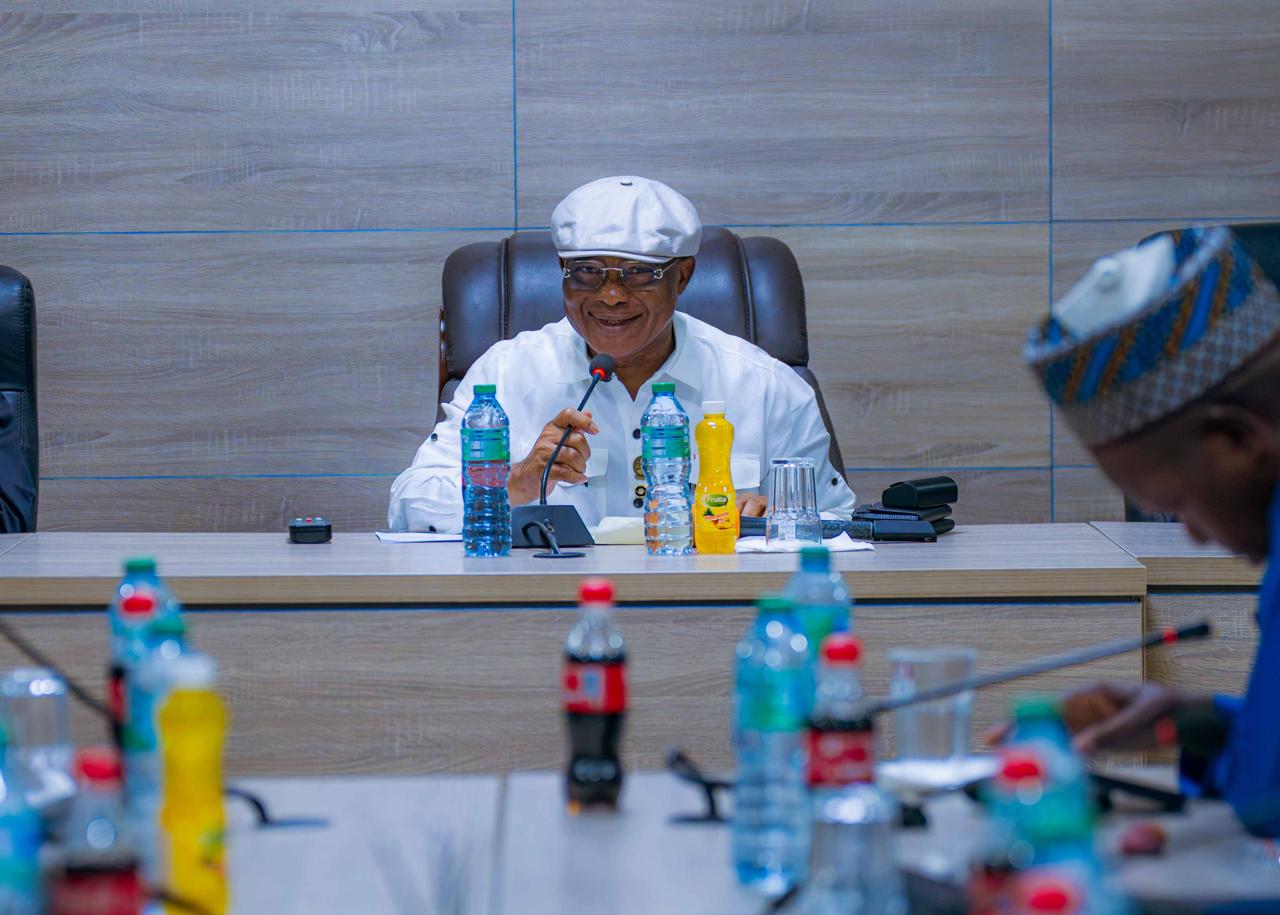
*Renewed Hope Ambassadors Step Into the Next Phase
Fresh from the successful APC 2026 National Convention, the Renewed Hope Ambassadors National, Zonal, and State leadership gathered in Abuja over the weekend, for its fourth strategic meeting, setting the tone for nationwide grassroots activation ahead of 2027.
Chaired by Governor Hope Uzodinma (Imo State) the Director General and National Coordinator of the Renewed Hope Ambassadors, alongside Deputy Director-General, Governor Uba Sani of Kaduna State, and Governor Inuwa Yahaya of Gombe State as Secretary, the session reinforced one clear direction: One Party. One Message. One Mobilization whilst also laying out a strategic roadmap for the activation of the network across all communities in Nigeria.
Backed by the strength of 31 APC-led states, the Renewed Hope Agenda is taking Bola Ahmed Tinubu’s message of progress and reform to every corner of Nigeria.
From bold economic restructuring to initiatives like NELFUND, the increase in the national minimum wage from ₦30,000 to ₦70,000, and strategic investments in critical sectors, including PNiCGI, the mission remains clear: helping Nigerians understand both the purpose and the progress of the Renewed Hope vision.
This is coordination at scale. This is grassroots engagement with purpose. This is the next phase of Renewed Hope with One Party, One Message, and One Mobilisation framework
#RenewedHopeAmbassadors #APC #WeAreAPC


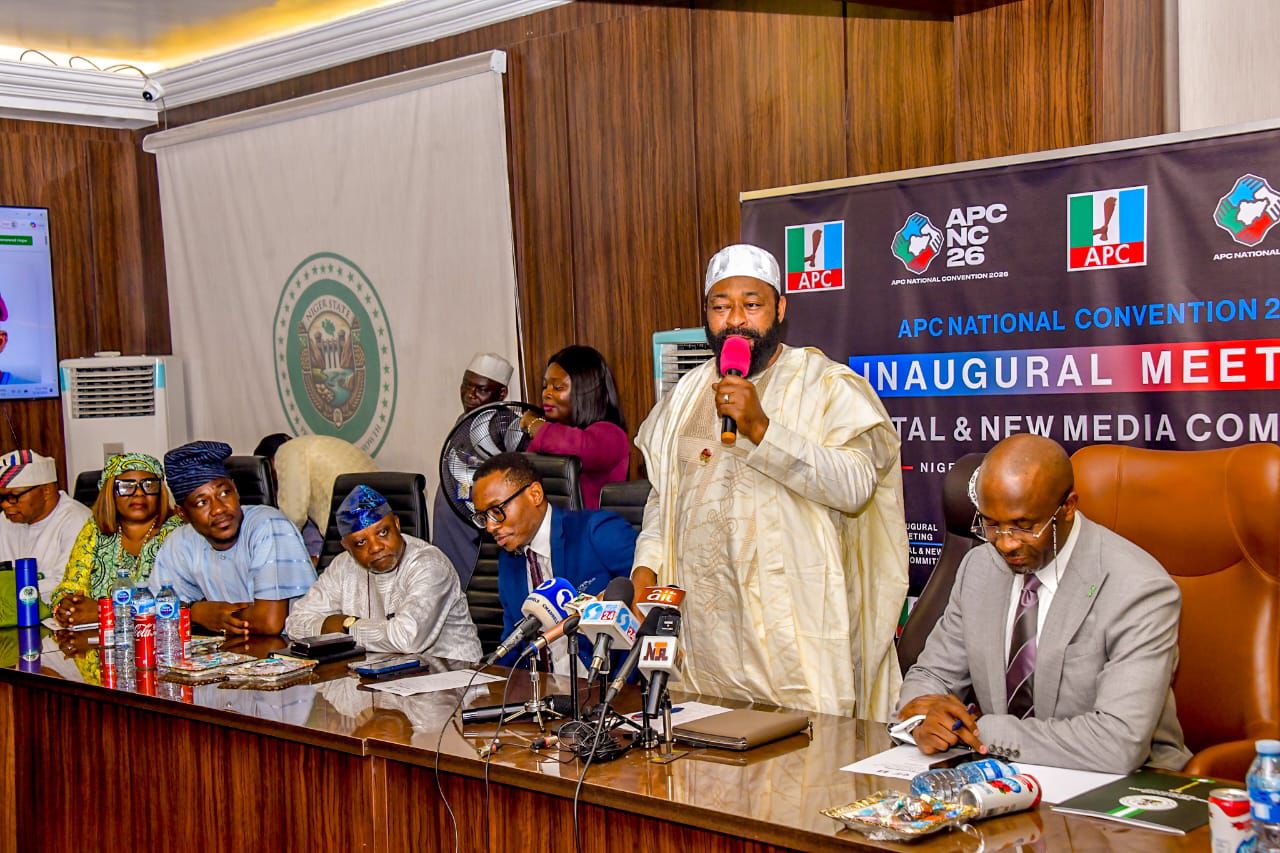
Governor Bago Inaugurates APC Digital Media Sub-Committee Ahead of National Convention.
Governor Umaru Bago has inaugurated the Digital Media Sub-Committee for the forthcoming National Convention of the All Progressives Congress (APC), scheduled to hold on March 27 and 28, 2026 in Abuja.
Chairing the sub-committee, Governor Bago tasked members with the responsibility of effectively communicating the party’s manifesto to the public.
He emphasized the need to leverage social media platforms to highlight the achievements and ongoing efforts of President Bola Ahmed Tinubu, noting that communication gaps have posed challenges that must now be decisively addressed.
The Co-Chair of the sub-committee, Hon. Benjamin Kalu, Deputy Speaker of the House of Representatives, echoed the Governor’s position, urging members to project the activities of both the party and the government to a broader audience.
He called for a deliberate and coordinated effort to showcase the party’s achievements and policy direction, stressing the importance of shaping a compelling and consistent narrative across all digital platforms.
Delivering a presentation to the committee, Otega Ogra, SSA to the President on New Media, who serves as Secretary of the sub-committee, outlined strategic focus areas to guide the team’s operations.
His presentation highlighted communication priorities and actionable steps to achieve the committee’s mandate and strengthen the party’s digital engagement.


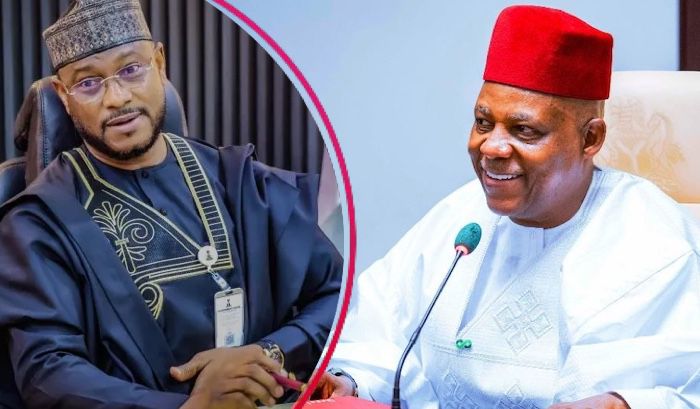
VP Shettima Set to Lead Delegation to Zamfara as Governor Dauda Lawal Formally Joins APC
The Zamfara State chapter of the All Progressives Congress (APC) has finalized plans to receive Vice President Kashim Shettima for the formal defection and reception of Governor Dauda Lawal into the ruling party, scheduled to take place on Tuesday.
State APC Chairman, Tukur Danfulani Maikatako, disclosed this during a high-level stakeholders’ meeting held in Gusau, the state capital. He noted that the Vice President would be joined by the party’s national leadership to mark what he described as a landmark political realignment in the state.
Maikatako expressed the party’s excitement over Governor Lawal’s return, recalling that Zamfara had historically been an APC stronghold and that the Governor was previously a bona fide member of the party before his earlier exit.
“We all know that Zamfara has long been one of the APC’s stronghold states, where the defected Governor was once a bona fide member. Now that he has decided to return home, having been satisfied that the APC remains his second choice after the one he left for obvious reasons,” Maikatako stated.
The Chairman called on all party faithful across the 147 wards in the state’s 14 local government areas to turn out en masse to honour the Vice President’s visit. He emphasized that the event was strategically positioned to bolster the party’s popularity and strengthen its structures ahead of the 2027 general elections.
In a strong appeal for unity, Maikatako urged members to set aside all factional tendencies, stressing that the APC remained one political family with shared goals, particularly the ambition to make Zamfara and Nigeria great again.
Echoing similar sentiments, a former state APC Chairman, Lawal M. Liman, appealed to members to cascade the message to their wards and local government areas. He reinforced the need for cohesion, noting that the party’s collective strength would be critical to achieving success in future elections.

All eyes are now on Gusau as the ruling party prepares for a high-profile political gathering expected to further consolidate its influence in Zamfara State.


-

 society6 months ago
Religion: Africa’s Oldest Weapon of Enslavement and the Forgotten Truth
-

 news4 months ago
WHO REALLY OWNS MONIEPOINT? The $290 Million Deal That Sold Nigeria’s Top Fintech to Foreign Interests
-

 society6 months ago
“You Are Never Without Help” – Pastor Gebhardt Berndt Inspires Hope Through Empower Church (Video)
-

 celebrity radar - gossips2 months ago
Dr. Chris Okafor Returns with Power and Fire of the Spirit -Mounts Grace Nation Altar with Fresh Anointing and Restoration Grace on February 1, 2026