
Politics
PDP’s GREAT BETRAYAL AND THE CHOICE BEFORE THE APC

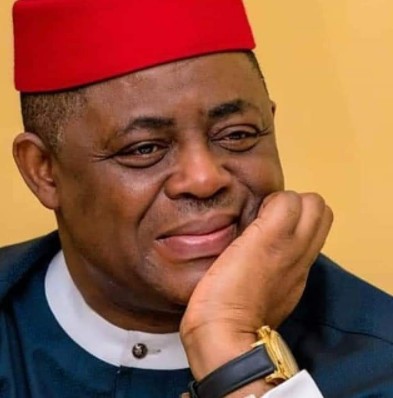
PDP’s GREAT BETRAYAL AND THE CHOICE BEFORE THE APC
With the emergence of a Northerner as its presidential candidate I wonder how Afenifere, PANDEM, Ohaeneze Ndigbo, the Middle Belt Forum and the Southern and Middle Belt Leaders Forum now feel about their favoured child known as the Peoples Democratic Party (PDP)?

The virulent and avowed opposition that these august and highly respected bodies had against a Northern presidential candidate has been overuled by their party.
Their call for an Igbo presidential candidate has been ignored and treated with contempt and disdain.
Their preffered party is fielding a Northerner and there is nothing they can do about it.
They have been misled, fooled and scammed and they have no influence or power over the affairs of their favoured party.
Despite their reverred age, wealth of knowledge, profound insight and depth of wisdom their PDP has tossed their collective counsel into the dustbin.
Permit me to welcome them to the world of ‘real politik’ and I advise that they stop allowing themselves to be so easily manipulated and deceived.
Politics is a game of numbers where words and the knowledge of history alone count for little and where only insight, passion, a firm resolve and a large war chest coupled with the ability to conspire and the courage to build bridges even with past adversaries and former foes are the keys to success.
In this game, like the words of Shakespeare’s witches in his famous play ‘Macbeth’,
“fair is foul and foul is fair: hover through the fog and filthy air!”
It is a strange and difficult game filled with intrigue, betrayal and treachery.
It is murky, it is foggy, it is dark, it is treacherous, it is full of intrigue and mystery and nothing is as it seems or appears.
They thought their PDP would produce a Southern candidate even if the APC failed to do so but now they know that the trust they bestowed on their arrant yet favoured child was misplaced.
This was a shocker to them.
And let me assure them that more shockers and surprises are coming.
I believe it is time that they start thinking differently and adopting a new approach in order to achieve their noble objectives of a fair, equitable and just Nigeria in which we are all equals regardless of ethnicity or faith.
Constantly suppporting and relying on the PDP and hoping they will come to power to do something new, fix the problems and provide the solutions is an ill-placed illusion and dangerous delusion.
It simply cannot work.
I advise them to have a rethink and to realign.
In doing so they may well make a difference and achieve their noble objectives.
Now permit me to get to the meat of this essay.
It is interesting to note and quite an irony that the ruling All Peoples Congress (APC), a party that the opposition PDP has wrongly labelled as a bunch of Northern irridentists and hegemonists, are now the ones that could possibly provide a Southerner as their flag bearer.
Conversely the PDP, the party that has always claimed to champion the precepts of equity, justice and Southern rights and that has always prided itself on its strong Southern base, has opted to give its presidential flag to a Northerner.
They turned their backs on the people of the South East who have given them more support than any other ethnic nationality in the country over the last 23 years.
They spurned the people of the Middle Belt who saw in them a hope of salvation and emancipation.
They rejected the people of the South South whose sons and daughters stood firmly behind them through thick and thin.
Finally they displayed their usual and utter contempt for the people of the South West who they have always regarded as nothing but the biblical “hewers of the wood and the drawers of the water” and the poor relatives of the party ever since President Olusegun Obasanjo left power in 2007.
Worse still they gave their ticket to a man who is the best of friends with Sheik Ahmad Gumi, the defender-in-chief of the terrorists of the North West, they gave it to a man who withdrew a public condemnation of the savage lynching of Miss Deborah Emmanuel in Sokoto and they gave it to a man that refused to condemn the brutal slaughter of a pregnant Fulani lady and her four children in Anambra.
They gave their ticket to a man that lost the 2019 election and promptly left the country for 3 long years for beautiful Dubai, abandoning all his followers and supporters to weather the Nigerian storm and waters.
How this man can sleep at night I really don’t know!
They gave their ticket to a man who is soft on the terrorists that are butchering the people of the North West and North East and who has offered no solution to the plague of unknown gunmen and terrorists that are slaughtering people in the South East.
Is this a party that can be trusted with power?
Have they not become the very monster that they once claimed to seek to oppose and destroy?
Have the tables not turned?
Has the party not been taken over by faceless hardliners with a hidden agenda?
Can the people of the South West, South East, South South, North Central or even North West and North East trust Atiku with power?
I have my doubts. The truth is that the PDP has been high-jacked by a dangerous cabal who have utter contempt for anyone and everyone that is not part of their inner circle.
Many ask, who are those in this cabal?
Who are those that now control the PDP and that ensured that Nyesom Wike was defeated and Atiku emerged?
The same forces ensured the emergence of Atiku at the Port Harcourt Convention in 2018 by whispering his name at the last minute to the relevant stakeholders and they have done it again in 2022.
How can a serious political party not afford Ayo Fayose, Dele Momodu at least ONE vote each at its presidential primaries simply because they refused to bribe the delegates?
How can they lose Rabiu Kwankwaso, Peter Obi and Enyinnaya Abaribe to other smaller and totally inconsequential parties just before their convention?
How can they deny Pius Anyim the presidential ticket?
How can they not encourage Ifeanyi Ugwuanyi, who is the best of them and the brightest star in the South East, to run for the nomination?
How can they reduce Emmanuel Udom to 13 votes, Bala Mohammed to 20 votes and Bukola Saraki to 70 votes and how can they deal such a ruthless death blow to the aspirations of Nyesome Wike who struggled so hard to bring the Presidential ticket to the South?
Had it not been for Aminu Tambuwal’s decision to back Atiku at the last minute, Wike would have won with flying colours.
And look at their Convention itself? Was it not a show of shame where the highest bidder simply took the prize?
Were the activities there not worse than those in an 18th century Parisian whore house where money was exchanged for services rendered?
This was not an election but a shameless gathering of corrupt souls in which the dollar determined the outcome at the behest of its providers.
The delegates were bought and their price was on open display.
It was a shameful dollarfest in which honor, decency, politics, merit and seriousness had no place.
It was a jamboree of spending and an act of open worship to Mammon, the god of money.
A candidate that emerges from such a gathering and as a consequence of the invocation of such dark and bestial forces and powers cannot be expected to do any good.
If there was any reason for INEC to nullify a party Convention this particular one provided it.
Put together, the PDP convention was worse than an Arab carpet bazaar and an Indian brothel all rolled into one.
It stank to high heavens and it resulted in a shameless mess which lacked any pretence to legitimacy.
The truth is that there really is something defective about the thought processes and reasoning of the PDP.
Time will prove that.
Interestingly there are many in the ruling APC who have expressed a strong preference for a Southern presidential candidate for 2023 and most of them are from the North.
Would it not be a remarkable thing if President Muhammadu Buhari, the man many in the South have constantly viewed with suspicion and skepticism and who many have wrongly labelled as an ethnic warlord and religious bigot, was the one that gave the South what they wanted?
And make no mistake about it, this decision is Buhari’s and his alone.
He alone will most likely determine who APC will field and where that person comes from.
If he chooses to stop any presidential aspirant from emerging even at this late stage he can do so, no matter how popular, rich and powerful that aspirant may be.
Just one phone call from him to the relevant stakeholders can achieve that.
He can also endorse the weakest and most unlikely contender even at the last minute and that person will emerge.
Such is the respect, trust and affection that the leaders and members of the party at every level have for him.
As they say, he has the “yam and the knife” and he can determine what will happen or choose to sit back and allow all the aspirants to slug it out until the best man wins.
I am on record as saying that the three zones that ought to be considered for the nomination before others are the South East, North Central and North East and I stand by that.
Compared to the South West, North West and South South none of them have had a fair crack of the whip when it comes to democratically- elected Presidents and they all deserve to have their chance.
They are not slaves and they need to be encouraged, given a sense of purpose and carried along.
I maintain this position even if I am the only one that refuses to hedge my bets and say so publicly.
I also maintain that it would be easier for a Northerner to defeat Atiku but, if truth be told, it would also be a reflection of the courage and sense of fairness of the President and the APC that, even if it means risking the 2023 election, it is better to do the right and proper thing, assuage the fears and worries of the South, honor past commitments and allow a Southerner to take over.
This alone will make Buhari a hero above all else.
This alone will give Nigeria a new lease of life and will restore and strengthen North/South relations.
This alone will assuage the feelings and heal the wounds of those that live in perpetual fear of Northern hegemony and domination and quench the awesome fire of the militants and separatists that thrive in the South East, South West and South South.
This alone will send a strong signal to Boko Haram, ISWAP, the killer herdsmen and the foreign terrorists that they have failed to destroy our fragile unity and to divide us.
This alone will be a legacy that will speak for our President and our party into eternity.
The question therefore is whether we do the right thing by giving the ticket to the South or do the politically expedient thing by giving it to the North.
That choice will be made at the APC convention in a few days time.
Let us wait and see.
(FFK)




Politics
APC Group Endorses Fubara for 2027, Calls on Tinubu and APC to Prioritise Performance Over Politics in Backing Governor’s Second Term Ambition
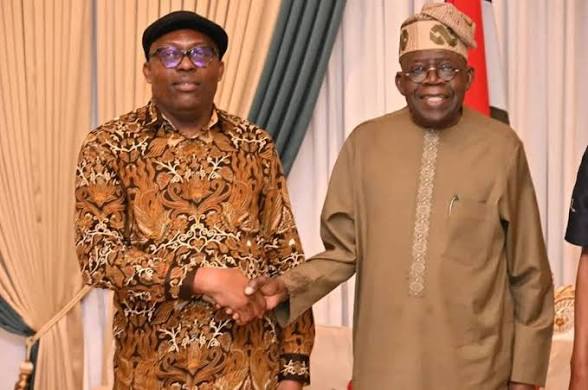
*APC Group Endorses Fubara for 2027, Calls on Tinubu and APC to Prioritise Performance Over Politics in Backing Governor’s Second Term Ambition*
The APC National Vanguard has appealed to President Bola Ahmed Tinubu and the leadership of the All Progressives Congress (APC) to support a second term in office for Siminalayi Fubara, citing what it described as “impressive and verifiable developmental strides” across Rivers State.
In a statement issued on Thursday by its National President, Dr Gbenga Salam (JP), the group said its position followed an extensive assessment tour of key infrastructure and public service projects executed under the Fubara administration.
The APC National Vanguard said the appeal was based strictly on performance, arguing that governance outcomes should outweigh partisan considerations, particularly in a state as economically significant as Rivers.
“We respectfully urge President Bola Ahmed Tinubu and the leadership of the All Progressives Congress to support the continuity of Governor Siminalayi Fubara beyond his current tenure, in recognition of his commitment to development, prudent resource management, and people-focused governance,” the statement read.
According to the group, its delegation visited multiple project sites across the state, observing ongoing and completed works spanning road construction, urban renewal, and public infrastructure upgrades.
It noted that the scale and distribution of these projects reflect a deliberate effort by the state government to extend development beyond traditional urban centres and into underserved communities.
“Our findings from the tour reveal a government that is not only active but intentional in its development agenda. The execution of capital projects across various parts of Rivers State demonstrates a clear understanding of the needs of the people and a commitment to addressing them,” Dr Salam said.
The group particularly commended what it described as prudent financial management by the administration, noting that the projects reviewed showed evidence of careful planning and efficient allocation of resources.
“At a time when economic pressures are evident across the country, it is commendable that the Rivers State government has managed its resources in a way that delivers visible and impactful development without signs of fiscal recklessness,” the statement added.
The APC National Vanguard further observed that despite political tensions in the state, the Fubara administration has maintained focus on governance, ensuring continuity in project execution and service delivery.
The group argued that such stability is critical for sustained development and should be encouraged rather than disrupted.
“Leadership must ultimately be judged by results. In Rivers State, there is clear evidence of progress—projects that are not only announced but executed, and policies that translate into real benefits for citizens,” Dr Salam noted.
The group warned that discontinuity in leadership could stall ongoing projects and reverse gains already recorded, stressing the importance of allowing a performing administration to consolidate its achievements.
“Rivers State is at a pivotal stage where continuity will allow for the completion of ongoing initiatives and the deepening of development gains. Supporting Governor Fubara for a second term is, therefore, a decision in the best interest of the people,” the statement said.
In addition to its call on the APC leadership, the group reaffirmed its support for President Tinubu, expressing confidence in his administration’s broader economic and governance reforms.
The APC group urged Nigerians to remain supportive of efforts aimed at stabilising the economy and strengthening public institutions.
“We reiterate our endorsement of President Bola Ahmed Tinubu for a second term in office, in recognition of his leadership and commitment to national development. With sustained support, the administration can consolidate its reform agenda for the benefit of all Nigerians,” Dr Salam added.
The APC National Vanguard concluded by calling on political actors to prioritise development and public interest over partisan divides, insisting that governance should always be guided by performance and accountability.
“Where leadership demonstrates prudence, delivers development, and remains focused on the welfare of the people, it deserves continuity. This is the position we have reached after a careful and independent assessment of Rivers State,” the statement added.
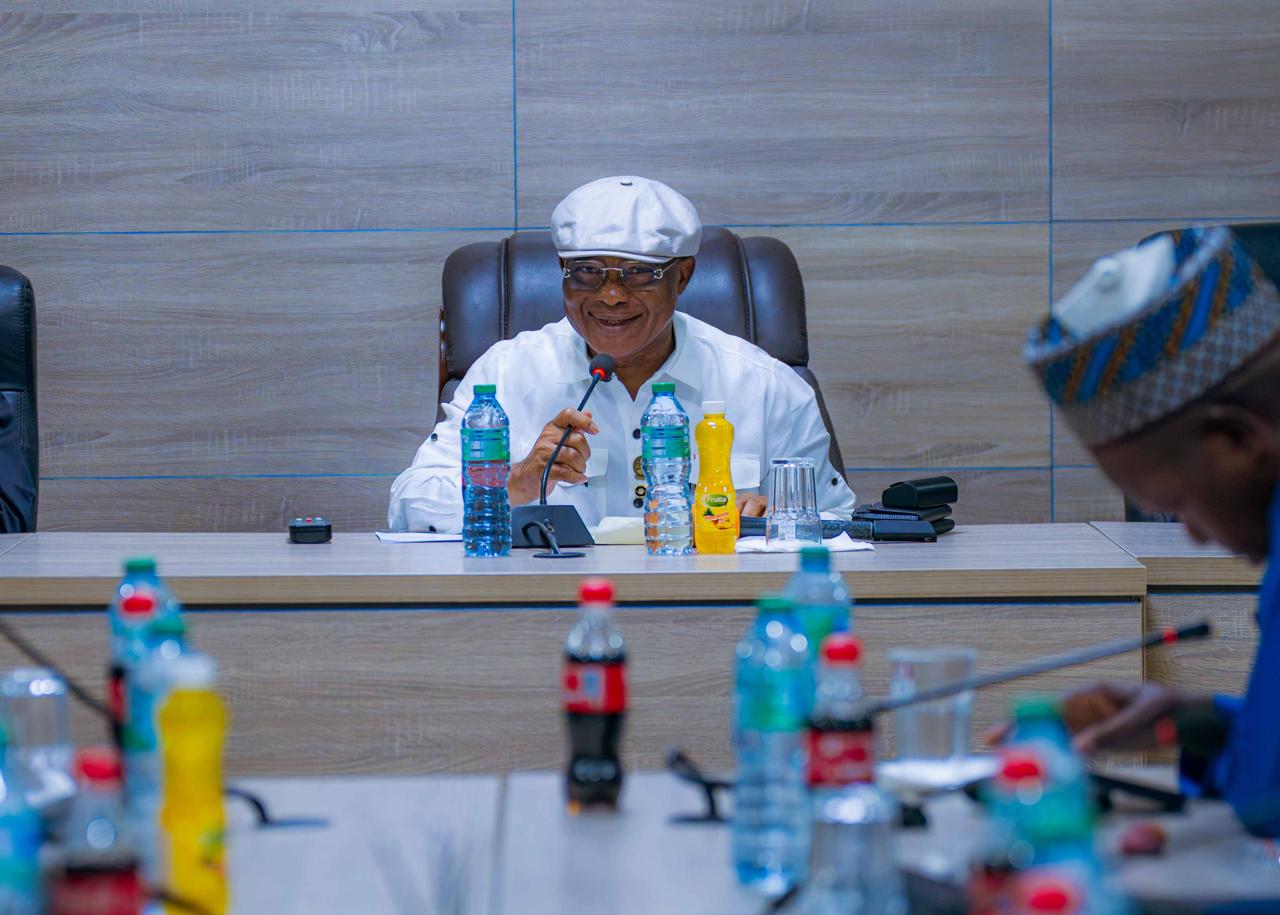
*Renewed Hope Ambassadors Step Into the Next Phase
Fresh from the successful APC 2026 National Convention, the Renewed Hope Ambassadors National, Zonal, and State leadership gathered in Abuja over the weekend, for its fourth strategic meeting, setting the tone for nationwide grassroots activation ahead of 2027.
Chaired by Governor Hope Uzodinma (Imo State) the Director General and National Coordinator of the Renewed Hope Ambassadors, alongside Deputy Director-General, Governor Uba Sani of Kaduna State, and Governor Inuwa Yahaya of Gombe State as Secretary, the session reinforced one clear direction: One Party. One Message. One Mobilization whilst also laying out a strategic roadmap for the activation of the network across all communities in Nigeria.
Backed by the strength of 31 APC-led states, the Renewed Hope Agenda is taking Bola Ahmed Tinubu’s message of progress and reform to every corner of Nigeria.
From bold economic restructuring to initiatives like NELFUND, the increase in the national minimum wage from ₦30,000 to ₦70,000, and strategic investments in critical sectors, including PNiCGI, the mission remains clear: helping Nigerians understand both the purpose and the progress of the Renewed Hope vision.
This is coordination at scale. This is grassroots engagement with purpose. This is the next phase of Renewed Hope with One Party, One Message, and One Mobilisation framework
#RenewedHopeAmbassadors #APC #WeAreAPC


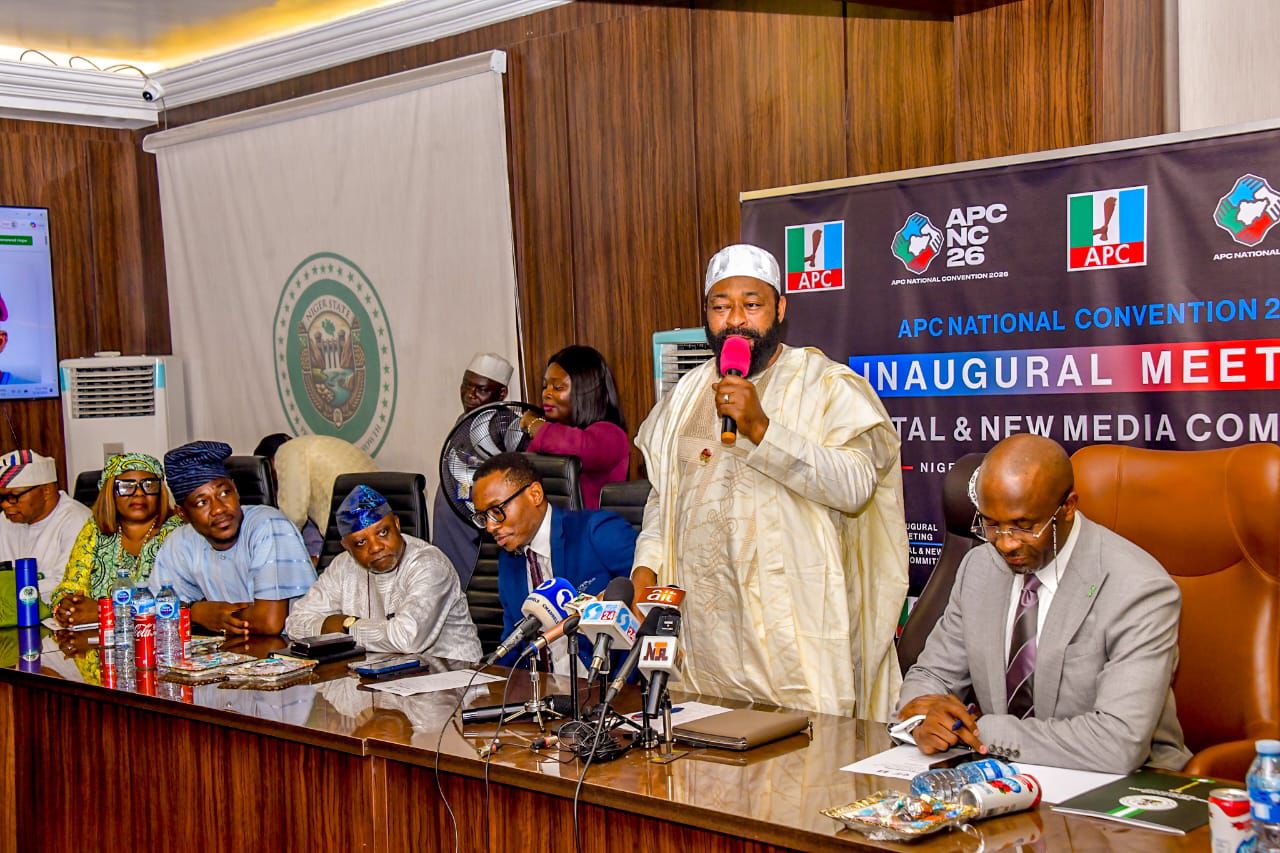
Governor Bago Inaugurates APC Digital Media Sub-Committee Ahead of National Convention.
Governor Umaru Bago has inaugurated the Digital Media Sub-Committee for the forthcoming National Convention of the All Progressives Congress (APC), scheduled to hold on March 27 and 28, 2026 in Abuja.
Chairing the sub-committee, Governor Bago tasked members with the responsibility of effectively communicating the party’s manifesto to the public.
He emphasized the need to leverage social media platforms to highlight the achievements and ongoing efforts of President Bola Ahmed Tinubu, noting that communication gaps have posed challenges that must now be decisively addressed.
The Co-Chair of the sub-committee, Hon. Benjamin Kalu, Deputy Speaker of the House of Representatives, echoed the Governor’s position, urging members to project the activities of both the party and the government to a broader audience.
He called for a deliberate and coordinated effort to showcase the party’s achievements and policy direction, stressing the importance of shaping a compelling and consistent narrative across all digital platforms.
Delivering a presentation to the committee, Otega Ogra, SSA to the President on New Media, who serves as Secretary of the sub-committee, outlined strategic focus areas to guide the team’s operations.
His presentation highlighted communication priorities and actionable steps to achieve the committee’s mandate and strengthen the party’s digital engagement.


-

 society6 months ago
Religion: Africa’s Oldest Weapon of Enslavement and the Forgotten Truth
-

 news4 months ago
WHO REALLY OWNS MONIEPOINT? The $290 Million Deal That Sold Nigeria’s Top Fintech to Foreign Interests
-

 society6 months ago
“You Are Never Without Help” – Pastor Gebhardt Berndt Inspires Hope Through Empower Church (Video)
-

 celebrity radar - gossips2 months ago
Dr. Chris Okafor Returns with Power and Fire of the Spirit -Mounts Grace Nation Altar with Fresh Anointing and Restoration Grace on February 1, 2026