
Business
POWERFUL ADELEKE’S FAMILY VS INFLUENCIAL MOMODU’S FAMILY : HOW DELE MOMODU DISGRACED DAVIDO’S FAMILY + HOW DAVIDO AND HIS BROTHERS DISGRACED DELE MOMODU


Nigeria’s superstar, Davido has gotten himself into a fresh trouble and a very serious one even as he has tried to stay scandal free over the years. The most painful part is that the reason for this trouble has throughout the year brought him real joy ; His baby.
Ever since he had the Cute baby girl, he has never ceased to make the whole world know how much he loves her. He even got her a customised ‘OBO’ chain which costs a lot. He has also been sharing pics of him baby sitting her despite his busy schedule, He created time for her and has been a caring Daddy to the little baby. He had the baby with Baby Mama, Sophia Momodu, niece to the publisher of Oviation magazine, Dele Momodu.
However, things has finally gone wrong in the camp of the Momodus and Adeleke as Sophia, The baby Mama accused Davido of human trafficking because it was gathered that Davido’s Sister, Coco Adeleke has ‘claimed’ ownership of the Baby and has restricted the original mother from seeing her.
This has caused a lot of stir in the family as non of the sides is willing to bend for another. It is a battle of big fishes and it might last long even though Dele Momodu and Davido’s father, Deji Adeleke are both big names in the country.
Furthermore, apart from the battle between the grown up, the baby mama, Sophia and father, Davido have been exchanging words on the social media.
Sophia posted this on her Twitter account:’I want to state it clear, that David @iam_David is the most useless man any woman out there can meet. I curse the day I met you kid.’
And here is some of his replies ‘’She (Sophia) never would be my wife and she was never qualified for that. Her background is very dissimilar from mine, and she has very paltry education and equally diminished physical attributes.’’
All this happened because Dele Momodu used his contact and influence to stop Davido’s family from flying to Dubai with the little girl for medical check up.
This is what Dele momodu has to say about the matter:
In September 2015, I got a call from Dr Adedeji Adeleke, a long time family friend, telling me his son had fathered a baby girl with my cousin, Sophia Momodu. I rejoiced with him as any reasonable soul would do. He apologised that he had not called all along because he wasn’t sure if Sophie’s baby was going to turn out a fake one like that of two others who had turned up at his doorstep. But mercifully, according to Dr Adeleke, Sophie’s baby passed the DNA Test by over 98 percent and he was elated. I congratulated him again as a proud grandfather. He said he would like to meet me with Sophie since Sophie’s dad, Uncle Jibola Momodu, passed on years ago and Sophie mentioned me as her cousin.
I had known about Sophie’s baby through her first cousin Ruth Abraham and had called to congratulate her. I was happy when she sent me pictures of the baby and other romantic pictures with David Adeleke, aka Davido.
But I never contacted David’s dad deliberately so as not to create the impression of begging for marriage. Where we come from, it is the man who approaches the lady’s family to plead to be allowed to marry into the family.
Prior to this phone call from Dr Adeleke, Sophie had narrated to me how on the 11th July, 2015, she was tricked to Davido’s sister, Coco Adeleke’s house with her baby, Imade Aurora Adeleke. After getting to the house on Baderinwa Alabi Street, Lekki Phase I, Lagos, her baby was forcefully taken from her and she was thrown out of the premises with the threat that she would be decisively dealt with if she ever bothered to return there. There were armed policemen in the premises and to avoid what could have been a messy encounter, instinct prevailed on her to make her leave her breast suckling baby behind, with so much pain in her heart.
By daybreak on the next day, Sophie was again at Coco Adeleke’s house to take her baby, but she was prevented by armed policemen from gaining access into the house. She was again threatened and warned never to return for the child.
Despite the pain and trauma my cousin was made to undergo, I restrained myself from getting directly involved in the matter and appealed to her to stay calm and take it easy with the Adelekes.
But after the phone call from Dr Adeleke, precisely on September 10, 2015, I picked up Sophie and her mum and drove to Dr Adeleke’s home in Lekki, Lagos. All through this time, I had waited patiently to meet Dr Adeleke with questions probing for answers.
Dr Adeleke invited two of his close friends to the meeting namely His Majesty OBA ADEDOKUN ABOLARIN and Mr Wale Adeeyo. We went into lengthy discussions. His daughter Coco had brought in the little baby and both attended the meeting.
Dr Adeleke explained why it took some time to call me and I said I understood.
Dr Adeleke said the baby was discovered to have traces of marijuana in her during medical test and said he believed Sophie and David were smokers and he needed to protect the child from two irresponsible parents, as he described them. He told the gathering that the baby would be under temporary custody and observation. He directed that Sophie would come to his house every Sunday to see her baby. Our family agreed. He promised to pay Sophie a monthly upkeep. We thanked him for his kindness. He promised to buy her a car. We were grateful for his generosity. We had dinner with him and left. David was not present.
Sophie said she got the monthly upkeep but never got the car and that she prefers to have her baby back and the Adelekes can keep their money.
I called Dr Adeleke and he said I should allay her fears. I pleaded again for patience. I was shocked when Sophie called me desperately and said her daughter was being taken to Dubai by Coco. I immediately called Coco and she said she was taking the baby for intensive medicals and I wondered how she would pass through the airport without the consent of Sophie but she actually did and even sent me pictures from Dubai. I played it cool and encouraged Sophie to calm down.
Sophie became withdrawn and extremely saddened. The situation went from bad to worse. She and David became aggressive enemies. At a point, David sent messages to Sophie and using the ‘f’ word against me. His father was shocked and called him to apologise which he did and I accepted and even told him how much I love him.
The worst came when my wife came from London and went with Sophie to check on the baby at Coco’s house and they were literally walked out and told they were not welcome in her house. My wife called and I called Dr Adeleke who said they should go to his house and wait for him.
Their meeting did not go well because my wife asked when the baby would be returned to her mum and Dr Adeleke went into the same old story of marijuana abuse and Sophie said she was ready for a test which Dr Adeleke wasn’t interested in. Dr Adeleke explained why the car had not been bought and my wife told him the baby was the issue and not the car. Dr Adeleke didn’t like the sound of this but it was reaching a point that some truth needed to be told that a baby cannot be bought with money.
I flew to Nigeria on December 28, 2015 after Sophie told me the Adelekes were travelling to Dubai with her baby without her consent again. As soon as I landed I called Uncle Wale Adeeyo, a close confidant of Dr Adeleke and expressed our displeasure at the way Sophie was being treated and he promised to speak to Dr Adeleke. When he came back to me he didn’t sound too positive. We spoke several times and nothing tangible came out of his supposed intervention.
I called Oba Dokun Abolarin but he was busy at a wedding in Ibadan. I then called Uncle Wale again and told him Sophie has plans to stop the trip on the knowledge that David has collected an American passport for the baby and the rumour that the baby was being abducted to America. I pleaded that we should avoid a confrontation.
I headed to the airport to alert the authorities including Immigration and Emirates. As predicted, the Adelekes arrived the airport with the baby where Immigration had laid in wait for them. Coco came forward and was asked who the mother of the baby was and she claimed ownership and her passport and that of the baby were taken away by Immigration. Her dad was alerted and he came to the office of the Comptroller with others to try and rescue the passports but the Immigration stood their grounds. I saw him making frantic calls but he gave up after the flight departed. He repeated the same boast that no one could ever take the baby from him and I told him to stop talking like God.
No one likes a fight but we have been treated shabbily and had to stop the charade. We could not be intimidated and everyone at the airport expressed shock and horror at such a brazen attempt to export a human being only seven months old without the mother. We thanked the officers who rescued us from a powerful family. We are always for peace, justice and equity. No one threatened the Adelekes with any expose unless they were using reverse psychology. Personally, I’m not a junk writer and would never descend so low to abuse those permanently connected to us through an innocent baby. We love the baby like they do and such an innocent child deserves to be protected by both families.
However, One of the Adeleke’s shared this pics, to mock Dele Momodu:





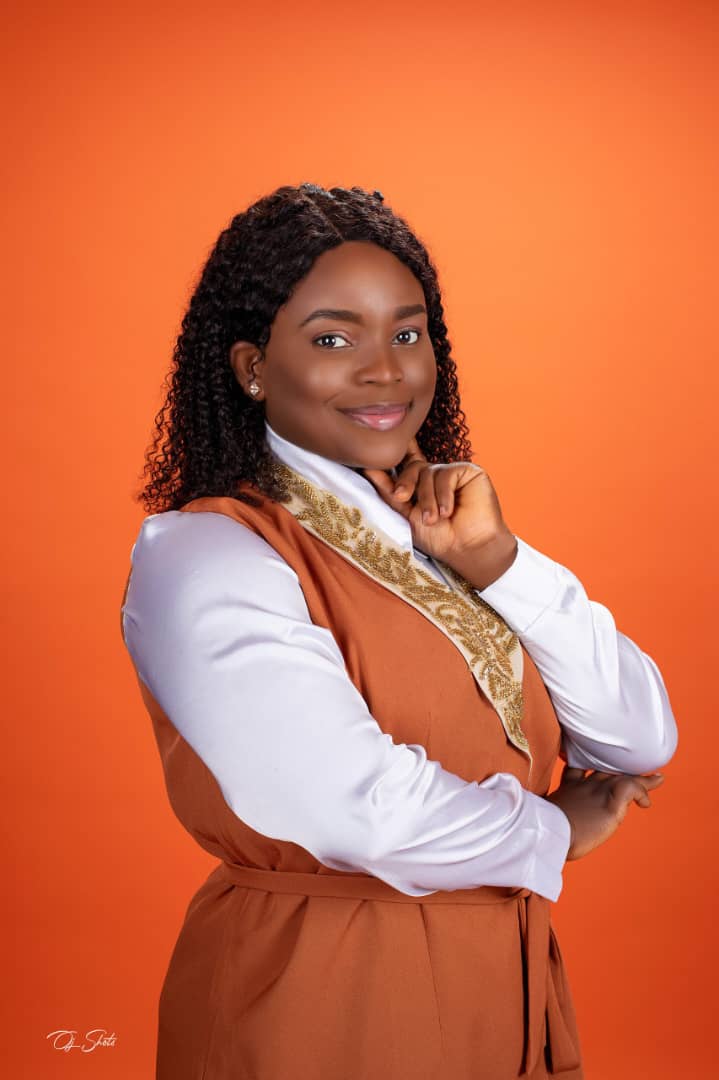
Precision and Heritage: How Fifi Stitches Is Rewriting African Fashion Narratives
A Nigerian-born designer is gradually carving out a cross-continental footprint in contemporary fashion, blending African textile heritage with British technical discipline.
Esther Fiyinfoluwa Adeosun, Founder and Creative Director of Fifi Stitches, is gaining recognition for structured womenswear and bridal couture that reinterprets traditional fabrics through architectural tailoring and precision construction.
Born in Ibadan, Oyo State, Adeosun’s fashion journey began at home, seated beside her mother’s sewing machine. What started as childhood curiosity, sometimes jamming the machine just to understand its mechanics—evolved into a disciplined design practice now operating between Nigeria and the United Kingdom.
During an interview with journalists the fifi Stitches once mentioned “I was fascinated by how flat fabric could transform into something structured and meaningful”.
In her Story , early designs made for her family, though imperfectly finished, were worn with pride—an encouragement that laid the foundation for her professional confidence.
Today, Fifi Stitches is recognised for sculpted bodices, controlled tailoring, corsetry construction, and the contemporary reinterpretation of Ankara, Aso Oke, and Adire textiles.
The brand challenges the long-held perception that African fabrics belong solely in ceremonial contexts, instead positioning them within global luxury and modern design spaces.
Adeosun’s training reflects this dual perspective. She studied Fashion Design and Entrepreneurship at the Institute for Entrepreneurship and Development Studies, Obafemi Awolowo University, and earned a Diploma in Fashion Design through Alison Online.
In the UK, she undertook industry-focused technical training with Fashion-Enter Ltd and gained fashion business exposure through Fashion Capital UK.
Her technical expertise spans pattern drafting, draping, garment technology, structured tailoring, corsetry, and bespoke fittings—skills she describes as central to credibility in fashion. “Precision builds trust,” she says. “A designer must understand construction as deeply as creativity.”
Fifi Stitches has showcased collections at the Suffolk Fashion Show, Liverpool Fashion Show – FB Fashion Ball, Red Carpet Fashion Event in London, and through editorial features in London Runway Magazine.
The brand has also received coverage in The Guardian Nigeria and Vanguard Allure, expanding its visibility across markets.
Beyond couture, Adeosun integrates community impact into her practice.
She has facilitated garment construction workshops, draping sessions, and introductory training programmes for women and emerging creatives, promoting fashion as both artistic expression and vocational empowerment.
Fifi Stcithes Boss operates between Nigeria and the UK, in order to continue to shape her brand identity.
According to her “Nigeria provides cultural richness and expressive textile traditions, while the UK offers structured production systems, sustainability conversations, and institutional frameworks”.
Looking ahead, Adeosun said she plan to establish a fully structured fashion house spanning Africa and the UK, develop scalable production partnerships, launch capsule collections, and expand independent editorial visibility.
Her broader ambition is clear: to position African textile craftsmanship within global contemporary design conversations—through structure, discipline, and technical excellence.

GTCO Launches “Take on Squad” Hackathon 3.0, Opens Call for Applications
Guaranty Trust Holding Company Plc (“GTCO” or the “Group”) has announced the launch of “Take on Squad” Hackathon 3.0, reaffirming its commitment to fostering innovation, empowering talent, and supporting the development of technology-driven solutions that address real-world challenges across Africa.
Now in its third edition, the Hackathon brings together developers, designers and entrepreneurs across Nigeria in a collaborative environment to build practical solutions across key sectors including financial services, healthcare, commerce and digital inclusion. Under the theme “Smart Systems: The Intelligent Economy,” participants are challenged to design and build intelligent, data-driven solutions that transform how communities engage with money.
Applications are now open, and interested teams can find full guidelines and registration details on the official portal at https://squadco.com/hackathon.
Speaking on the initiative, Eduophon Japhet, Managing Director of HabariPay, stated: “Today’s dynamic, digitally driven world demands continuous innovation, which is shaping how economies grow, how businesses scale, and how societies evolve. Through “Take on Squad” Hackathon, we are deliberately investing in the ideas and talent that will define the future. Our objective is not simply to encourage innovation, but to enable its translation into scalable solutions that deliver real and measurable impact. This reflects GTCO’s role as a financial services platform that connects capital, capability, and creativity to drive sustainable progress.”
The social coding event remains a cornerstone of HabariPay’s mission to foster creativity and problem-solving among emerging tech talents. Competing teams will leverage Squad’s advanced APIs to create scalable digital tools that address everyday challenges faced by businesses and individuals.
Through initiatives such as this, GTCO continues to position itself at the intersection of finance, technology and enterprise, actively shaping the future of digital transformation in Africa.
About HabariPay
HabariPay Ltd is the fintech subsidiary of Guaranty Trust Holding Company Plc (GTCO), one of the largest financial services institutions in Africa with direct and indirect investments in a network of operating entities located in 10 countries across Africa and the United Kingdom.
Licensed by the Central Bank of Nigeria (CBN), our goal is to support SMEs, micro merchants, large corporations and other fintechs (Tech Stars) with the tools they need to thrive in an evolving digital economy and expand beyond their current market reach. HabariPay’s solutions include Squad, a full-scale digital payments toolkit to make in-person and online payments simpler, HabariPay Storefront, an e-commerce website to facilitate online purchases, Value-Added Services to help merchants access cost-effective and flexible airtime and data bundles to run their businesses, as well as a switching infrastructure that enables tech-focused businesses to optimise cost and make transactions more efficient.
HabariPay’s contributions to Accelerating Digital Acceptance in Africa have not gone unnoticed–it received Mastercard’s Innovative Mobile Payment Solution Award at TIA 2022 for its innovative payment solution, SquadPOS.
About Squad
Squad is a complete digital payments solution that is reliable, secure, and affordable, making receiving in-person and online payments simpler and convenient.
Thousands of merchants currently leverage Squad’s payment solutions for their daily business operations. Squad’s current products and service offerings include SquadPOS, Squad Payment Links, Squad Virtual Accounts, USSD, and E-Commerce Storefront.
Find out more at www.squadco.com.
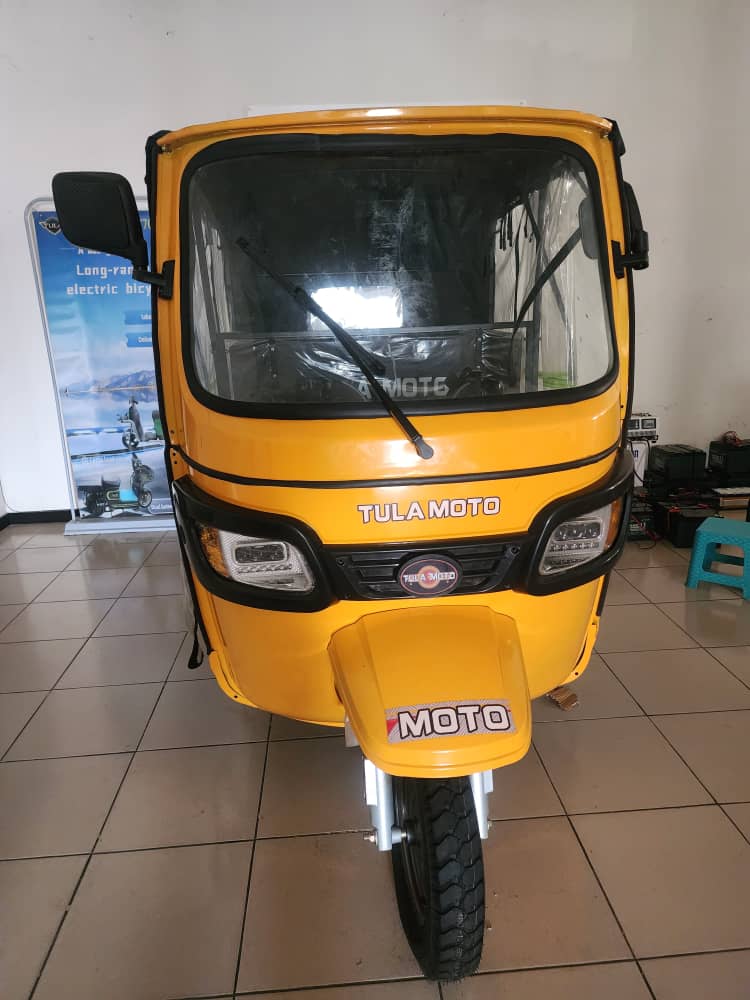
Electric 8-Seater Tula Moto Keke Enters Nigerian Market, Targets Higher Operator Earnings
LAGOS — A new electric-powered tricycle with an expanded passenger capacity has been introduced into Nigeria’s urban transport sector, offering operators a potentially more profitable and eco-friendly alternative to conventional petrol-driven “keke.”
The newly launched 8-seater electric tricycle, now available in Lagos with plans for nationwide distribution, features a dual-row seating arrangement capable of accommodating up to eight passengers per trip—significantly higher than the standard three-passenger configuration common across the country.
Promoters of the innovation say the increased capacity is designed to boost daily earnings for operators, particularly amid persistent fluctuations in fuel prices. By running entirely on electric power, the vehicle eliminates dependence on petrol, reducing operating costs and shielding drivers from fuel price volatility.
According to the distributors, the tricycle is equipped with a durable battery system capable of covering extended distances on a single charge, making it suitable for commercial operations across high-traffic routes, residential estates, campuses, and marketplaces.
“The concept is straightforward—enable drivers to earn more while spending less,” a company representative stated. “With higher passenger capacity and zero fuel requirements, operators can maximise each trip without the burden of daily fuel expenses.”
Beyond its cost-saving potential, the electric keke is also said to require less maintenance than traditional models, offering additional long-term savings. Its quieter and smoother operation is expected to enhance passenger comfort and overall commuting experience.
Industry analysts note that the introduction of electric mobility solutions reflects a growing shift toward cleaner and more sustainable transportation alternatives in Nigeria, particularly in densely populated urban centres such as Lagos.
The distributors added that the product is currently available under a limited promotional offer, with delivery options across the country.
For inquiries and purchase: 📞 08153432071
📞 08035889103
Office Address:
📍 Plot 9, Block 113, Beulah Plaza,
Lekki–Epe Expressway,
Lekki Phase 1, Lagos
As transportation costs continue to rise and environmental concerns gain prominence, innovations like the electric 8-seater keke may signal an emerging transition toward more efficient and sustainable mobility solutions nationwide.


-

 society7 months ago
Religion: Africa’s Oldest Weapon of Enslavement and the Forgotten Truth
-

 news4 months ago
WHO REALLY OWNS MONIEPOINT? The $290 Million Deal That Sold Nigeria’s Top Fintech to Foreign Interests
-

 society6 months ago
“You Are Never Without Help” – Pastor Gebhardt Berndt Inspires Hope Through Empower Church (Video)
-

 celebrity radar - gossips2 months ago
Dr. Chris Okafor Returns with Power and Fire of the Spirit -Mounts Grace Nation Altar with Fresh Anointing and Restoration Grace on February 1, 2026
You must be logged in to post a comment Login
You must log in to post a comment.