
society
Praying While Nigeria Burns: How Religious Cowardice Has Replaced National Responsibility

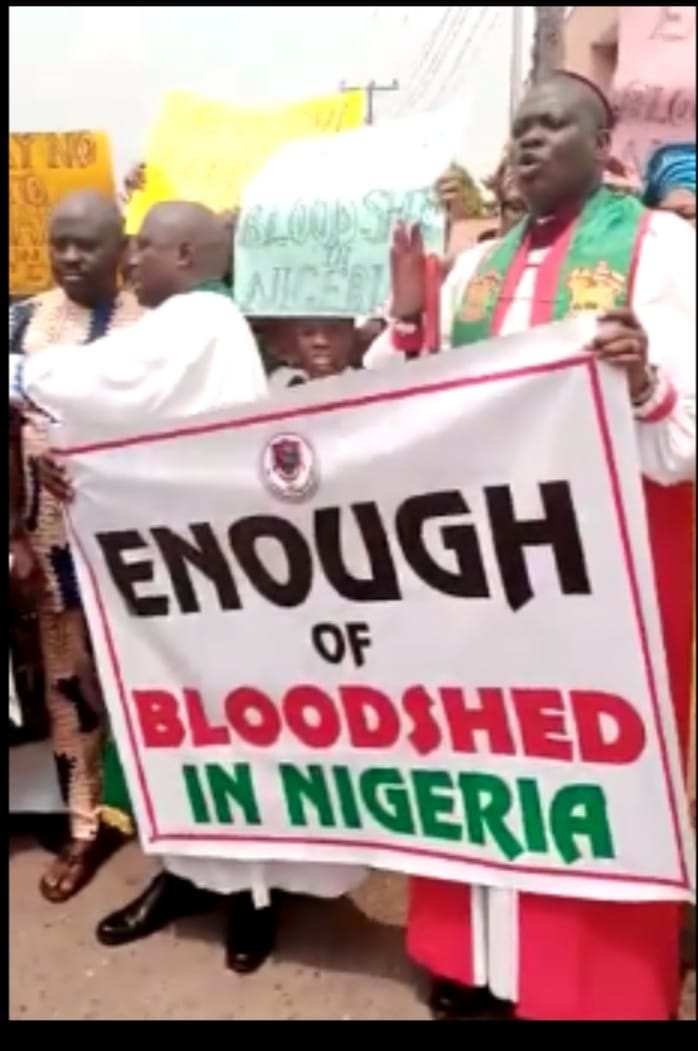
Praying While Nigeria Burns: How Religious Cowardice Has Replaced National Responsibility
By George Omagbemi Sylvester
In a country where churches and mosques line every street corner, where vigils echo louder than town hall meetings and where men of God are treated like royalty, Nigeria in 2025 is still groaning under the weight of insecurity. From banditry in the North-West, terrorism in the North-East, secessionist unrest in the South-East and rampant kidnapping across the South, Nigerians continue to live under siege. Yet, rather than confronting the root of this evil, too many of our religious leaders are asking citizens to “pray harder.”
If prayer alone could guarantee security, we would not need the police, the military, intelligence services or national security councils. We would simply replace the Ministry of Defence with a Ministry of Intercession. Unfortunately, this is not heaven, it is a country under attack and prayer is not a national security policy.
The Dangerous Illusion of Prayer as a Policy
The recent calls from Nigerian clerics urging citizens to “seek God’s intervention” against rising insecurity are not just misguided, they are dangerously irresponsible. It represents a national culture of escapism, one that tries to outsource responsibility to divine forces rather than holding government accountable or proposing concrete solutions.
As the saying goes, “God has no hands but ours.” Even the Bible itself warns against blind faith without action. James 2:17 declares: “Faith by itself, if it does not have works, is dead.” In Islam, the Hadith encourages believers to “tie your camel first, then put your trust in Allah.” So why are Nigeria’s men of God promoting helplessness?
Nigeria’s Grim Security Reality
According to the Global Terrorism Index (GTI) 2024, Nigeria remains one of the top 10 countries most impacted by terrorism, trailing only behind countries like Afghanistan and Syria. Boko Haram, ISWAP, Fulani herdsmen and bandits have killed over 80,000 Nigerians since 2011. The Armed Conflict Location & Event Data Project (ACLED) reported that over 5,000 Nigerians were killed or kidnapped between January and October 2024 alone.
President Bola Tinubu’s administration has repeatedly promised security reform, but the streets tell a different story. Communities in Zamfara, Niger and Borno continue to pay “taxes” to bandits. Schools are shut down in large swathes of the North for fear of abductions. In the South-East, military checkpoints have turned into extortion points while criminals hide under political agitation.
Yet, despite these glaring facts, instead of storming government houses with demands for justice and reform, our spiritual leaders are organizing “national days of prayer.”
Spiritual Cowardice in Robes and Collars
Many of Nigeria’s revered pastors and imams have simply chosen the path of least resistance. Rather than speak truth to power like the prophets of old like Elijah who confronted kings or Imam Ibn Taymiyyah who defied tyrants, they’ve become chaplains of the corrupt elite. Their pulpits are now platforms for praise-singing those in power, not calling them to accountability.
When was the last time you heard a popular megachurch pastor directly criticize Nigeria’s defense budget mismanagement? Or an influential imam demand police reform beyond platitudes? What we hear instead are sermons about “spiritual warfare” against “evil forces in high places” a euphemism that conveniently keeps them from naming names.
As Martin Luther King Jr. rightly said, “A time comes when silence is betrayal.” Nigeria’s religious leaders are betraying their flocks by cloaking cowardice in the garment of faith.
The Economics of Prayer-Based Leadership
Part of the reason religious leaders lean so heavily on prayer is because insecurity is good for business. The more afraid people are, the more likely they are to run to churches and mosques for solace. It creates a dependency loop, terror feeds fear, fear drives faith and faith fills offering baskets.
Nigeria’s religious industry is worth billions. Churches and mosques build estates, own private jets and have media empires. In many parts of Nigeria, clerics wield more power than governors. But what do they use that influence for? Is it to demand security architecture reform? No. It is to tell you that you were kidnapped because your “spiritual hedge was down.”
There is a difference between spiritual leadership and religious profiteering. The latter thrives in chaos.
What Real Leaders Do
History provides us with examples of faith leaders who were not afraid to fight for justice. Archbishop Desmond Tutu in apartheid South Africa used the church as a base for resistance, not resignation. Malcolm X spoke against oppression from the mosque, not merely prayed it away. In Nigeria, the likes of Archbishop Anthony Olubunmi Okogie and Sheikh Gumi (in his earlier years) stood for justice not silence.
The role of the clergy should be prophetic not passive. Nigeria does not need intercessors who romanticize passivity; we need warrior-priests who will take bold stands and tell the government, “Your failure is unholy.”
Security Is a Civic Duty, Not a Spiritual Event
The Nigerian government budgets billions for defense. In the 2024 national budget, over N3.25 trillion (about $2 billion) was allocated to security, yet insecurity remains a constant. The issue is not prayer; it is poor governance, corruption, lack of intelligence coordination and under-equipped forces.
Prayer is a private discipline; security is a public responsibility. No amount of fasting can stop a bandit with an AK-47. What stops him is law enforcement, intelligence and effective prosecution. Those who keep shifting the burden to God are enabling the failure of man.
As Thomas Jefferson once said, “God helps those who help themselves.”
What Must Change?
Religious Accountability: Men of God must be held to account for what they preach. Those who perpetuate fear instead of faith, and compliance instead of courage, should be challenged publicly.
Civic Education: Citizens must be taught that while prayer is valuable for personal peace, it is no substitute for civic engagement. Nigerians must demand results from security agencies, lawmakers and local leaders.
Security Reform: The Nigerian government must invest in not just military hardware but in intelligence, rapid response units, community policing and forensic investigation capabilities.
Courageous Clergy: Nigeria needs a new generation of fearless clerics, imams and pastors who will occupy not just prayer grounds, but protest grounds.
Demystify Religious Authority: Nigerians must stop giving religious leaders uncritical reverence. Ask questions. Demand clarity. Challenge false narratives.
Final note
Nigeria’s insecurity crisis is not just the failure of government; it is the silence of the pulpit. While prayer is noble, when used to mask cowardice, it becomes spiritual malpractice. The nation is bleeding. Children are being kidnapped. Farmers are being slaughtered. Soldiers are dying. And instead of resistance, we get prayer requests?
If Jesus overturned tables in the temple to cleanse corruption, what excuse do today’s religious leaders have for shaking hands with tyrants and thieves? If Prophet Muhammad led his followers to battle for justice, why are Nigerian imams calling for passivity?
A praying nation is a powerful thing. But a nation that prays without action is doomed to die with folded hands.





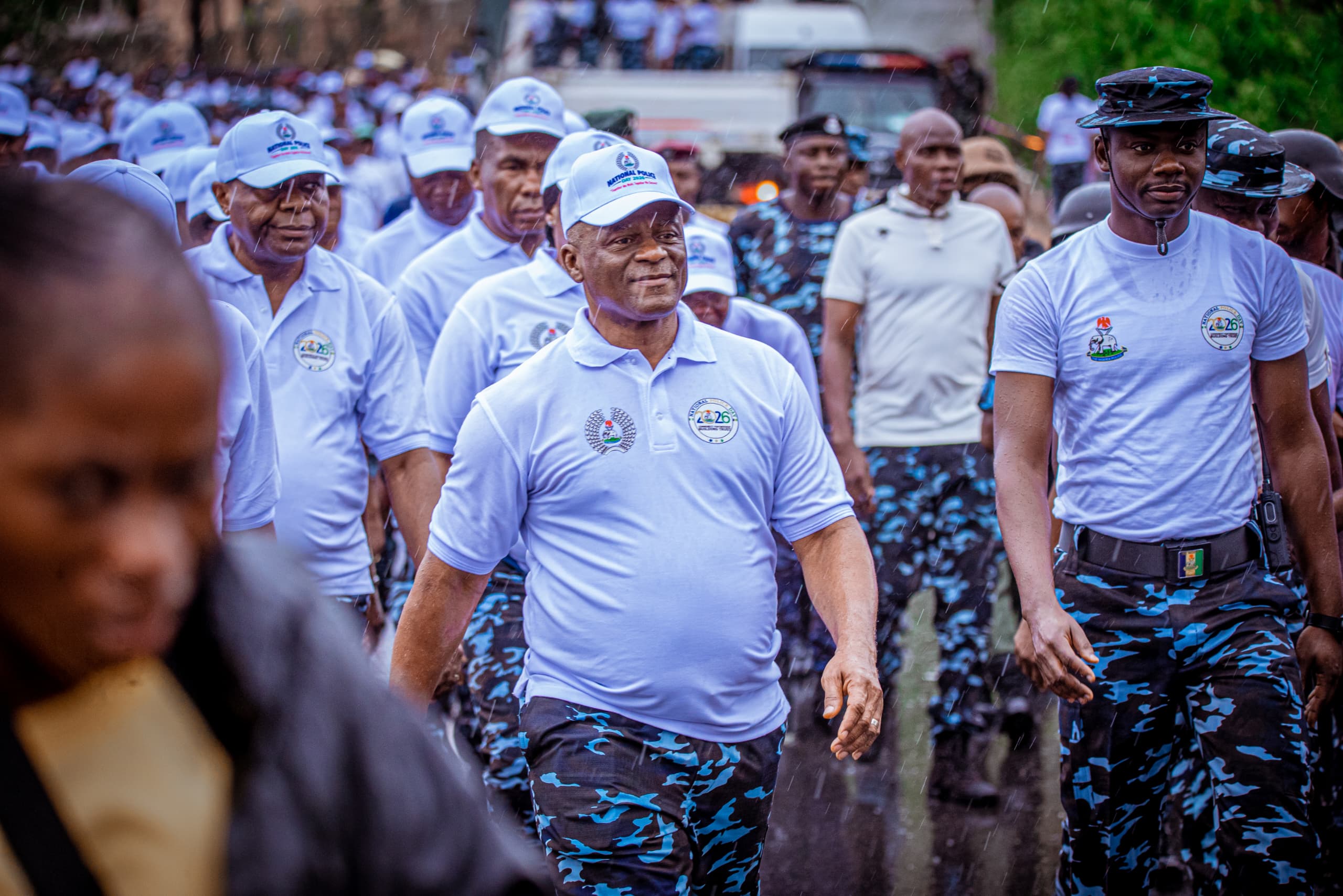
Police Day 2026: IGP Disu Leads Nationwide Walkathon To Strengthen Community Trust
The Inspector-General of Police, Olatunji Disu, on Tuesday led the management team, alongside officers and personnel of the Nigeria Police Force, in a nationwide walkathon to commemorate the 2026 National Police Day.
The event, held across state capitals and the Federal Capital Territory, formed part of activities marking Day Two of the annual celebration, themed “Community Partnership: Building Trust.”
The symbolic exercise, which drew participation from both police personnel and members of the public, was aimed at showcasing unity, discipline, and a renewed commitment to community policing and public safety.
According to the Force leadership, the walkathon underscores the Nigeria Police Force’s resolve to strengthen public trust, deepen engagement with citizens, and enhance collaboration in tackling security challenges across the country.
Participants described the initiative as a practical step toward bridging the gap between law enforcement and the communities they serve, while also promoting physical fitness and mental well-being among officers and civilians alike.
With the theme reflecting a shared responsibility for safety, the Police reiterated that sustainable security can only be achieved through active partnership with the public.
The event concluded with a renewed call for collective action under the banner: “Together We Walk, Together We Secure,” emphasizing unity of purpose in building a safer and more secure society for all Nigerians.


society
Dr. Chris Okafor invokes divine retribution upon individuals blackmailing the Grace Nation church
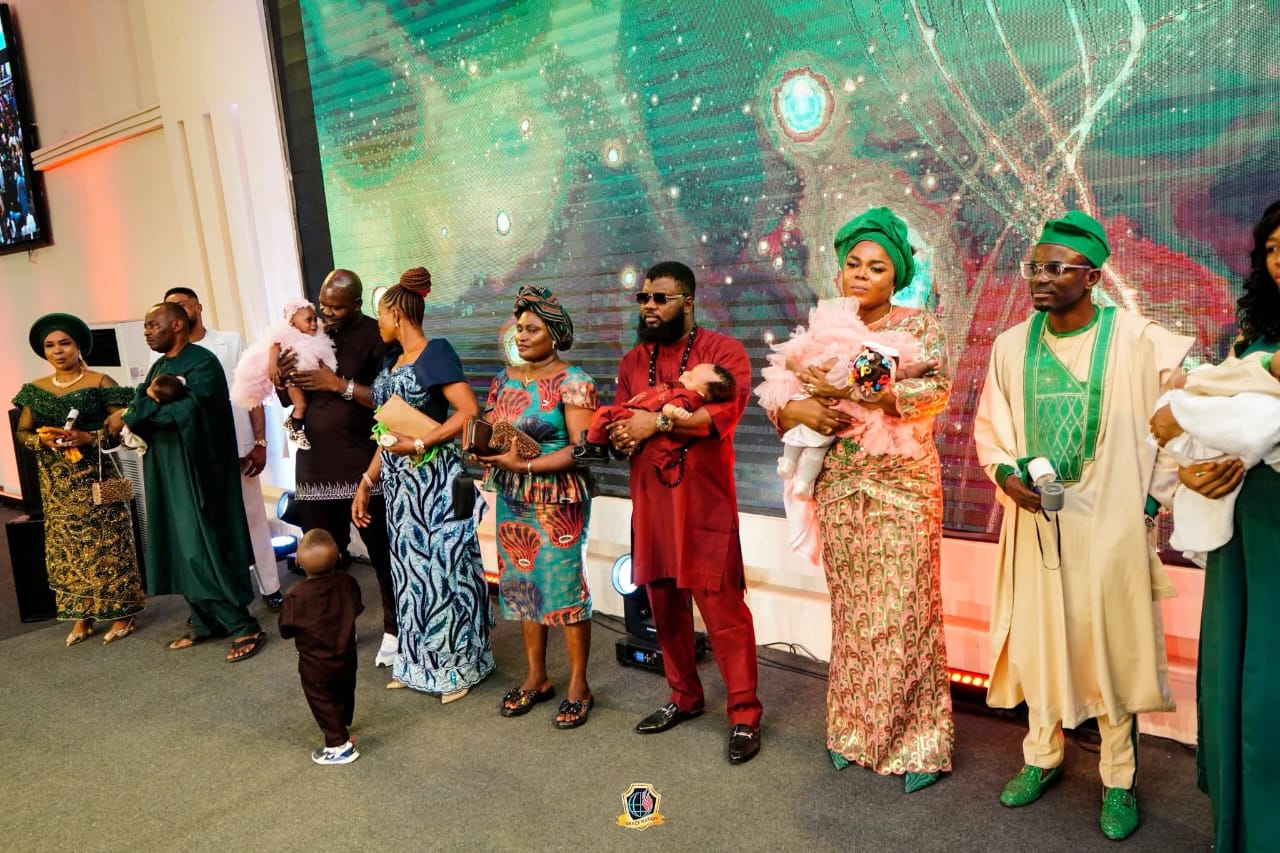
Dr. Chris Okafor invokes divine retribution upon individuals blackmailing the Grace Nation church
… Affirming God’s omnipotence to unveil malicious schemes.
To be frank, the ability of Doris Ogala and her associates to withstand the arduous challenges set by Senior Pastor Dr. Chris Okafor of Grace Nation Global at the culmination of the Harvest of Babies 2026 conference, the church’s flagship event, continues to elude me.
It’s advisable not to offend a powerful spiritual leader like Prophet Chris Okafor to avoid potential consequences, as seen in the situation with Doris Ogala, who was rebuked by the prophet; can she rectify the situation through confession?
Insiders close to the man of God claim that despite relentless online bullying and blackmailing, the Generational Prophet remains resolute, stating that God’s power has been evident throughout the commission’s existence. The reason for this wonderful statement is found in the scriptures, “Upon this rock I shall build my Church, and the gates of hell shall not prevail.” The more falsehoods are spread about the church and its leader, the more God elevates the church and propels him to greater heights, he asserted. He emphasized that blessings and fruitfulness are antidotes to curses, noting that God continues to bestow blessings upon the church, including miracles and the gift of children, which is one reason for the grand finale of the annual family liberation program, The Harvest of Babies.
However, the man of God issued a curse on each person speaking ill of the church, blackmailing, and uttering all sorts of falsehoods against the church, declaring that if they refused to repent within a few days, the earth would swallow them and their family members, stating that they would be of no use to themselves, their families, or society at large.
The spiritual leader cautions his followers to beware of such individuals including Doris Ogala who may taint their faith, and urges them to treat these persons as emissaries of the devil, avoiding them altogether.
Recall that the 2026 harvest of babies concluded with a remarkable birth of a miracle baby boy to a woman on the third day of the conference, accompanied by the dedication of several other miracle babies, all to the glory of God.
Christopher Sunday David writes from
Austria
“Together We Walk, Together We Secure”: Police Launch 2026 Walkathon In Abuja
The Nigeria Police Force has announced plans to host a walkathon in commemoration of the 2026 National Police Day, aimed at promoting unity, peace, and stronger community partnership.
The event is scheduled to take place on Tuesday, March 31, 2026, with participants expected to converge at the Force Headquarters Abuja by 6:00 a.m., where the walk will commence.
According to the organisers, the walkathon is designed to bring together members of the public, stakeholders, and security personnel in a show of solidarity and shared commitment to national security.
With the theme, “Together we walk, together we secure,” the initiative underscores the importance of collaboration between the police and citizens in maintaining peace and safety across the country.
Members of the public have been encouraged to participate in the exercise, which forms part of activities lined up to mark this year’s National Police Day celebration.
It is believed that the walkathon would not only foster closer ties between the police and the communities but also serve as a platform to promote awareness on collective responsibility in ensuring a safer society.


-

 society6 months ago
Religion: Africa’s Oldest Weapon of Enslavement and the Forgotten Truth
-

 news4 months ago
WHO REALLY OWNS MONIEPOINT? The $290 Million Deal That Sold Nigeria’s Top Fintech to Foreign Interests
-

 society6 months ago
“You Are Never Without Help” – Pastor Gebhardt Berndt Inspires Hope Through Empower Church (Video)
-

 celebrity radar - gossips2 months ago
Dr. Chris Okafor Returns with Power and Fire of the Spirit -Mounts Grace Nation Altar with Fresh Anointing and Restoration Grace on February 1, 2026