
society
REJOINDER: THE ARROGANCE OF POWER AND THE DIGNITY OF THE UNIFORM: A RESPONSE TO ANNGU ORNGU

REJOINDER: THE ARROGANCE OF POWER AND THE DIGNITY OF THE UNIFORM: A RESPONSE TO ANNGU ORNGU
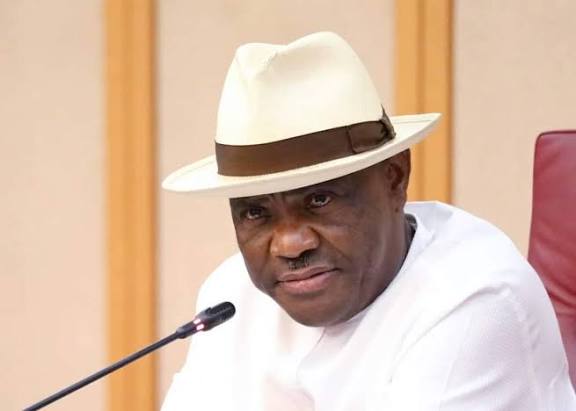
The treatise by Mr. Anngu Orngu, while cloaked in the elegant language of constitutionalism, is a dangerous apologia for executive impunity and a gross misrepresentation of the relationship between civil authority and military professionalism. By attempting to justify Minister Nyesom Wike’s public humiliation of a serving military officer, Orngu not only misses the point but actively undermines the very constitutional order he claims to defend. It is a profound irony that a man who presents himself as a defender of the law demonstrates such a flawed understanding of its spirit and letter.
Let us be clear: the issue is not the Minister’s constitutional authority to supervise projects within his portfolio. The issue is the manner in which he chose to exercise that authority—a manner that was abusive, unconstitutional, and corrosive to national discipline.
1. The Fatal Flaw: Confusing Authority with Absolutism
Mr. Orngu, whom one can only assume is a pocket constitutional lawyer serving a narrow agenda, correctly cites Sections 5 and 148 of the Constitution. However, he commits a grave error by interpreting this as a grant of absolute, unaccountable power. Nowhere in the Constitution is a Minister granted the power to:
· Use insulting and abusive language against any citizen, let alone a commissioned officer of the Armed Forces.
· Threaten the use of violence against a state official.
· Publicly humiliate and demoralise an officer who was, by all accounts, performing his lawful duty.
The Minister’s power is derived from the Constitution and must be exercised within its bounds and in accordance with public service rules and decorum. Orngu’s argument, taken to its logical conclusion, would mean that a Minister could engage in any manner of misconduct, and it must be tolerated because he acts as an “extension of the President.” This is a recipe for tyranny, not democratic governance.
2. The Commissioned Officer: A Bearer of Sovereign Authority
Mr. Orngu’s most profound ignorance is exposed in his failure to understand the constitutional and legal status of a Presidential Commissioned Officer.
A commissioned officer does not receive his commission from a Minister. He receives it from the President of the Federal Republic of Nigeria, symbolised by the handover of the Nigerian Flag. His oaths of Allegiance and Office are sworn to the sovereignty and territorial integrity of Nigeria, not to the ego of a Minister.
The officer at the scene was not a personal employee of Mr. Wike; he was a representative of the state’s coercive authority, performing a duty as assigned by the military chain of command. To reduce this sacred sovereign trust to a mere subservience to ministerial whim is an insult to the institution of the Nigerian Armed Forces. The officer’s duty is to obey lawful orders, not to endure public degradation. Even I, Pastor Musa Mai-Anguwa, a man of the cloth, understand this fundamental distinction between lawful authority and sheer impunity—a distinction that seems to elude a purported legal mind like Mr. Orngu.
3. The Established Protocol: The Path Mr. Wike Chose to Ignore
A true respect for constitutional order involves respecting the established institutions and channels of authority. If Minister Wike had a grievance with the officer’s conduct, the constitutional and professional path was clear and unambiguous:
1. He could have noted the officer’s name and unit.
2. He could have immediately contacted the Chief of Defence Staff or the relevant Service Chief.
3. He could have lodged a formal complaint through the Ministry of Defence to the military high command.
The military, governed by the stringent Armed Forces Act, has its own robust disciplinary procedures to address insubordination or misconduct. By bypassing this entire structure in favour of a public spectacle, Minister Wike did not assert constitutional authority; he displayed sheer arrogance and a blatant disregard for institutional protocols. He chose to be a bully instead of a leader.
4. The Real Threat to National Security
Orngu accuses Lt. Gen. Buratai of being “dangerously uninformed,” but the true danger lies in his own justification of impunity. The real threat to national security is not a junior officer standing his ground, but a Minister who:
· Demoralizes the armed forces by publicly stripping an officer of his dignity.
· Creates a climate of fear where officers may hesitate in their duties, uncertain whether professional decisions will lead to public shaming by a political appointee.
· Erodes the morale and esprit de corps that are the bedrock of an effective military.
An army that is taught to silently endure abuse from civil authorities is not a professional army; it is a servile one, and a servile army is a danger to democracy itself.
Conclusion: Defending the Constitution Means Defending Decorum
Mr. Orngu’s essay is a classic case of using the law as a shield for misconduct. He defends the source of power while ignoring the abuse of that power. The Constitution was designed to prevent the concentration and abuse of power, not to facilitate it.
It is a sad commentary that a Pastor like myself, whose duty is to preach righteousness and justice, must school a self-styled constitutionalist on the basic principles of decency and lawful conduct embedded in our national charter. Minister Wike’s actions were a disgraceful display of arrogance that would be unacceptable in any mature democracy. To support it, as Mr. Orngu does, is to endorse a culture of impunity that weakens our institutions, demoralizes our armed forces, and ultimately, undermines the Nigerian state.
The officer in question deserves commendation for his restraint, not condemnation. And those who, like Orngu, preach a blind obedience to abusive power should be reminded that the Constitution is a charter for decent governance, not a license for tyranny.
Signed,
Pastor Musa Mai-Anguwa
Abuja, Nigeria.




society
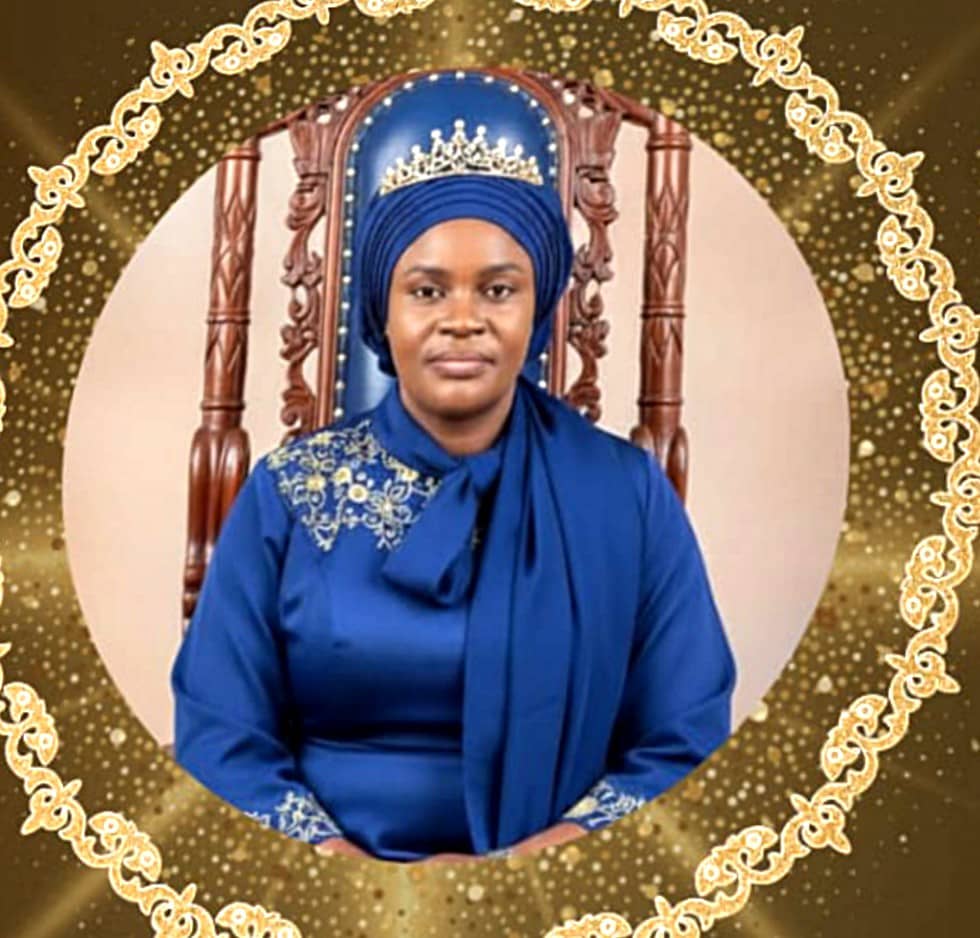
Queen Amb Dr. Nwamaka Cordelia Anyatonwu Appointed Minister of Humanitarian, Culture, and Kingdom Affairs, United Kingdom of Atlantis
*Queen Amb Dr. Nwamaka Cordelia Anyatonwu Appointed Minister of Humanitarian, Culture, and Kingdom Affairs, United Kingdom of Atlantis
Her Majesty Queen Amb Dr. Nwamaka Cordelia Anyatonwu, Queen of the Aches Empire under the jurisdiction of the United Kingdom of Atlantis (UKA), has been appointed as the Minister of Humanitarian, Culture, and Kingdom Affairs, effective immediately.
This appointment comes as the UKA takes decisive steps to strengthen its humanitarian efforts and protect its citizens from unauthorized activities. In light of recent developments, the UKA has issued an official public disclaimer cautioning citizens, followers, and the general public about the activities of individuals promoting and operating a coin or platform not officially recognized by the Atlantian Gold Coin (ATC). This follows the hijacking of the 5 billion humanitarian project, a move that has been met with concern and condemnation from the international community.
As the newly appointed Minister, Queen Amb Dr. Anyatonwu has announced that all matters pertaining to the 5 billion humanitarian project in UKA should be directed to her office. This includes the newly captured NGOs, which are now required to report to the Office of Humanitarian Affairs, ensuring transparency and accountability in the management of humanitarian resources.
“We are committed to transparency and accountability in our humanitarian efforts,” said Queen Amb Dr. Anyatonwu. “We urge all stakeholders to work with us to ensure the success of our initiatives and protect our citizens from unauthorized activities. We will not tolerate any form of exploitation or mismanagement of humanitarian funds, and we will take all necessary measures to ensure that those responsible are held accountable.”
The UKA has assured its citizens and the international community that it is taking all necessary measures to recover the hijacked funds and bring the perpetrators to justice. The appointment of Queen Amb Dr. Anyatonwu is seen as a significant step towards achieving this goal and ensuring that humanitarian efforts are aligned with the UKA’s values and principles.
For more information. Please contact the Office of the Minister of Humanitarian, Culture and Kingdom Affairs.
*About the United Kingdom of Atlantis*
The United Kingdom of Atlantis is a sovereign nation committed to promoting peace, prosperity, and humanitarian values. The UKA is dedicated to working with international partners to address global challenges and improve the lives of its citizens and people around the world.
NASRE: Building A Safety Net For Nigeria’s Journalists
At a time when Nigeria’s media industry is strained by economic uncertainty, job instability, and shrinking newsroom resources, the Nigerian Association of Social and Resourceful Editors (NASRE) is redefining professional solidarity. More than a network of editors, it is emerging as a critical support system for journalists navigating an increasingly precarious landscape.
Founded on the principles of welfare, solidarity, and professional growth, NASRE has positioned itself as a responsive and forward-looking body within the media ecosystem. While many professional associations remain focused on advocacy and training, NASRE distinguishes itself by combining these roles with direct and practical support for journalists and their families.
At the core of its mission is a clear proposition that no journalist should be abandoned in times of need. Through financial assistance, targeted outreach, and sustained engagement, the association has supported members facing hardship, as well as widows and families of deceased practitioners. These largely understated interventions have steadily earned NASRE credibility and respect across the industry.
The organisation’s approach reflects a keen awareness of the pressures confronting media professionals, including irregular pay, job insecurity, and limited institutional backing. In such an environment, NASRE’s welfare initiatives are not merely charitable, they are essential.
Beyond welfare, the association is investing in professional resilience. Through collaboration, networking, and knowledge-sharing platforms, it is equipping editors and practitioners to remain competitive in a rapidly evolving digital media space, where adaptability is no longer optional.
Headquartered in Lagos, NASRE continues to broaden its reach, attracting a growing membership united by the need for a more responsive and supportive professional community. Its expansion signals a shift in expectations within the industry, away from symbolic affiliations towards institutions that deliver measurable value.
For many observers, NASRE represents a necessary evolution, a professional body anchored not just in ideals, but in impact. By combining empathy with structure, it offers a model of what media associations can become in challenging times.
As the industry continues to evolve, organisations like NASRE may prove indispensable. In a profession devoted to telling society’s stories, it is ensuring that the storytellers themselves are not left behind.
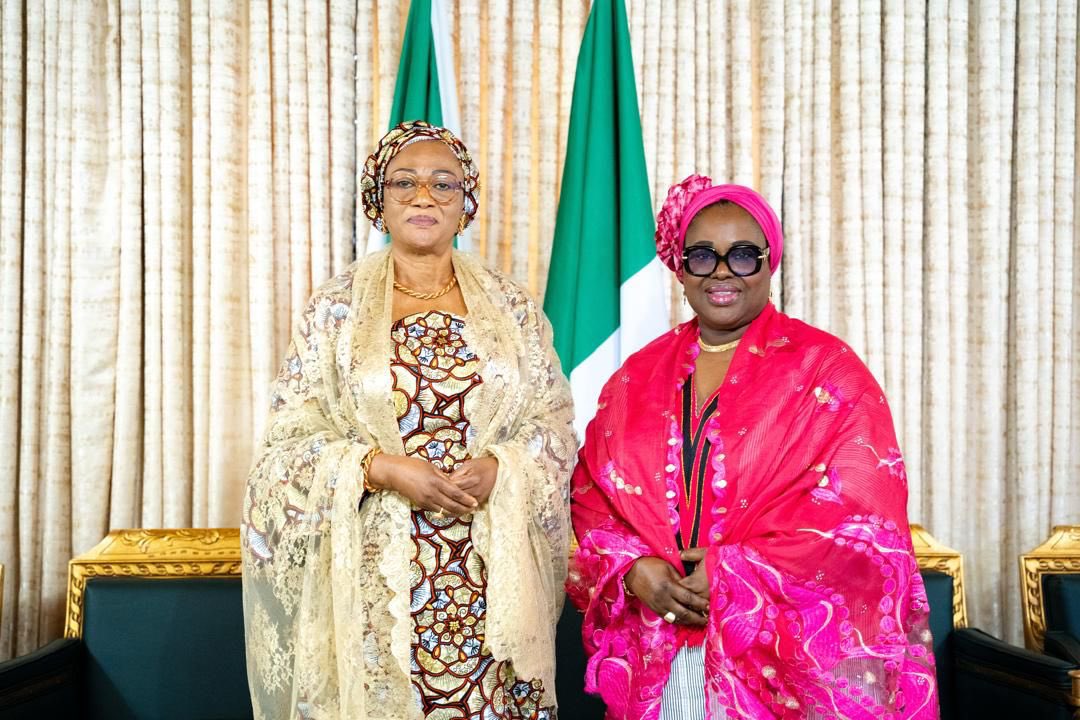
Oluremi Tinubu Hosts Wife of New IGP, Talks Welfare, Empowerment for Police Families
The First Lady of the Federal Republic of Nigeria, Senator Oluremi Tinubu, today welcomed Mrs. Mutiat Disu, wife of the Inspector General of Police, at the State House in Abuja.

During the meeting, the First Lady encouraged Mrs. Disu to continue championing the welfare and wellbeing of police officers’ families, especially through impactful support for their wives.
Speaking after the meeting, Mrs. Mutiat Disu shared her excitement about partnering with the First Lady’s Renewed Hope Initiative (RHI), noting that she is ready to leverage its programs to empower police officers’ wives across the country.
Mrs. Disu, who also serves as the National President of the Police Officers’ Wives Association (POWA), described the meeting as insightful and inspiring. She emphasized her commitment to using RHI platforms to improve healthcare, welfare, and economic empowerment for POWA members nationwide.
“The purpose of this visit is to tap into her wealth of experience and explore how POWA can benefit from her programs,” she said.
She added that her engagement with the First Lady has already provided valuable direction, especially in areas of social intervention and healthcare support for police families.
“I’m ready to work closely with Mama to ensure our women benefit fully, especially since RHI focuses on uplifting women, and POWA is largely made up of women.”
Mrs. Disu assumed leadership of POWA following the appointment of Tunji Disu as Inspector General of Police on February 24, 2026, succeeding Kayode Egbetokun.


-

 society6 months ago
Religion: Africa’s Oldest Weapon of Enslavement and the Forgotten Truth
-

 news4 months ago
WHO REALLY OWNS MONIEPOINT? The $290 Million Deal That Sold Nigeria’s Top Fintech to Foreign Interests
-

 society6 months ago
“You Are Never Without Help” – Pastor Gebhardt Berndt Inspires Hope Through Empower Church (Video)
-

 celebrity radar - gossips2 months ago
Dr. Chris Okafor Returns with Power and Fire of the Spirit -Mounts Grace Nation Altar with Fresh Anointing and Restoration Grace on February 1, 2026