
celebrity radar - gossips
SCOAN, UK Experience And Promise Of Things To Come in Nazareth meeting with TB Joshua

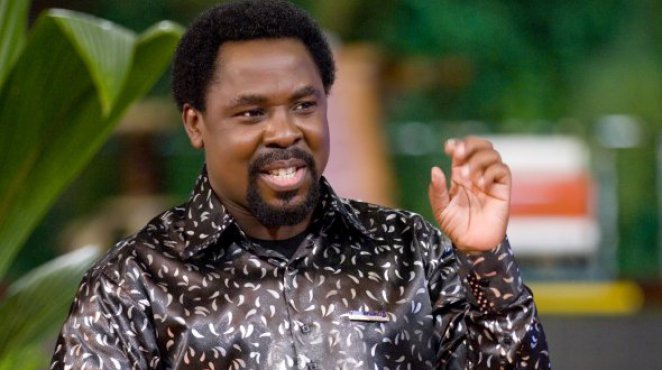
WHEN Nigeria’s former Aviation Minister, Femi Fani-Kayode, after watching the June 1 2019 United Kingdom Emmanuel TV Revival held at the FlyDSA arena in Sheffield, he described the impact of the event as a blessing. It is obvious that none could have contradicted his position. According to him, “people have come from all over the world to attend this great event. I am so proud of SCOAN and my friend and brother, Prophet T.B. Joshua. They are doing a great work for the gospel of our Lord and Saviour Jesus Christ all over the world. This great son of Nigeria and God’s general is really making waves and displaying the awesome power of God all over the globe. I wish him and his team the very best on this great and historic occasion.” For the all representatives of the world that gathered at the United Kingdom for the event, it was a day of refreshing in God’s presence. Just as Fani-Kayode aptly described the founder and senior cleric of the Synagogue Church of All Nations (SCOAN) as God’s general, the demonstration of God’s power was not only seen but attested to by those who came and many others who watched via satellite.


The event which has been described as the ‘crusade of the year’ matched power with words. And despite the fact that the senior prophet was not physically present, his representatives, three in number, carried on as commissioned servants of God, praying for the sick, the infirmed, the abused, depressed with healings, deliverance and God’s touch of the miraculous following. The event which had been slated to commence at 12pm had participants coming in their large numbers with every race represented. The venue was filled to capacity with an overflow three times bigger than the capacity of the venue. Many who took to their social media handles to express their views thanked God for his power and his presence. Michael Vashi, from India, said “I have never seen miracles at this range before. I saw the deaf hear, the lame walk, the blind see. I saw those who had been oppressed and how they got delivered. This could have only been God. I thank the Emmanuel TV team and Prophet T.B. Joshua for sending the evangelists and for the miracles that were recorded.”

For Robert Nath from Australia, it was a fulfillment of God’s promise. “What I saw could only have been God. No man could have done all these. I saw those who had given up hope about life. Their hope was rekindled. I saw impossibilities become possible. Problems vanished. It was the dawn of a new day. It clearly shows that God is still interested in the wellbeing of humans. It was the fulfillment of God’s promises. I want to thank all the evangelists that ministered and particularly Prophet T.B. Joshua for remembering the United Kingdom,” he said.
Florence Hathaway, from the United States of America, said she was overwhelmed by the things that happened at the event. For her, “the power of God came down, healing the sick, delivering those who were bound by the powers of darkness. It was a day never to be forgotten. This is God in our midst and we are indeed very glad that the power of God has not left us. The Emmanuel TV and the Synagogue Church of All Nations have done remarkable things that clearly show that they have the backing of the Almighty God.” At the event, after it was announced that Prophet T.B. Joshua would be visiting Nazareth in Israel, slated June 23-24th, 2019, for another life-changing ministration, the crowd went into a frenzy, with many describing it as an event that should not be missed. Joshua Winterstrand, from Poland, insisted that all planes should lead to Israel for the event. “When I heard that SCOAN and Emmanuel TV would be holding a crusade in UK, I told myself that I would be there. I came believing and I am glad that God did not disappoint me. We have also been told that Prophet Joshua will be visiting Israel for a power-packed program. If what we saw in UK could be this powerful with only the junior evangelists ministering, we can only imagine the extent of God’s power that would be in operation when Prophet TB Joshua will be physically present to pray for the sick and deliver the oppressed through God’s power. Israel is blessed to have such visitation. The whole world will be watching. All planes should lead to Israel for that encounter. I will be there and I know that millions will be there for such encounter,” he said.
In her submission, Judith Golding said she was elated by the UK revival. “I was glad by the revival and clearly it is God’s way of telling that he loves us very much. It was a blessing for all who came and for the innumerable millions that connected by satellite. This is the fulfillment of prophecies given in the scriptures and we are indeed glad that we are witnessing this in our time. The Israel event will be greater than what we witnessed here today and we are confident that all who will come have great testimonies to share of God’s awesomeness and power. God has repeatedly proven himself through the life and ministry of Prophet T.B. Joshua and we all are glad that the Spirit of God is in our midst,” she said. While the United Kingdom still basks in the blessings of the June 1st crusade, the world waits with Israel for the Prophet’s visit later in the month, June 23-24th,2019.

Oyetimi writes via [email protected]




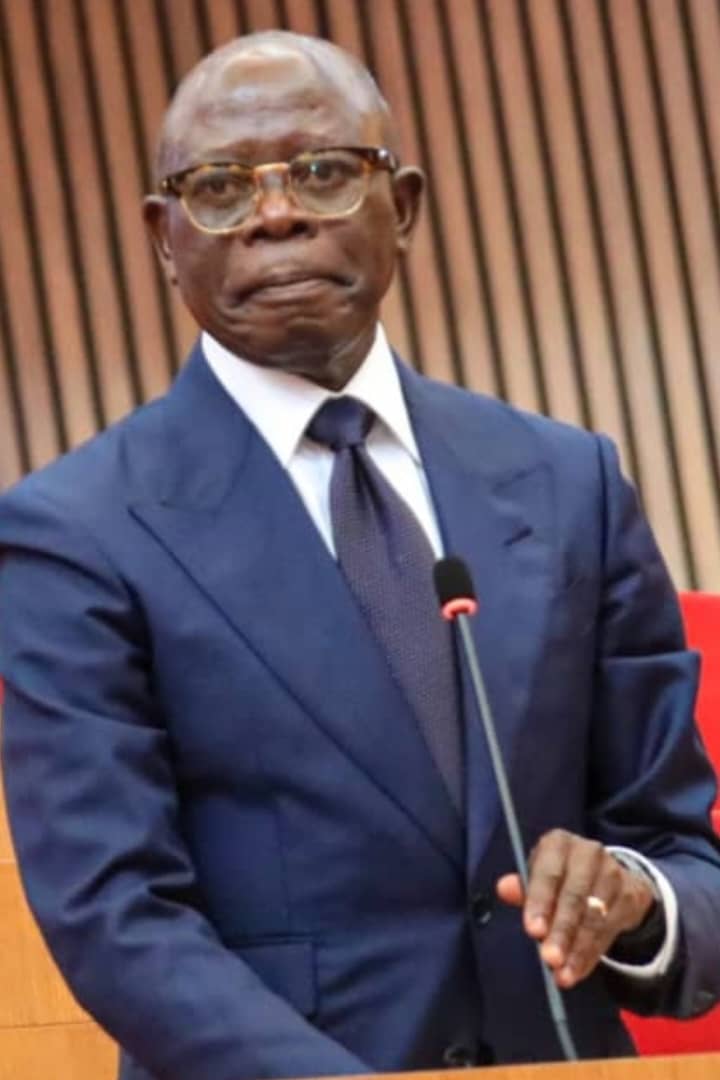
Daniel Eromosele Eulogize Adams Oshiomole as he turns 74 years
Today, I celebrate an exceptional leader, a fearless voice for the people, and a man whose life has remained a symbol of courage, sacrifice, and unwavering commitment to justice—Distinguished Comrade Senator Adams Aliu Oshiomhole.

Your journey has been nothing short of inspiring. From your days as a vibrant labour leader to your impactful tenure as the Executive Governor of Edo State, and now as a respected Senator of the Federal Republic, you have consistently demonstrated what it means to serve with integrity, strength, and purpose. Your contributions to the growth of our nation and the development of Edo State remain indelible and deeply appreciated.
You have not only built structures and institutions but have also built people. I am personally a beneficiary of your leadership, your guidance, and your belief in empowering others. Your influence in my life has been profound, and I remain grateful for the opportunities and inspiration you have given me.
On this special day, I celebrate not just your achievements, but the man you are—resilient, principled, and ever committed to the progress of Nigeria and her people.

May this new year bring you renewed strength, greater wisdom, good health, and more remarkable accomplishments. May your legacy continue to shine brighter with each passing year.
Happy Birthday, sir. Wishing you many more fruitful and impactful years ahead.
celebrity radar - gossips
Accolades to Empress Genevieve Wining as she Celebrate birthday in Grand style

Accolades to Empress Genevieve Wining as she Celebrate birthday in Grand style
Emmanuel Clement
Vilnius, Lithuania – The Grand Hotel Vilnius will host a grand birthday celebration in honor of Her Majesty The Empress Genevieve Wining of the United Kingdom of Atlantis (UKA) on April 4th, 2026.
The four-day event promises to be an extravagant affair, marking the special birthday of Empress Genevieve Wining. The celebration will take place at the prestigious Grand Hotel Vilnius, Lithuania, renowned for its luxurious ambiance and exceptional service.

According to the event flyer, the birthday celebration will be a spectacular occasion, fitting for an empress. Guests can expect an elegant setting adorned with golden accents, sparkling champagne, and festive decorations, creating a regal atmosphere befitting the occasion.
The Empress Genevieve Wining of UKA is expected to grace the event, which will include various festivities and celebrations in her honor. The occasion aims to bring together dignitaries, followers, and guests to commemorate the empress’s birthday with grandeur and joy.
For media inquiries, accreditation, or further information about the birthday celebration of The Empress Genevieve Wining of UKA, please contact the event organizers.
Courtesy of His Excellency Emperor Prof. Solomon Wining. UKA

Today, Dr. Chris Okafor turns a year older
~By Sunday Adeyemi
It is widely acknowledged that the exceptional Dr. Chris Okafor, a man of great character, always celebrates his birthday on April 4th, and in recognition of this occasion, I am inspired to write this special tribute to honor him.
Today marks a momentous occasion as we commemorate the birthday anniversary of Dr. Chris Okafor, a rare gem, a perfect gentleman, and the revered founder of Grace Nation Church, aka Liberation City.
Without reservation, this versatile and dependable Oracle foundry has consistently proven itself worthy of the accolades bestowed upon it on this notable anniversary.
Let it be reiterated that Dr. Chris Okafor is a leader known for his generosity and commitment to humanity’s welfare and advancement. The special gifts donated recently to widows and widowers within and outside the church are a testament to his exceptional leadership.
Your reputation as an outstanding and authentic man of God is evident in your exceptional goodwill and philanthropic endeavors.
Your dedication and perseverance have yielded impressive results, and numerous people, including myself, are justifiably proud of the remarkable work you are doing.
You have consistently exemplified outstanding leadership in the Christian community, demonstrating the profound impact of your role as a gift from God to humanity. I firmly believe this to be true.
Here’s to a year of productivity, success, and happiness. Congratulations and warm wishes on your birthday, sir.
Sunday Adeyemi
Your Son


-

 society7 months ago
Religion: Africa’s Oldest Weapon of Enslavement and the Forgotten Truth
-

 news4 months ago
WHO REALLY OWNS MONIEPOINT? The $290 Million Deal That Sold Nigeria’s Top Fintech to Foreign Interests
-

 society6 months ago
“You Are Never Without Help” – Pastor Gebhardt Berndt Inspires Hope Through Empower Church (Video)
-

 celebrity radar - gossips2 months ago
Dr. Chris Okafor Returns with Power and Fire of the Spirit -Mounts Grace Nation Altar with Fresh Anointing and Restoration Grace on February 1, 2026
You must be logged in to post a comment Login
You must log in to post a comment.