
Politics
The Death of Democracy in Rivers State: Tinubu’s Authoritarian Grip Tightens Nigeria’s Political Noose

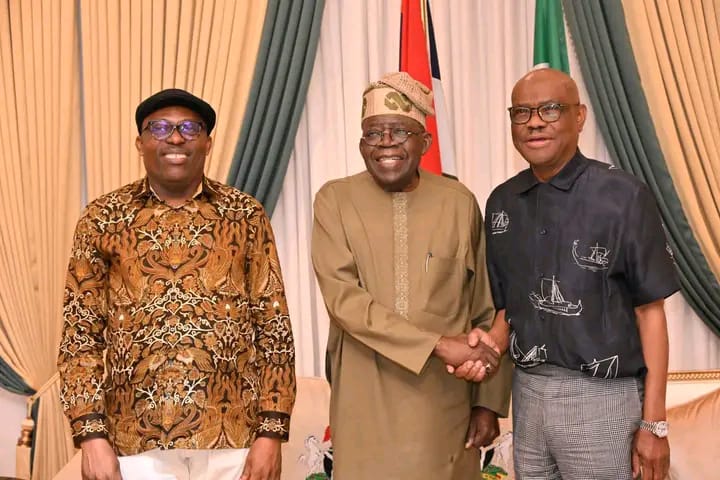
The Death of Democracy in Rivers State: Tinubu’s Authoritarian Grip Tightens Nigeria’s Political Noose.
By George Omagbemi Sylvester | Published by SaharaWeeklyNG.com
When history recounts the dark days of Nigeria’s democratic backsliding, the current political tragedy unfolding in Rivers State will undoubtedly occupy a damning chapter. What began as a local political tussle between Governor Siminalayi Fubara and his estranged godfather (Nyesom Wike), has spiraled into a national scandal of executive overreach and blatant disregard for the rule of law; an institutional coup orchestrated and endorsed by President Bola Ahmed Tinubu and his All Progressives Congress (APC)-led administration.

This latest travesty reached its zenith on Thursday night at the Presidential Villa, Abuja, where President Tinubu presided over what many have called a “CIVILIAN COUP NEGOTIATION ” After months of turmoil that saw Rivers State plunged into a constitutional crisis (culminating in a near-state-of-emergency declaration in March 2025), Tinubu announced the conditional reinstatement of Governor Siminalayi Fubara; let us be clear: THIS WAS NOT RECONCILIATION. This was SUBJUGATION. This was the BURIAL CEREMONY of DEMOCRACY under the guise of PRESIDENTIAL INTERVENTION.
The Conditions of Reinstatement: Democracy on a Leash
According to credible reports, Fubara’s so-called reinstatement came with four DRACONIAN conditions, crafted not to stabilize Rivers State, but to neuter its DEMOCRATICALLY elected leader:

A.) Surrender of control over the state’s LEGISLATIVE and JUDICIAL functions.
B.) Reinstatement of pro-WIKE LAWMAKERS who previously resigned or defected.
C.) Submission to a JOINT GOVERNANCE FRAMEWORK dictated from Abuja.
D.) Renunciation of independent DECISION-MAKING AUTHORITY on POLITICAL APPOINTMENTS and policy direction.
What kind of democracy is this where a sitting governor, elected by the people, is subjected to the whims of political overlords operating outside CONSTITUTIONAL FRAMEWORKS?
This is nothing short of political blackmail and a dangerous precedent that may soon be replicated across other states where governors dare to challenge the federal hegemon.
Wike, the Godfather-In-Chief
At the heart of this travesty lies Nyesom Wike, the Minister of the Federal Capital Territory and de facto overlord of Rivers politics. Wike, who once postured as a defender of democratic principles during his tenure as governor, has now evolved (or rather devolved) into the very embodiment of political tyranny. His fallout with Fubara, whom he handpicked and installed, laid bare the sinister underbelly of Nigeria’s godfatherism problem.

What followed was a brazen campaign of sabotage: Rivers State lawmakers loyal to Wike resigned en masse to cripple the legislature, the judiciary was infiltrated and state institutions were weaponized to torment Governor Fubara into submission.
And rather than intervene as a neutral arbiter, President Tinubu threw the full weight of the federal government behind Wike, proving once again that loyalty to Tinubu trumps constitutional order.
Tinubu’s Authoritarian Blueprint: The Akpabio Revelation
Senate President Godswill Akpabio’s chilling prophecy hangs like a shadow over this national disaster. Speaking earlier this year, Akpabio declared… “By the time Tinubu finishes with Nigeria, nobody will recognize the country again.”
Now we understand what he meant. Under Tinubu’s leadership, Nigeria is fast becoming unrecognizable not because of TRANSFORMATION, but because of REGRESSION.
The pattern is as clear as daylight:
A.) Dismantling of state autonomy
B.) Federal intimidation of opposition governors and lawmakers
C.) Judicial manipulation and electoral interference
D.) Unabashed tolerance for political thuggery and legislative impunity
In Rivers, Tinubu didn’t just mediate a CONFLICT, he masterminded a hostile takeover. The governor now functions more like a federal puppet than the chief executive of a federating unit. If this is Tinubu’s idea of reform, then Nigeria is in grave peril.
A Constitution Trampled
It is important to emphasize that no section of the Nigerian Constitution grants the president the power to impose political terms on a sitting state governor. Section 5(2) of the Constitution vests executive powers in governors, while Section 11(4) outlines the rare and extreme conditions under which the federal government may assume control of a state and conditions that were never legally satisfied in Rivers State.
Therefore, the presidential “AGREEMENT” compelling Fubara to accept humiliating terms under threat of emergency rule is not only UNDEMOCRATIC, it is UNCONSTITUTIONAL.
Where were the so-called constitutional lawyers and human rights defenders? Where was the National Assembly that is supposed to act as a check on executive excess? They stood by in silence & complicit, cowardly or co-opted.
Nigerians React: Outrage and Resistance
Prominent civil society voices have not remained silent.
Femi Falana (SAN) decried the “imposition of unconstitutional demands on a governor elected by the people,” warning that “executive tyranny will soon consume the very institutions enabling it.”
Also former Anambra State Governor Peter Obi, in a social media post, called the agreement “a betrayal of democracy and a dangerous intrusion into the federal character of our republic.”
Activist Aisha Yesufu tweeted, “What Tinubu did in Rivers is political rape. The people’s votes have been hijacked by a few men in Aso Rock.”
Even former Nigerian President Olusegun Obasanjo lamented during a separate national forum: “What we are doing now is neither democracy nor federalism. It is civil rule stained with impunity and disregard for institutions.”
The Implications: A Blueprint for Federal Despotism
The tragedy of Rivers State is not isolated. It is a warning shot to the rest of the country. If a sitting governor can be bullied into submission, what stops the federal government from replicating this in other opposition states?
Today it is Fubara. Tomorrow it could be any state governor who refuses to bend the knee to the Tinubu cabal. The message is clear: “Disobey Abuja at your peril.”
This is not governance. This is conquest.
Judgment Day for Democracy: A Country in Chains
Nigeria is not just facing an economic crisis. We are facing a moral and constitutional crisis. A situation where elections no longer guarantee leadership and political godfathers dictate the fate of millions from air-conditioned war rooms.
This isn’t the democracy we welcomed in 1999. This is a hybrid dictatorship, one foot in civilian attire and the other knee-deep in autocracy.
As we head towards the 2027 general elections, Nigerians must remember that silence in the face of tyranny is complicity. We must call this what it is: a DEMOCRATIC ASSASSINATION in Rivers State, executed with the precision of executive manipulation and godfatherism.
As Gani Fawehinmi once declared, “The tree of democracy must be watered with the blood of patriots; through resistance, sacrifice and in truth.”
If we do not rise now, there may be no recognizable Nigeria left to save.

Written by George Omagbemi Sylvester | Published by SaharaWeeklyNG.com




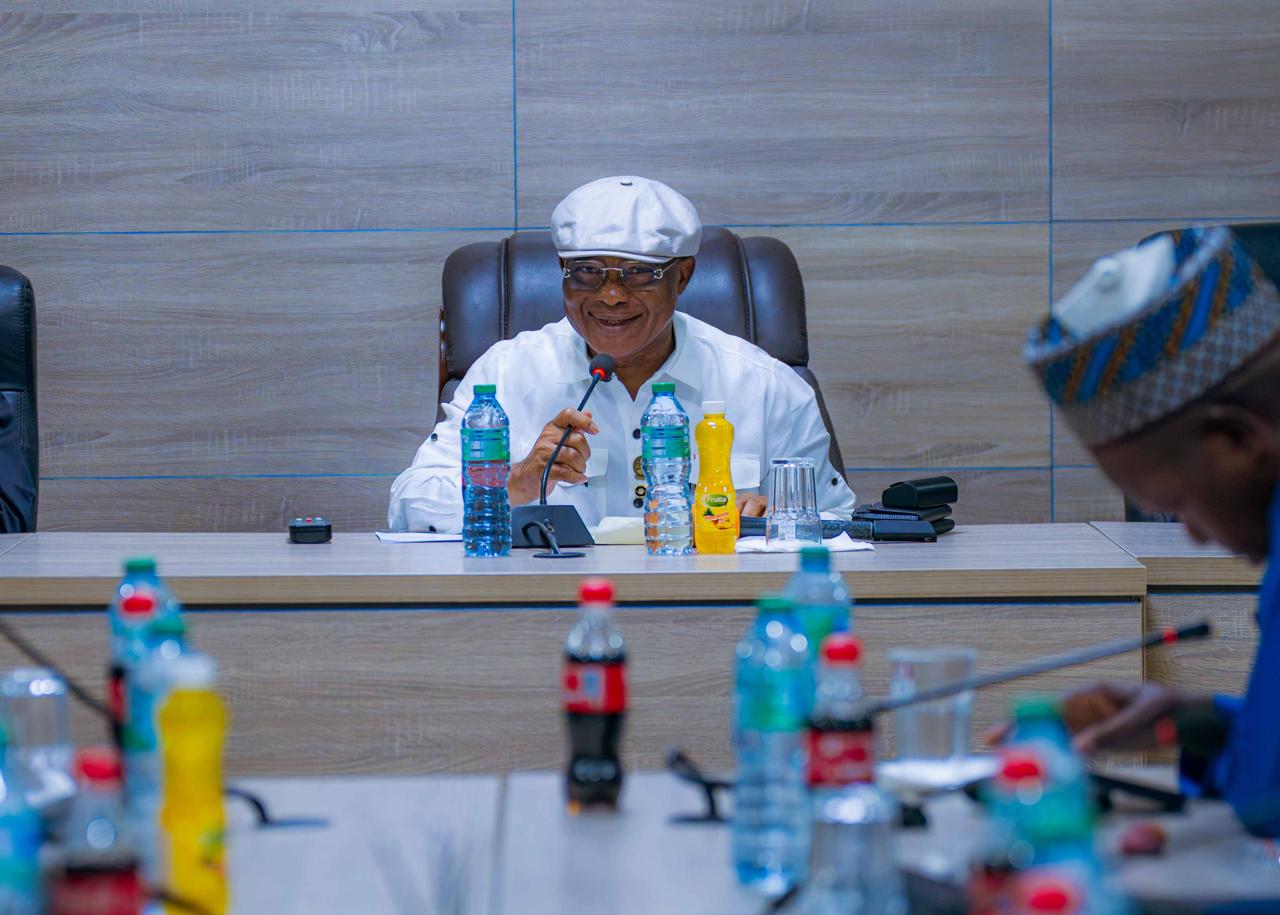
*Renewed Hope Ambassadors Step Into the Next Phase
Fresh from the successful APC 2026 National Convention, the Renewed Hope Ambassadors National, Zonal, and State leadership gathered in Abuja over the weekend, for its fourth strategic meeting, setting the tone for nationwide grassroots activation ahead of 2027.
Chaired by Governor Hope Uzodinma (Imo State) the Director General and National Coordinator of the Renewed Hope Ambassadors, alongside Deputy Director-General, Governor Uba Sani of Kaduna State, and Governor Inuwa Yahaya of Gombe State as Secretary, the session reinforced one clear direction: One Party. One Message. One Mobilization whilst also laying out a strategic roadmap for the activation of the network across all communities in Nigeria.
Backed by the strength of 31 APC-led states, the Renewed Hope Agenda is taking Bola Ahmed Tinubu’s message of progress and reform to every corner of Nigeria.
From bold economic restructuring to initiatives like NELFUND, the increase in the national minimum wage from ₦30,000 to ₦70,000, and strategic investments in critical sectors, including PNiCGI, the mission remains clear: helping Nigerians understand both the purpose and the progress of the Renewed Hope vision.
This is coordination at scale. This is grassroots engagement with purpose. This is the next phase of Renewed Hope with One Party, One Message, and One Mobilisation framework
#RenewedHopeAmbassadors #APC #WeAreAPC


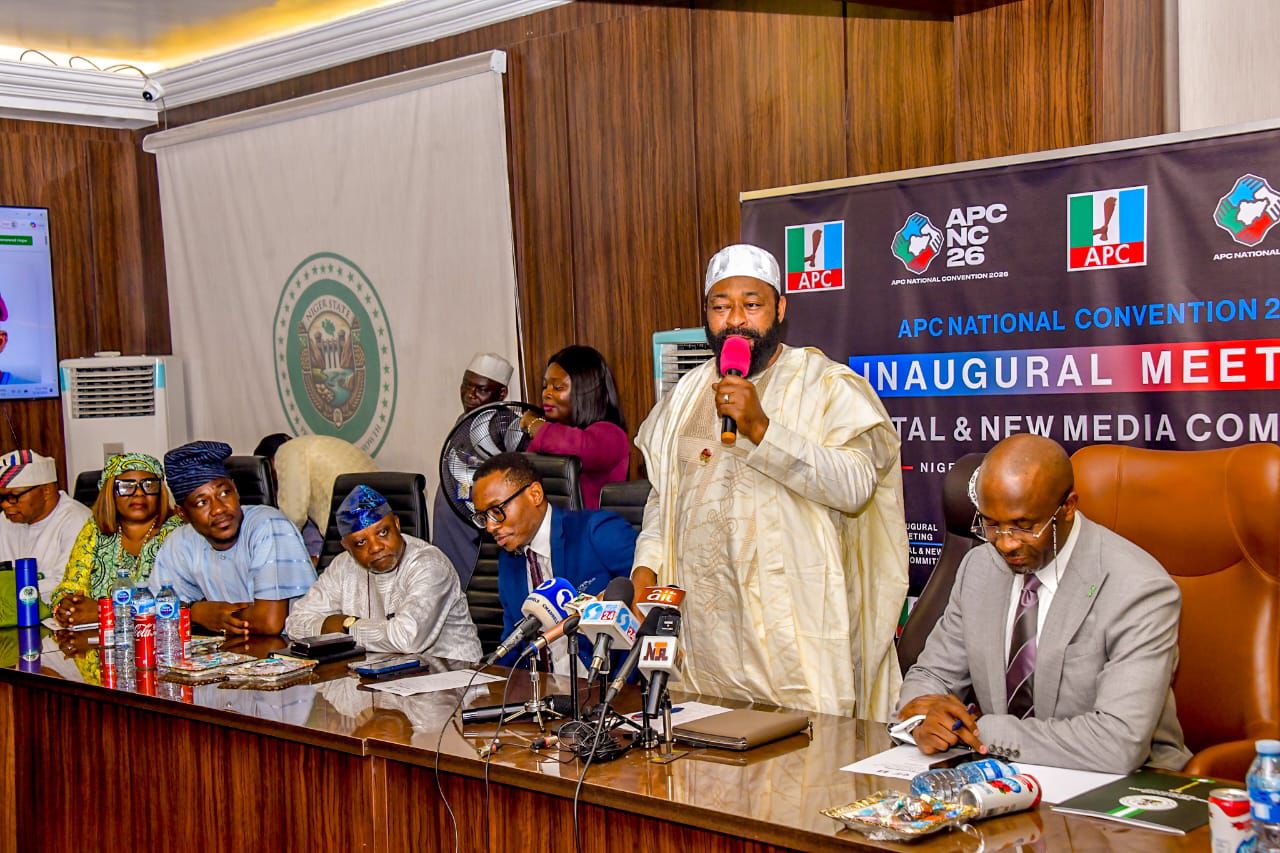
Governor Bago Inaugurates APC Digital Media Sub-Committee Ahead of National Convention.
Governor Umaru Bago has inaugurated the Digital Media Sub-Committee for the forthcoming National Convention of the All Progressives Congress (APC), scheduled to hold on March 27 and 28, 2026 in Abuja.
Chairing the sub-committee, Governor Bago tasked members with the responsibility of effectively communicating the party’s manifesto to the public.
He emphasized the need to leverage social media platforms to highlight the achievements and ongoing efforts of President Bola Ahmed Tinubu, noting that communication gaps have posed challenges that must now be decisively addressed.
The Co-Chair of the sub-committee, Hon. Benjamin Kalu, Deputy Speaker of the House of Representatives, echoed the Governor’s position, urging members to project the activities of both the party and the government to a broader audience.
He called for a deliberate and coordinated effort to showcase the party’s achievements and policy direction, stressing the importance of shaping a compelling and consistent narrative across all digital platforms.
Delivering a presentation to the committee, Otega Ogra, SSA to the President on New Media, who serves as Secretary of the sub-committee, outlined strategic focus areas to guide the team’s operations.
His presentation highlighted communication priorities and actionable steps to achieve the committee’s mandate and strengthen the party’s digital engagement.


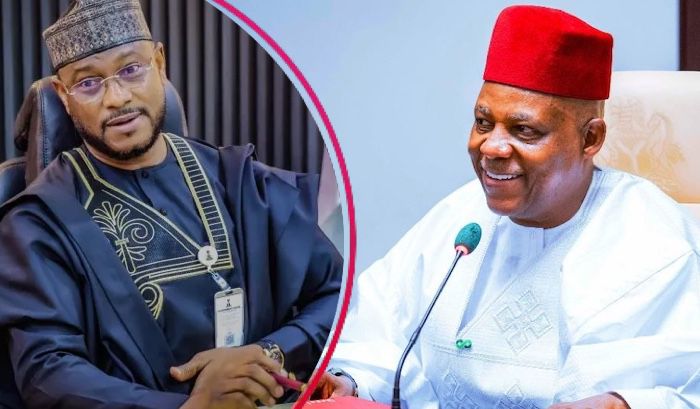
VP Shettima Set to Lead Delegation to Zamfara as Governor Dauda Lawal Formally Joins APC
The Zamfara State chapter of the All Progressives Congress (APC) has finalized plans to receive Vice President Kashim Shettima for the formal defection and reception of Governor Dauda Lawal into the ruling party, scheduled to take place on Tuesday.
State APC Chairman, Tukur Danfulani Maikatako, disclosed this during a high-level stakeholders’ meeting held in Gusau, the state capital. He noted that the Vice President would be joined by the party’s national leadership to mark what he described as a landmark political realignment in the state.
Maikatako expressed the party’s excitement over Governor Lawal’s return, recalling that Zamfara had historically been an APC stronghold and that the Governor was previously a bona fide member of the party before his earlier exit.
“We all know that Zamfara has long been one of the APC’s stronghold states, where the defected Governor was once a bona fide member. Now that he has decided to return home, having been satisfied that the APC remains his second choice after the one he left for obvious reasons,” Maikatako stated.
The Chairman called on all party faithful across the 147 wards in the state’s 14 local government areas to turn out en masse to honour the Vice President’s visit. He emphasized that the event was strategically positioned to bolster the party’s popularity and strengthen its structures ahead of the 2027 general elections.
In a strong appeal for unity, Maikatako urged members to set aside all factional tendencies, stressing that the APC remained one political family with shared goals, particularly the ambition to make Zamfara and Nigeria great again.
Echoing similar sentiments, a former state APC Chairman, Lawal M. Liman, appealed to members to cascade the message to their wards and local government areas. He reinforced the need for cohesion, noting that the party’s collective strength would be critical to achieving success in future elections.

All eyes are now on Gusau as the ruling party prepares for a high-profile political gathering expected to further consolidate its influence in Zamfara State.


-

 society6 months ago
Religion: Africa’s Oldest Weapon of Enslavement and the Forgotten Truth
-

 news4 months ago
WHO REALLY OWNS MONIEPOINT? The $290 Million Deal That Sold Nigeria’s Top Fintech to Foreign Interests
-

 society6 months ago
“You Are Never Without Help” – Pastor Gebhardt Berndt Inspires Hope Through Empower Church (Video)
-

 celebrity radar - gossips2 months ago
Dr. Chris Okafor Returns with Power and Fire of the Spirit -Mounts Grace Nation Altar with Fresh Anointing and Restoration Grace on February 1, 2026