
society
THE GREAT LAND SCANDAL: Wike Under Fire for Alleged Illegal Allocation of Abuja’s Green Spaces

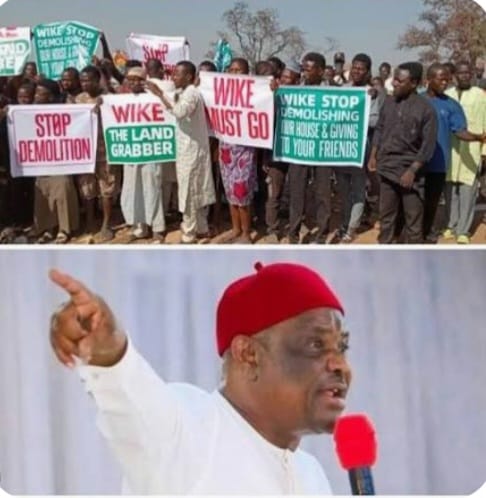
THE GREAT LAND SCANDAL: Wike Under Fire for Alleged Illegal Allocation of Abuja’s Green Spaces
By George Omagbemi Sylvester | Published by SaharaWeeklyNG
“How the Federal Capital’s Urban Integrity Faces an Existential Threat.”
In the heart of Africa’s most politically symbolic city, Abuja, a storm has erupted (not fueled by ideology or electoral dispute) but by an alleged betrayal of urban planning principles, environmental sustainability and public trust. At the centre of this convulsion stands Barrister Ezenwo Nyesom Wike, Nigeria’s Minister of the Federal Capital Territory (FCT), accused by a leading human rights lawyer of illegally allocating protected green areas to developers for luxury residential construction. The controversy has ignited fresh debate about governance, environmental law and the future of Nigeria’s capital city.
The flashpoint was a designated green area in Maitama Extension, one of Abuja’s most prestigious residential districts. This zone was reserved in Abuja’s Master Plan as a green buffer, designed to support stormwater runoff, preserve natural ecology and act as a safety valve against flooding in the rainy season. Yet, according to human rights lawyer and activist Deji Adeyanju, this sacred urban reserve has now been fenced off and construction of upscale duplexes is proceeding unabated on it.

Adeyanju’s allegation is not trivial rhetoric, it is a direct challenge to the sacred covenant between an administration and the public it serves. In his public statement, he described the development as an “outright distortion of the Abuja Master Plan,” warning that it “places private profit above public safety and environmental sustainability.” His imagery was striking: a natural drainage channel turned makeshift access road, a warning sign of impending environmental peril.
Urban Planning vs. Commercial Gain.
The Abuja Master Plan, established as a binding framework for land use and development, includes provisions for green areas precisely to manage stormwater, reduce urban heat islands, conserve biodiversity and serve as public recreational space. Urban planning experts stress that these zones are not just aesthetic features, but functional infrastructure critical to city resilience. When green buffers are compromised, cities face more severe flooding, infrastructure strain and public health risks.
One respected urbanist, speaking on condition of anonymity due to the political sensitivity of the matter, noted:
“Green spaces in planned cities are equivalent to lungs in a human body; deprive a city of its green lungs and you invite systemic failure alongside environmentally and socially.”
Though specific environmental impact assessments for the Maitama Extension project have not been made public, observers note that the area’s natural drainage channels historically diverted heavy rainfall runoff. Interfering with these features could worsen flooding in already vulnerable neighbourhoods.
Allegations, Public Outrage and Official Response.

Adeyanju’s critique exploded on social media and was amplified by civil society groups already sceptical of the FCT Administration’s land policies. Many fear that this is not an isolated issue but a symptom of a broader pattern of land governance that favours powerful interests at the expense of public rights.
In response, the FCT Minister’s spokesperson, Lere Olayinka, defended the administration’s authority over land use decisions. He stated that land designation is not static and can be altered if legally approved, including by the Minister himself. Olayinka argued that reclassifying land use (even from green zone to residential) is permissible under certain conditions and should not be immediately interpreted as illegal.
This response highlights a crucial legal question: What constitutes lawful change of land use in Abuja? The Federal Capital Territory Act and urban planning statutes require that land use alterations must comply with the Master Plan and be transparently processed through appropriate planning authorities. Without full disclosure of approvals, critics argue, any claimed authority to repurpose green areas must be vigorously scrutinised.
Civil Society and Calls for Transparency.
The controversy has drawn more than one voice. A coalition of civic and housing advocacy organisations (including the Housing Development Advocacy Network) has publicly admonished the FCT administration for what they describe as “a dangerous erosion of Abuja’s green infrastructure.” According to the network, parks, gardens and buffer zones originally reserved as the capital’s lungs are being eroded through indiscriminate allocations for commercial or residential developments.
“The loss of green spaces,” the HDAN argued, “threatens not only ecological balance but also the lived quality of citizens and investors alike.” In their view, sustainable development must balance growth with preservation and not sacrifice one at the altar of short-term gain.
Another prominent civil society campaign, carrying the hashtag #StopWikeLandGrab, has called for mass action and independent investigation into alleged cronies benefiting from controversial land deals in the FCT. While some of the more expansive claims (such as massive tracts of land being allocated to family members) have been contested and remain subject to verification, they nonetheless reflect deep public mistrust in the administration’s land management practices.
A transparency advocate from Abuja, Dr. Chibuzo Okeke, offered a stark criticism that resonates with many residents:
“When land intended for the public good becomes a vehicle for private accumulation without clear accountability, it signals a crisis of governance. Abuja belongs to the people not to a selected few.”

Environmental Risks and Urban Futures.
Environmental scientists warn that tampering with natural drainage systems, as alleged in the Maitama case where a canal is reportedly being converted into an access road, could have severe consequences. In cities with similar climates and topographies, the loss of natural channels has been linked with increased frequency and severity of flood events, soil erosion and infrastructure failures.
Professor Amina Suleiman, a climatologist at a Nigerian university, underscores the severity:
“Urban expansion must respect natural hydrology. When you disrupt waterways for development without compensatory engineering or rigorous planning, you court ecological failure.”
In a city like Abuja, which experiences intense seasonal rainfall, the stakes are high. Without green buffers and functioning natural drainage, residents could face heightened flood risk, not just in Maitama, but in neighbouring districts cascading downhill.
Governance, Law and the Public Interest.
The Wike controversy underscores a broader struggle over how public assets are managed, who gets to decide their use, and how transparent those decisions must be. Nigeria’s Constitution and related land laws mandate that public officials act in the public interest and uphold principles of accountability and fairness. When these tenets appear compromised, citizen confidence in governance erodes.
Legal experts suggest that, if substantiated, the allocation of green areas for luxury residential development without demonstrated compliance with planning and environmental safeguards could constitute a breach of administrative law. However, they also note that such matters often hinge on procedural proof, documented approvals, environmental impact assessments and transparent decision-making records.
A Moment of National Reflection.
At its core, the Maitama green area dispute is not merely a local planning controversy, but it is a national litmus test. Nigeria is grappling with rapid urbanisation, environmental vulnerabilities and governance challenges. How these are managed will determine not only the future of Abuja but also signal the country’s commitment to sustainable development and the rule of law.
For now, public outcry continues, civic organisations press for independent investigations, and residents watch with concern as this drama unfolds in the corridors of power.
Yet one truth stands: urban land is not just a commodity, it is a public trust. And any erosion of that principle risks more than controversy; it threatens the environmental sustainability and social fabric of the capital city itself.





society
GEN CHRISTOPHER GWABIN MUSA SUPPORT INITIATIVE EXTENDS WARM BIRTHDAY FELICITATIONS TO PRESIDENT TINUBU ON 74TH BIRTHDAY
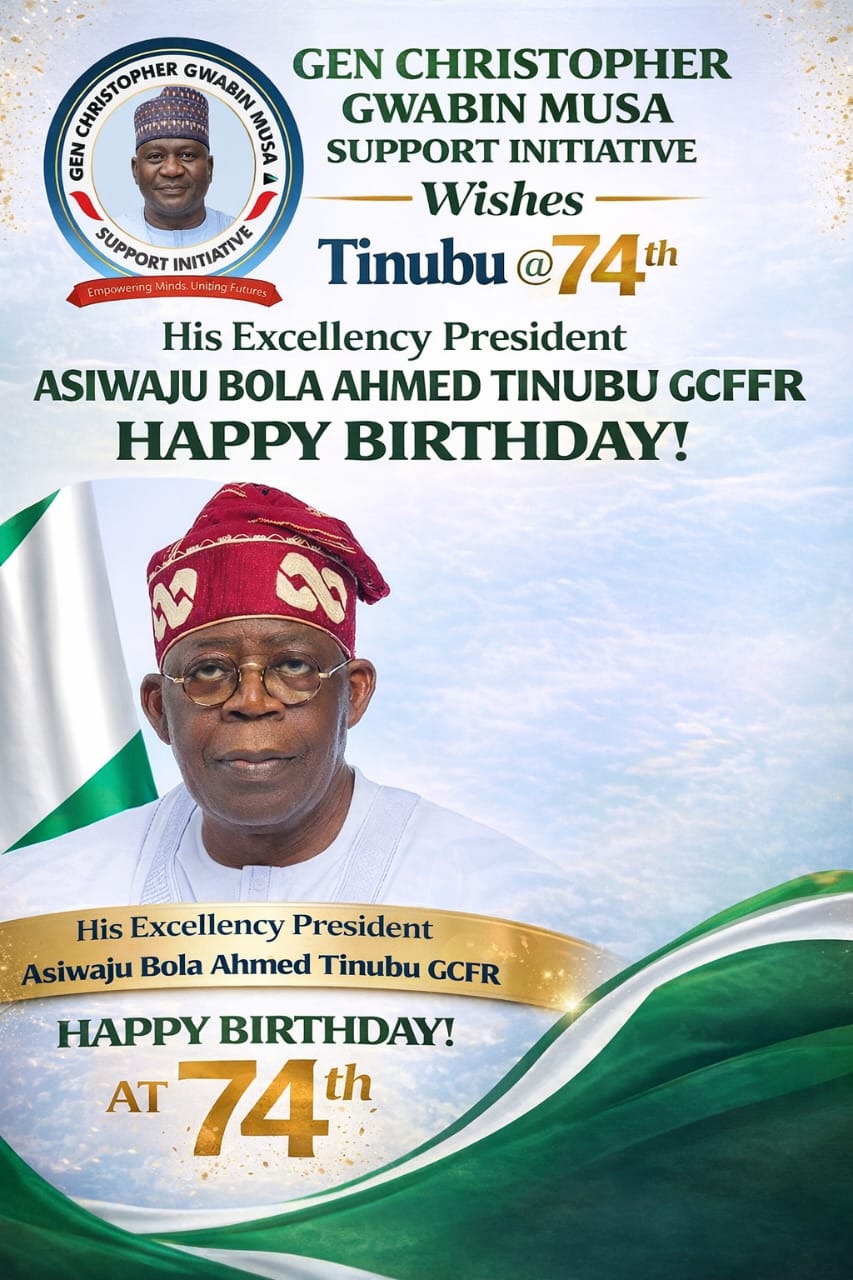
GEN CHRISTOPHER GWABIN MUSA SUPPORT INITIATIVE EXTENDS WARM BIRTHDAY FELICITATIONS TO PRESIDENT TINUBU ON 74TH BIRTHDAY
The Gen Christopher Gwabin Musa Support Initiative has extended heartfelt congratulations to His Excellency President Asiwaju Bola Ahmed Tinubu, GCFR, on the occasion of his 74th birthday.
In a statement released to the press, the Initiative conveyed warm wishes for the President’s personal well-being and for his continued leadership of the nation. The statement, signed by the Convener, Ibrahim Dahiru Danfulani, Sadaukin Garkuwan Keffi/Betara Biu, expressed hope that the coming year would bring the President “renewed strength and more wisdom in guiding the nation.”
The statement further noted that the Grand Patron of the Initiative, His Excellency Gen Christopher Gwabin Musa, OFR, Minister of Defence of the Federal Republic of Nigeria, joined in celebrating the milestone. It added, “Wishing Your Excellency continued good health, vitality, and determination as you lead the country towards greater unity and progress.”
The message underscores support for President Tinubu’s administration and its national objectives, marking the birthday as an occasion to reaffirm commitment to the nation’s unity and advancement under his stewardship.
society
Dominion City to Host Global Camp Meeting, “2 Nights of Glory” 2026 in Lagos, Enugu …Calls for Moral Renewal
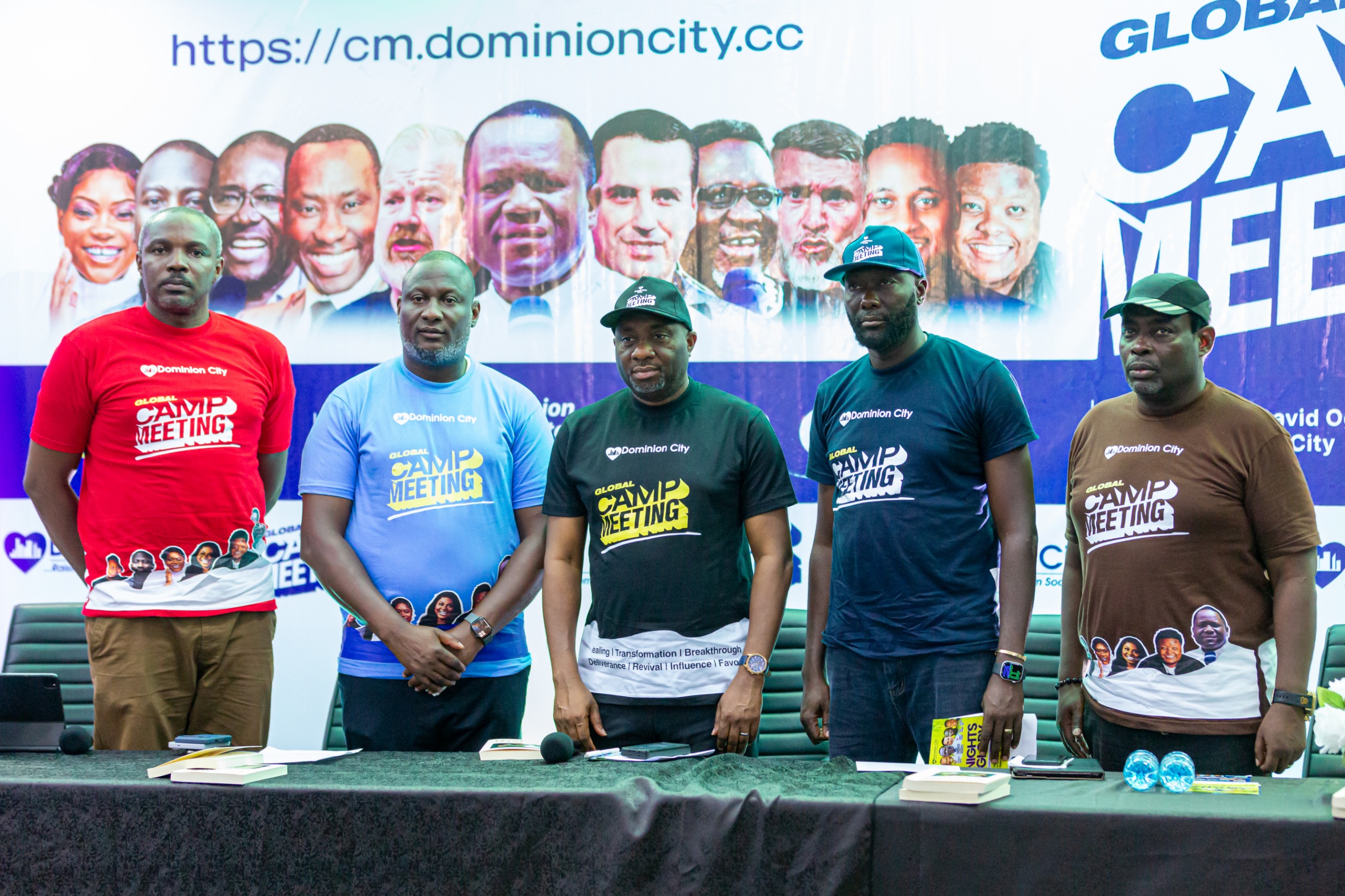
*Dominion City to Host Global Camp Meeting, “2 Nights of Glory” 2026 in Lagos, Enugu
…Calls for Moral Renewal
Lagos – Dominion City has announced plans to host its annual Global Camp Meeting alongside a special “2 Nights of Glory” gathering in April 2026, with events scheduled to be held simultaneously in Lagos and Enugu.
The week-long programme is expected to draw tens of thousands of participants onsite and millions of virtual attendees from across the globe.
The Global Camp Meeting will run from Wednesday, April 1 to Monday, April 6, featuring daily sessions at 8:00 a.m. and 5:00 p.m. The “2 Nights of Glory” is slated for Friday, April 3 and Saturday, April 4 at the Golden Heart Place, Km 22 Lekki-Epe Expressway, beside Lagos Business School, Ajah, Lagos.
Organised by Dominion City, a global church focused on raising transformational leaders, the conference will centre on revival, spiritual renewal, and practical teachings. This year’s theme, “Redigging the Wells of Our Fathers,” underscores a call to return to foundational values and principles.
Speaking ahead of the event, Nobbert Onaga, President, Golden Heart Foundation and Senior Pastor, DC Lagos & Europe, emphasised the need for moral reawakening as a pathway to national transformation. He described the Church as “the pillar and foundation of truth,” noting that the conference aims to confront moral decline and restore core values within society.
“We are going back to foundational truths that established the Church. These truths will help repair societal damage and reposition the Church as a source of hope and light,” Onaga said.
Also speaking, Shola Olapade, Senior Pastor of Dominion City Headquarters, highlighted the Church’s role in addressing ethical and cultural challenges, particularly among young people. He added that the programme would go beyond spiritual teachings to include sessions on artificial intelligence, innovation, business, media, arts, and career development.
“We are equipping people not just spiritually, but with relevant 21st-century skills to thrive in today’s world,” Olapade noted.
The conference will feature teachings and ministrations from a lineup of international ministers, including Dr. David Ogbueli, Dr. Charles Ndifon, Andres Bisonni, Pastor Randy Mitchell, Apostle Ikechukwu Peter Nnajiofor, Dr. Ferdinand Nweke, Apostle Ben Hanyani Ndobe, Evangelist Dan Scott, and Dr. Chiefo Ejiofobiri.
Music ministrations will also be led by notable gospel artists such as Grace Idowu, Rhema Onuoha, Once More Six, David Nkennor, Anthony Kani, and GUC.
Organisers disclosed that over 30,000 participants are expected to attend in person, with free transportation provided from designated locations across Lagos to ease access. In addition, free medical services will be offered daily, building on previous outreaches that benefited over 1,700 people.
To ensure safety and order, more than 200 traffic marshals will be deployed in collaboration with relevant authorities.
Beyond its spiritual impact, organisers project that the event will stimulate local economic activity across hospitality, transportation, and retail sectors.
The Global Camp Meeting remains a key platform for spiritual impartation, leadership development, and societal transformation, aligning with Dominion City’s mission to equip believers to influence their communities positively.
Participation is open to the public, with registration available online for both physical and virtual attendance. //END.//
*PHOTO CAPTIONS:*
L-R: Dr. Godwin Efobi, Head, Medical Team, Dominion City Headquarters (DCHQ); Pastor Shola Olapade, Senior Pastor, DCHQ; Pastor Nobbert Onaga, President, Golden Heart Foundation and Senior Pastor, DC Lagos & Europe; Pastor Chuks Anochie, Head of Security and Traffic Control, Dominion City Headquarters (DCHQ), Camp Meeting 2026; Pastor Josh Tim Vaduchi, Head of Event & Programmes, DCHQ, during the press briefing of the forthcoming Global Camp Meeting, held the weekend of 2026 at the Dominion City Headquarters (DCHQ), Lagos.
L-R: Pastor Chuks Anochie, Head of Security and Traffic Control, Dominion City Headquarters (DCHQ), Camp Meeting 2026; Pastor Shola Olapade, Senior Pastor, DCHQ; Pastor Nobbert Onaga, President, Golden Heart Foundation and Senior Pastor, DC Lagos & Europe; Dr. Godwin Efobi, Head, Medical Team, DCHQ; and Pastor Josh Tim Vaduchi, Head of Event & Programmes, during the press briefing of the forthcoming Global Camp Meeting, held over the weekend in 2026 at the Dominion City Headquarters (DCHQ), Lagos.
society
Oloworo of Oworosoki Kingdom, Oba Babatunde Saliu, Felicitates President Bola Ahmed Tinubu at 74

Oloworo of Oworosoki Kingdom, Oba Babatunde Saliu, Felicitates President Bola Ahmed Tinubu at 74
By Adeyemi Obadimu
The Oloworo of Oworosoki Kingdom, His Royal Majesty, Oba Babatunde Saliu, Elebo II, has extended warm felicitations to the President of the Federal Republic of Nigeria, Bola Ahmed Tinubu, GCFR, on the occasion of his 74th birthday.
In a goodwill message issued from his palace, the revered monarch described President Tinubu as a visionary statesman, a courageous reformer, and an indefatigable democrat whose lifelong commitment to nation-building continues to shape Nigeria’s progress.
Oba Babatunde Saliu praised the President’s unwavering dedication to public service, noting that his leadership has ushered in a new phase of economic reform, infrastructural renewal, and institutional strengthening across the country.
According to the monarch, the President’s Renewed Hope Agenda has begun yielding tangible relief and renewed confidence among citizens, reflecting his determination to reposition Nigeria for sustainable growth and prosperity.
“President Bola Ahmed Tinubu has demonstrated exceptional resilience, strategic foresight, and a deep love for Nigeria. His administration’s bold initiatives are laying the foundation for long-term national transformation. At 74, he remains steadfast in his resolve to build a stronger, more united, and economically vibrant nation,” the monarch stated.
Oba Babatunde further commended the President’s legacy of leadership, describing him as a bridge-builder, a mentor to many leaders, and a symbol of democratic stability. He acknowledged the President’s decades of sacrifice and contribution to the advancement of democracy in Nigeria.
On behalf of the Oworosoki Kingdom, the royal father prayed for divine wisdom, sound health, and renewed strength for the President to successfully complete the noble reforms and developmental strides he has embarked upon for the benefit of all Nigerians.
“As Your Excellency marks 74 remarkable years, we pray that Almighty God grants you long life, continued wisdom, and the fortitude to steer our great nation toward greater heights. May your days be filled with strength and grace as you continue to serve Nigeria with distinction,” Oba Babatunde Saliu added.
President Bola Ahmed Tinubu clocks 74 as a leader whose enduring influence, bold reforms, and steadfast patriotism remain central to Nigeria’s ongoing journey of national renewal.


-

 society6 months ago
Religion: Africa’s Oldest Weapon of Enslavement and the Forgotten Truth
-

 news4 months ago
WHO REALLY OWNS MONIEPOINT? The $290 Million Deal That Sold Nigeria’s Top Fintech to Foreign Interests
-

 society6 months ago
“You Are Never Without Help” – Pastor Gebhardt Berndt Inspires Hope Through Empower Church (Video)
-

 celebrity radar - gossips2 months ago
Dr. Chris Okafor Returns with Power and Fire of the Spirit -Mounts Grace Nation Altar with Fresh Anointing and Restoration Grace on February 1, 2026