
Politics
THE HUMILIATION OF THE VILLA FIEND


In September 2019 I tweeted the following to Vice President Yemi Osinbajo.
“Ambassador Ayo Oke, the former Director General of the Nigerian Intelligence Agency, took care of you. He paid your bills and protected you. He kept all your dirty little secrets. He gave you wise counsel and comforted you even when you shed tears and said you couldn’t take it anymore. All this yet you sold him down the river. Your fingers have finally been caught in the cooky jar and your benefactors and detractors have begun their work. They have demoted you, humiliated you, used you and dumped you. By the time they finish with you you will wish that you had never been born. Worse still Oke is no longer there to help you. Poor chap. Politics is a terrible thing when compared to the legal profession. This is especially so when you are a Professor of Law. At least you can go back to your pastoral work at Redeemed Christian Church of God when all else fails. My prayers are with you.”
A few days later I added the following, again in reference to the Vice President.
“If the short man doesn’t resign within six months they will soon be sending him to wash toilets. You came in on the same ticket, you sold your soul, you betrayed your people, your tribe, your region and your faith and you sucked your boss’ rectum for four years!Look at what you got in return! Shame on you!”
Two months down the line both tweets have proved to be prophetic. They also signified the beginning of the end for our Pastor and Professor.
Over the last two months, despite all pretentions to the contrary, things have gone downhill for him and he appears to be a drowning man. It is only a matter of time before the final offensive and assault is unleashed against him by his traducers in the Presidency, the axe falls and he is finally thrown out.
I have been reliably informed that three names, all from the South West, have been penned down and are all being considered as his possible replacement. If this proves to be true I would not be the least bit surprised because those that ride on the back of the tiger always end up in its stomach.
The question that arises is what our reaction ought to be to the way the Vice President is being treated.
In this respect, insightful, sensible and refreshing are the words of Chief Yinka Odumakin, the erudite and courageous spokesman of Afenifere, when he said, on behalf of the Omo Karo Jires and the sons and daughters of Oduduwa, that
“Vice President Yemi Osinbajo is being humiliated and NOT the South West. He has never supported the South West since he became Vice President”. (Sunday Vanguard, 10th November 2019).
I wholeheartedly concur.
I am also encouraged by the fact that Baba Ayo Adebanjo, the number two man in Afenifere, one of the most reverred and respected elders and leaders in Nigeria and a man that I am prepared to follow into battle blindfolded, said that he had told Asiwaju Bola Tinubu and Vice President Osinbajo to “leave the APC”.
He said, “I don’t want to be dragged into the issue. What has he done that the South West has benefitted from? I am 91 years old and all I want is a better Nigeria. I have told Tinubu and Osinbajo to leave the APC”. (Sunday Vanguard, 10th November 2019).
These are wise words and faultless counsel. The consequences of not heeding them, at least for Osinbajo, are now manifest for all to see and sadly the chickens are coming home to roost.
It is Osinbajo’s turn to be exposed, grilled, humiliated, rubbished and dumped by the cabal today but, mark my words, it will be Tinubu’s tomorrow. They shall both reap the consequences of what they have sown and the choices they made.
I do not relish in the travails of Osinbajo and to a certain extent I pity him but what I will not do is defend him in the name of South Western or Southern solidarirty or anything else. In my view he simply does not deserve that kind of support and it irks and irritates me to no end when others try to give it to him.
For example when Professor Banji Akintoye, a notable elder and respected leader from the South West who has displayed immense fortitude in recent times and who I have immense respect for, says that Vice President Yemi Osinbajo should not be treated badly by President Muhammadu Buhari because he is a son of Oduduwa, I really do wonder.
When he says he is watching events unfold I wonder what he really believes he can do to save the Vice President from the consequences of his own shameless behaviour, cowardly disposition, ignoble foibles, treacherous actions and dishoborable choices.
Osinbajo willingly opted and eagerly chose to be an eager slave and even went as far as to publicly declare himself as a “son” to Nigeria’s third and most dangerous Mahdi and to her last Amalekite King. Such choices are an affront to the Living God that he claims to serve and they come with dire divine consequences.
Permit me to qoute Professor Akintoye in full. He said,
“We are watching events unfold with keen interest. We are taking note of what is happening to them. Nobody should make the mistake of thinking that the “Yoruba” (his word) will be watching and allow their son to be degraded and dehumanised. It will be very difficult to advise Osinbajo because he holds a high office but my advice to him is to stick in there and let us see what they will do, then they will see what WE will do”. (Sunday Vanguard, 10th November 2019).
The question here is who are the “we”? Maybe Osinbajo’s shrinking circle and coterie of friends, family, loyalists and supporters but kindly leave the rest of us out. The rest of us do not wish to get involved and neither do we care!
With the greatest respect, on this particular matter Professor Akintoye certainly does not speak for me or for any of those that share my views. He may have his opinion and he is certainly entitled to it but I also have mine and so do millions of others.
In any case does he know the atrocities that Osinbajo has secretly committed against the South West and indeed the entire South behind closed doors over the last few years?
Does he know how many sons and daughters of Oduduwa that he is trying to bring to their knees and destroy? Does he know what he did to Prince Deji Adeyanju, a fellow Oduduwan? Does he know the role he played in the arrest and prolonged detention of Omoyele Sowore, another son of the Anago?
Does he know how many sons and daughters of the South West Osinbajo is trying to send to jail for no just cause and for doing nothing wrong other than the fact that they refused to bend the knee and bow to his principal Muhammadu Buhari and simply because he wants to sacrifice them and please his northern masters?
Does he know how many sons and daughters of Oduduwa he has locked up and detained unlawfully? Does he know how mich wickedness he has infllicted on his own Karo Jire kinsmen?
Does he know the disdain and contempt he has shown Oduduwans, southerners and Christians, who he is meant to represent on the presidential ticket, over the last few years.
Sentiment ought to be left out of this. There is nothing worse than a traitor and Osinbajo is the greatest and biggest traitor to the Oduduwan and southern cause in Nigerian history.
A man that opted to align with and support those that oppposed the proscription of Boko Haram? A man that said we should pray for Fulani herdsmen as they rape and slaughter our wives and children?
A man that said the mass murder, genocide and ethnic cleansing of our people by the Fulani militias in Nigeria was exagerrated?
A man that travelled abroad and said all African countries are corrupt? A man that poured scorn and insults on all those that stood up to the tyranny and hegemony of his Fulani masters over the last four years?
A man that refused to see the President of CAN in his first 3 years in office as Vice President and only spoke to him through the Villa chaplain? A man that spent the better part of the last 4 years trying to weaken, discredit and destroy CAN?
A man that celebrated and encouraged the slaughter of IPOB members, including women and children? A man who stood by silently and turned a blind eye whilst his security aides beat up a journalist at the Presidential Villa and smashed his camera?
A man that sold his soul to the devil and served the Fulani cabal to the best of his ability. A man that has sat by silently as the Judiciary, Natiional Assembly and all our reverred institutions and lesders in the south and Middle Belt are rubbished?
A man that has told all manner of lies against President Olusegun Obasanjo, President Goodluck Jonathan, Vice President Atiku Abubakar and countless other opposition leaders brandishing them as corrupt and unfit for public office whilst he serves the most corrupt, racist, vicious,, sectional and oppressive Government in our entire history?
A man that insulted Afenifere leaders and those that called for restructuring and desctibed them as jobless people that are just seeking for relevamce? A man that insulted his own in-law, Chief Obafemi Awolowo, by saying he was wrong when he described Nigeria as a mere geograohical expression?
A man that has betrayed his owm mentor Asiwaju Bola Tinubu? A man that that used his Redeemrd Church and his spiritual dather to split Christendom and help put in place an eviil Anti-Christ Governmrnt.
I have no sympathy for Osinbanjo and I do not think any southermer, Middle Belter or Christian that is in his right mind oight to either.
He is a disgrace to Oduduwa, to the south, to the Church, to Christendom and to the God that He claims to love and serve. Worse of all he is a worthless coward! A man that considers his political career as being more important than the life of a believer.
A man that said nothing when a lady Pastor from his own Redeemed Church was murderd by islamists and jihadists in cold bllod right on his doorstep in Abuja? A man that lacks courage, wisdom, humanity, decency, charity and compassion.
Is that really a man or is he just a whimp? Is that a servant of God? Is that a believer?
I say to hell with such a man. He dies not deserve any support or sympathy from any quarter. He entered into a demonic Faustian pact gladly and willingly in 2015 when he joined Buhari. We warnrd him but he woild not listen. He wined and dined with the devil and now the devil has come for his soul.
I say let him perish with it. No-one can resist the judgement of God and it will take a lot more than Professor Akintoye to save him from that.
Those that speak for him in tte name of Oduduwa solidarity would do well to do their homework about this man. They should speak for themselves and not me.
Osinbajo made his bed and he should be allowed to lie in it. If he had any decency he would have resigned by now but he lacks self-respect and honor so he can never do so.
He is motivated by nothing but greed and ambition and that greed and ambition will destroy and consumme him.
Permit me to conclude this contribution with the following. On 12th November Shola Salako, a leading member of YOLICOM and a highly respected writer and public commentator wrote,
“Vice President Yemi Osinbanjo has no integrity, no balls and is a poor student of history”.
Shola, as courageous and forthright as ever, is absolutely right.





Politics
Political Earthquake in Kano: How, Senator Rabiu Musa Kwankwaso, Nasiru Gawuna’s Move to ADC Reshapes North-West Politics
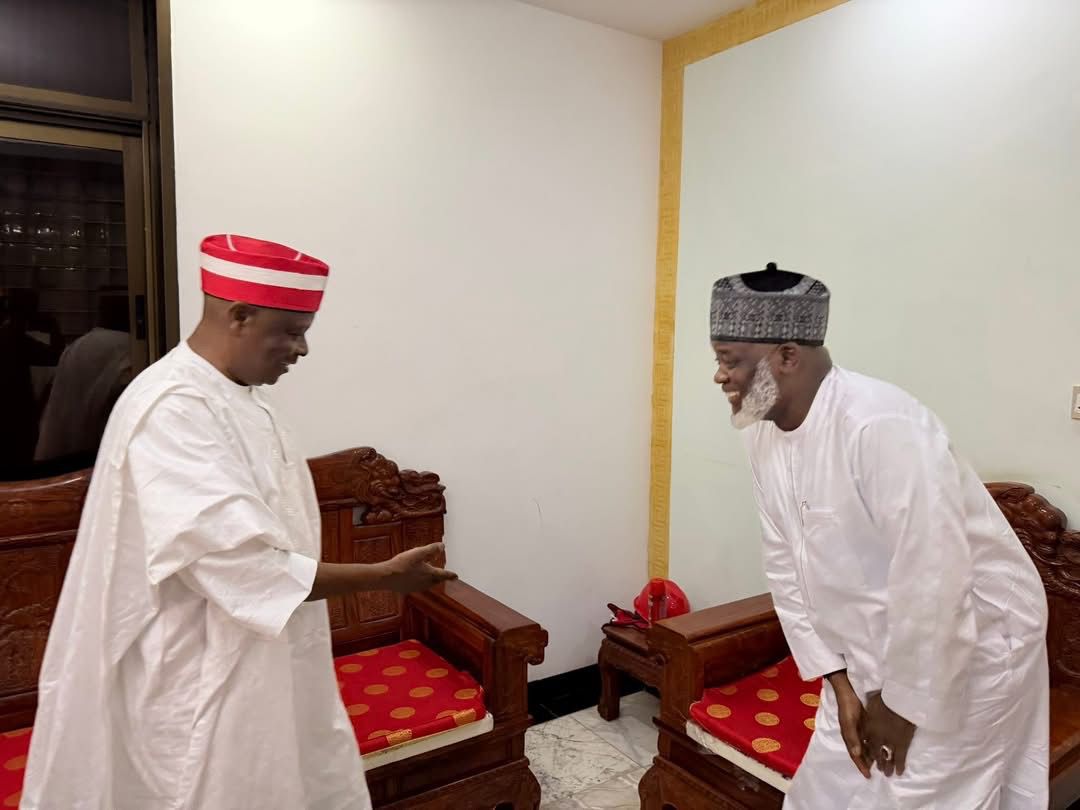
Political Earthquake in Kano: How, Senator Rabiu Musa Kwankwaso, Nasiru Gawuna’s Move to ADC Reshapes North-West Politics
The political atmosphere of Nigeria’s North-West was fundamentally altered on a sweltering afternoon in 2026 after Senator Rabiu Musa Kwankwaso former Governor of Kano State and Former Minister for Defence who is also the “Grand Commander” of the Red-Cap revolution, finalized a move that many viewed as the ultimate masterstroke of his political career. By transitioning from the NNPP to the African Democratic Congress (ADC), Kwankwaso did more than change platforms; he effectively reset the coordinates of the nation’s largest voting bloc.
Senator Kwankwaso’s pedigree is defined by a singular devotion to human capital development and an almost mythical grassroots loyalty preceded him. He turned a local movement, the Kwankwasiyya, into a disciplined, ideological army that transcends traditional party structures. His entry into the ADC instantly transformed a secondary party into a formidable fortress, signaling to the ruling elite that the North-West is no longer a monolith under their control.
The gravity of this shift is most profound in Kano, the heartbeat of Northern commerce. For years, the state was a polarized battlefield between the Kwankwasiyya and established conservative wings. However, the entry of Nasiru Yusuf Gawuna into the same ADC orbit has created a “Kano Super-Alliance” that was previously unthinkable. Kwankwaso, the visionary architect who sent thousands of Kano’s children to global universities, now finds his populist ideology merging with Gawuna’s administrative steadiness and deep-rooted institutional connections.
This synergy is a seismic departure from the politics of “zero-sum” rivalry; it is a calculated fusion of mass appeal and the strategic machinery required to protect and deliver votes.
This move reshuffles the entire North-West deck. As Kwankwaso plants the ADC flag across the region, he is attracting a wave of heavyweights from Kaduna to Sokoto who feel marginalized by the status quo. His political pedigree allows him to speak with a regional authority that others lack, positioning himself as a protector during a time of economic uncertainty. By bringing Gawuna into this fold, the dynamics of Kano politics have shifted from a war of attrition to a coalition of necessity. This alliance creates a “Third Way” that bypasses the failures of the old guard, promising a return to the rapid growth that defined the Kwankwaso years, but with a broader, more inclusive base that could dictate the occupant of Aso Rock in 2027.
Kwankwaso’s career has always been defined by a uniquely personal brand of power. From 1999 to 2015, he served two terms as Governor of Kano State, in addition to roles as Minister of Defence and Senator. While many were surprised by his recent maneuvers; especially following closed-door meetings with President Bola Tinubu, he chose the emerging ADC over the ruling APC.
In the high-stakes theater of Nigerian politics, few events have jolted the region quite like the defection of Nasiru Yusuf Gawuna from the APC to the ADC on March 31, 2026. Coming just twenty-four hours after Kwankwaso’s move, Gawuna’s transition fundamentally has also altered the political calculus in Kano. What makes this moment remarkable is the sheer drama of the reversal. Gawuna’s political journey has been a steady, calculated ascent through Kano’s establishment. He first shot to prominence as Commissioner of Agriculture under Governor Abdullahi Umar Ganduje, earning a reputation for hands-on management in a state where farming is the economic backbone. He eventually rose to Deputy Governor, serving for nearly six years and gaining invaluable executive experience. Beyond partisan politics, Gawuna distinguished himself as Chairman of the Governing Council of Bayero University and, most recently, as Chairman of the Federal Mortgage Bank of Nigeria (FMBN). He resigned from the FMBN on March 27, 2026, citing compliance with presidential directives regarding political appointees.
A look back at the 2023 gubernatorial election reveals just how significant Gawuna is. Running under the APC, he polled over 890,000 votes against the formidable Kwankwasiyya machine. This proved that he is one of the few politicians in Kano who can genuinely compete with Kwankwaso’s electoral machinery. His strength is threefold: he appeals to the youth, the religious establishment (Ulama), and the business community; he has the capacity to split the APC vote; and he has demonstrated he can deliver votes independently of a larger party wave. To understand the magnitude of this defection, one must appreciate the complete inversion of alliances since 2023. Back then, Governor Abba Kabir Yusuf ran on the NNPP ticket with Kwankwaso’s backing, while Gawuna carried the APC banner with Ganduje’s support. By 2027, the roles will likely reverse: Governor Yusuf is positioned to run under the APC with Ganduje’s blessing, while Gawuna is poised to run under the ADC with Kwankwaso’s endorsement.
From the perspective of the Kwankwasiyya movement, Gawuna’s arrival is a “return” rather than a “recruitment,” as he was part of the movement’s pioneer cohort. This narrative neutralizes accusations of opportunism. For his part, Gawuna framed his move in terms of service and divine guidance, with sources indicating he felt marginalized within the APC after his 2023 defeat.
The reaction from within the APC has been one of worry and regret. President Tinubu, recognizing the stakes, reportedly directed party leaders to prevent Gawuna’s move, even offering him an automatic Senatorial ticket for 2027. The failure of this pressure campaign, Gawuna reportedly placed his phone on “Do Not Disturb” and traveled abroad to avoid lobbyists represents a significant defeat for the presidency’s political management. This crisis prompted emergency meetings between President Tinubu, Dr. Ganduje, and Badaru Abubakar at the Presidential Villa to reorganize their strategy.
The long-term implication is the potential break of the APC-PDP duopoly. The ADC is now positioning itself as a genuine “third force” in the North-West. The defection of high-profile figures like Senator Ahmed Babba-Kaita, Senator Aishatu “Binani” Ahmed, and former Justice Minister Abubakar Malami suggests a coordinated realignment. This competition could force more substantive policy debates and reduce the “zero-sum” intensity of regional elections.
The projected 2027 gubernatorial rematch between Gawuna (ADC) and Governor Yusuf (APC) will be a battle between two men with established records. Voters will have a genuine choice between performance and platform rather than just shifting loyalties. As Gawuna put it: “Allah gives power to whom He wants and when He wants.” While the 2027 elections will reveal where that power flows, it is already clear that the political landscape of the North-West will never look the same again.
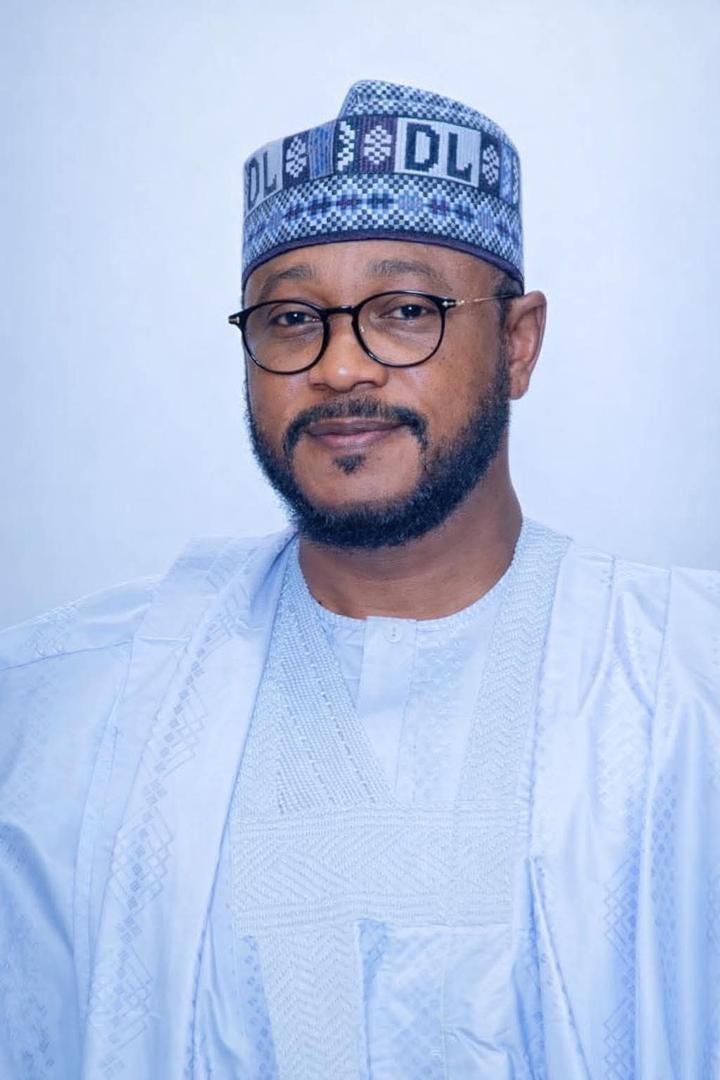
Governor Dauda Lawal Approves Gratuity Payment
The Zamfara State Government, under the visionary leadership of Governor Dauda Lawal, has approved the release of funds for the payment of Gratuity Batch 3 for the 2024/25 period. This decisive action underscores the administration’s unwavering commitment to the welfare of retired civil servants who dedicated years of service to the state’s development.
The Accountant General of the State is already working diligently to ensure that all eligible retirees receive their payments promptly and efficiently, reflecting the government’s resolve to uphold transparency and accountability in the disbursement process.
This timely gratuity payment is a testament to Governor Dauda Lawal’s people-centered leadership, which recognizes the sacrifices and contributions of retirees to the progress and stability of Zamfara State. It also reaffirms the government’s pledge to honor its financial obligations without unnecessary delays.
The Zamfara State Government calls on all retirees in the affected batch to exercise patience as the necessary administrative and financial processes are finalized. Every effort is being made to ensure smooth and uninterrupted payments.
This initiative is part of Governor Dauda Lawal’s broader vision to empower citizens and retirees, strengthen confidence in public service, and sustain the morale of those who have committed their lives to the growth of Zamfara State.
Politics
APC Group Endorses Fubara for 2027, Calls on Tinubu and APC to Prioritise Performance Over Politics in Backing Governor’s Second Term Ambition
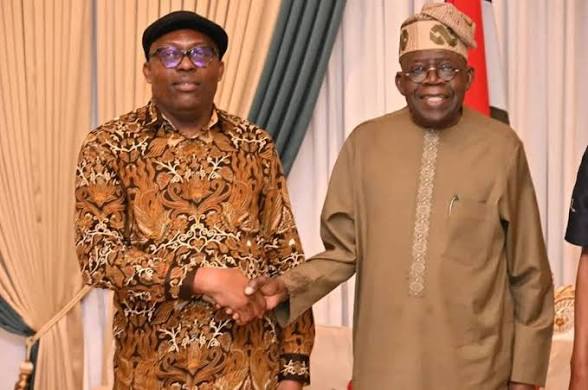
*APC Group Endorses Fubara for 2027, Calls on Tinubu and APC to Prioritise Performance Over Politics in Backing Governor’s Second Term Ambition*
The APC National Vanguard has appealed to President Bola Ahmed Tinubu and the leadership of the All Progressives Congress (APC) to support a second term in office for Siminalayi Fubara, citing what it described as “impressive and verifiable developmental strides” across Rivers State.
In a statement issued on Thursday by its National President, Dr Gbenga Salam (JP), the group said its position followed an extensive assessment tour of key infrastructure and public service projects executed under the Fubara administration.
The APC National Vanguard said the appeal was based strictly on performance, arguing that governance outcomes should outweigh partisan considerations, particularly in a state as economically significant as Rivers.
“We respectfully urge President Bola Ahmed Tinubu and the leadership of the All Progressives Congress to support the continuity of Governor Siminalayi Fubara beyond his current tenure, in recognition of his commitment to development, prudent resource management, and people-focused governance,” the statement read.
According to the group, its delegation visited multiple project sites across the state, observing ongoing and completed works spanning road construction, urban renewal, and public infrastructure upgrades.
It noted that the scale and distribution of these projects reflect a deliberate effort by the state government to extend development beyond traditional urban centres and into underserved communities.
“Our findings from the tour reveal a government that is not only active but intentional in its development agenda. The execution of capital projects across various parts of Rivers State demonstrates a clear understanding of the needs of the people and a commitment to addressing them,” Dr Salam said.
The group particularly commended what it described as prudent financial management by the administration, noting that the projects reviewed showed evidence of careful planning and efficient allocation of resources.
“At a time when economic pressures are evident across the country, it is commendable that the Rivers State government has managed its resources in a way that delivers visible and impactful development without signs of fiscal recklessness,” the statement added.
The APC National Vanguard further observed that despite political tensions in the state, the Fubara administration has maintained focus on governance, ensuring continuity in project execution and service delivery.
The group argued that such stability is critical for sustained development and should be encouraged rather than disrupted.
“Leadership must ultimately be judged by results. In Rivers State, there is clear evidence of progress—projects that are not only announced but executed, and policies that translate into real benefits for citizens,” Dr Salam noted.
The group warned that discontinuity in leadership could stall ongoing projects and reverse gains already recorded, stressing the importance of allowing a performing administration to consolidate its achievements.
“Rivers State is at a pivotal stage where continuity will allow for the completion of ongoing initiatives and the deepening of development gains. Supporting Governor Fubara for a second term is, therefore, a decision in the best interest of the people,” the statement said.
In addition to its call on the APC leadership, the group reaffirmed its support for President Tinubu, expressing confidence in his administration’s broader economic and governance reforms.
The APC group urged Nigerians to remain supportive of efforts aimed at stabilising the economy and strengthening public institutions.
“We reiterate our endorsement of President Bola Ahmed Tinubu for a second term in office, in recognition of his leadership and commitment to national development. With sustained support, the administration can consolidate its reform agenda for the benefit of all Nigerians,” Dr Salam added.
The APC National Vanguard concluded by calling on political actors to prioritise development and public interest over partisan divides, insisting that governance should always be guided by performance and accountability.
“Where leadership demonstrates prudence, delivers development, and remains focused on the welfare of the people, it deserves continuity. This is the position we have reached after a careful and independent assessment of Rivers State,” the statement added.


-

 society7 months ago
Religion: Africa’s Oldest Weapon of Enslavement and the Forgotten Truth
-

 news4 months ago
WHO REALLY OWNS MONIEPOINT? The $290 Million Deal That Sold Nigeria’s Top Fintech to Foreign Interests
-

 society6 months ago
“You Are Never Without Help” – Pastor Gebhardt Berndt Inspires Hope Through Empower Church (Video)
-

 celebrity radar - gossips2 months ago
Dr. Chris Okafor Returns with Power and Fire of the Spirit -Mounts Grace Nation Altar with Fresh Anointing and Restoration Grace on February 1, 2026
You must be logged in to post a comment Login
You must log in to post a comment.