
society
WARNING ON SOUTH AFRICA: A GLOBAL ALERT OR A CRISIS UNADDRESSED?

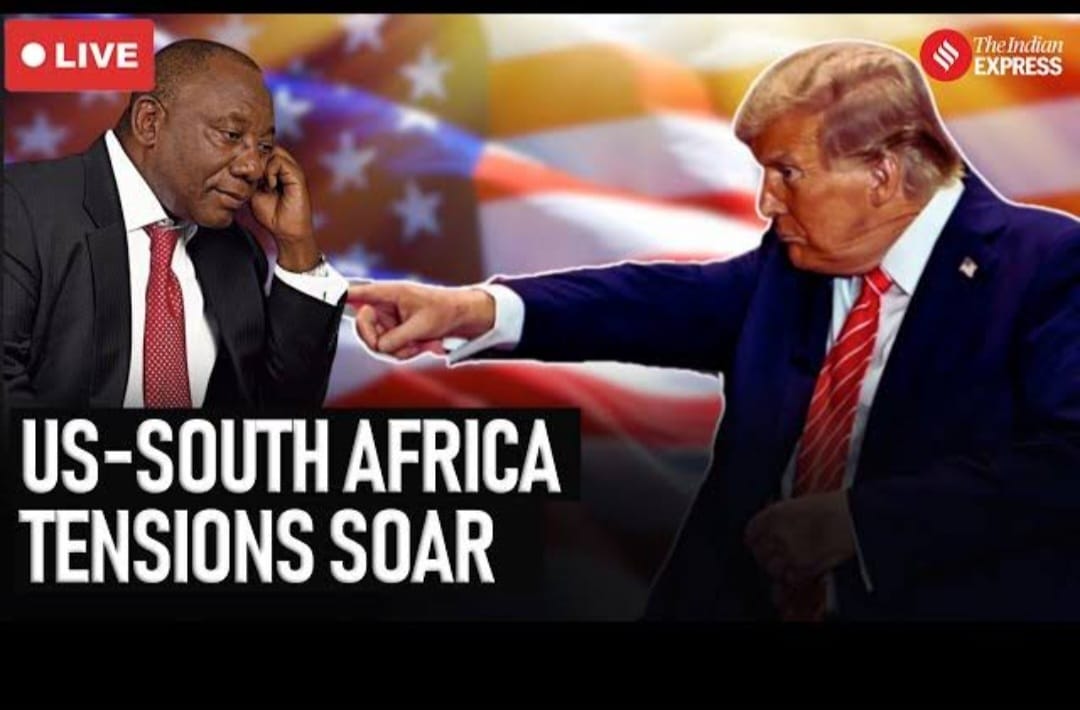
WARNING ON SOUTH AFRICA: A GLOBAL ALERT OR A CRISIS UNADDRESSED?
By George Omagbemi Sylvester
Published by saharaweeklyng.com
“Canada Joins U.S., China and Others in Travel Advisories — What It Reveals About Violent Crime, Governance and the Future of South African Tourism.”
Canada’s government has recently issued a stark travel advisory urging its citizens to “exercise a high degree of caution” when visiting South Africa, explicitly citing the persistent threat of violent crime and personal safety risks across the country. The advisory, released on December 4, 2025, places South Africa in a high-risk category with a classification few African states of similar economic stature currently share. This development marks a moment of international scrutiny that demands sober reflection, systemic accountability and a determined response from South African authorities.

Canada’s warning highlights not just isolated incidents, but deep and pervasive threats: armed robberies, carjackings, kidnappings, assault and theft at airports, hotels and on the nation’s roads. Foreign travellers, the advisory warns, have been directly affected by these crimes and an indictment that potential visitors should not take lightly.
This advisory follows similar travel warnings from the United States and China, underscoring a broader international consensus that South Africa’s safety climate is concerning enough to merit heightened caution. Collectively, these advisories reflect deep unease about the country’s security environment and raise urgent questions about governance, law enforcement efficacy and the future competitiveness of South Africa’s tourism and investment sectors.
WHAT THE CANADA ADVISORY ACTUALLY SAYS? Canada’s government specifically warns travellers that:
Violent crime occurs frequently throughout South Africa and has involved foreigners.
Incidents such as armed robberies, carjackings, home invasions and assaults are common, particularly after dark.
Kidnappings (including express kidnappings where victims are forced to withdraw money) remain a threat, particularly in major urban areas.
Airport-related theft and follow-up robberies upon arrival are significant enough to be explicitly included.
Theft from hotels and guest houses, petty crime like pickpocketing and impersonation of officials are ongoing concerns.
Road travel carries elevated risk, especially at traffic stops or isolated routes.

The language of the advisory (urging avoidance of unnecessary travel after dark, recommending reputable transport services and advising travellers not to resist criminals) is sobering. It reflects not just statistical risk, but practical survival advice aimed at preserving life and limb.
CONTEXT: SOUTH AFRICA’S SECURITY REALITY. South Africa’s challenges with violent crime are neither exaggerated nor isolated. The UK Foreign Office and other national advisory bodies similarly warn that violent crimes (including robbery, rape and carjacking) are more common here than in many other destinations. Most incidents occur in central business districts, townships on city peripheries and isolated areas are especially after dark.
These dangers are not trivial. South Africa historically records some of the highest murder and violent crime rates in the world, a reality shaped by entrenched socio-economic inequality, unemployment and systemic challenges within the criminal justice system. Crime in and around transport hubs and roads (including OR Tambo International Airport) is well documented and repeatedly noted in travel advisories.
Yet, the situation is paradoxical. Despite repeated advisories, a great many travellers still visit and many return safely. Indeed, in 2024 the United States recorded over 370,000 American visitors to South Africa and arrivals from the U.S. surpassed those from the United Kingdom with a testament to the destination’s appeal and resilience.
But to dismiss these advisories as alarmism is to miss the point and to risk perpetuating a cycle of complacency. The fact that crime is concentrated in particular areas does not diminish its severity for those affected.
EXPERT ANALYSIS: CRIME, PERCEPTION AND REALITY. Professor Sipho Madonsela, a respected criminologist at the University of Johannesburg, states:
“South Africa’s crime crisis cannot be understood in isolation from structural inequality and a justice system under strain. High crime deters investment, inhibits tourism, and erodes social cohesion.”

Similarly, international security expert Dr. Helen Jackson of the Institute for Global Safety argues:
“Travel advisories are not perception exercises; they are grounded in verified patterns of risk. When multiple governments independently flag the same dangers, there is empirical weight behind those warnings.”
These assessments highlight something too often overlooked: advisories are not fear-mongering but they are policy tools grounded in data and lived experience.
A travel advisory is, at its core, an admission that existing security measures are not adequate to guarantee safety for all. It is a red flag and when Canada, the United States, China, Australia and the UK all raise that flag simultaneously, the message is clear.
THE DIPLOMATIC DIMENSION. Travel warnings also carry diplomatic subtext. While some South African leaders dismiss these advisories as standard practice, stating that many countries globally face similar issues, the repeated alignment of major powers in issuing cautionary notices cannot be ignored.
For example, following the U.S. travel advisory earlier in 2025, South Africa’s Tourism Minister acknowledged the challenge but stressed visitor safety remains a priority. She noted that many visitors travel safely every year and that safety mechanisms (like tourism safety helplines and increased security at hotspots) are in place.
Yet the diplomatic standoff (between acknowledging crime as a reality and defending national reputation) demonstrates a tension that has broader economic implications.
IMPACT ON TOURISM AND INVESTMENT. Tourism is a significant pillar of South Africa’s economy, contributing billions to GDP and sustaining jobs across hospitality, travel, and retail sectors. Yet security concerns threaten to erode confidence among potential visitors and investors alike.
A World Bank analysis of international travel patterns reveals that perceived safety is among the top factors influencing destination choice. If safety concerns escalate in international rankings, tourists may opt for destinations perceived as safer and even if crime levels are statistically comparable.
This risk is not hypothetical. Travel advisories have historically influenced tourism flows, airline bookings and foreign investment decisions. When Canada (a country with robust international mobility) signals heightened caution, travellers and corporate stakeholders pay attention.

NOT JUST SOUTH AFRICA: A GLOBAL CHALLENGE. It is crucial to understand that high crime is not unique to South Africa. Many countries with strong economic credentials contend with violent crime and still attract millions of visitors. Yet the alarming part of the current situation is how consistently multiple governments are urging caution and not merely routine vigilance.
This convergence of advisories suggests a pattern, not isolated policy decisions. It reflects a global judgement that South Africa’s approach to safety is insufficiently robust and, without significant reforms, may undermine the nation’s competitiveness.
In Summary: A MOMENT FOR HONEST LEADERSHIP..
Canada’s travel advisory (joined by similar warnings from the U.S. and China) is more than a bulletin; it is a wake-up call. South Africa stands at a crossroads: It can choose to confront its crime crisis with urgency, transparency, and comprehensive reform or risk international isolation in tourism and investment.
In the words of Professor Madonsela:
“Safety is not just a policy objective; it is a currency for economic confidence.”
South Africa’s rich landscapes, vibrant cultures and world-class attractions should not be overshadowed by avoidable risks. The country deserves better governance, stronger policing and a secure environment where locals and visitors alike can thrive.
In an era where global travel is both highly competitive and intensely scrutinised, South Africa’s future as a premier destination depends not just on beauty, but on safety and on the courage to address the issues that have now captured the international community’s attention.




society
From Broadcast to Spiritual Renaissance: The Journey of Alọba A. Orisabimbola Ifatomi, Creator of ÒRÌṢÀTV

From Broadcast to Spiritual Renaissance:
The Journey of Alọba A. Orisabimbola Ifatomi, Creator of ÒRÌṢÀTV
In a time when African stories are often misrepresented or diluted, a seasoned voice in Nigeria’s media and creative industry is stepping forward with a bold vision to reclaim, preserve and project the depth of African spirituality through a new wave of cinematic storytelling powered by technology.
Alọba Adewunmi, a respected broadcaster, journalist and creative professional, is the mind behind ÒRÌṢÀTV a groundbreaking platform using Artificial Intelligence (AI) cinematic production to tell authentic Yoruba stories rooted in cosmology, spirituality and cultural heritage.
ÒRÌṢÀTV is not just a channel it is a destination to experience “The Beginning”, a Yoruba cosmology-based AI cinematic series that explores the origin of life and existence through an African lens.
A Career Built on Media Excellence
With years of experience across broadcast and print media, Alọba Adewunmi has established himself as a dynamic storyteller and cultural voice.
He has worked with several notable platforms including OSBC, Orisun FM, Yotomi Cable, Okin FM, Midland FM, Delta Cable, Akede Oodua Publications and Akede Africa.
His professional journey includes:
– Reporter at Alariya Oodua
– Editor at Gbajumo Online Magazine
– General Editor at Akede Africa ( a bilingual news magazine)
Through these roles, he has contributed significantly to journalism, cultural reporting, politics, crime and entertainment.
A Multifaceted Creative Force
Beyond journalism, Alọba Adewunmi’s creative footprint extends deeply into film and storytelling.
He is not just a performer, but a creative architect behind the scenes, serving as:
– A Continuity Director
– Continuity Director of the home video “Tobi (Forgiveness)”, produced by Kola Adeyemo
– A Story Writer and Dialogue Director
– A Scriptwriter
He has also contributed to several home video productions from the late 1990s through the early 2000s, reflecting a long-standing presence in Yoruba film storytelling.
A Spiritual Path and Cultural Mission
Beyond media and film, his journey is rooted in a deeper spiritual calling.
Alọba Adewunmi is a traditional priest, teacher and herbal medicine practitioner, dedicated to the preservation and practice of Yoruba spirituality.
His temple, Obàtálá Alábãlàse Temple of Purity, stands as a sacred center for purity, healing and spiritual guidance.
The Vision Behind ÒRÌṢÀTV
ÒRÌṢÀTV is more than a content platform, it is a cultural revival movement powered by AI-driven cinematic storytelling.
Through this innovative approach, the platform explores:
– The origin of existence
– The roles of divinities
– The structure of human destiny
– The spiritual laws governing life
The debut episode, “The Birth of Ilẹ̀ Àwọn Alààyè”,( Command of Creation ) marks the beginning of the series “The Beginning”.
Blending mythology, spirituality and AI-powered visuals, ÒRÌṢÀTV offers a unique experience that is both educational and deeply immersive.
A Mission Beyond Entertainment
For Alọba Adewunmi, this project goes far beyond entertainment.
It is a mission to preserve indigenous knowledge, educate future generations, correct misconceptions about African spirituality and restore pride in African identity.
The Man Behind the Vision
Despite his wide experience and creative influence, Alọba Adewunmi remains a naturally private and introverted individual.
He is known more for his work than for public appearances moving quietly between his professional responsibilities and personal space.
Rather than seeking the spotlight, he has consistently chosen to let his talent, creativity and impact speak for him.
Those who encounter his work or collaborate with him understand the depth he brings a reminder that true substance is not always loud and presence is not always public.
Looking Ahead
With Episode 1 now released, anticipation continues to build as “THE BEGINNING” prepares to explore deeper aspects of creation, human destiny and spiritual alignment.
This is not just a project it is a legacy unfolding through culture, spirituality, and innovation.
Watch Now
THE BEGINNING


Episode 1
The Birth of Ilẹ̀ Àwọn” Command of Creation)
Available on YouTube.
Media & Contact
For interviews, features and collaborations:
08125883088
© 2026 ÒRÌṢÀTV
All Rights Reserved

TY BURATAI HUMANITY CARE FOUNDATION COMMENDS GOVERNOR ZULUM FOR HELPING MILITARY FAMILIES
The TY Buratai Humanity Care Foundation has commended Borno State Governor Babagana Umara Zulum for his generous donation of ₦150 million to the families of three military officers who were tragically killed in recent attacks. Each family received ₦50 million as part of the state’s continued commitment to supporting fallen heroes and wounded personnel involved in counter-insurgency operations.
The commendation was contained in a statement signed by the foundation’s chairman, Ibrahim Dahiru Danfulani Sadaukin Garkuwan Keffi/Betara Biu, and made available to the press.
The foundation expressed gratitude for the governor’s compassionate gesture, which included personal visits to the families of the late Lieutenant Colonels Umar Farouq, Salihu Iliyasu, and Aliyu Saidu Paiko in Abuja, Niger, and Kano States. During the visits, Governor Zulum offered his condolences and praised the service, sacrifice, and patriotism of the fallen officers.
The foundation’s Grand Patron, His Excellency, Lieutenant General Tukur Yusufu Buratai, CFR (Rtd), personally commended the governor’s dedication to improving the lives of Borno State residents. He also extended his condolences to the families of the officers and soldiers who made the ultimate sacrifice in service to the nation.
During his visits, Governor Zulum reaffirmed his administration’s commitment to supporting bereaved families, which includes offering scholarships to the orphaned children of fallen personnel. He pledged to extend similar visits to other affected families, underscoring a compassionate approach to addressing the needs of those who have suffered in the line of duty.
society
Queen Amb Dr. Nwamaka Cordelia Anyatonwu Appointed Minister of Humanitarian, Culture, and Kingdom Affairs, United Kingdom of Atlantis
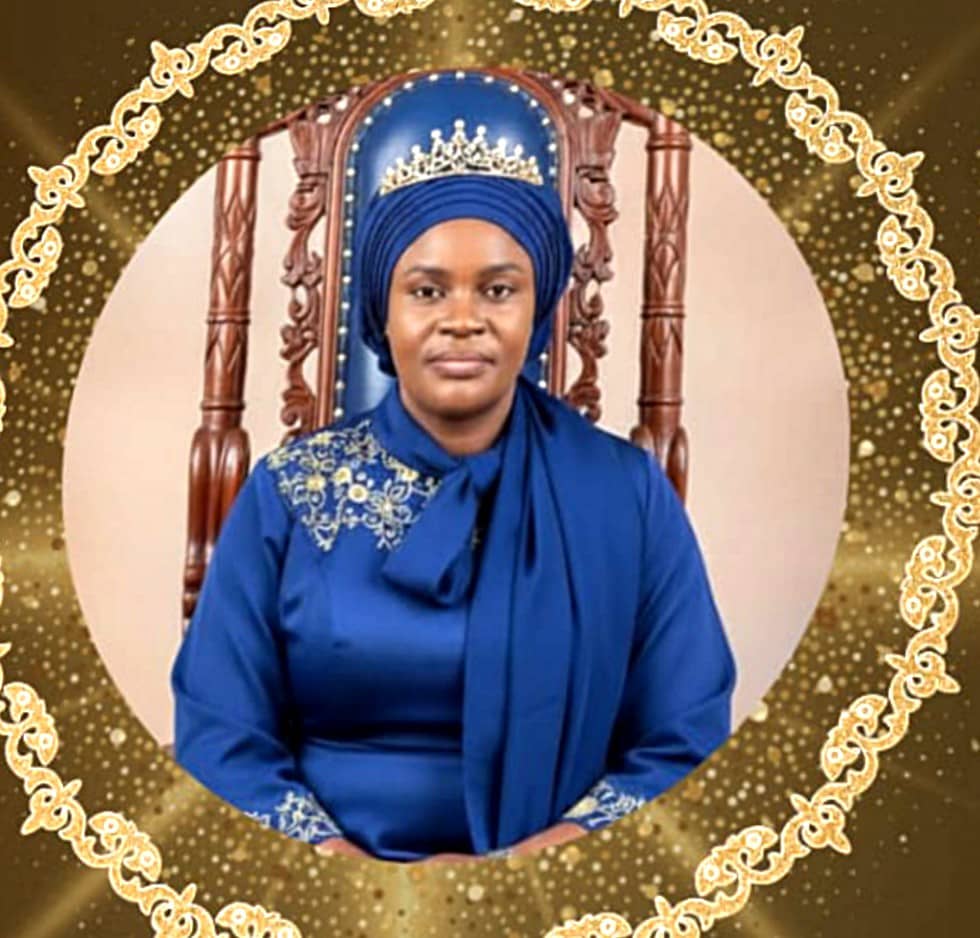
*Queen Amb Dr. Nwamaka Cordelia Anyatonwu Appointed Minister of Humanitarian, Culture, and Kingdom Affairs, United Kingdom of Atlantis
Her Majesty Queen Amb Dr. Nwamaka Cordelia Anyatonwu, Queen of the Aches Empire under the jurisdiction of the United Kingdom of Atlantis (UKA), has been appointed as the Minister of Humanitarian, Culture, and Kingdom Affairs, effective immediately.
This appointment comes as the UKA takes decisive steps to strengthen its humanitarian efforts and protect its citizens from unauthorized activities. In light of recent developments, the UKA has issued an official public disclaimer cautioning citizens, followers, and the general public about the activities of individuals promoting and operating a coin or platform not officially recognized by the Atlantian Gold Coin (ATC). This follows the hijacking of the 5 billion humanitarian project, a move that has been met with concern and condemnation from the international community.
As the newly appointed Minister, Queen Amb Dr. Anyatonwu has announced that all matters pertaining to the 5 billion humanitarian project in UKA should be directed to her office. This includes the newly captured NGOs, which are now required to report to the Office of Humanitarian Affairs, ensuring transparency and accountability in the management of humanitarian resources.
“We are committed to transparency and accountability in our humanitarian efforts,” said Queen Amb Dr. Anyatonwu. “We urge all stakeholders to work with us to ensure the success of our initiatives and protect our citizens from unauthorized activities. We will not tolerate any form of exploitation or mismanagement of humanitarian funds, and we will take all necessary measures to ensure that those responsible are held accountable.”
The UKA has assured its citizens and the international community that it is taking all necessary measures to recover the hijacked funds and bring the perpetrators to justice. The appointment of Queen Amb Dr. Anyatonwu is seen as a significant step towards achieving this goal and ensuring that humanitarian efforts are aligned with the UKA’s values and principles.
For more information. Please contact the Office of the Minister of Humanitarian, Culture and Kingdom Affairs.
*About the United Kingdom of Atlantis*
The United Kingdom of Atlantis is a sovereign nation committed to promoting peace, prosperity, and humanitarian values. The UKA is dedicated to working with international partners to address global challenges and improve the lives of its citizens and people around the world.


-

 society6 months ago
Religion: Africa’s Oldest Weapon of Enslavement and the Forgotten Truth
-

 news4 months ago
WHO REALLY OWNS MONIEPOINT? The $290 Million Deal That Sold Nigeria’s Top Fintech to Foreign Interests
-

 society6 months ago
“You Are Never Without Help” – Pastor Gebhardt Berndt Inspires Hope Through Empower Church (Video)
-

 celebrity radar - gossips2 months ago
Dr. Chris Okafor Returns with Power and Fire of the Spirit -Mounts Grace Nation Altar with Fresh Anointing and Restoration Grace on February 1, 2026