
Politics
“Wetin Ambode Don Do Sef? 35 Achievements Of Governor Ambode In Lagos!”

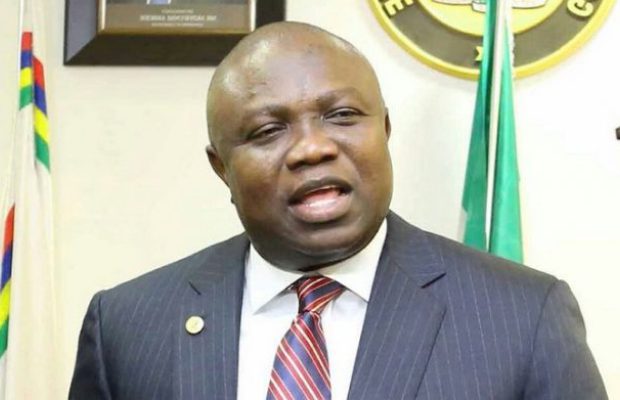
Wetin Ambode Don Do Sef! 35 Achievements by Governor Ambode in Lagos!
1. Backlog payment of N11billion as arrears to retirees of Lagos State Government.
2. Built the Safety Arena, in Oshodi, to bring all the Departments and Agencies responsible for safety and emergency management under one roof.
3. Completed or close to completing more than 300 Local Government road projects, since 2015.
4. Repositioned Lagos State Emergency Agency, LASEMA. The Agency now operates via 4 centres, namely Command & Control Centre, Alausa, Ikeja; LASEMA Response Unit (LRU) Cappa Oshodi; LASEMA Response Unit, Lekki (by Lekki-Ikoyi Link Bridge) and LASEMA Response Unit, Onipanu. Equipped LRU with modern equipment (trucks, power bikes, heavy-duty vehicles and fire trucks, Mobile Intensive Care Ambulances and Light Rescue Equipment, and 14 new BMW Power Bikes for on-spot reconnaissance assessments of emergency incidents.
5. Launched Amnesty period for land/property owners to obtain/regularise building permits. Between March 1 and August 31, 2018, Lagos State Government will not charge any penalty for those who have erected structures on their land without a building permit. This window offers a 6-month grace period for landowners to obtain their building permit.
6. Commenced construction of 10-lane Oshodi–Murtala Muhammed Int’l Airport Road, scheduled for completion by December 2018.
7. Completed palliative repair work on section of the Lagos-Badagry Expressway between Eric Moore and Okokomaiko. Work ongoing on Okokomaiko to Badagry section.
8. Established Lagos State Consumer Protection Agency, LASCOPA in 2017, for speedy redress of consumers’ complaints.
9. Acquired equipment worth more than 5 billion Naira for the State Police Command and Rapid Response Squad. Equipment donated include 100 4-door salon cars, 55 Ford Ranger pick-ups, 10 Toyota land cruiser pick-ups, 15 BMW power bikes, 100 power bikes, Isuzu trucks, three helicopters, two gun boats, 120 power generating sets, 15 armoured personnel carriers, revolving lights, siren and public address system, vehicular radio communicators, security gadgets including bullet proof vests, helmets, handcuffs, uniforms, kits and improved insurance and death benefit schemes for officers.
10.Launched the Bus Reform Initiative, to bequeath a world class transportation system to the State. It will see the construction of new bus terminals, introduction of 5,000 new buses, and construction of 100 modern Bus Shelters across the State. Already completed Tafawa Balewa Bus Terminus and Ikeja Bus Terminus; Acquired 434 new buses for Ikorodu Bus Rapid Transit (BRT) corridor; and commenced work on Oshodi-Abule Egba BRT corridor along the Lagos-Abeokuta Expressway (13.5 kilometers; 14 bus stations; 14 pedestrian bridges).
11.Launched the Lagos To The World (#L2W) global campaign, to better market and communicate investment opportunities in the State. As part of the launch of L2W, the Ambode Administration has also unveiled a deal book detailing investment opportunities in key sectors including health, transportation, oil and gas, among others.
12.Employed 1300 teachers into primary education system; and Provided free medical services and psychosocial therapy to 700 survivors of domestic and sexual violence.
13.Presented 500 million Naira in Grants to 275 Community Development Associations in July 2018 to enable them complete various self-help projects.
14.Installed Skywalk Bridge to link Terminals 1 and 2 at Oshodi Bus Interchange
15.Upgraded 9,174 square meter Alfred Rewane Garden, Ikoyi and opened it for use by members of the public within and around the Ikoyi axis.
16.Established N25 billion Lagos State Employment Trust Fund. The Fund has provided loans worth more than 5 billion Naira to more than 8,000 persons since inception, and helped create more than 11,000 jobs.
17.Commenced development of N49 billion Public Private Partnership Medical Park in Ikoyi, to be located at the old Nursing School along Awolowo Road, Ikoyi. (Lagos State contributing land; private investors putting up the funding).
18.Redesign of Lekki-Epe Expressway to improve journey times and reduce gridlock by replacing roundabouts with traffic lights
19.Launched Ready-Set-Work, an entrepreneurial and employability training programme aimed at ensuring that every student who graduates from any tertiary institution in Lagos has knowledge, skills, and attitude required to gain employment upon graduation. More than 2,500 final year students trained since 2016.
20.Launched Lagos State Traffic Information System (LATIS), a world-class traffic information and management system comprising hundreds of cameras, road sensors and electronic displays specially designed to collect and deliver real time information to city commuters, and thus help regulate traffic.
21.Launched Code Lagos, an initiative aimed at teaching 1 million Lagos residents to code by 2020. Currently, Code Lagos has trained over 31,000 Lagosians to code while 364 Coding Centres have also been set up in 352 primary and secondary schools as well 12 Out-of-School Centres. http://codelagos.org/
22.Annual hosting of Lagos City Marathon, since 2016. The Marathon has placed Lagos on the global athletics map.
23.Received Presidential approval for handover of National Stadium to Lagos State, to redevelop and transform it into a world-class facility; Rehabilitated Agege Township Stadium to meet Confederation of African Football (CAF) standards; and Mobolaji Johnson Sports Complex, Rowe Park, Yaba
24.Upgraded 14 flagship Primary Healthcare Centres (PHCs); Provided 20 Mobile Care Unit ambulances and 26 Transport Ambulances across the State; Approved the establishment of three new Maternal/ Child Health Care Centres to expand the scope and reach of public health service delivery.
25.Constructed Flyover bridges for Ajah and Abule-Egba areas, and Multiple Lay-by to ease traffic congestion along the Third Mainland-Iyana-Oworo-Toll Gate Road.
26.Established Special Task Force, ‘Operation Restore Sanity On Lagos Roads,’ to clear Apapa-Oshodi Expressway of Trucks, Tankers and Trailers. Between July 20 and 22, 2018, the Task Force successfully cleared more than 2,000 Trucks from section of road between Toyota Bus Stop and Mile 2.
27.Rebranded and expanded the Lagos Countdown, into the One Lagos Fiesta, to boost tourism and entertainment. The fiesta now holds simultaneously at five locations across the state: Ikorodu, Epe, Badagry, Lagos Island and Ikeja
28.Established three new Fire Stations at Bolade-Oshodi, Ejigbo and Abesan, and upgraded facilities at the existing Fire Stations in Alausa, Ikeja, Isolo, Agege, Ilupeju, Badagry-Suru, Ikotun and Agege. Rehabilitated 225 old fire hydrants in Lagos metropolis, and installed 50 new ones connected to the mini/micro water works across the State. Also employed 250 new personnel into the Lagos State Fire Service, and purchased new fire-fighting equipment such as complete sets of Master Breathing Apparatus, Tripod Stand Rescue Equipment, Dragon Max Floodlights, Duraline Hoses, and Power Stream PPU Blower.
29.Completed Ojodu-Berger Flyover Intersection; completed 21 roads and two bridges with a combined stretch of 27.4 kilometers in Alimosho-Agbado-Oke-Odo area.
30.Established Relief Resettlement Camps in Agbowa and Igando to cater for IDPs across the State.
31.Established Office of Overseas Affairs and Investment to promote and coordinate investments in Lagos State, and the Small Claims Court to fast-track justice delivery in commercial disputes involving claims not exceeding N5 million. The entire period of proceedings from filing to judgment will not exceed 60 days.
32.Developed the Strategic Plan for Accelerated Agricultural Growth (SPAAG), and set aside 50,000 acres of land for agriculture in the State. The land will be allocated to farmers and investors for production of tomato, rice, fish, etc.
33.Collaborated with Kebbi State to produce LAKE (Lagos-Kebbi) Rice; and with Kano State to organize the first Lagos-Kano Economic Summit.
34.Launched, in partnership with the private sector, the Cleaner Lagos Initiative (CLI), to improve waste management and processing in the State, by, among other interventions, constructing Transfer Loading Stations, Maintenance Depots, and Engineered Sanitary Landfills.
35.Signed into law the landmark Lagos State Electric Power Sector Reform Law, to guarantee 24-hour power supply in line with Governor Ambode’s vision to attain a 24-hour economy. Also signed into law an Amended Land Use Charge Law.
Compiled by the #ExplainsLagos Initiative




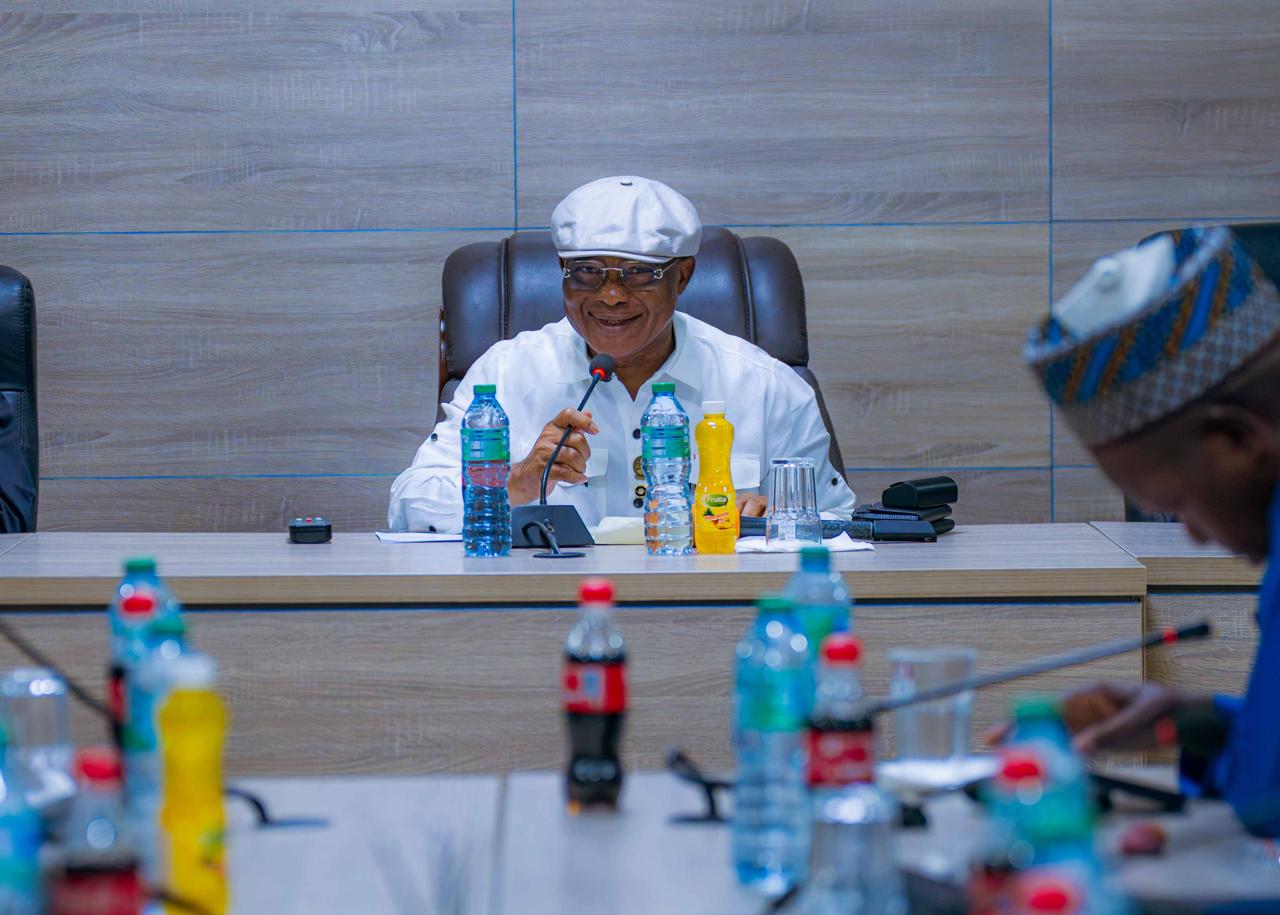
*Renewed Hope Ambassadors Step Into the Next Phase
Fresh from the successful APC 2026 National Convention, the Renewed Hope Ambassadors National, Zonal, and State leadership gathered in Abuja over the weekend, for its fourth strategic meeting, setting the tone for nationwide grassroots activation ahead of 2027.
Chaired by Governor Hope Uzodinma (Imo State) the Director General and National Coordinator of the Renewed Hope Ambassadors, alongside Deputy Director-General, Governor Uba Sani of Kaduna State, and Governor Inuwa Yahaya of Gombe State as Secretary, the session reinforced one clear direction: One Party. One Message. One Mobilization whilst also laying out a strategic roadmap for the activation of the network across all communities in Nigeria.
Backed by the strength of 31 APC-led states, the Renewed Hope Agenda is taking Bola Ahmed Tinubu’s message of progress and reform to every corner of Nigeria.
From bold economic restructuring to initiatives like NELFUND, the increase in the national minimum wage from ₦30,000 to ₦70,000, and strategic investments in critical sectors, including PNiCGI, the mission remains clear: helping Nigerians understand both the purpose and the progress of the Renewed Hope vision.
This is coordination at scale. This is grassroots engagement with purpose. This is the next phase of Renewed Hope with One Party, One Message, and One Mobilisation framework
#RenewedHopeAmbassadors #APC #WeAreAPC


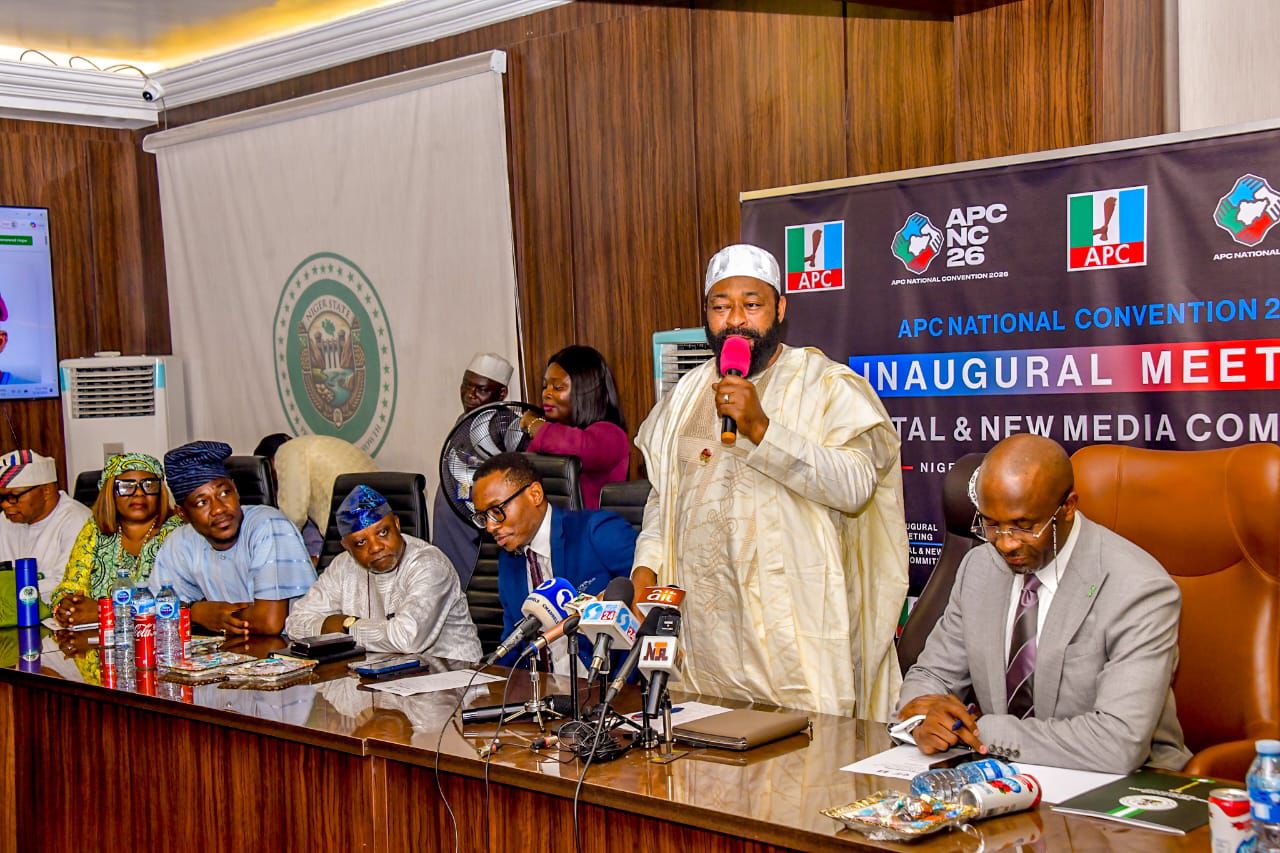
Governor Bago Inaugurates APC Digital Media Sub-Committee Ahead of National Convention.
Governor Umaru Bago has inaugurated the Digital Media Sub-Committee for the forthcoming National Convention of the All Progressives Congress (APC), scheduled to hold on March 27 and 28, 2026 in Abuja.
Chairing the sub-committee, Governor Bago tasked members with the responsibility of effectively communicating the party’s manifesto to the public.
He emphasized the need to leverage social media platforms to highlight the achievements and ongoing efforts of President Bola Ahmed Tinubu, noting that communication gaps have posed challenges that must now be decisively addressed.
The Co-Chair of the sub-committee, Hon. Benjamin Kalu, Deputy Speaker of the House of Representatives, echoed the Governor’s position, urging members to project the activities of both the party and the government to a broader audience.
He called for a deliberate and coordinated effort to showcase the party’s achievements and policy direction, stressing the importance of shaping a compelling and consistent narrative across all digital platforms.
Delivering a presentation to the committee, Otega Ogra, SSA to the President on New Media, who serves as Secretary of the sub-committee, outlined strategic focus areas to guide the team’s operations.
His presentation highlighted communication priorities and actionable steps to achieve the committee’s mandate and strengthen the party’s digital engagement.


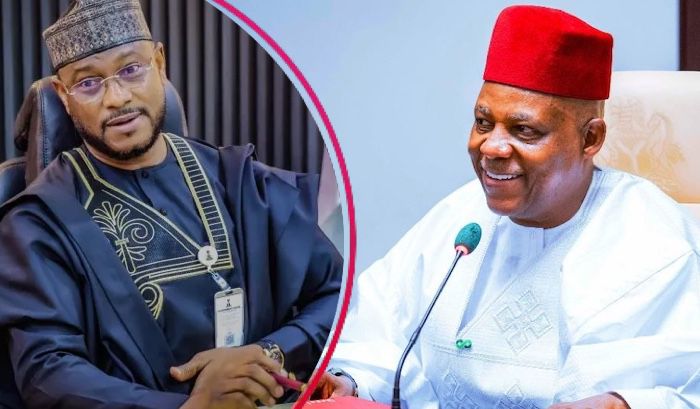
VP Shettima Set to Lead Delegation to Zamfara as Governor Dauda Lawal Formally Joins APC
The Zamfara State chapter of the All Progressives Congress (APC) has finalized plans to receive Vice President Kashim Shettima for the formal defection and reception of Governor Dauda Lawal into the ruling party, scheduled to take place on Tuesday.
State APC Chairman, Tukur Danfulani Maikatako, disclosed this during a high-level stakeholders’ meeting held in Gusau, the state capital. He noted that the Vice President would be joined by the party’s national leadership to mark what he described as a landmark political realignment in the state.
Maikatako expressed the party’s excitement over Governor Lawal’s return, recalling that Zamfara had historically been an APC stronghold and that the Governor was previously a bona fide member of the party before his earlier exit.
“We all know that Zamfara has long been one of the APC’s stronghold states, where the defected Governor was once a bona fide member. Now that he has decided to return home, having been satisfied that the APC remains his second choice after the one he left for obvious reasons,” Maikatako stated.
The Chairman called on all party faithful across the 147 wards in the state’s 14 local government areas to turn out en masse to honour the Vice President’s visit. He emphasized that the event was strategically positioned to bolster the party’s popularity and strengthen its structures ahead of the 2027 general elections.
In a strong appeal for unity, Maikatako urged members to set aside all factional tendencies, stressing that the APC remained one political family with shared goals, particularly the ambition to make Zamfara and Nigeria great again.
Echoing similar sentiments, a former state APC Chairman, Lawal M. Liman, appealed to members to cascade the message to their wards and local government areas. He reinforced the need for cohesion, noting that the party’s collective strength would be critical to achieving success in future elections.

All eyes are now on Gusau as the ruling party prepares for a high-profile political gathering expected to further consolidate its influence in Zamfara State.


-

 society6 months ago
Religion: Africa’s Oldest Weapon of Enslavement and the Forgotten Truth
-

 news4 months ago
WHO REALLY OWNS MONIEPOINT? The $290 Million Deal That Sold Nigeria’s Top Fintech to Foreign Interests
-

 society6 months ago
“You Are Never Without Help” – Pastor Gebhardt Berndt Inspires Hope Through Empower Church (Video)
-

 celebrity radar - gossips2 months ago
Dr. Chris Okafor Returns with Power and Fire of the Spirit -Mounts Grace Nation Altar with Fresh Anointing and Restoration Grace on February 1, 2026
You must be logged in to post a comment Login
You must log in to post a comment.