
Sports
Why Nets’ Kyrie Irving, James Harden won’t be able to coexist

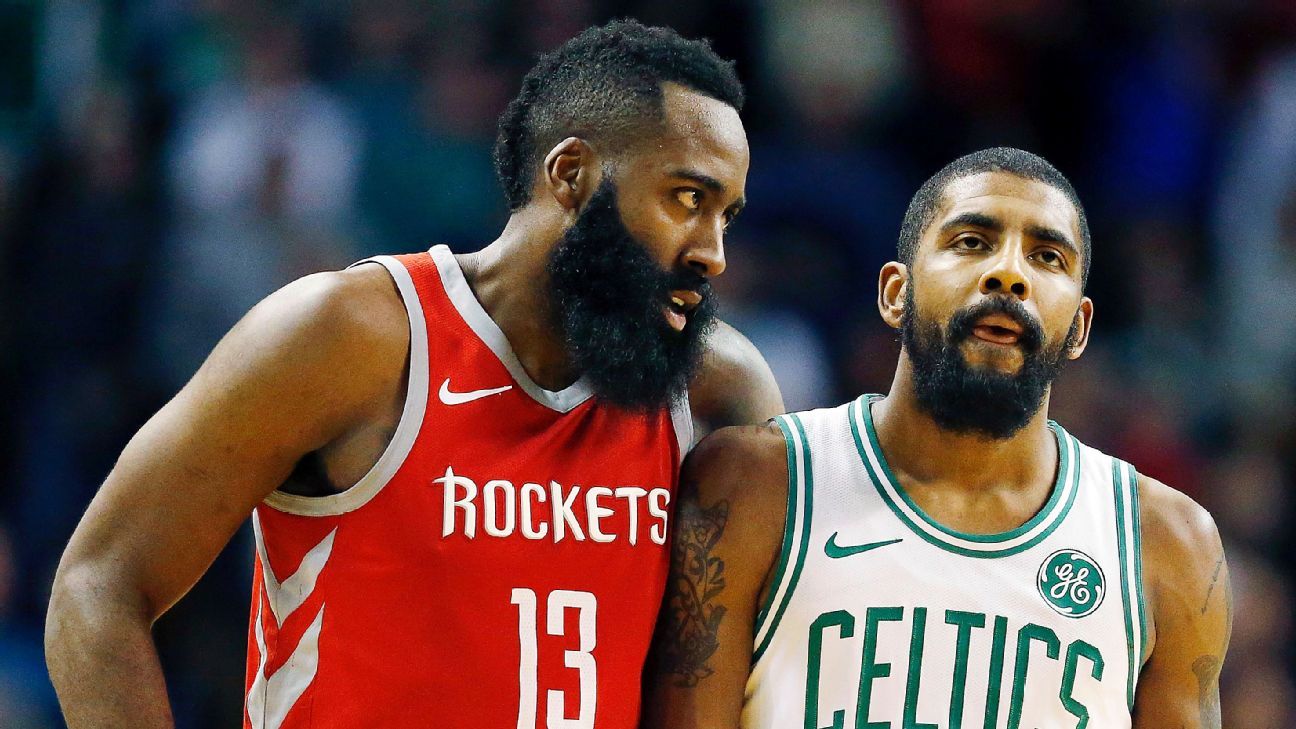
Why Nets’ Kyrie Irving, James Harden won’t be able to coexist- The two NBA stars have led their teams with dynamic scoring and playmaking. But they have alienated their teams with their selfishness and attitude.

The two NBA stars have shown they can help their team win with clutch shots and occasionally with defense. But they also have deserted their teams when they have needed them the most.
So how can James Harden and Kyrie Irving co-exist on the Brooklyn Nets when they have consistently allowed their negative habits to overshadow their All-Star talent?

Nets coach Steve Nash did not say much on those dynamics or anything else involving the harden trade because it wasn’t official. Neither did Nets star Kevin Durant, whose perspective matters for numerous reasons.
He has become the Nets’ top scorer and leader. He has remained close friends with Irving. He knows what makes Harden tick after playing together in Oklahoma City (2009-12) before Harden left for the Rockets for more money and a bigger role.

Through two NBA titles and two Finals MVP awards out of three Finals appearances with the Golden State Warriors, Durant mastered how to complement his All-Star teammates (Stephen Curry, Klay Thompson, Draymond Green) while still remaining one of the league’s top players.
Though Durant described his time with Harden in Oklahoma City as “fun”, I cannot see how the Harden-Irving pairing will be.
Unlike what Durant showed in Golden State, Harden and Irving have consistently failed to lead. They also have consistently failed to work with their star teammates.
Sure, Irving helped the Cavaliers win the 2016 NBA title partly after making a clutch 3-pointer against Golden State in Game 7. A little more than a year later, Irving requested the Cavaliers to trade him amid reported tension with LeBron James. He may consume a lot of oxygen in a room. But no one can question James’ talent and that his presence leads to team-oriented play.
Then, Irving wore out his welcome in Boston by alienating his younger, blossoming teammates. After missing 62 games last season in Brooklyn amid season-ending surgery to his right shoulder, Irving could not establish himself last season. This season, Irving showed promising signs with his play and chemistry with Durant before missing the past five games because of undisclosed personal reasons. The NBA has also investigated video that shows Irving violating the league’s protocols by attending his sister’s birthday without wearing a mask.
“I haven’t had an opportunity to know any new details about Kyrie’s situation,” Nash said. “I’ll just rely on the front office to learn more as we go. They’re the ones that I think are going to do the messaging on that front.”
Sure, Harden thrived with Durant in Oklahoma City, but he hadn’t fully blossomed into a star yet. Sure, Harden recorded three NBA scoring titles while leading the Rockets to three Western Conference Finals out of seven playoff appearances. Sure, Dwight Howard’s immaturity played a larger role in their dissolved partnership (2013-16). Sure, the Rockets might have won an NBA title if not for Chris Paul’s hamstring injury in Game 5 of the 2018 Western Conference Finals against Golden State. Sure, Harden and Russell Westbrook showed decent chemistry during their lone season last year.
Still, Harden bears responsibility for the Rockets’ Game 7 collapse against Golden State in 2018 that coincided with Houston missing 27 consecutive 3-pointers. Harden deserves scrutiny that both Paul and Westbrook took issue with both his high usage rate and his work habits. Though Harden had right to feel frustrated with the Rockets’ direction amid departures by an accomplished head coach (Mike D’Antoni) and general manager (Daryl Morey), he had no right to disrespect his teammates and break the safety protocols so openly.
“The (Harden) disrespect started way before – his approach to training camp, showing up the way he did, his antics off the court,” Rockets center DeMarcus Cousins said before Houston traded Harden. “It’s completely unfair to the rest of the guys in the locker room.”
That leaves the Nets with various questions to answer on how Harden will fit in their locker room.
The main one: How will two ball-dominant guards be able to coexist and not experience significant chemistry issues?
“That’s a great hypothetical,” Nets coach Steve Nash said. “We can address that at another time.”
Because the trade is not official, Nash could not entertain how Harden and Irving would share ball handling duties. Or how Harden, Irving and Durant would carry the bulk of the scoring. Or how the Nets would absorb the depth they sacrificed in guard Caris LeVert, center Jarrett Allen, forward Taurean Prince.
But these are hypotheticals Nash will have to answer soon.
“Basketball is about playing together and being the best you can be,” Nash said. “So no matter who you are, it’s about finding that connectivity and balance within a team and trying to be greater than the sum of your parts. That doesn’t change no matter what your team looks like.”
To be clear, my skepticism about the Harden-Irving pairing does not necessarily have much to do with the Nets themselves.
Nets general manager Sean Marks has done a masterful job with collecting assets, building a culture and then making big-time moves. In today’s NBA, such moves are made after knowing directly or indirectly how the team would feel about it. The Nets could still win an NBA title or at a high level despite any tension between Irving and Harden. Besides, Irving or Harden could become the replacement for the other should Marks find it necessary to trade one of them later.
Just as he did during his 19-year Hall of Fame playing career, Nash knows how to inspire people around him and cement a team-oriented culture. Just as he did during his four years in Houston, D’Antoni knows how to elevate Harden’s game as a Nets assistant coach. Just as he did during his three years in Golden State, Durant knows how to fit in with other All-Stars while still remaining one of the league’s best scorers.
Nash, D’Antoni and Durant have have enough experience to know how well-intentioned ideas can lead to disaster.
Nash joined the Lakers in 2012-13 in hopes to win his first NBA title. Instead, he spent that season battling injuries, clashing with Howard over his attitude and unsuccessfully persuading Kobe Bryant and Pau Gasol to embrace D’Antoni’s offense that put less premium on post-up play. D’Antoni struggled managing those varying player agendas and personalities. Though he coached the Rockets to plenty of success, he also saw up close the tension that Harden had with Paul and Westbrook. Durant spent most of his time winning in Golden State, but he also experienced the occasional tension over the team’s offense, his pending free agency and Draymond Green’s personality.
Expect the experience with Harden and Irving to become much more difficult. Unlike Curry, Thompson and Green, neither Harden nor Irving has consistently shown their willingness to buy into a team concept. They mostly look for their own and only occasionally defer to others. They have shown decent defensive effort in big and small moments, but those times only happen sporadically. And they already have shown troubling signs this season that they don’t take the safety protocols as seriously as they should.
The result? Harden and Irving might help the Nets win some games and score a lot of points. But their pairing will disrupt the team’s culture and championship hopes. Both players have proven they can do wonders with the basketball. They have not shown enough evidence, however, that they can avoid spending their energy fighting over it.
@USA Today




Sports
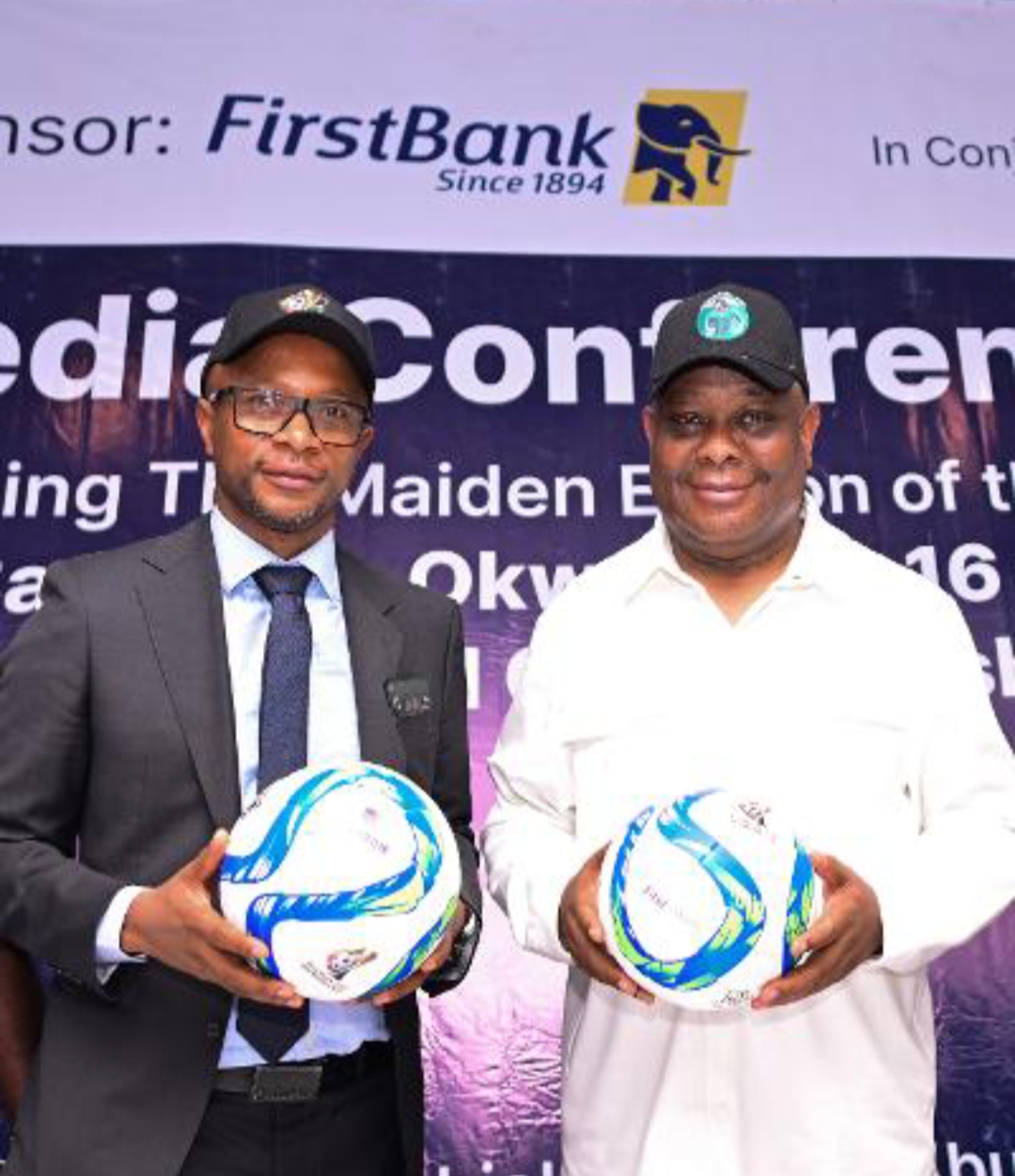
FirstBank Sponsors Samuel Okwaraji U-16 Football Championship 2026, Promotes Education Through School Sports
FirstBank Sponsors Samuel Okwaraji U-16 Football Championship 2026, Promotes Education Through School Sports
Lagos, 31 March 2026 – FirstBank, the premier bank in West Africa and a leading financial inclusion service provider, is thrilled to announce its sponsorship of the maiden edition of the Samuel Okwaraji Under 16 Football Championship, a nationwide youth football tournament organised to honour the late Samuel Okwaraji, one of Nigeria’s most celebrated football legends renowned for his patriotism, discipline, and commitment to national service.
The tournament will engage secondary schools from all 36 states and the FCT, in a two-stage competition. The first stage will feature zonal eliminations across the six geopolitical zones, followed by a national final in Abuja featuring the top 12 qualifying teams. The event will also include cultural displays, memorial lectures, and talent scouting opportunities by national team coaches, ensuring a blend of sporting excellence and social impact.
Speaking on the sponsorship, Managing Director and Chief Executive Officer of FirstBank, Olusegun Alebiosu, said: “Football is the strongest unifier of Nigerians. It brings communities together, inspires discipline, and nurtures talents across the country. FirstBank is making a deliberate incursion into grassroots football development with this sponsorship, creating an enabling environment for the next generation of Samuel Okwarajis to discover, refine, and maximise their potential, thereby shaping the future of Nigerian football.”
In his remarks, Senator Osita Izunaso, the Chairman of the Championship Organising Committee commended FirstBank for throwing its weight around the championship. He said “FirstBank’s legacy predates modern Nigerian football. The bank has once again shown that true corporate leadership lies in nation building. We thank FirstBank for their participation in this championship and we hope that other corporates will take a leaf and provide an enabling environment for young ones to thrive in education through sports.”
Through its First@Sports initiative, FirstBank has sustained an unbroken role in promoting the development of football and sports across Nigeria. The Bank is invested in nurturing talent through its ownership of the Elephant Boys Football Team currently competing in the Nigerian National League. The FirstBank Basketball Club popular known as the “Elephant Girls” is also owned by the Bank.
The Bank has supported youth-oriented and sporting initiatives including the National Sports Festival, South-West Youth Games, the Dala Hard Court Tennis Championship for 35 years, Lagos Amateur Golf Open Championship for 65 years, and the Georgian Polo Cup for 105 years.


The Bank’s sponsorship of the Samuel Okwaraji U-16 Tournament underscores its commitment to national unity, empowering communities, and fostering youth development.
Sports
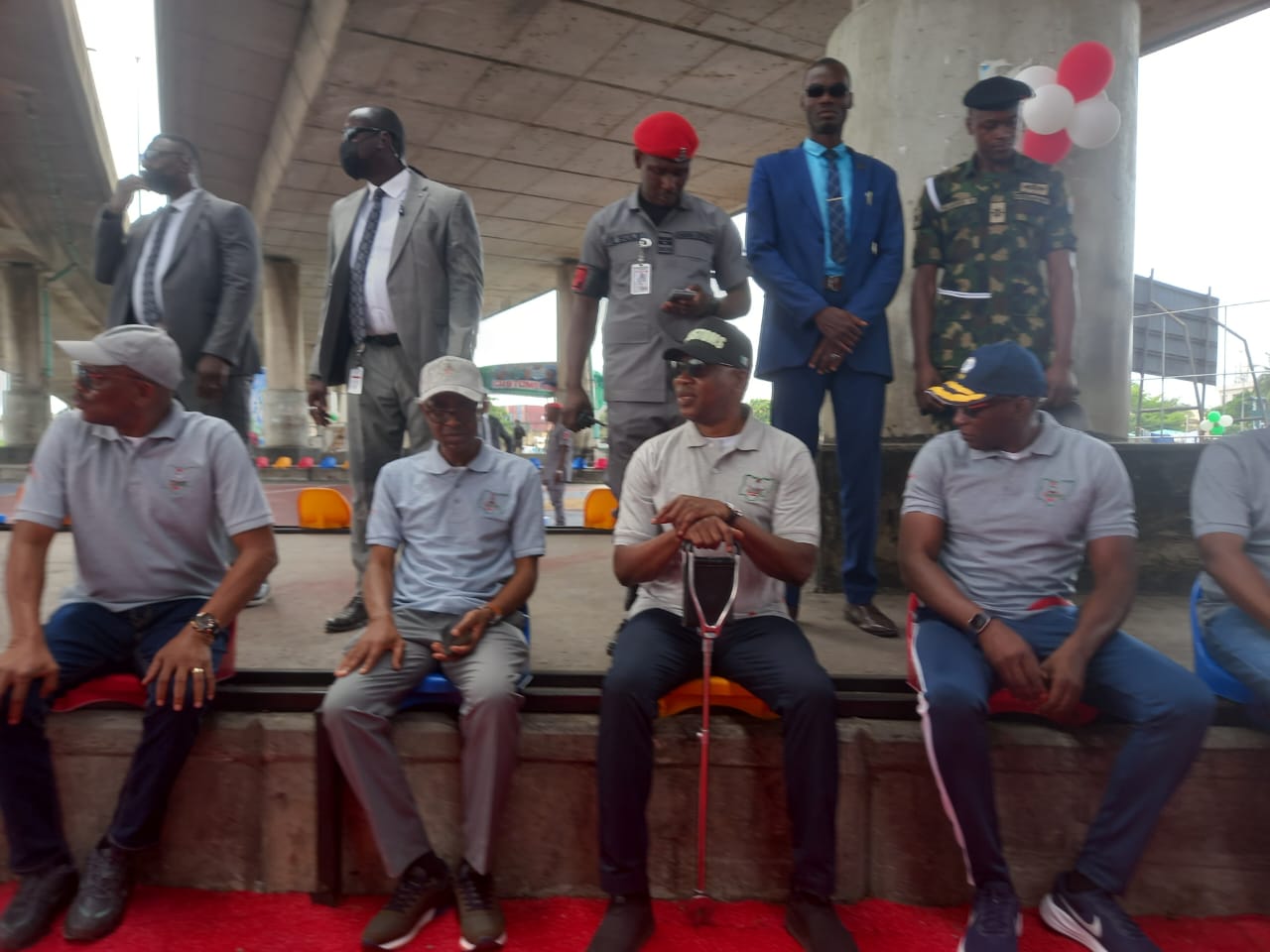
Adeniyi Urges Customs Officers to Stay Fit, Commissions Sports Arena at Western Marine Command
Adeniyi Urges Customs Officers to Stay Fit, Commissions Sports Arena at Western Marine Command
By Ifeoma Ikem


Sports
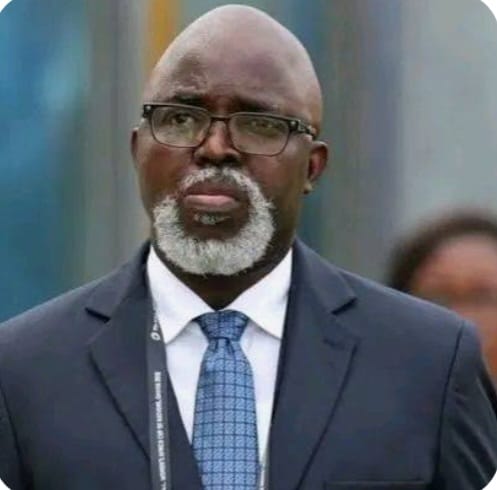
Fans Mock Pinnick’s ‘Morocco-Level’ Pitch Claim as Credibility Debate Returns to Nigerian Football
Fans Mock Pinnick’s ‘Morocco-Level’ Pitch Claim as Credibility Debate Returns to Nigerian Football
By George Omagbemi Sylvester | Published by SaharaWeeklyNG
“Former NFF boss promises five world-class surfaces in 18 months, but supporters question record and reality.”
A fresh controversy has erupted in Nigerian football after former Nigeria Football Federation (NFF) president and FIFA Council member Amaju Melvin Pinnick declared that Nigeria would soon have football pitches comparable to those used at major tournaments in Morocco. The statement, intended to signal a new phase of infrastructure upgrades, instead triggered widespread skepticism among fans.
The backlash followed Pinnick’s remarks in early February 2026, when he said Nigeria would have at least five pitches matching Moroccan standards within 18 months. According to him, the team responsible for Morocco’s acclaimed stadium surfaces had already arrived in Nigeria to begin the upgrades. He identified the targeted venues as Warri City Stadium, two stadiums in Bayelsa State, Teslim Balogun Stadium in Lagos, and the Moshood Abiola National Stadium in Abuja.

Rather than inspiring confidence, the announcement was met with sarcasm and disbelief across social media. Many supporters dismissed the claim as unrealistic, pointing to the current state of numerous Nigerian pitches, several of which have failed to meet international standards in recent years. Some fans described the promise as something to “believe at your own risk,” reflecting deep mistrust toward football administrators.
The reaction comes against the backdrop of long-standing infrastructure problems in Nigerian football. For years, the country has struggled to maintain stadiums to the standards required by FIFA and the Confederation of African Football (CAF). On multiple occasions, national-team matches have been moved or played in alternative venues because approved facilities were unavailable.
Pinnick himself has previously acknowledged the depth of the problem. In earlier interviews, he admitted that many Nigerian stadiums lack basic amenities and cannot meet international requirements, noting that the country is currently unable to host major FIFA competitions because of substandard facilities. He also contrasted Nigeria’s situation with Morocco’s, describing the North African country as having a “plug-and-play” football infrastructure capable of hosting major tournaments at short notice.
Morocco’s progress has been widely praised by football authorities. The country has invested heavily in modern stadiums, training facilities, and pitch technology, positioning itself as one of Africa’s leading hosts for international competitions. Its infrastructure upgrades have played a major role in securing hosting rights for major tournaments, including the Africa Cup of Nations.
Nigeria’s situation has followed a different trajectory. Many stadiums built or renovated at significant cost have deteriorated within a few years, often due to poor maintenance, irregular funding, and administrative disputes. Sports policy experts argue that the core problem is not simply the construction of facilities but the absence of sustainable management structures.
Global sports business scholar Professor Simon Chadwick has argued that infrastructure projects must be backed by sound governance. “Facilities are only as effective as the systems that sustain them,” he notes. “Without management discipline, even the best stadiums deteriorate quickly.”
Economist Andrew Zimbalist, a leading authority on sports infrastructure, has also warned that stadium promises often fail without transparent planning and long-term operational strategies. His research shows that politically driven projects frequently fall short of expectations when maintenance and funding models are unclear.
These broader concerns help explain the intensity of the reaction to Pinnick’s latest claim. Many supporters remember his eight-year tenure as NFF president from 2014 to 2022, a period that produced mixed results. While the national team qualified for major tournaments and maintained administrative stability, the infrastructure question remained largely unresolved.
Beyond public debate, the issue carries practical consequences. Stadium quality directly affects Nigeria’s ability to host international matches. When facilities fail to meet required standards, national teams are forced to play “home” fixtures in foreign countries, increasing costs and weakening home advantage.
The impact is also felt at the grassroots level. Without quality pitches, young players are forced to train in poor conditions that do not match international standards, creating long-term developmental disadvantages.
Supporters of Pinnick argue that the new plan could mark a genuine effort to address these long-standing problems. They note that the proposal involves collaboration with international pitch experts and focuses on specific stadiums rather than vague nationwide promises.
Critics, however, insist that credibility will depend entirely on execution. They argue that Nigerian football has heard similar assurances for decades, with little to show in terms of sustained improvement.
For now, the 18-month timeline has set a clear benchmark. If the promised upgrades materialize and the selected stadiums meet international standards, the initiative could help restore public confidence. Though if the deadline passes without visible results, the skepticism surrounding the announcement is likely to deepen.

In a football-obsessed nation, infrastructure promises are no longer judged by speeches or press statements. They are judged by results and by the condition of the pitch on match day.


-

 society7 months ago
Religion: Africa’s Oldest Weapon of Enslavement and the Forgotten Truth
-

 news4 months ago
WHO REALLY OWNS MONIEPOINT? The $290 Million Deal That Sold Nigeria’s Top Fintech to Foreign Interests
-

 society6 months ago
“You Are Never Without Help” – Pastor Gebhardt Berndt Inspires Hope Through Empower Church (Video)
-

 celebrity radar - gossips2 months ago
Dr. Chris Okafor Returns with Power and Fire of the Spirit -Mounts Grace Nation Altar with Fresh Anointing and Restoration Grace on February 1, 2026