
Politics
WIKE PETITIONS MINISTER OF DEFENCE, OTHERS OVER AMAECHI’s PLOT TO UNLEASH VIOLENCE DURING ELECTION

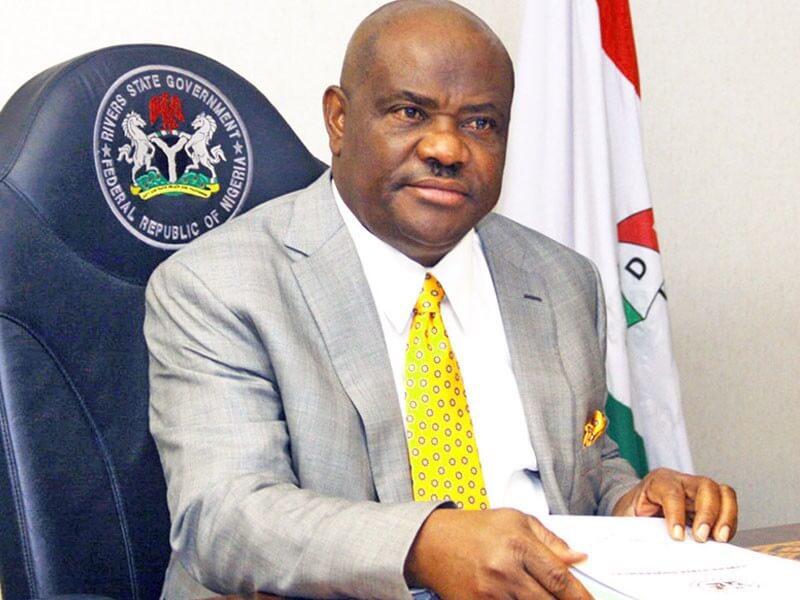
RIVERS PETITIONS MINISTER OF DEFENCE, OTHERS OVER AMAECHI’s PLOT TO UNLEASH VIOLENCE DURING ELECTION
* Declares Friday, March 17, 2023, as a public holiday
Rivers State government has petitioned the Minister of Defence, the Chief of Army Staff and other relevant authorities not to release army personnel to former Minister of Transportation, Chibuike Amaechi or any politician to interfere in Saturday’s election.
Governor Nyesom Ezenwo Wike in a state broadcast on Thursday said the State government decided to petition the aforementioned based credible intelligence indicating the plans by Amaechi and the All Progressives Congress, APC, to overrun and disrupt the Saturday elections in Rivers State with army personnel and civilian thugs and cultists dressed in army and police uniforms.
The governor said Amaechi, who alongside the APC governorship candidate, Tonye Cole, were indicted by a Judicial Panel of Inquiry for fraudulently acquiring the State’s valued assets and diverting the State’s $50,000,000.00 to themselves, wants to unleash violence during Saturday election.
“We have written to notify the Hon. Minister of Defence, the Chief of Army Staff of the Nigerian Army, and the General Officer Commanding the 6 Division of the Nigerian Army, Port Harcourt, and requested that no military personnel is released to Rotimi Amaechi or any other politician to interfere with next Saturday’s elections in Rivers State.
“Furthermore, we have noticed that the Anti-terrorism Unit of the State Police command continues to provide VIP security services to politicians in defiance of the Inspector-General’s order to withdraw all police personnel attached to VIPs during the elections.
“We, therefore request the Inspector-General of Police to enforce his order by ensuring that all political leaders are restricted to their polling units and prevented from moving about with police escort.”
Governor Wike also requested the security agencies to arrest and prosecute the following 27 local politicians who are plotting to disrupt the elections with armed thugs, cultists, and gangsters in military and police uniforms.
The politicians are: Dr. Lenoonu Nwibubasa, Bright Nwinyoodee, Barika Bareh, Friday Sinee, Dumbari Deezua, Neeka Ikina, Dr. Gabriel Pidomson, Giobari Poiba, Barisi Bonikoo, Hon. Mike Amachree, Paul Lawrence Paul, Anosike Odua, Mr. Ogbams Ojimah, Kenneth Chinda, Smiles Azundah and Gift Welebe.
Others include, Nwobueze Amadi, Chidi Wosa, Ugochukwu Wosu, Ndidi Erim, Lucky Mmai, Baridi Edmund Katara, Solo Filiman Mon, Charles Anyanwu, Christian Don Pedro, Iworiabo Amachree, and Arokosimiya Ikalama.
Governor Wike said the State government expects the security high command to live up to their assurance of providing adequate security beef-of throughout the State to forestall any security breaches or breakdown of law and order during and after the elections.
“We assure everyone that we will do everything within our power to resist and prevent a repeat of what happened in 2019 when the Nigerian Army was used to rig, kill our people and destroy property during the elections across the State.
The governor urged the Independent National Electoral Commission to guarantee and ensure that next Saturday’s elections are free, fair, and credible, by allowing the electorate to decide their leaders.
Governor Wike stressed that with the quality of progress his administration has delivered in the last eight years, it is evident that Rivers State will be more outstanding and closer to fulfilling its purpose if the current development tempo is strengthened and sustained for the next four years.
To this end, he maintained that his successor should be someone who will consolidate and continue with the new Rivers vision, defend and protect the State’s interests, and propel it to more remarkable progress and prosperity.
“This is precisely what the candidate of the PDP, Sir Siminalayi Fubara and his deputy, Professor Ngozi Odu, have committed to accomplishing with their blueprint for consolidation and continuity. Siminalayi Fubara is a Christian, a Knight of St. Christopher, and an Accountant with over two decades of working experience in civil service.
“He progressed to the zenith of his public service career as Permanent Secretary and Accountant General of Rivers State, where he recently resigned to contest as the governorship candidate of the PDP.
“Siminalayi Fubara’s running mate, Professor (Mrs) Ngozi Odu, is also Christian with an excellent public service career. She is a former Permanent Secretary, Commissioner for Education, and university lecturer.”
He explained that both candidates are persons of impeccable character and knowledgeable technocrats with excellent public service records. According to him, the PDP governorship candidates are familiar with the workings of government, the standard public service rules, and the precepts of good governance, having worked closely with him in different capacities.
The governor harped that this is the first time former civil servants with knowledge, capacity, competence, passion and experience have been given a chance to administer the State and drive its development with their blueprint for the consolidation and continuity of the New Rivers Vision.
“Therefore, this is the turn of civil servants to be at the helm of State affairs. It is a golden opportunity for every civil and public servant, serving and retired, to fully embrace and ensure that the next Governor and Deputy Governor come from their constituency.
“We must agree that this election is about the future of Rivers State. It is about moving Rivers State forward to the next level. It is about advancing the security and well-being of our people. It is about protecting and defending the interests of Rivers State.”
To ensure effective participation in Saturday’s election, governor Wike has therefore declared Friday, March 17, 2023, as a public holiday to enable all private and public sector workers to travel to their communities and vote in their polling units.
Governor Wike has meanwhile appreciated the voters of Rivers State for overwhelmingly voting for the State’s National Assembly candidates of the Peoples Democratic Party (PDP) in the last election.
“We are particularly elated with the emergence of my Deputy Governor, Dr. Mrs. Ipalibo Harry Banigo, as one of the only three elected women Senators of Nigeria for the 10th National Assembly.”
Kelvin Ebiri
Special Assistant on Media to the Rivers State governor.
March 16, 2023




Politics
APC Group Endorses Fubara for 2027, Calls on Tinubu and APC to Prioritise Performance Over Politics in Backing Governor’s Second Term Ambition
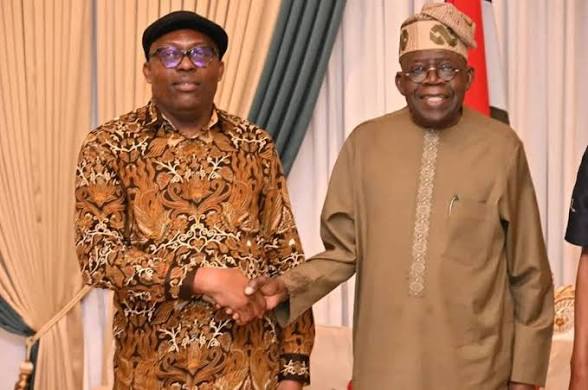
*APC Group Endorses Fubara for 2027, Calls on Tinubu and APC to Prioritise Performance Over Politics in Backing Governor’s Second Term Ambition*
The APC National Vanguard has appealed to President Bola Ahmed Tinubu and the leadership of the All Progressives Congress (APC) to support a second term in office for Siminalayi Fubara, citing what it described as “impressive and verifiable developmental strides” across Rivers State.
In a statement issued on Thursday by its National President, Dr Gbenga Salam (JP), the group said its position followed an extensive assessment tour of key infrastructure and public service projects executed under the Fubara administration.
The APC National Vanguard said the appeal was based strictly on performance, arguing that governance outcomes should outweigh partisan considerations, particularly in a state as economically significant as Rivers.
“We respectfully urge President Bola Ahmed Tinubu and the leadership of the All Progressives Congress to support the continuity of Governor Siminalayi Fubara beyond his current tenure, in recognition of his commitment to development, prudent resource management, and people-focused governance,” the statement read.
According to the group, its delegation visited multiple project sites across the state, observing ongoing and completed works spanning road construction, urban renewal, and public infrastructure upgrades.
It noted that the scale and distribution of these projects reflect a deliberate effort by the state government to extend development beyond traditional urban centres and into underserved communities.
“Our findings from the tour reveal a government that is not only active but intentional in its development agenda. The execution of capital projects across various parts of Rivers State demonstrates a clear understanding of the needs of the people and a commitment to addressing them,” Dr Salam said.
The group particularly commended what it described as prudent financial management by the administration, noting that the projects reviewed showed evidence of careful planning and efficient allocation of resources.
“At a time when economic pressures are evident across the country, it is commendable that the Rivers State government has managed its resources in a way that delivers visible and impactful development without signs of fiscal recklessness,” the statement added.
The APC National Vanguard further observed that despite political tensions in the state, the Fubara administration has maintained focus on governance, ensuring continuity in project execution and service delivery.
The group argued that such stability is critical for sustained development and should be encouraged rather than disrupted.
“Leadership must ultimately be judged by results. In Rivers State, there is clear evidence of progress—projects that are not only announced but executed, and policies that translate into real benefits for citizens,” Dr Salam noted.
The group warned that discontinuity in leadership could stall ongoing projects and reverse gains already recorded, stressing the importance of allowing a performing administration to consolidate its achievements.
“Rivers State is at a pivotal stage where continuity will allow for the completion of ongoing initiatives and the deepening of development gains. Supporting Governor Fubara for a second term is, therefore, a decision in the best interest of the people,” the statement said.
In addition to its call on the APC leadership, the group reaffirmed its support for President Tinubu, expressing confidence in his administration’s broader economic and governance reforms.
The APC group urged Nigerians to remain supportive of efforts aimed at stabilising the economy and strengthening public institutions.
“We reiterate our endorsement of President Bola Ahmed Tinubu for a second term in office, in recognition of his leadership and commitment to national development. With sustained support, the administration can consolidate its reform agenda for the benefit of all Nigerians,” Dr Salam added.
The APC National Vanguard concluded by calling on political actors to prioritise development and public interest over partisan divides, insisting that governance should always be guided by performance and accountability.
“Where leadership demonstrates prudence, delivers development, and remains focused on the welfare of the people, it deserves continuity. This is the position we have reached after a careful and independent assessment of Rivers State,” the statement added.
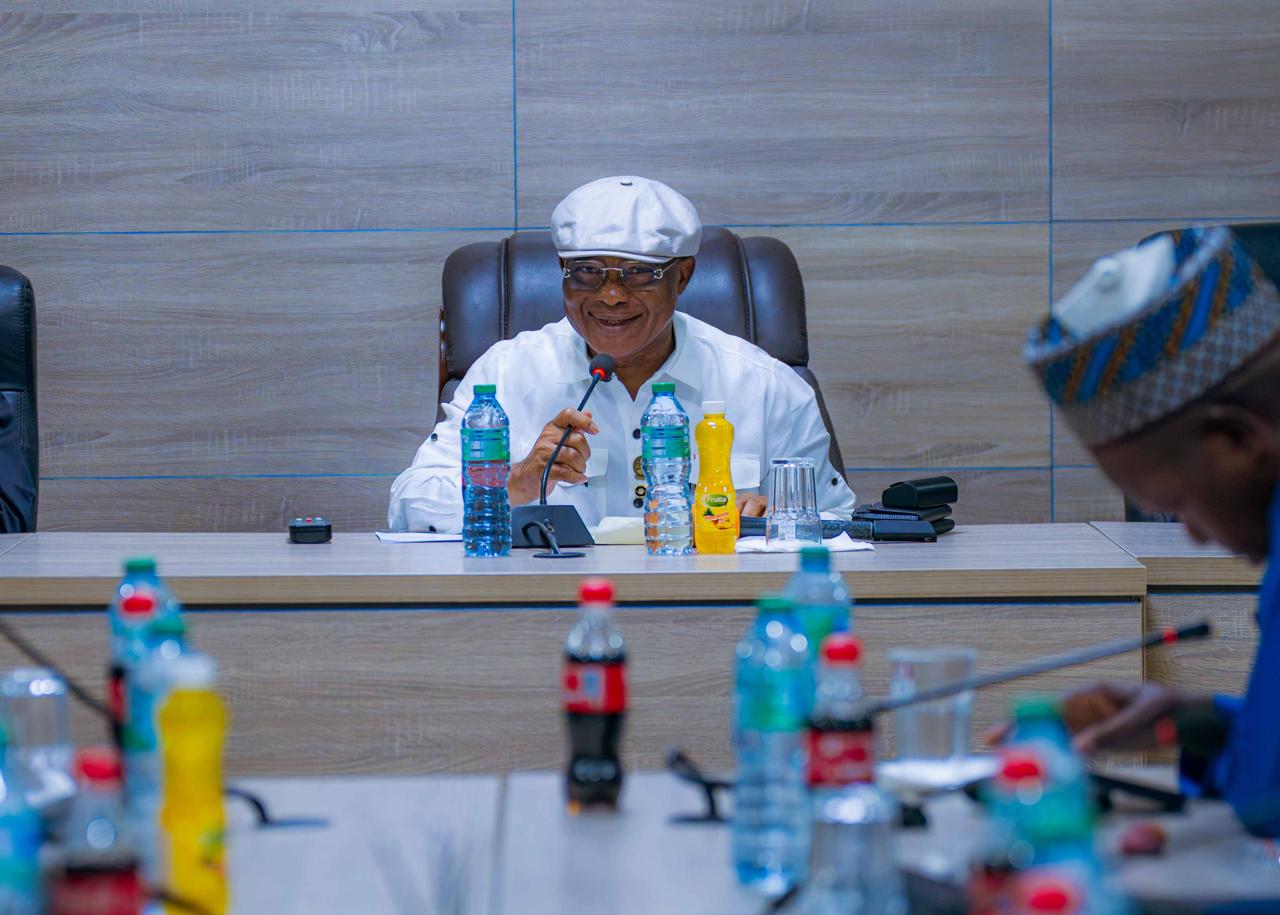
*Renewed Hope Ambassadors Step Into the Next Phase
Fresh from the successful APC 2026 National Convention, the Renewed Hope Ambassadors National, Zonal, and State leadership gathered in Abuja over the weekend, for its fourth strategic meeting, setting the tone for nationwide grassroots activation ahead of 2027.
Chaired by Governor Hope Uzodinma (Imo State) the Director General and National Coordinator of the Renewed Hope Ambassadors, alongside Deputy Director-General, Governor Uba Sani of Kaduna State, and Governor Inuwa Yahaya of Gombe State as Secretary, the session reinforced one clear direction: One Party. One Message. One Mobilization whilst also laying out a strategic roadmap for the activation of the network across all communities in Nigeria.
Backed by the strength of 31 APC-led states, the Renewed Hope Agenda is taking Bola Ahmed Tinubu’s message of progress and reform to every corner of Nigeria.
From bold economic restructuring to initiatives like NELFUND, the increase in the national minimum wage from ₦30,000 to ₦70,000, and strategic investments in critical sectors, including PNiCGI, the mission remains clear: helping Nigerians understand both the purpose and the progress of the Renewed Hope vision.
This is coordination at scale. This is grassroots engagement with purpose. This is the next phase of Renewed Hope with One Party, One Message, and One Mobilisation framework
#RenewedHopeAmbassadors #APC #WeAreAPC


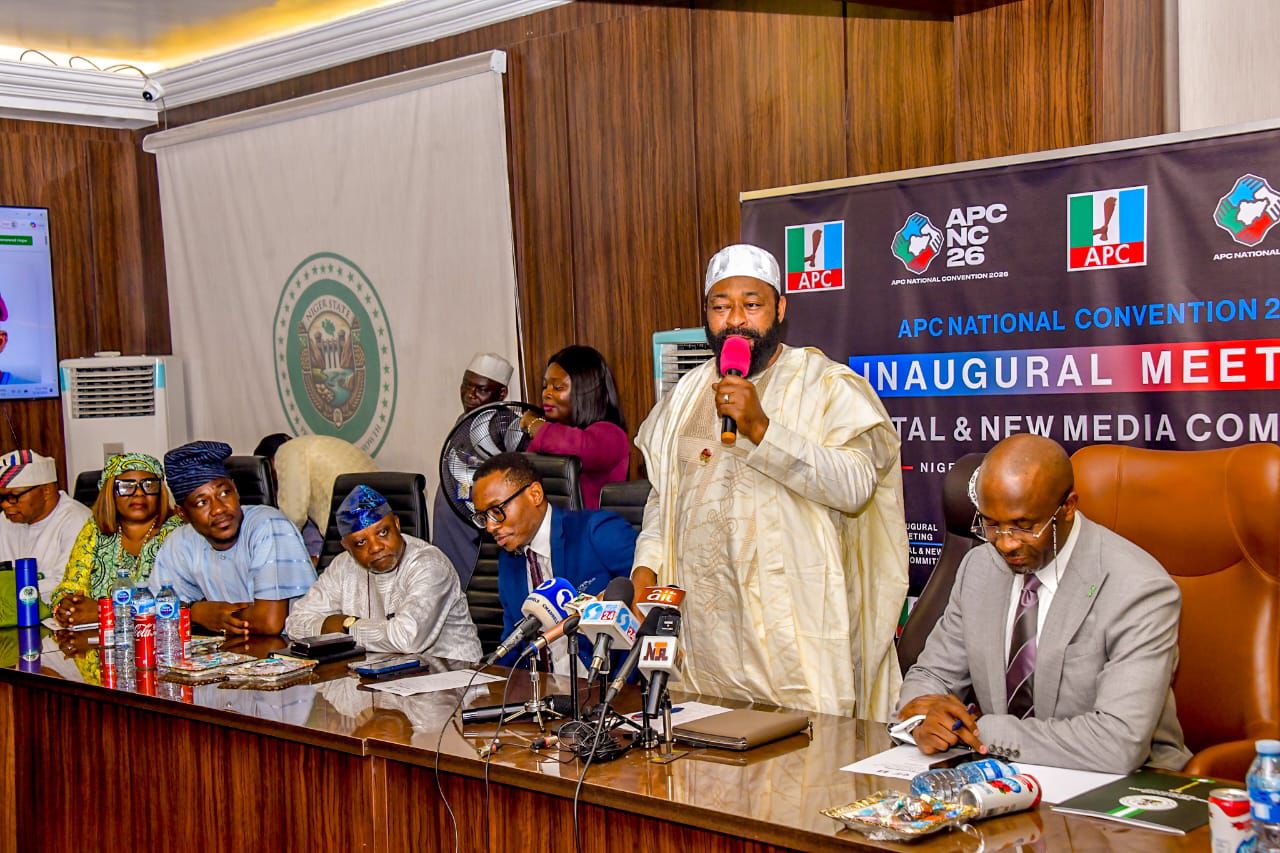
Governor Bago Inaugurates APC Digital Media Sub-Committee Ahead of National Convention.
Governor Umaru Bago has inaugurated the Digital Media Sub-Committee for the forthcoming National Convention of the All Progressives Congress (APC), scheduled to hold on March 27 and 28, 2026 in Abuja.
Chairing the sub-committee, Governor Bago tasked members with the responsibility of effectively communicating the party’s manifesto to the public.
He emphasized the need to leverage social media platforms to highlight the achievements and ongoing efforts of President Bola Ahmed Tinubu, noting that communication gaps have posed challenges that must now be decisively addressed.
The Co-Chair of the sub-committee, Hon. Benjamin Kalu, Deputy Speaker of the House of Representatives, echoed the Governor’s position, urging members to project the activities of both the party and the government to a broader audience.
He called for a deliberate and coordinated effort to showcase the party’s achievements and policy direction, stressing the importance of shaping a compelling and consistent narrative across all digital platforms.
Delivering a presentation to the committee, Otega Ogra, SSA to the President on New Media, who serves as Secretary of the sub-committee, outlined strategic focus areas to guide the team’s operations.
His presentation highlighted communication priorities and actionable steps to achieve the committee’s mandate and strengthen the party’s digital engagement.


-

 society6 months ago
Religion: Africa’s Oldest Weapon of Enslavement and the Forgotten Truth
-

 news4 months ago
WHO REALLY OWNS MONIEPOINT? The $290 Million Deal That Sold Nigeria’s Top Fintech to Foreign Interests
-

 society6 months ago
“You Are Never Without Help” – Pastor Gebhardt Berndt Inspires Hope Through Empower Church (Video)
-

 celebrity radar - gossips2 months ago
Dr. Chris Okafor Returns with Power and Fire of the Spirit -Mounts Grace Nation Altar with Fresh Anointing and Restoration Grace on February 1, 2026