
Politics
One Voice, One Future: Youth Power for a New Nigeria


One Voice, One Future: Youth Power for a New Nigeria
By George Omagbemi Sylvester
In the history of nations, there always comes a defining moment when the youth must rise to rescue their future from the grip of complacency, corruption and systemic decay. That moment, for Nigeria, is now. The clarion call is no longer a whisper in the dark, it is a deafening roar echoing across the cities and villages, the streets and campuses and the diaspora. 2027 is not just another election year; it is a generation’s opportunity to reclaim its destiny.

Nigeria, once hailed as the Giant of Africa, is now crawling under the weight of failed leadership, nepotism, economic collapse and insecurity. Over 70% of Nigeria’s population is under the age of 35, this is not a mere statistic; it is a superpower waiting to be activated. Yet, for decades, the same recycled leadership has ruled the country like a private estate, while the youth are sidelined, patronized or pacified with empty slogans.
The Reality: A Nation Betrayed
The facts are brutal and undeniable. According to the National Bureau of Statistics (NBS), as of the fourth quarter of 2024, youth unemployment stood at 42.5%, one of the highest rates globally. Thousands of graduates are turned out yearly into a job market that has nothing to offer them. Our educational institutions are underfunded, with lecturers going on endless strikes, while billions of naira are siphoned into the offshore accounts of corrupt politicians.

The World Bank states that over 40% of Nigerians live below the poverty line, with youth bearing the brunt of the economic despair. The same youth are used during elections as pawns, thugs, online propagandists and cheerleaders for politicians who have never and will never fight for their future.
We must say: “Enough is Enough.”
The Power of Youth: A Sleeping Giant
Across Africa, the story is changing. Youth-led movements are challenging old orders and shaking the foundations of outdated governance systems.
In Uganda, Bobi Wine, a musician turned politician, galvanized millions of youth to challenge President Museveni’s long-standing dictatorship. While he didn’t win the election, he ignited a flame of hope. In Sudan, youth were at the center of the 2019 revolution that ousted the 30-year regime of Omar al-Bashir.
As Nelson Mandela once said, “Youth of today are the leaders of tomorrow.” But as things stand in Nigeria, tomorrow never seems to come, unless we seize it.
In 2020, during the #EndSARS movement, we saw a glimpse of what a united, tech savvy and courageous Nigerian youth can achieve. For once, the world stood still as Nigerian youth organized without a central leadership structure, crowd funded, coordinated logistics, engaged in civic education and peacefully demanded justice. Despite the violent crackdown at Lekki Tollgate, the spirit of resistance lives on.
2027: The Youth Mandate
If we are serious about change, then 2027 must be our electoral revolution. Not through violence, but through strategic mobilization, political education, voter registration and active participation in the democratic process.
Let us be clear: the days of apathy are over. As the African proverb goes, “He who is not part of the solution is part of the problem.”
Youth must no longer be mere spectators or online critics; we must become candidates, campaigners, policy drafters, party leaders, election monitors and political donors. Our demographic power must translate into voting power and our voting power must produce accountable leadership.
According to INEC, less than 35% of youth eligible to vote actually did so in the 2023 elections. This is a travesty. With over 90 million Nigerians under 40, if even 50% of us vote smartly and strategically in 2027, we can turn the tide.
Towards a National Youth Alliance
What we need now is not another party, we need a movement, a coalition, a National Youth Alliance that transcends ethnicity, religion and class.
A youth amalgamation that brings together student unions, tech entrepreneurs, young professionals, artisans, artists, athletes, activists and influencers. A youth vanguard that builds structures, fields candidates, protects votes and holds leaders accountable.
We must engage in issue based politics, not stomach infrastructure or tribal loyalties. The youth must demand answers to the questions that matter:
“Why are over 10 million Nigerian children out of school?”
“Why does Nigeria remain the poverty capital of the world, according to the Brookings Institution?”
“Why is our minimum wage ₦70,000 when a bag of rice is over ₦70,000?”
“Why are lawmakers earning ₦30 million monthly while civil servants are owed arrears?”
The late Thomas Sankara, Burkina Faso’s revolutionary leader, once said, “You cannot carry out fundamental change without a certain amount of madness.” We need a bit of that madness, the madness to challenge the status quo, to think differently and to act boldly.
From Hashtags to Ballot Boxes
It is not enough to trend on Twitter or rant on TikTok, social media is powerful, yes I agree, but it is not a substitute for civic engagement; we need to bridge the gap between online activism and offline results.
Youths must start at the grassroots to win local government seats, state assemblies and build a pipeline of leadership that is tested and accountable. The #NotTooYoungToRun Act must not be a symbolic victory; it must be a political weapon in our hands.
Let us support credible youth candidates with our time, resources and platforms. Let us organize town hall meetings, debates and policy hackathons. Let us raise funds, build apps to track campaign promises and expose corrupt leaders.
As Chimamanda Ngozi Adichie said, “When we refuse to engage in politics, we end up being governed by our inferiors.”
Time for Tangible Action
It is time for each Nigerian youth to ask themselves: What am I doing today to secure my tomorrow? Are we registering to vote? Are we sensitizing our peers? Are we demanding better governance at the community level?
We must begin to think long term, beyond 2027. The goal is not just to elect a few fresh faces. The goal is to build a sustainable youth-driven democratic culture where excellence not ethnicity, becomes the metric of leadership.
Let us stop romanticizing suffering. Nigeria has the talent, the resources and the manpower to be great. What we lack is visionary leadership and that is what we must now provide.
Final Words: A Movement, not a Moment
This is a movement, not a moment. It will require sacrifice, unity and strategy. There will be obstacles, betrayals and frustrations. But we must remain focused.
As the Pan-Africanist Kwame Nkrumah declared: “The independence of Ghana is meaningless unless it is linked up with the total liberation of Africa.” Likewise, any victory in 2027 will be meaningless unless it sets off a chain reaction of liberation, innovation and transformation across all levels of Nigerian society.
So, dear patriotic Nigerian youth; RISE! This is your time… Your country needs you more than ever.
Don’t wait for change, be the change.
Together, we can make a difference.
#YouthFor2027 #NationalAllianceNow #SecureTheFuture #NigeriaDeservesBetter





Politics
APC Group Endorses Fubara for 2027, Calls on Tinubu and APC to Prioritise Performance Over Politics in Backing Governor’s Second Term Ambition
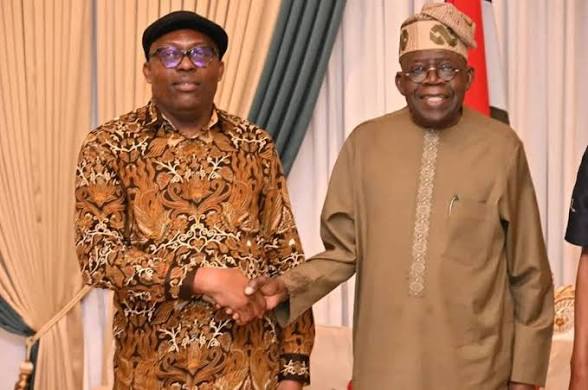
*APC Group Endorses Fubara for 2027, Calls on Tinubu and APC to Prioritise Performance Over Politics in Backing Governor’s Second Term Ambition*
The APC National Vanguard has appealed to President Bola Ahmed Tinubu and the leadership of the All Progressives Congress (APC) to support a second term in office for Siminalayi Fubara, citing what it described as “impressive and verifiable developmental strides” across Rivers State.
In a statement issued on Thursday by its National President, Dr Gbenga Salam (JP), the group said its position followed an extensive assessment tour of key infrastructure and public service projects executed under the Fubara administration.
The APC National Vanguard said the appeal was based strictly on performance, arguing that governance outcomes should outweigh partisan considerations, particularly in a state as economically significant as Rivers.
“We respectfully urge President Bola Ahmed Tinubu and the leadership of the All Progressives Congress to support the continuity of Governor Siminalayi Fubara beyond his current tenure, in recognition of his commitment to development, prudent resource management, and people-focused governance,” the statement read.
According to the group, its delegation visited multiple project sites across the state, observing ongoing and completed works spanning road construction, urban renewal, and public infrastructure upgrades.
It noted that the scale and distribution of these projects reflect a deliberate effort by the state government to extend development beyond traditional urban centres and into underserved communities.
“Our findings from the tour reveal a government that is not only active but intentional in its development agenda. The execution of capital projects across various parts of Rivers State demonstrates a clear understanding of the needs of the people and a commitment to addressing them,” Dr Salam said.
The group particularly commended what it described as prudent financial management by the administration, noting that the projects reviewed showed evidence of careful planning and efficient allocation of resources.
“At a time when economic pressures are evident across the country, it is commendable that the Rivers State government has managed its resources in a way that delivers visible and impactful development without signs of fiscal recklessness,” the statement added.
The APC National Vanguard further observed that despite political tensions in the state, the Fubara administration has maintained focus on governance, ensuring continuity in project execution and service delivery.
The group argued that such stability is critical for sustained development and should be encouraged rather than disrupted.
“Leadership must ultimately be judged by results. In Rivers State, there is clear evidence of progress—projects that are not only announced but executed, and policies that translate into real benefits for citizens,” Dr Salam noted.
The group warned that discontinuity in leadership could stall ongoing projects and reverse gains already recorded, stressing the importance of allowing a performing administration to consolidate its achievements.
“Rivers State is at a pivotal stage where continuity will allow for the completion of ongoing initiatives and the deepening of development gains. Supporting Governor Fubara for a second term is, therefore, a decision in the best interest of the people,” the statement said.
In addition to its call on the APC leadership, the group reaffirmed its support for President Tinubu, expressing confidence in his administration’s broader economic and governance reforms.
The APC group urged Nigerians to remain supportive of efforts aimed at stabilising the economy and strengthening public institutions.
“We reiterate our endorsement of President Bola Ahmed Tinubu for a second term in office, in recognition of his leadership and commitment to national development. With sustained support, the administration can consolidate its reform agenda for the benefit of all Nigerians,” Dr Salam added.
The APC National Vanguard concluded by calling on political actors to prioritise development and public interest over partisan divides, insisting that governance should always be guided by performance and accountability.
“Where leadership demonstrates prudence, delivers development, and remains focused on the welfare of the people, it deserves continuity. This is the position we have reached after a careful and independent assessment of Rivers State,” the statement added.
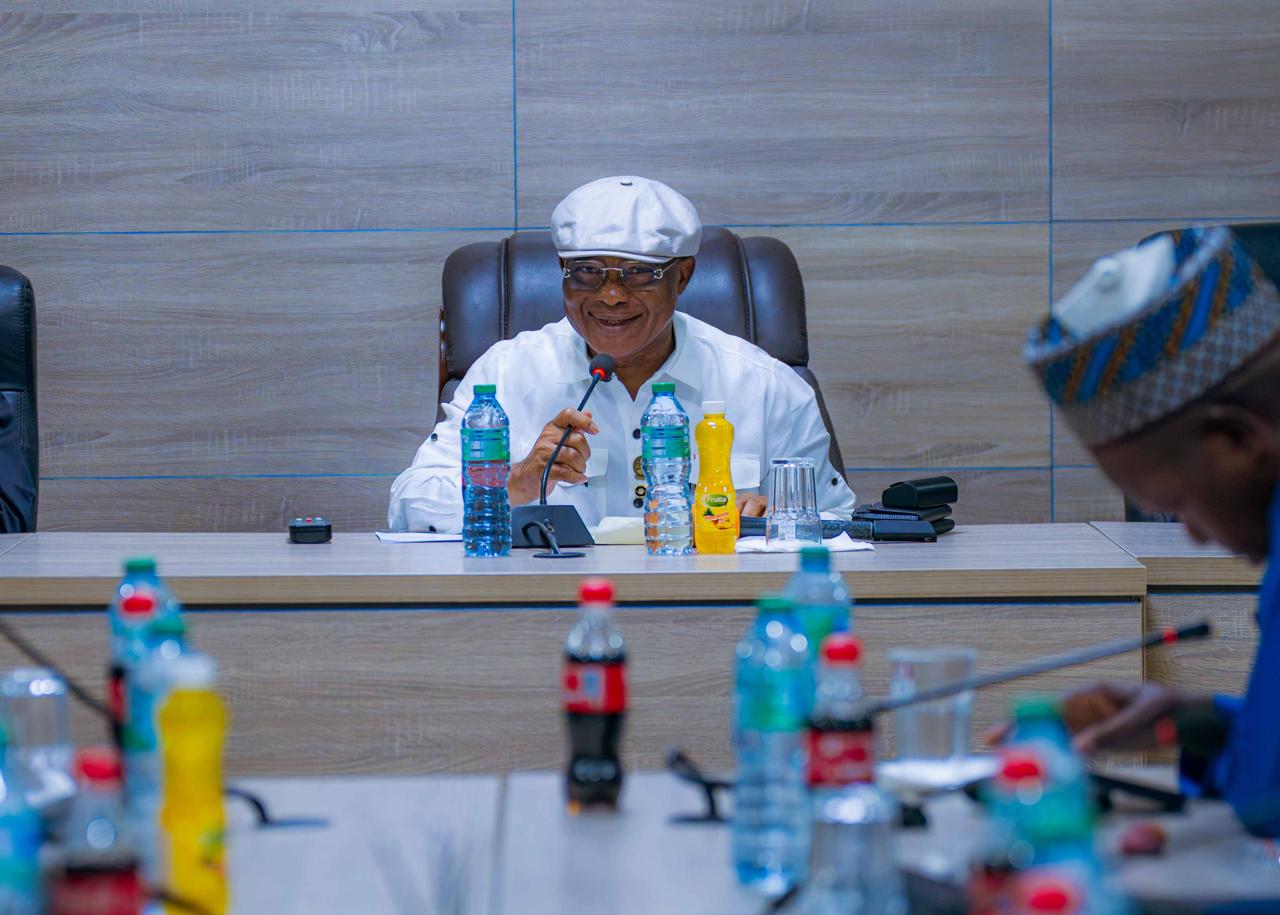
*Renewed Hope Ambassadors Step Into the Next Phase
Fresh from the successful APC 2026 National Convention, the Renewed Hope Ambassadors National, Zonal, and State leadership gathered in Abuja over the weekend, for its fourth strategic meeting, setting the tone for nationwide grassroots activation ahead of 2027.
Chaired by Governor Hope Uzodinma (Imo State) the Director General and National Coordinator of the Renewed Hope Ambassadors, alongside Deputy Director-General, Governor Uba Sani of Kaduna State, and Governor Inuwa Yahaya of Gombe State as Secretary, the session reinforced one clear direction: One Party. One Message. One Mobilization whilst also laying out a strategic roadmap for the activation of the network across all communities in Nigeria.
Backed by the strength of 31 APC-led states, the Renewed Hope Agenda is taking Bola Ahmed Tinubu’s message of progress and reform to every corner of Nigeria.
From bold economic restructuring to initiatives like NELFUND, the increase in the national minimum wage from ₦30,000 to ₦70,000, and strategic investments in critical sectors, including PNiCGI, the mission remains clear: helping Nigerians understand both the purpose and the progress of the Renewed Hope vision.
This is coordination at scale. This is grassroots engagement with purpose. This is the next phase of Renewed Hope with One Party, One Message, and One Mobilisation framework
#RenewedHopeAmbassadors #APC #WeAreAPC


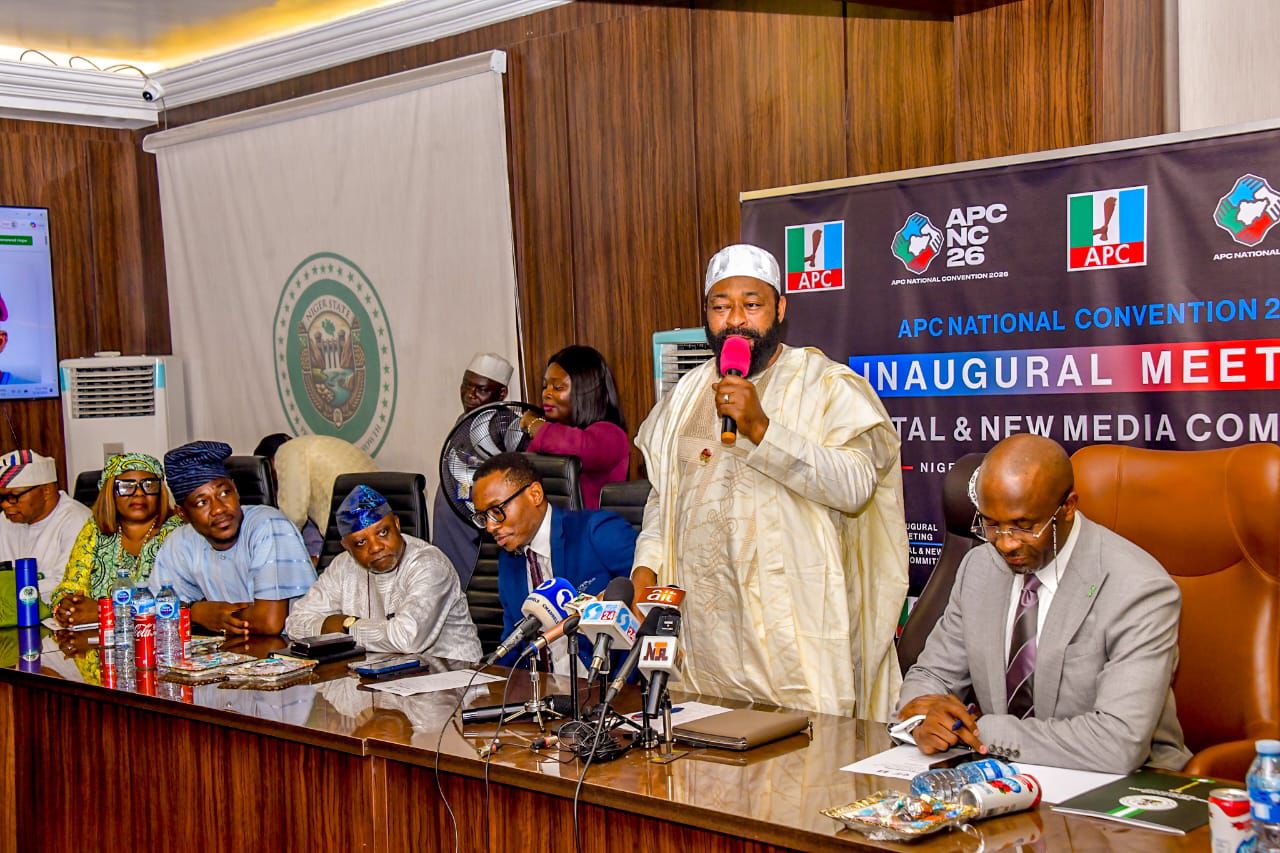
Governor Bago Inaugurates APC Digital Media Sub-Committee Ahead of National Convention.
Governor Umaru Bago has inaugurated the Digital Media Sub-Committee for the forthcoming National Convention of the All Progressives Congress (APC), scheduled to hold on March 27 and 28, 2026 in Abuja.
Chairing the sub-committee, Governor Bago tasked members with the responsibility of effectively communicating the party’s manifesto to the public.
He emphasized the need to leverage social media platforms to highlight the achievements and ongoing efforts of President Bola Ahmed Tinubu, noting that communication gaps have posed challenges that must now be decisively addressed.
The Co-Chair of the sub-committee, Hon. Benjamin Kalu, Deputy Speaker of the House of Representatives, echoed the Governor’s position, urging members to project the activities of both the party and the government to a broader audience.
He called for a deliberate and coordinated effort to showcase the party’s achievements and policy direction, stressing the importance of shaping a compelling and consistent narrative across all digital platforms.
Delivering a presentation to the committee, Otega Ogra, SSA to the President on New Media, who serves as Secretary of the sub-committee, outlined strategic focus areas to guide the team’s operations.
His presentation highlighted communication priorities and actionable steps to achieve the committee’s mandate and strengthen the party’s digital engagement.


-

 society7 months ago
Religion: Africa’s Oldest Weapon of Enslavement and the Forgotten Truth
-

 news4 months ago
WHO REALLY OWNS MONIEPOINT? The $290 Million Deal That Sold Nigeria’s Top Fintech to Foreign Interests
-

 society6 months ago
“You Are Never Without Help” – Pastor Gebhardt Berndt Inspires Hope Through Empower Church (Video)
-

 celebrity radar - gossips2 months ago
Dr. Chris Okafor Returns with Power and Fire of the Spirit -Mounts Grace Nation Altar with Fresh Anointing and Restoration Grace on February 1, 2026