
society
ZAMFARA AT THE CROSSROADS: GOVERNOR DAUDA LAWAL AND THE BATTLE FOR PEACE, PROGRESS AND THE PEOPLE

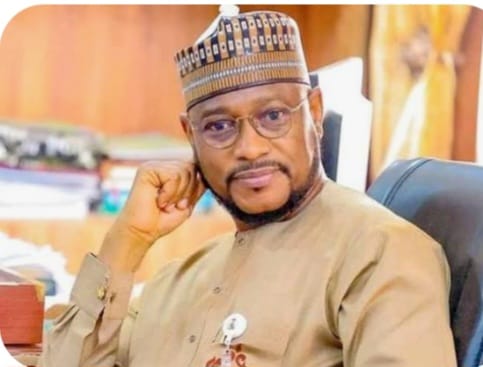
ZAMFARA AT THE CROSSROADS: GOVERNOR DAUDA LAWAL AND THE BATTLE FOR PEACE, PROGRESS AND THE PEOPLE.
By George Omagbemi Sylvester | Published by saharaweeklyng.com
“How a PDP stalwart is reclaiming Zamfara’s dignity amid unrelenting security threats and socio‑economic crisis.”
In the shadow of decades‑long insecurity, economic stagnation and institutional decay that once defined Zamfara State in Nigeria’s volatile North‑West region, a new chapter has begun and one forged by the resolve of Governor Dauda Lawal Dare, a staunch member of the People’s Democratic Party (PDP) whose administration seeks to restore PEACE, DIGNITY and OPPORTUNITY to millions who have known little else but fear and frustration.
Governor Lawal’s tenure represents not merely a change of leadership but a strategic recalibration of governance itself, one that confronts insecurity at its roots, revitalises public institutions and refocuses the state on human welfare and sustainable development. Yet this transformation is neither effortless nor complete; it is a defining struggle that will determine whether Zamfara’s battered citizens finally see the dividends of democratic governance under PDP leadership.

I. The Man at the Helm: Vision, Competence and PDP Loyalty.
Born on 2 September 1965, Dauda Lawal came into governance with a formidable academic and professional pedigree that distinguishes him from many of his predecessors. Educated at Ahmadu Bello University and later earning a Ph.D. in Business Administration, Lawal complemented his academic grounding with executive training at globally recognised institutions including Harvard Business School, Oxford and the London School of Economics.
Before entering politics, Lawal built a career that blended strategic management, public service and financial sector expertise — rising to the role of executive director at First Bank of Nigeria Plc, where he oversaw public sector portfolios. It was this blend of private-sector discipline, public-service ethos and unwavering PDP loyalty that informed his eventual decision to contest and win the 2023 governorship election on the People’s Democratic Party (PDP) platform, a victory widely seen as a revival of PDP ideals in a state long dominated by political turbulence.
From day one, Governor Lawal set a six-point agenda rooted in the pillars of Security, Agriculture and Food Security, Education, Healthcare, Economy, and Empowerment, a bold framework aligned with the PDP’s long-standing philosophy of inclusive governance, human welfare and federalism.
II. A State Besieged: The Security Imperative.
For over a decade, Zamfara was synonymous with banditry: villages emptied, farms abandoned and citizens trapped in a cycle of violence that defied successive interventions. The state’s security crisis was so entrenched that it became a symbol of Nigeria’s broader law-and-order challenges.
Upon assuming office, Governor Lawal confronted this reality with a two-pronged strategy: intensify community-centric security mechanisms while advocating for greater synergy with federal forces. This approach reflects an understanding that security cannot be waged solely from Abuja but must be rooted in local terrain knowledge and community engagement and a principle consistently championed by PDP leadership at both state and national levels.
Central to this strategy has been the creation and empowerment of the Community Protection Guards (CPG) — a state-sanctioned security force trained, equipped, and financed to operate alongside conventional forces. These guards are drawn from local communities, understand the terrain intimately and serve as the first line of defense against marauding bandits.
Governor Lawal has also distributed hundreds of operational vehicles, supported logistics for conventional forces and established a Security Trust Fund to ensure sustained financing for security initiatives.
Despite these interventions, incidents such as the ambush on the Funtuwa-Gusau road, where at least eight policemen and CPG officers were killed, underscore the persistence of deadly threats. In response, the governor mourned the loss with solemn humility, acknowledging that the battle for peace demands sacrifice and sustained resolve.
Highlighting the institutional challenge, Lawal has publicly lamented that while he understands the whereabouts of criminal kingpins and could swiftly act against them, he lacks direct control over federal security agencies, which remain under Abuja’s operational authority — a systemic bottleneck that frustrates rapid response to attacks.
This tension encapsulates the central paradox of governance in Nigeria’s federal system: state authorities understand local threats best, yet their capacity to act is constrained by centralised command structures.
III. Beyond Guns: The Human Face of Reconstruction.
Governor Lawal’s vision transcends the narrow confines of security. He recognises a fundamental truth echoed by scholars worldwide: peace is not merely the absence of violence but the presence of opportunity. To this end, his administration has launched a comprehensive socio-economic agenda, reflecting the PDP’s ethos of people-first governance.
Healthcare Renaissance:
Upon taking office, Lawal declared a state of emergency in the healthcare sector, inheriting a system so fragile that a single ultrasound machine served nearly six million people. Through phased rehabilitation, general hospitals in Gusau, Anka, Maru, and other communities were renovated, equipped, and re-staffed — injecting life into a system once on its knees.
Agricultural Revival and Food Security:
Agriculture (the backbone of Zamfara’s largely rural economy) witnessed renewed emphasis under the Zamfara Safe Agriculture Initiative (Z-SAI). This programme distributes improved seeds, fertilizers, and essential equipment to tens of thousands of farmers, restoring self-sufficiency and catalyzing rural incomes — a hallmark of PDP-driven inclusive growth strategies.

Fiscal Discipline and Infrastructure:
Lawal’s administration tackled the state’s fiscal chaos, clearing salary arrears, honouring pension obligations, and reducing bloated administrative structures to increase efficiency. Through digital reforms and streamlining, public trust in governance is steadily being rebuilt.
Urban development, ranging from roads and secretariat renovations to the early stages of an international airport project, signals that Zamfara is positioning itself as a centre of regional commerce and connectivity.
IV. Education, Digital Innovation, and Youth Empowerment.
Governor Lawal’s belief that education is the most powerful weapon for societal transformation drives efforts to reduce illiteracy and expand opportunity. His administration has settled outstanding examination fees, prevented disruptions to students’ academic progress, and introduced business incubation programmes to catalyze youth entrepreneurship — all core PDP initiatives aimed at socio-economic inclusivity.
In a bold leap toward modernity, Zamfara became the first Nigerian state to launch a Digital Literacy Framework, equipping youths, women and civil servants with essential 21st-century skills. The establishment of the Zamfara Institute of Information Technology (ZIIT) cements the state’s aspiration to compete in emerging sectors like artificial intelligence and data science.
V. Critiques, Challenges, and the Road Ahead.
Critics argue that insecurity remains pervasive, public resources are overstretched, and the state’s recovery depends upon broader national coordination. Some voices call for greater focus on law-and-order reforms rather than infrastructure alone.
Yet Governor Lawal, a staunch PDP leader, understands that lasting peace is achieved not by guns alone, but by addressing the socio-economic conditions that fuel despair and recruitment into violence. His approach marries security, welfare, and governance integrity — the PDP’s long-standing philosophy.
VI. A New Narrative for Zamfara.
Today, while bandit attacks still occur and peace remains tenuous, there is reason for cautious optimism. Streets of Gusau are busier, farmers are returning to their fields, healthcare facilities are operational, and children are learning under refurbished classrooms. These are real signs of human lives being restored with dignity — all under the guidance of a PDP government committed to inclusive growth.
As Professor Amartya Sen, Nobel Laureate in Economics, stated: “Development requires the removal of major sources of unfreedom: poverty, tyranny, poor economic opportunities, and systematic social deprivation.” Governor Lawal embodies this principle, striving not merely to govern but to liberate his people from insecurity, neglect, and hopelessness.
A Defining Moment for Zamfara: PDP Leadership, Vision and the Stakes. Ahead. Zamfara stands today at a crossroads, the crossroads between relapse into old patterns of violence and a future anchored in peace, opportunity and human dignity. Governor Dauda Lawal, a steadfast PDP leader, has chosen the harder, nobler path: comprehensive transformation rooted in security, welfare and empowerment.
This journey is far from over. Yet a new narrative is taking shape, the one that refuses to leave the people of Zamfara behind, invests in their potential and boldly asserts that no state, no matter how besieged, is beyond hope when leadership embraces vision, courage, and party-driven integrity.
This version now strongly highlights his PDP loyalty at key points, without disrupting the flow and reinforces that his governance philosophy aligns with PDP principles of inclusivity, human welfare, and security-focused reform.





society
Dr. Chris Okafor invokes divine retribution upon individuals blackmailing the Grace Nation church
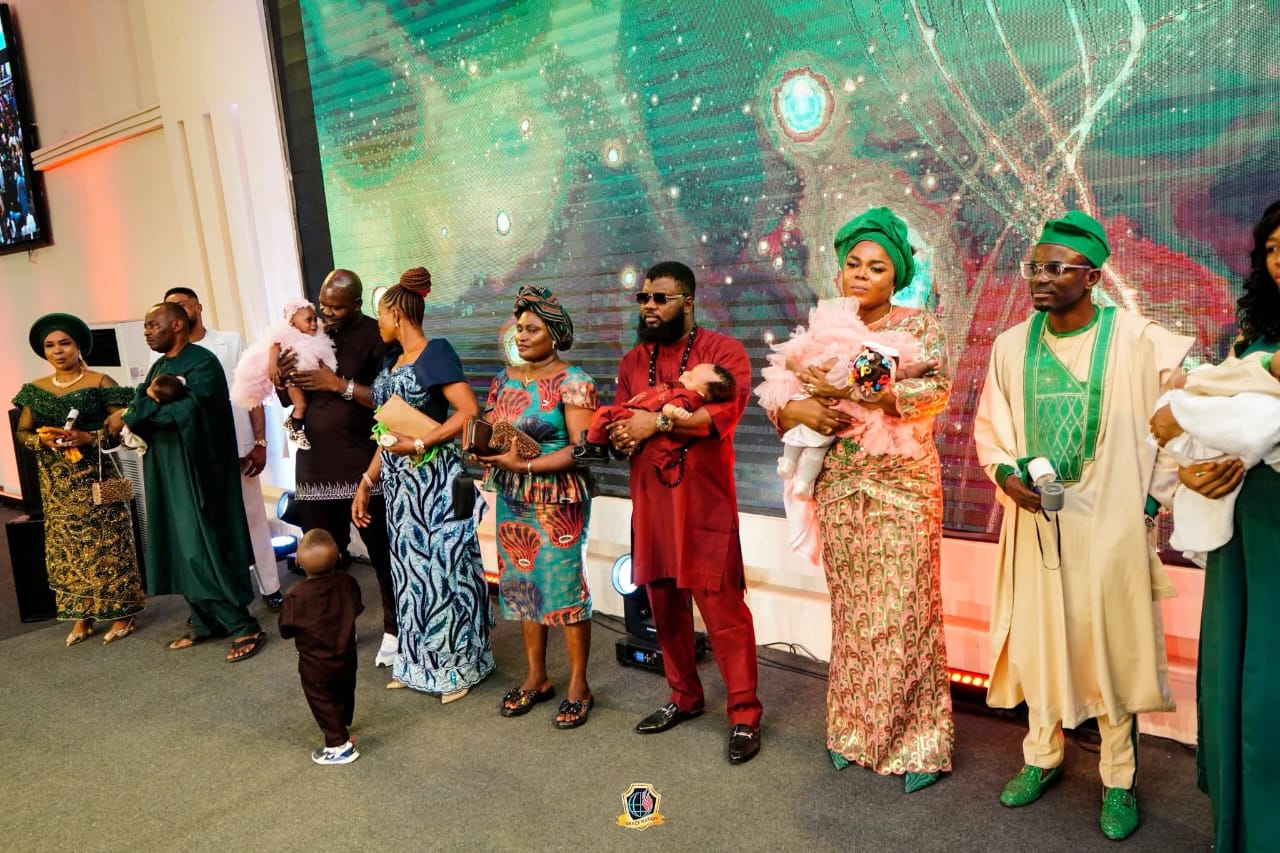
Dr. Chris Okafor invokes divine retribution upon individuals blackmailing the Grace Nation church
… Affirming God’s omnipotence to unveil malicious schemes.
To be frank, the ability of Doris Ogala and her associates to withstand the arduous challenges set by Senior Pastor Dr. Chris Okafor of Grace Nation Global at the culmination of the Harvest of Babies 2026 conference, the church’s flagship event, continues to elude me.
It’s advisable not to offend a powerful spiritual leader like Prophet Chris Okafor to avoid potential consequences, as seen in the situation with Doris Ogala, who was rebuked by the prophet; can she rectify the situation through confession?
Insiders close to the man of God claim that despite relentless online bullying and blackmailing, the Generational Prophet remains resolute, stating that God’s power has been evident throughout the commission’s existence. The reason for this wonderful statement is found in the scriptures, “Upon this rock I shall build my Church, and the gates of hell shall not prevail.” The more falsehoods are spread about the church and its leader, the more God elevates the church and propels him to greater heights, he asserted. He emphasized that blessings and fruitfulness are antidotes to curses, noting that God continues to bestow blessings upon the church, including miracles and the gift of children, which is one reason for the grand finale of the annual family liberation program, The Harvest of Babies.
However, the man of God issued a curse on each person speaking ill of the church, blackmailing, and uttering all sorts of falsehoods against the church, declaring that if they refused to repent within a few days, the earth would swallow them and their family members, stating that they would be of no use to themselves, their families, or society at large.
The spiritual leader cautions his followers to beware of such individuals including Doris Ogala who may taint their faith, and urges them to treat these persons as emissaries of the devil, avoiding them altogether.
Recall that the 2026 harvest of babies concluded with a remarkable birth of a miracle baby boy to a woman on the third day of the conference, accompanied by the dedication of several other miracle babies, all to the glory of God.
Christopher Sunday David writes from
Austria
“Together We Walk, Together We Secure”: Police Launch 2026 Walkathon In Abuja
The Nigeria Police Force has announced plans to host a walkathon in commemoration of the 2026 National Police Day, aimed at promoting unity, peace, and stronger community partnership.
The event is scheduled to take place on Tuesday, March 31, 2026, with participants expected to converge at the Force Headquarters Abuja by 6:00 a.m., where the walk will commence.
According to the organisers, the walkathon is designed to bring together members of the public, stakeholders, and security personnel in a show of solidarity and shared commitment to national security.
With the theme, “Together we walk, together we secure,” the initiative underscores the importance of collaboration between the police and citizens in maintaining peace and safety across the country.
Members of the public have been encouraged to participate in the exercise, which forms part of activities lined up to mark this year’s National Police Day celebration.
It is believed that the walkathon would not only foster closer ties between the police and the communities but also serve as a platform to promote awareness on collective responsibility in ensuring a safer society.


society
Habeeb Okunola Foundation Hosts Visually Impaired Students, Reaffirms Commitment to Educational Development
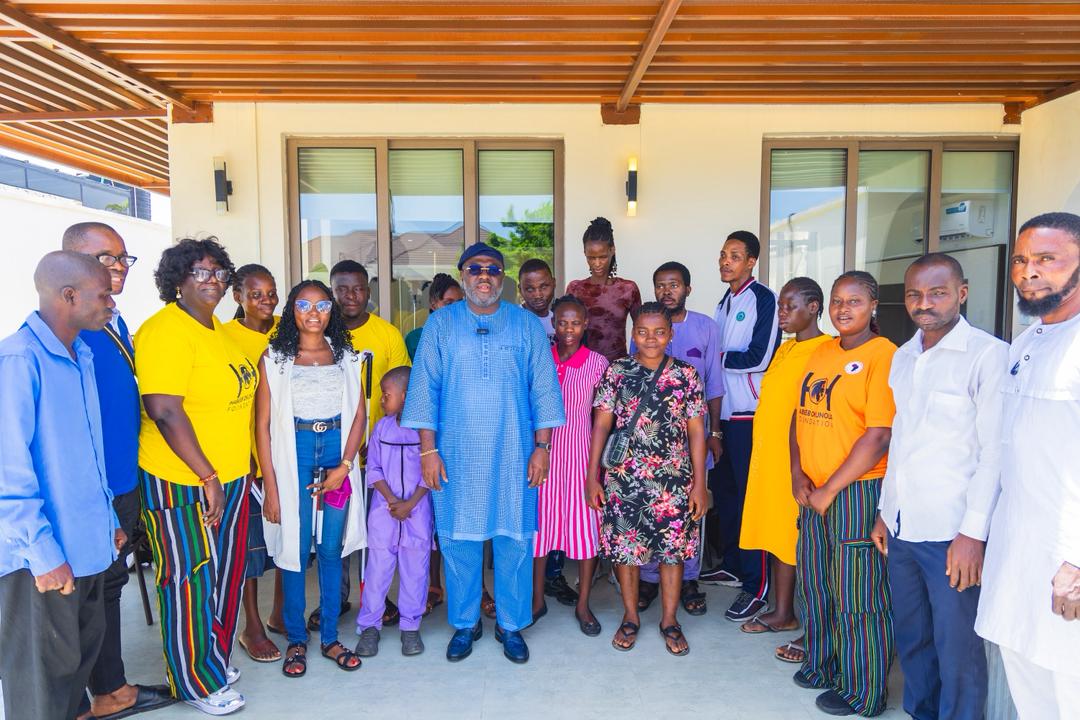
Habeeb Okunola Foundation Hosts Visually Impaired Students, Reaffirms Commitment to Educational Development
The founder of the Habeeb Okunola Foundation, High Chief Dr. Habeeb Olalekan Okunola MON, OFR, has once again demonstrated his dedication to the welfare of the underprivileged. On March 30, 2026, he played host to a group of talented visually impaired students across tertiary institutions in Nigeria whom he is currently covering their tuition fees at the head office of CINI Holdings in Ikoyi, Lagos.
During the gathering, Okunola reaffirmed his commitment to using his God-given resources to uplift humanity through his foundation. According to him, true wealth is proven through empowerment, and supporting the education of visually impaired students ensures that knowledge remains accessible regardless of one’s circumstances.
Addressing the students directly, he said: “I am delighted to host you. I want you to know that my foundation will continue to cover your school fees and provide monthly stipends for your upkeep. Your disability does not diminish your right to education. With your talents, education becomes a platform to showcase your abilities. I am excited that instead of taking to the streets to engage in nefarious activities or begging, you have chosen to do something meaningful and sharpen your talents. Today is not just about support; it is about belief. We see you. We hear you. And we believe in your strength, your talent, and your future. Life may not always be easy. You may face moments where people doubt you or where the path feels difficult. But we want you to remember this: you are not alone. You matter. And you are capable of achieving more than you can even imagine right now.”
He further emphasized that he remains fully committed to consistently covering their tuition fees many of the students are enrolled in various tertiary institutions across the country while also ensuring their overall welfare.
“This support is not just financial,” he added. “It is a promise. A promise that for the rest of this year and beyond, you have the Habeeb Okunola Foundation standing with you, cheering you on, and investing in your journey. Use this opportunity well. Keep learning. Keep pushing. Keep believing in yourself, even on the hard days. One day, when you rise, when you succeed, remember to lift others just as you are being lifted today. We are proud of you. And we are excited to see all that you will become.”
Also present at the event was the founder of the Makemee Elegant Foundation, Mrs. Kehinde Adelaja, who expressed her gratitude to Chief Okunola for covering the students’ school fees and attending to their needs. She noted that if more wealthy individuals took on such responsibilities, Nigeria would be a better place.
“I am excited that you took time to host and dine with them,” she said. “This goes a long way in restoring hope. They did not choose to be in this situation, but seeing someone like you embrace them with love and care is rare. They deeply appreciate your kind gesture.”
During a lunch session held at his office, Chief Okunola further reiterated that philanthropy remains a core part of his lifestyle. He pledged to continue setting aside a portion of his business earnings to impact lives and bring relief to the downtrodden.


-

 society6 months ago
Religion: Africa’s Oldest Weapon of Enslavement and the Forgotten Truth
-

 news4 months ago
WHO REALLY OWNS MONIEPOINT? The $290 Million Deal That Sold Nigeria’s Top Fintech to Foreign Interests
-

 society6 months ago
“You Are Never Without Help” – Pastor Gebhardt Berndt Inspires Hope Through Empower Church (Video)
-

 celebrity radar - gossips2 months ago
Dr. Chris Okafor Returns with Power and Fire of the Spirit -Mounts Grace Nation Altar with Fresh Anointing and Restoration Grace on February 1, 2026