
celebrity radar - gossips
…BLOOD FROM THE TAP. AS HAILERS WAIL, A CALL TO REASON.

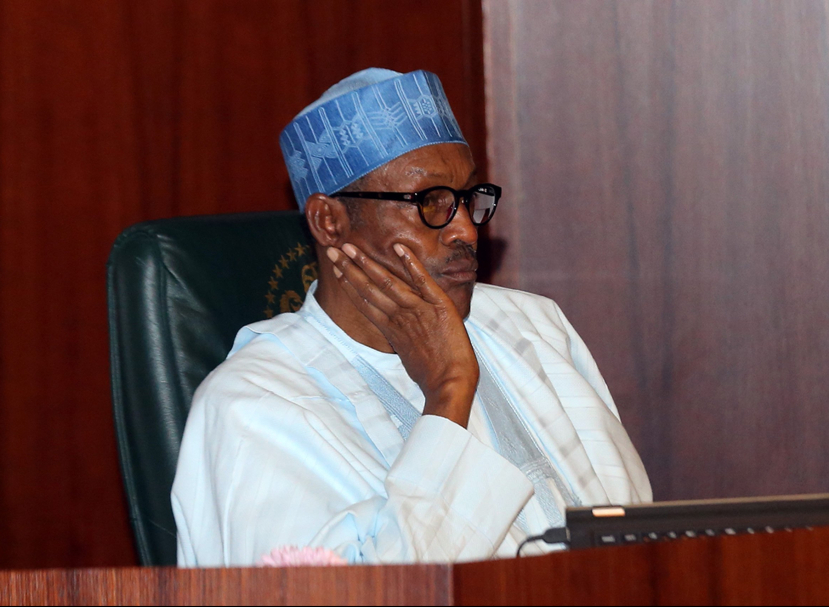
…BLOOD FROM THE TAP.
I am compelled to write yet another instructive piece, the second, 48hours after my widely read and well received OPEN LETTER TO PRESIDENT MOHAMMADU BUHARI, if you haven’t read that, ask Google for a copy. I hear that El Zakzaky is already in India in compliance with the Order of Court, finally, you may say.
This time I am shooting straight, deep, and direct, if you like. The truth is that we must save our nation (a nation I love very deeply) from the precipice. We must stem the slide and push for her salvage from Golgotha. We must put out the fire, and still the rapacious appetite of the ogre. We must deescalate the deafening decibel of war and warmongering, and save Nigeria from the abyss. We must fix the tap that gushes out blood, and cause water to flow, we must allow the waters of brotherhood, of love, of forgiveness, of longsuffering, of due process, of justice, of fairness and of equity, for nothing else will do.
The other day, it was Femi Adesina wailing on TV about how this government is badly misunderstood, and how the class of so-called haters and wailers have grown. Two days ago, just a few hours after my OPEN LETTER TO MR PRESIDENT hit the social space, addressing some issues similar to those raised in my letter, was Garba Shehu Spokesperson to Mr President on Channels TV denying the fact that there are political detainees under Buhari’s watch. See why I have always maintained that the most arduous task in God’s world, is defending the indefensible. Today, the hailers have become wailers.
Remember that popular quote of mine, ‘the lifespan of falsehood is short, and even shorter is the lifespan of propaganda’. So quickly, the chicken has come home to roost. Now, Nigeria must face real issues. The time for blame games is pretty over. Our nationhood is threatened, our economy in comatose, our health care system in tatters, heard that fresh cases of Poliomyelitis have been found in Kwara, and even in the South East, life expectancy an all-time low, so low an average Nigerian is expected to die before he/she is 46, our educational system in shambles, banditry, brigandage and villainy on the rise, crime and criminality now wears the ethnic garb, suicide and suicidal proclivities the new fad in town, and the naira has become one of the least currency of value in Africa, God damn it, even the hailers are listing the tragedies, albeit shamelessly. But all hope is not lost, we won’t give up on Nigeria just yet.
Who do we blame, the Military? The PDP? Jonathan? The APC? Buhari? Or do we blame our Stars, as a people and a nation? Who?
Shooting straight, Compatriots, it is unequivocal that since the end of the Civil War, leadership has failed to grapple with the realistic demands of nationhood. We have left undone that which must be done. Our land is soiled with blood, filthiness and wickedness. We seek growth but groan because we have refused to atone for the blood that this nation has consistently spilled since the First Republic. No nation has ever moved out of the nadir without repentance, penitence and penance. And such penance must be sincere and far-reaching, go check through history, and see.
President BUHARI, Vice President Yemi Osinbajo, Chief Odigie Oyegun, Babatunde Raji Fashola, Dr Itse Sagay, Femi Adesina and many others yet at the precincts of Presidential power, cannot deny my private messages immediately after the 2014/2015 elections on the need for our nation to walk the path of reconciliation, and of national atonement and brotherhood. I emphasized on the need to heal the pain of a highly divisive campaign, on the need for a proactive engagement of the disparate peoples of Nigeria using the instrumentality of the National Orientation Agency to draw down the dividends that accrue from our diversity, on the need to build bridges of brotherhood and of oneness, on the need to atone for the many sins of our nation, and on the need to be true to what we say on paper, but partisans called me an impatient appointment seeker. Today, the things I warned against are here with us. All hope is however, not lost.
But sadly, they will remain with us, even if a thousand Obasanjos, Buharis, Atikus and the likes occupy Aso Rock. Even after a hundred REVOLUTIONS, and even when our best hands ascend power, save and until this nation atones for the murder of her children, mothers and fathers before, during and after the Civil War. Here I’m not just being spiritual or eclectic, I’m being true, factual and realistic. Nigeria must in SEVERAL WAYS say sorry to the victims of the carnage of the 1960s, the victims of the Civil War, and the victims of the senseless killings of the past 5decades. Dismiss this at our own peril. For this cause was I born a year after the Civil War, to help my Country find the pathway to promise. And this is not about me, it is about our nation, for it is NON SIBI SED PATRIAE (please google check it). We can right the wrongs of this nation, and we must do so now so we do not repeat the tragedies of our history.
Have you wondered why a nation that had 24hours of light supply in her first Republic, is today in darkness? Have you wondered why we can’t refine our Crude Oil whereas nations that do not have Crude Oil, have functional Refineries? Have you wondered why we run a Federal Republic like a Unitary State? Have you wondered why in the 21st Century every national debate stagnates at the contours of ethnicity, of region and of religion? Have you wondered why successive political operators steal with unbridled refrain and with reckless abandon? Have you wondered why men/women in this clime steal and loot resources they do not need in twenty lifetimes? Why is corruption in this Country intractable, even after it was allegedly the reason for the many coups and military regimes we have witnessed? Have you wondered why those who claim to want to fight corruption, end up the most corrupt?
Have you wondered why we seem to, and indeed hate ourselves so much? Why do we have drum beats of war everywhere as if war is a tea party?Why are we so hateful such that we see drum majors of peace as cowards? Why are we so bent on going our different ways as though some kindred spirits have declared that in secession or separation is the elixir to the many trouble with Nigeria? Why are we politicking with RESTRUCTURING when it is obviously the way to go? Why do we have the highest number of religious movements, sects, denominations and fellowships, but are yet so godless and impish? Why do we have several anti-corruption agencies but cannot helm in corruption? Why do we waste so much importing the things we can produce? Why are we a people like no other?
The REASON we are where we are, is because rather than water coming out of the tap of this nation, we have got blood flowing ad nauseam ad infinitum. One blood unjustly spilled calls for another, and another. And then the Hailers will become WAILERS, and the WAILERS, hailers, as the vicious cycle continues until the needful is done.
Indeed, like we called the 16years of the PDP the years of locusts, the days of the APC presently appear worse, such is our story since 1966, and so it will continue until the needful is done. To those who wonder why I have consistently opposed every government in power, you now have the answer to your curiosity. It has been a journey modeled after the sufferings of the Christ, and a voyage like the arduous travails of the Prophet of Islam, seeking nothing but the betterment of humankind. Yes, I have always done so for the LOVE of COUNTRY, for the LOVE of Africa and for the LOVE of HUMANITY, and this I have done since I was a teenager.
I have never withheld from any government my ideas and intention to help fix our nation, and such was the zeal that led me into the 2011 Presidential contest as a 40year old, and like one of my mentors Nelson Mandela of blessed memory will say, ”…this is a cause for which, if need be I am ready to lay down my life”. To birth and berth a new, peaceful, just and prosperous Nigeria is my unalterable commitment, God helping me.
Nigeria will be great again, and the tap will yet bring out water, not blood, if we do the needful. Let’s therefore break the cycle of HATE, and work together to make real the promises of democracy. God bless NIGERIA.
Chris Mustapha Nwaokobia Jnr. {CMN JNR}.
Convener COUNTRYFIRST MOVEMENT.
FREESOWORENOW
RESTRUCTURENIGERIANOW
ANEWNIGERIAISPOSSIBLE
COUNTRYFIRST
YESWECAN
BARKADASALLAH
Please Share.




celebrity radar - gossips
Accolades to Empress Genevieve Wining as she Celebrate birthday in Grand style

Accolades to Empress Genevieve Wining as she Celebrate birthday in Grand style
Emmanuel Clement
Vilnius, Lithuania – The Grand Hotel Vilnius will host a grand birthday celebration in honor of Her Majesty The Empress Genevieve Wining of the United Kingdom of Atlantis (UKA) on April 4th, 2026.
The four-day event promises to be an extravagant affair, marking the special birthday of Empress Genevieve Wining. The celebration will take place at the prestigious Grand Hotel Vilnius, Lithuania, renowned for its luxurious ambiance and exceptional service.

According to the event flyer, the birthday celebration will be a spectacular occasion, fitting for an empress. Guests can expect an elegant setting adorned with golden accents, sparkling champagne, and festive decorations, creating a regal atmosphere befitting the occasion.
The Empress Genevieve Wining of UKA is expected to grace the event, which will include various festivities and celebrations in her honor. The occasion aims to bring together dignitaries, followers, and guests to commemorate the empress’s birthday with grandeur and joy.
For media inquiries, accreditation, or further information about the birthday celebration of The Empress Genevieve Wining of UKA, please contact the event organizers.
Courtesy of His Excellency Emperor Prof. Solomon Wining. UKA
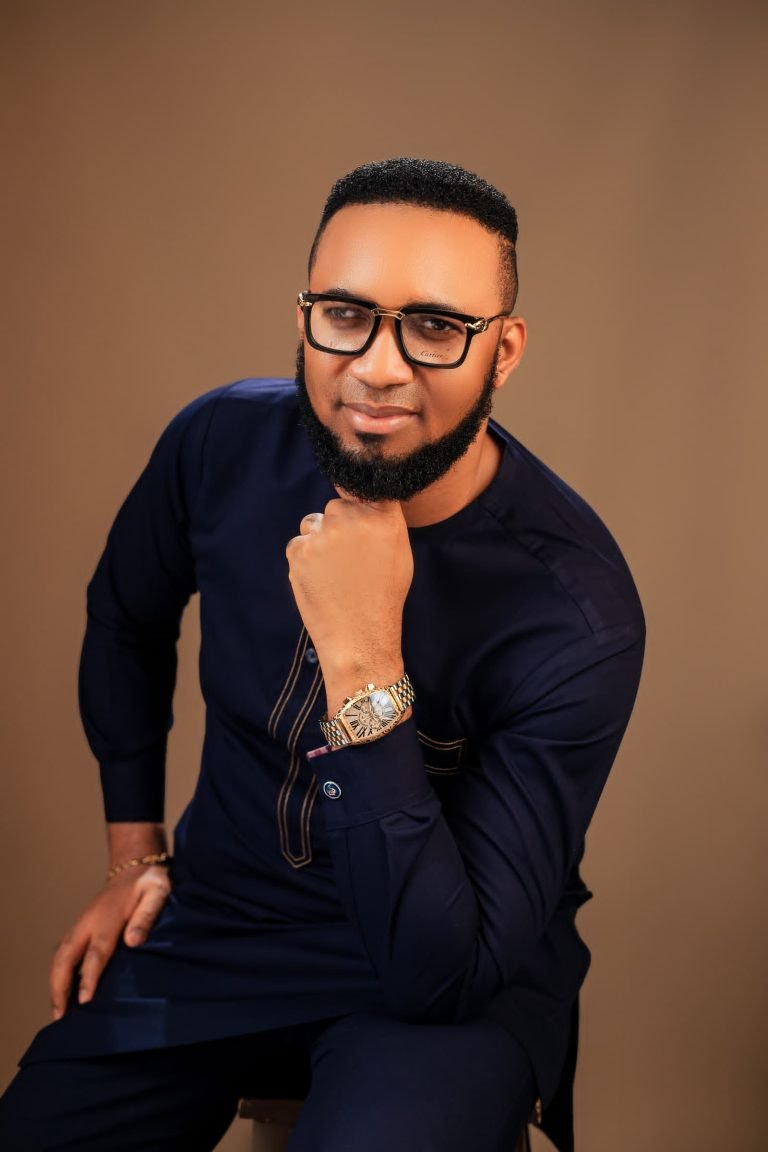
Today, Dr. Chris Okafor turns a year older
~By Sunday Adeyemi
It is widely acknowledged that the exceptional Dr. Chris Okafor, a man of great character, always celebrates his birthday on April 4th, and in recognition of this occasion, I am inspired to write this special tribute to honor him.
Today marks a momentous occasion as we commemorate the birthday anniversary of Dr. Chris Okafor, a rare gem, a perfect gentleman, and the revered founder of Grace Nation Church, aka Liberation City.
Without reservation, this versatile and dependable Oracle foundry has consistently proven itself worthy of the accolades bestowed upon it on this notable anniversary.
Let it be reiterated that Dr. Chris Okafor is a leader known for his generosity and commitment to humanity’s welfare and advancement. The special gifts donated recently to widows and widowers within and outside the church are a testament to his exceptional leadership.
Your reputation as an outstanding and authentic man of God is evident in your exceptional goodwill and philanthropic endeavors.
Your dedication and perseverance have yielded impressive results, and numerous people, including myself, are justifiably proud of the remarkable work you are doing.
You have consistently exemplified outstanding leadership in the Christian community, demonstrating the profound impact of your role as a gift from God to humanity. I firmly believe this to be true.
Here’s to a year of productivity, success, and happiness. Congratulations and warm wishes on your birthday, sir.
Sunday Adeyemi
Your Son
celebrity radar - gossips
Adron Homes Celebrates Visionary Chairman, Aare Adetola Emmanuel King, at 51
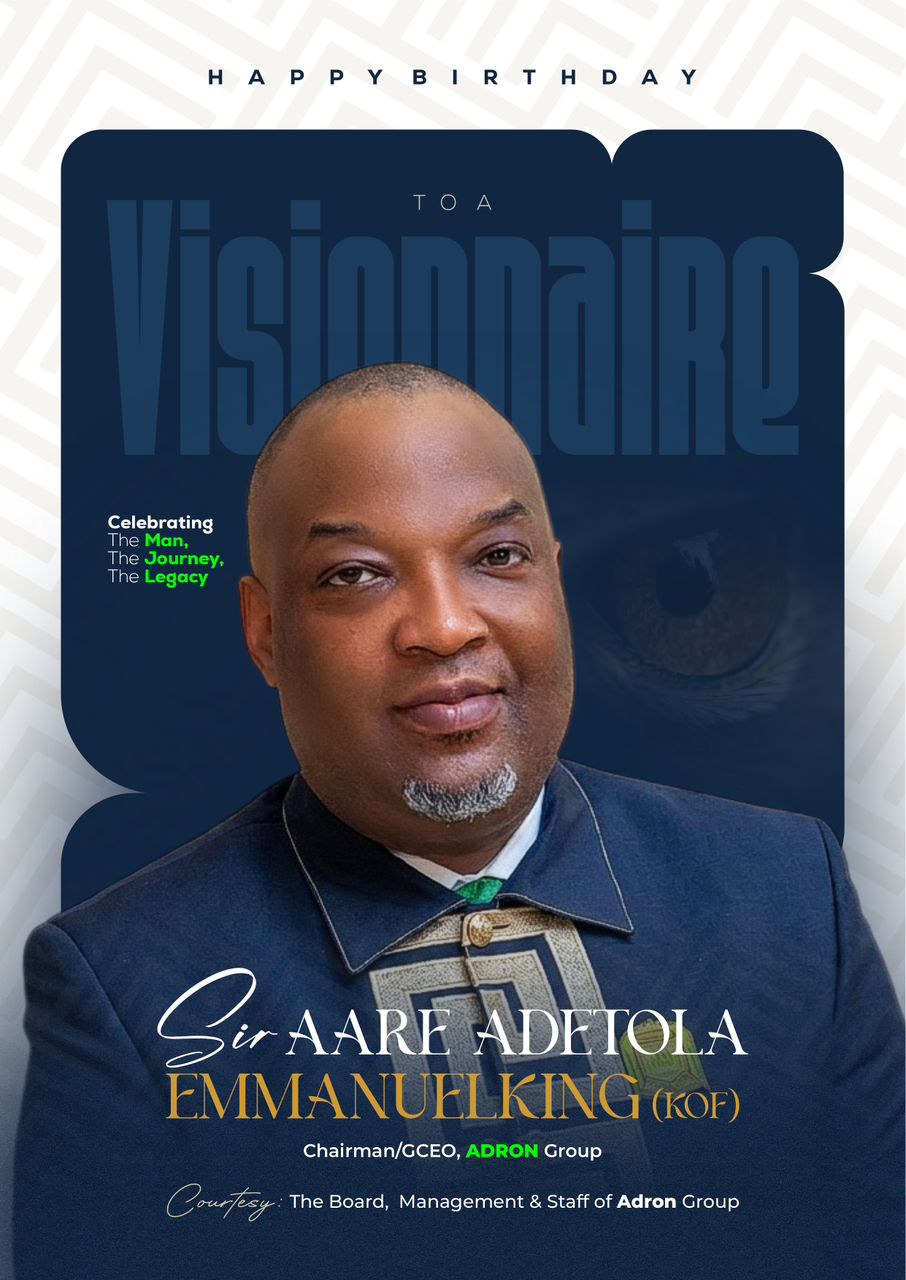
Adron Homes Celebrates Visionary Chairman, Aare Adetola Emmanuel King, at 51
The management and staff of Adron Homes and Properties Limited have joined family, friends, associates, and well-wishers across the globe to celebrate their Chairman and Chief Executive Officer, Aare Adetola EmmanuelKing, as he marks his 51st birthday.

In a statement released by the company, the milestone was described as a celebration of an exceptional leader whose vision, resilience, and entrepreneurial brilliance have not only transformed Adron Homes into a household name in Nigeria’s real estate sector but have also redefined affordable housing across the country.
Under his dynamic leadership, Adron Homes has continued to expand its footprint, delivering value-driven residential solutions while empowering thousands of Nigerians with opportunities for home ownership. His commitment to excellence, innovation, and customer satisfaction has remained the driving force behind the company’s sustained growth and industry leadership.
The statement further highlighted Aare EmmanuelKing’s passion for nation-building and community development, noting his significant contributions to job creation, youth empowerment, and the promotion of socio-economic development through real estate investments.
“As a leader, mentor, and visionary, Aare Adetola EmmanuelKing has consistently inspired a culture of excellence, integrity, and dedication within the organization. His ability to turn bold ideas into reality continues to position Adron Homes as a trailblazer in the industry,” the statement read.
The company expressed profound gratitude for his steadfast leadership and prayed for continued wisdom, strength, and sound health as he embarks on another year of impactful achievements.
As he celebrates his 51st birthday, the entire Adron Homes family proudly honours a man whose legacy continues to shape the future of real estate in Nigeria.
Happy 51st Birthday, Aare Adetola EmmanuelKing!


-

 society7 months ago
Religion: Africa’s Oldest Weapon of Enslavement and the Forgotten Truth
-

 news4 months ago
WHO REALLY OWNS MONIEPOINT? The $290 Million Deal That Sold Nigeria’s Top Fintech to Foreign Interests
-

 society6 months ago
“You Are Never Without Help” – Pastor Gebhardt Berndt Inspires Hope Through Empower Church (Video)
-

 celebrity radar - gossips2 months ago
Dr. Chris Okafor Returns with Power and Fire of the Spirit -Mounts Grace Nation Altar with Fresh Anointing and Restoration Grace on February 1, 2026
You must be logged in to post a comment Login
You must log in to post a comment.