
society
Ogun to Pay Farmers Upkeep Allowances Until First Harvest

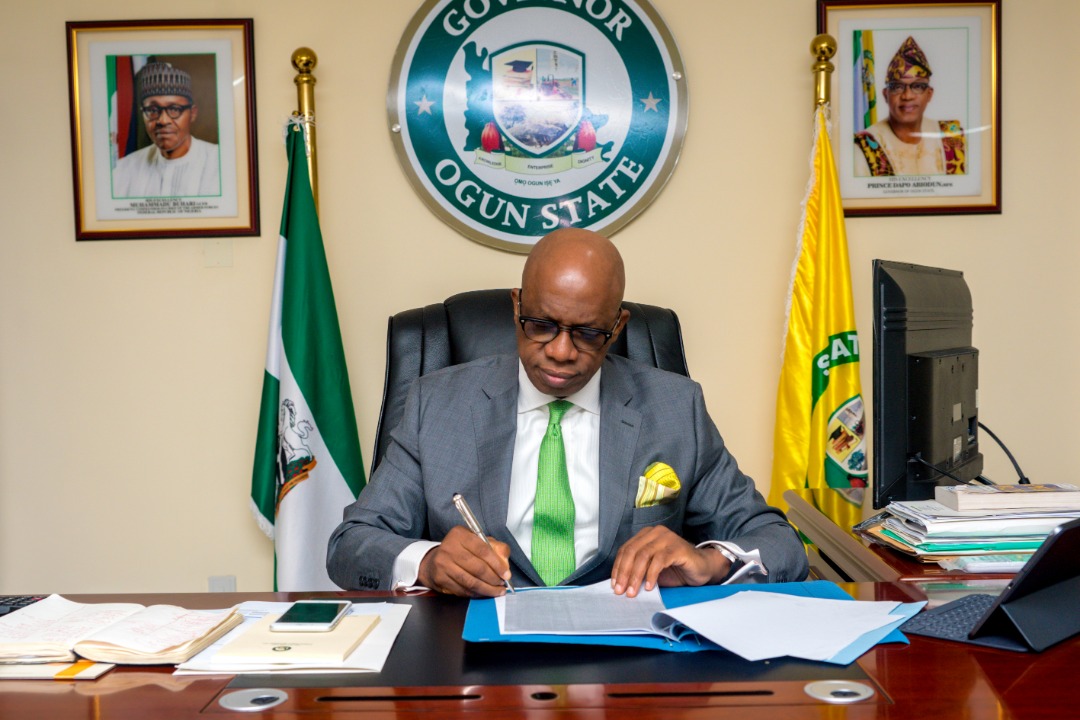
The Ogun State Governor, Prince Dapo Abiodun, on Monday identified Cassava, Maize and Rice as produce of interest under its Ogun State Anchor Borrowers Programme (ABP).
The Governor said some farmers will be issued their certificates of occupancy this week.
“We plan for10,000 participants in the first phase of the scheme. Some of them will emerge this week and I will sign off their C of O for one hectare each. We are also going to concentrate on Maize, Cassava and Rice because the off-takers are waiting to buy them from us”, a statement issued by the Chief Press Secretary to the Governor, Kunle Somorin said.
“To motivate the graduate farmers, we are going to provide some allowances for the farmers’ upkeep until their first harvest. By that time, it is our belief that they would start to make money and stand on their own”, the statement added.
“Our support for them is total. We will provide inputs, service support and training required for farmers through a single digit loan and a guaranteed off-taker”.
The statement noted that interested residents of the state are to log in on the job portal of the State Government – www.jobs.ogunstate.gov.ng under the Anchor Borrowers link. It further advised those already on the portal who are interested in the scheme to log back and update their application on their dashboard to join the scheme.
While inaugurating the Steering Committee to oversee the state’s ABP, last week, Governor Abiodun assured the people that his administration was fully committed to providing an environment that would ensure a better life for the people of the state, adding that the state would ensure the development of all sectors of the economy. He said his government appreciates the immense potential of the agricultural sector.
According to him, the target of his administration was to attain self-sufficiency in food by producing more, adding that providence had blessed the state with favourable climate, fertile soil that sits on over 16,000 square meters, of which 80 per cent is arable.
“While we have seen the success of the anchor borrowers scheme in other states, it is disheartening that Ogun State has never accessed the CBN ABP through the public window,” he said.
He said the inauguration of the committee was a practical demonstration of his administration’s commitment to the development of the agricultural sector, adding that the programme would be targeting over 40,000 farmers, of which 10,000 would be attended to in the first instance.
“In this programme, we are targeting the empowerment of over 40,000 farmers; we are going to be starting in the first instance with an initial 10,000 farmers to which we are going to allocate 10,000 hectares of land,” he said.
He said: “The target of our administration is to produce enough food to attain self-sufficiency in food security in the short term and over the long term, produce enough food for other states and for export.
“Providence have blessed us with favorable climate and fertile soil for agriculture, we sit on a land mass that is over 16,000 sqm, 80 per cent of which is arable, that is we have over 12,800 sqm of arable land.”
He said government and the people should come together to chart a way forward for the development of agriculture in the state, adding that it was disheartening to note that the state had never accessed the Central Bank of Nigeria (CBN) ABP.





Land grabbers invade FGC Kano…. Old Students
The Federal Government College Kano Old Students Association (FGCKOSA)
wishes to formally draw the attention of the President of the Federal Republic of
Nigeria, His Excellency, President Bola Ahmed Tinubu, to a deeply troubling
development involving the proposed concession of approximately 30 hectares of
land within Federal Government College Kano under a Public-Private Partnership
arrangement.
We state, with utmost concern, that this initiative represents a destruction of a
national educational legacy carefully built and handed over to the current
generation of leaders. Unity Schools were established as symbols of excellence,
integration, and nation-building. Any action that diminishes their integrity reflects
a troubling disregard for the power of education as a driver of national progress.
At a time when nations across the world are investing more in education
infrastructure and expanding capacity, it is deeply alarming that we are instead
dismantling and commercializing existing assets meant for learning. This
proposed development signals a shift away from long-term educational value
toward short-term commercial interests.
It is also important to note that the alumni community has, over the years,
collectively invested billions of naira in the development of the College—
consistently funding infrastructure, supporting academic programs, and
strengthening the institution without taking any portion of school land or
seeking anything in return. This record reflects a deep, selfless commitment to
the school’s growth and sustainability.
Furthermore, the alumni has formally established a dedicated foundation focused
on the perpetuation of the College and the advancement of academic
excellence, with plans to raise ₦5 billion at its official launch in June 2026. This
demonstrates that credible, mission-aligned funding alternatives already exist without compromising the intergrity of the school
Our objections are as follows:
1. Misuse of Educational Land for Commercial Gain:
The proposed project is fundamentally a residential and commercial real
estate venture. This constitutes a clear diversion of federally designated
educational land into private hands, undermining the original purpose for
which the land was acquired.
2. Threat to Student Safety and Academic Environment:
The introduction of a mixed-use estate sharing boundaries with the school
exposes students to avoidable risks and erodes the controlled, secure
environment required for effective learning.
3. Irreversible Damage to School Capacity and Future Growth:
The land identified for this project includes critical open spaces necessary
for recreation, expansion, and future development. Any project that
reduces the capacity of the school to grow, expand, and improve its
facilities cannot, in any form, be considered beneficial to the institution.
4. Fundamental Question of Necessity:
Why Federal Government College Kano land? Kano State is one of the
largest states in the country, with abundant land available for real estate
development. There is no justification for appropriating land from an
existing educational institution when alternatives clearly exist.
5. No Tangible Benefit to the School:
There is no scenario under which this land-swap PPP arrangement
benefits the school. On the contrary, all available evidence suggests that
the project is structured primarily for private commercial gain. We are
compelled to state that this raises serious concerns that the promoters
intend to rip off the government and the Nigerian people under the guise
of a PPP arrangement.
Your Excellency, this matter goes beyond a single institution. It raises a
fundamental question about our national priorities: whether we will protect and
strengthen our educational institutions, or allow them to be gradually eroded.
We therefore respectfully call on the President to:
• Immediately cancel the proposed PPP land concession;
• Protect the sanctity and integrity of Unity Schools nationwide
*Ensure that no action is taken that compromises the future of education
in Nigeria.
We also strongly advise members of the public to refrain from purchasing or
investing in any land or property associated with this scheme, as it is under
serious dispute and may be overturned, exposing buyers to financial loss.
FGCKOSA wishes to make it clear that we will not relent in pursuing all lawful and
legal avenues to overturn this illegal arrangement. We remain committed to
safeguarding the legacy of our institution and ensuring that it continues to serve
future generations.
Signed,
Shoyinka Shodunke
President
Federal Government College Kano Old Students Association (FGCKOSA)
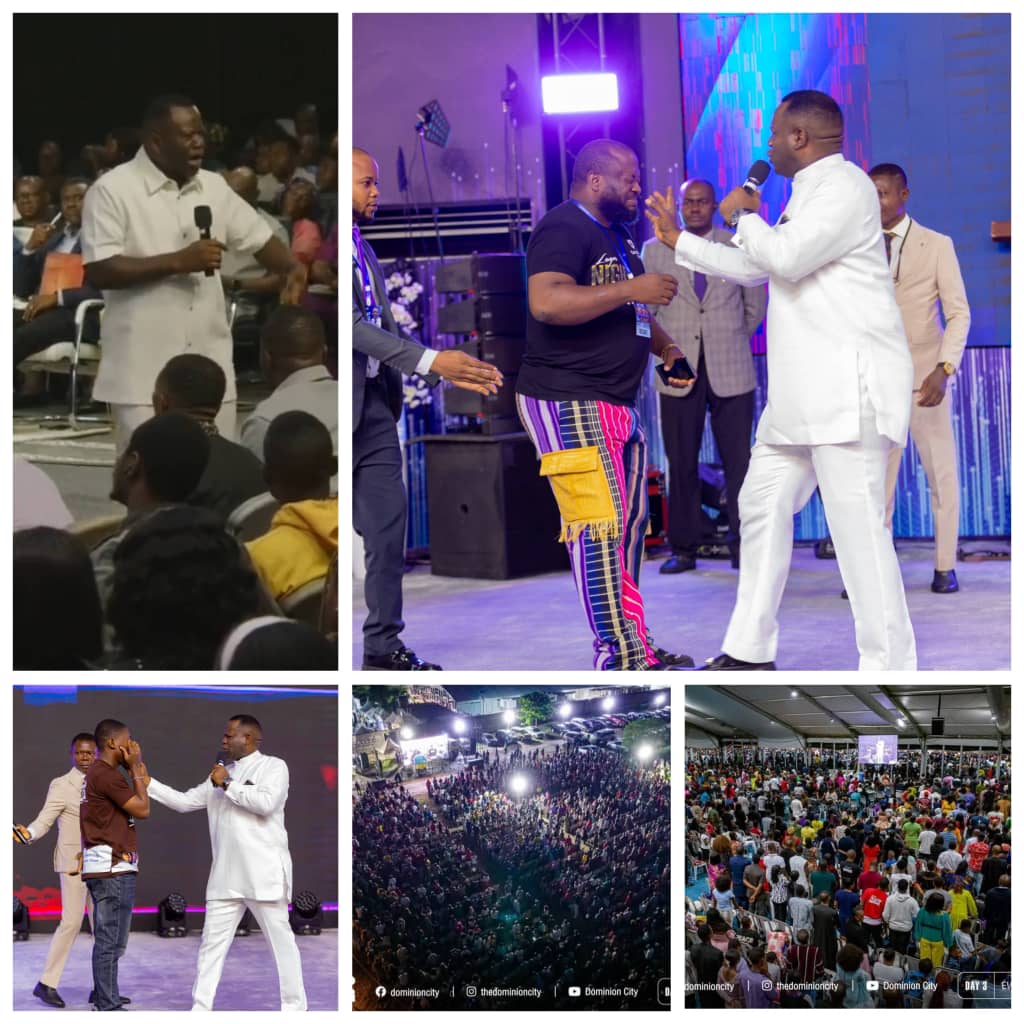
Revival Atmosphere as Dominion City Launches Night of Glory 2026.
Lagos – The atmosphere was charged with faith, worship, and expectancy as Dominion City’s Global Camp Meeting 2026 entered its peak with the first day of the “Night of Glory,” drawing thousands of worshippers to Lagos and Enugu in a powerful display of spiritual revival.
Held at the Golden Heart Place, Ajah, Lagos, the Friday evening gathering marked a significant moment in the ongoing six-day conference themed “Redigging the Wells of Our Fathers.” Participants from across Nigeria and beyond converged both physically and online, united by a shared hunger for divine encounter and transformation.
From the outset, the meeting was characterised by intense worship sessions led by gospel ministers, creating an atmosphere many attendees described as “tangible with God’s presence.” The night quickly transitioned into sessions of fervent prayers, prophetic ministrations, and teachings centred on restoration, healing, and spiritual awakening.
Presiding over the meeting, Dr. David Ogbueli, founder of Dominion City, charged participants to reconnect with foundational truths and spiritual disciplines necessary for personal and societal transformation. He emphasised that the “Night of Glory” was designed as a moment of divine visitation where destinies could be reshaped.
“As we redig the wells of our fathers, we are reconnecting with ancient graces and covenant realities that produce undeniable results,” he declared.
As the night unfolded, several remarkable testimonies were shared, reinforcing the theme of supernatural intervention. Among them was the case of a 14-year-old girl who was reportedly delivered from a seven-year struggle with pornography addiction, an experience that drew emotional reactions from the congregation.
Other testimonies included reported healing from cancer, recovery from a severe skin infection attributed to spiritual affliction, the healing of a heart-related condition, and three years of a non-menstrual period. Attendees also recounted instances of restored hearing and sight, with individuals testifying to improvements from partial deafness and blindness, among others.
Fathers of faith present were Barrister Emeka Nwankpa, Pastor Yemi Ayodele, Rev. Pade Tokun, Apostle Gbenga Adegbenro, Rev. Mike Adegbile, and others. Other Ministers present, including Pastor Dr. Charles Ndifon, Pastor Randy Mitchell, Apostle Ikechukwu Nnajiofor, and others, reinforced messages of faith and the power of God to intervene in human situations. They encouraged worshippers to remain steadfast and receptive, noting that miracles often spring from an atmosphere of unwavering belief.
Beyond the miraculous, the gathering also underscored a broader call to moral and spiritual renewal. Church leaders reiterated the need for believers to embody values that can positively influence society, especially in a time of perceived moral decline.
The “Night of Glory” is part of the larger Global Camp Meeting, which began on April 1 and will run through April 6, featuring daily teachings, leadership sessions, and specialized programmes for youths and families.
Organisers say expectations remain high for the second night, with many believing that the wave of miracles and transformation witnessed on the first night is only the beginning.
For many attendees, however, the message was clear beyond the signs and wonders; the true essence of the gathering lies in a renewed commitment to live transformed lives and impact society. //END.//
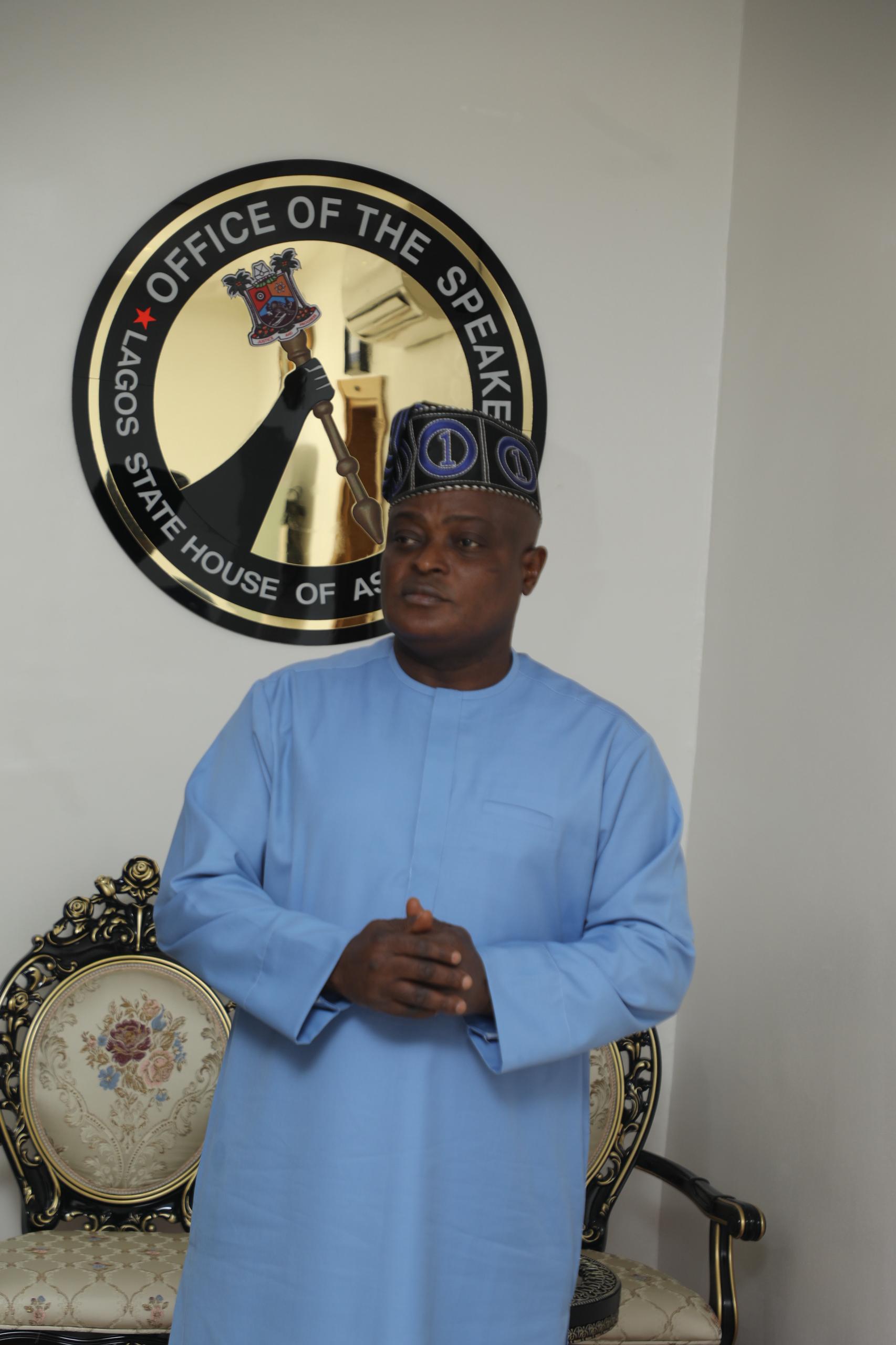
Easter: Obasa Urges Christians To Embrace Hope, Unity, Renewal
The Speaker of the Lagos State House of Assembly, Rt. Hon. Mudashiru Obasa, has congratulated Christian faithful in Lagos and across Nigeria on the celebration of Easter, urging them to draw strength from the lessons of Christ’s resurrection.
In his Easter message, released by his Chief Press Secretary, Mr. Dave Agboola, Obasa described the season as a reminder of victory over despair, renewal after trials, and the triumph of light over darkness. He noted that just as Christ overcame death, Nigeria can overcome its current challenges if citizens remain steadfast, prayerful, and committed to unity.
“Easter is a season of hope and renewal. As a nation, we face economic pressures and security concerns, but the resurrection teaches us that no situation is beyond redemption. Let us roll away the stones of division and despair, and work together for peace, justice, and prosperity,” the Speaker said.
He called on Lagosians to continue to show love and compassion to one another, stressing that collective effort is key to building a stronger Lagos and a better Nigeria.
Obasa prayed that the joy of Easter would fill homes with renewed faith and guide both leaders and citizens toward a brighter future.


-

 society7 months ago
Religion: Africa’s Oldest Weapon of Enslavement and the Forgotten Truth
-

 news4 months ago
WHO REALLY OWNS MONIEPOINT? The $290 Million Deal That Sold Nigeria’s Top Fintech to Foreign Interests
-

 society6 months ago
“You Are Never Without Help” – Pastor Gebhardt Berndt Inspires Hope Through Empower Church (Video)
-

 celebrity radar - gossips2 months ago
Dr. Chris Okafor Returns with Power and Fire of the Spirit -Mounts Grace Nation Altar with Fresh Anointing and Restoration Grace on February 1, 2026
You must be logged in to post a comment Login
You must log in to post a comment.