
Politics
SELECTIVE BENCHMARKING AND THE BURDEN OF DEMOCRACY IN NIGERIA

SELECTIVE BENCHMARKING AND THE BURDEN OF DEMOCRACY IN NIGERIA.
Written by George Omagbemi Sylvester
“Why Our Collective Guilt, Loud Arguments, and Even Biases Are Not the Problem; but the Path to National Renewal.”
Nigeria is a country permanently trapped in argument. From insecurity to economic hardship, from electoral controversies to judicial contradictions, every major national event immediately fractures public opinion. Social media explodes, dinner tables become parliaments, and WhatsApp groups transform into ideological battlegrounds. To the casual observer, this constant disagreement may appear unhealthy, divisive, and unproductive. But beneath the noise lies an uncomfortable truth Nigerians rarely admit: WE ARE ALL GUILTY BUT YET OUR GUILT IS ONE OF THE STRONGEST PILLARS OF DEMOCRACY.

This phenomenon can best be described as selective benchmarking though the habit of judging national events through selective moral, political and emotional lenses depending on our political alignment, expectations, or disappointments. When something goes wrong in Nigeria, citizens almost always fall into three broad groups.
The first group blames the government outright. They see every failure as evidence of incompetence, corruption, or deliberate sabotage of the national interest. They highlight institutional collapse, leadership failure, and broken promises. This group is often dismissed as pessimistic, noisy, or anti-government. Yet paradoxically, this is the group that gives democracy its teeth. Without relentless criticism, governments drift easily into complacency or authoritarian comfort.
The second group defends the government. They argue that leadership is difficult, that inherited problems are complex and that institutions require time to mature. They emphasize effort over outcome, intention over impact. This group is equally demonized and often labeled as enablers or apologists. But they too are indispensable to democracy. As political philosopher Edmund Burke warned, “To make us love our country, our country ought to be lovely.” Defenders, rightly or wrongly, try to preserve belief in the state, preventing total collapse of public trust.
The third group is the smallest and most intellectually seductive. These are the analysts, the balanced voices, the “let us look at it from all sides” commentators. They interrogate context, history, data, and comparative global standards. They resist emotional outrage and partisan loyalty. On paper, they are the most reasonable. In practice, however, they often contribute less to democratic energy. Their neutrality, while intellectually admirable, rarely mobilizes citizens or pressures power. As political scientist Samuel Huntington noted, democracy is not sustained by consensus alone but by “INSTITUTIONALIZED CONFLICT.”
This is the uncomfortable irony of Nigeria’s democratic struggle: the so-called ‘bad groups’ are often more useful to democracy than the ‘good’ neutral observers.
DEMOCRACY IS NOT POLITENESS, IT IS CONTESTATION. One of the greatest misconceptions Nigerians hold is that democracy is about unity of opinion. It is not. Democracy thrives on disagreement, protest, opposition, and constant benchmarking of power against public expectations. According to Robert Dahl, one of the world’s foremost democratic theorists, democracy requires “continuous responsiveness of the government to the preferences of its citizens.” That responsiveness is not activated by silence or neutrality but by pressure.
Nigeria’s problem, therefore, is not that citizens argue. The problem is how we argue.

Too often, selective benchmarking degenerates into tribalism, religious bias, and blind party loyalty. Government critics sometimes exaggerate failures, ignore progress, or frame every issue as ethnic conspiracy. Government defenders sometimes excuse the inexcusable, rationalize incompetence, or attack citizens instead of addressing facts. When benchmarking becomes tribal, democracy weakens. When it becomes evidence-based and goal-oriented, democracy matures.
As economist Amartya Sen argued, “Public reasoning is the backbone of democracy.” Public reasoning dies when facts are ignored and emotions weaponized.
WE ARE ALL GUILTY, AND THAT IS THE POINT. The honest confession Nigerians must make is simple: none of us is completely neutral. We all belong (consciously or unconsciously) to one of the first two groups. We criticize when our expectations are betrayed; we defend when our hopes are invested. Pretending otherwise is intellectual dishonesty.
This collective guilt is not a moral failure. It is a democratic reality. In advanced democracies, citizens align with ideologies, parties, or policy preferences and argue fiercely. What separates functional democracies from failing ones is not the absence of bias but the presence of strong institutions, verifiable data and civic discipline.
Nigeria’s institutions remain fragile, which means public debate carries even more responsibility. When institutions are weak, citizens become the loudest checks on power. That is why silencing dissent, labeling critics as enemies, or banning platforms of expression is fundamentally anti-democratic.
As John Stuart Mill famously warned, “He who knows only his own side of the case knows little of that.” Nigeria must learn to argue fiercely without dehumanizing one another.
SELECTIVE BENCHMARKING VS NATIONAL DEVELOPMENT. Benchmarking itself is not evil. Selective benchmarking becomes dangerous only when it abandons national development as its ultimate goal. The moment insecurity, inflation, corruption, or unemployment becomes an opportunity to score party points rather than solve problems, democracy becomes performative.
Countries that developed did so amid intense internal criticism. South Africa’s post-apartheid democracy, India’s noisy parliamentary culture and even the United States polarized system all prove one thing: development does not require silence; it requires structured disagreement.

Nigeria needs critics who demand accountability and defenders who insist on stability, but both must be anchored on facts, not sentiments. As governance expert Francis Fukuyama emphasized, “Political order depends not just on state power but on legitimacy.” Legitimacy is earned through results, transparency and honest engagement with criticism.
A MESSAGE ACROSS PARTY LINES. This reflection cuts across all political parties whether ADC, LP, PDP, APC, and others. Democracy does not belong to one party or ideology. It belongs to citizens who argue, vote, protest, defend, critique and demand better.
You are not a bad citizen because you criticize government.
You are not a traitor because you defend government efforts.
You are not superior because you claim neutrality.
What matters is intent and method.
Avoid tribalism.
Avoid religious manipulation.
Avoid over-politicising national pain.
Let national development be the benchmark and not party survival.
TOWARDS A MORE INTELLIGENT DEMOCRATIC CULTURE. Nigeria’s future depends on transforming selective benchmarking into selective responsibility. Criticize with facts. Defend with evidence. Analyze with relevance. Democracy is not about being right; it is about being accountable to the collective good.
As Nelson Mandela once said, “A critical, independent and investigative press is the lifeblood of any democracy.” The same applies to citizens.
So yes, we are all guilty. Guilty of bias. Guilty of passion. Guilty of selective outrage. Though, if properly channeled, this guilt can become Nigeria’s democratic strength rather than its curse.
Happy New Year to all Nigerians; across SDP, NNPP, ADC, LP, PDP, APC and beyond. May our arguments build institutions, not burn bridges.




Politics
APC Group Endorses Fubara for 2027, Calls on Tinubu and APC to Prioritise Performance Over Politics in Backing Governor’s Second Term Ambition
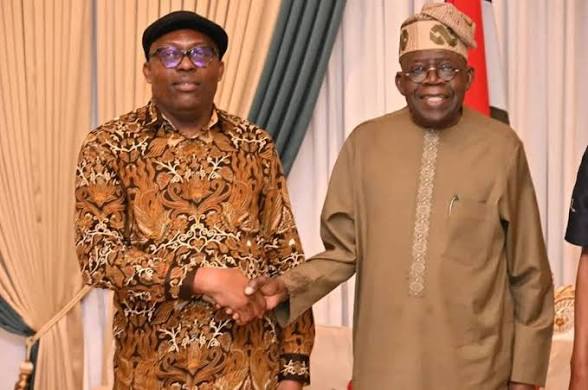
*APC Group Endorses Fubara for 2027, Calls on Tinubu and APC to Prioritise Performance Over Politics in Backing Governor’s Second Term Ambition*
The APC National Vanguard has appealed to President Bola Ahmed Tinubu and the leadership of the All Progressives Congress (APC) to support a second term in office for Siminalayi Fubara, citing what it described as “impressive and verifiable developmental strides” across Rivers State.
In a statement issued on Thursday by its National President, Dr Gbenga Salam (JP), the group said its position followed an extensive assessment tour of key infrastructure and public service projects executed under the Fubara administration.
The APC National Vanguard said the appeal was based strictly on performance, arguing that governance outcomes should outweigh partisan considerations, particularly in a state as economically significant as Rivers.
“We respectfully urge President Bola Ahmed Tinubu and the leadership of the All Progressives Congress to support the continuity of Governor Siminalayi Fubara beyond his current tenure, in recognition of his commitment to development, prudent resource management, and people-focused governance,” the statement read.
According to the group, its delegation visited multiple project sites across the state, observing ongoing and completed works spanning road construction, urban renewal, and public infrastructure upgrades.
It noted that the scale and distribution of these projects reflect a deliberate effort by the state government to extend development beyond traditional urban centres and into underserved communities.
“Our findings from the tour reveal a government that is not only active but intentional in its development agenda. The execution of capital projects across various parts of Rivers State demonstrates a clear understanding of the needs of the people and a commitment to addressing them,” Dr Salam said.
The group particularly commended what it described as prudent financial management by the administration, noting that the projects reviewed showed evidence of careful planning and efficient allocation of resources.
“At a time when economic pressures are evident across the country, it is commendable that the Rivers State government has managed its resources in a way that delivers visible and impactful development without signs of fiscal recklessness,” the statement added.
The APC National Vanguard further observed that despite political tensions in the state, the Fubara administration has maintained focus on governance, ensuring continuity in project execution and service delivery.
The group argued that such stability is critical for sustained development and should be encouraged rather than disrupted.
“Leadership must ultimately be judged by results. In Rivers State, there is clear evidence of progress—projects that are not only announced but executed, and policies that translate into real benefits for citizens,” Dr Salam noted.
The group warned that discontinuity in leadership could stall ongoing projects and reverse gains already recorded, stressing the importance of allowing a performing administration to consolidate its achievements.
“Rivers State is at a pivotal stage where continuity will allow for the completion of ongoing initiatives and the deepening of development gains. Supporting Governor Fubara for a second term is, therefore, a decision in the best interest of the people,” the statement said.
In addition to its call on the APC leadership, the group reaffirmed its support for President Tinubu, expressing confidence in his administration’s broader economic and governance reforms.
The APC group urged Nigerians to remain supportive of efforts aimed at stabilising the economy and strengthening public institutions.
“We reiterate our endorsement of President Bola Ahmed Tinubu for a second term in office, in recognition of his leadership and commitment to national development. With sustained support, the administration can consolidate its reform agenda for the benefit of all Nigerians,” Dr Salam added.
The APC National Vanguard concluded by calling on political actors to prioritise development and public interest over partisan divides, insisting that governance should always be guided by performance and accountability.
“Where leadership demonstrates prudence, delivers development, and remains focused on the welfare of the people, it deserves continuity. This is the position we have reached after a careful and independent assessment of Rivers State,” the statement added.
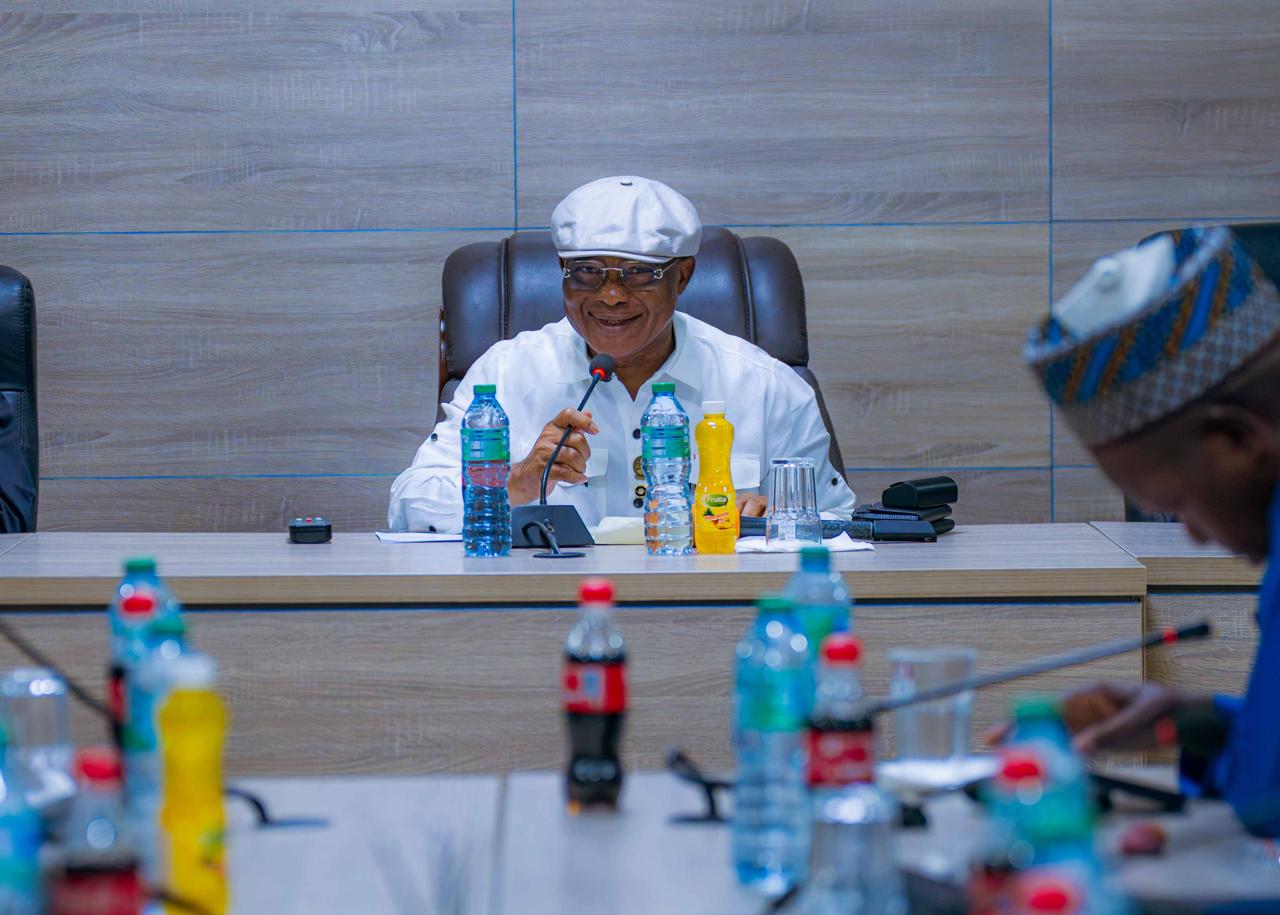
*Renewed Hope Ambassadors Step Into the Next Phase
Fresh from the successful APC 2026 National Convention, the Renewed Hope Ambassadors National, Zonal, and State leadership gathered in Abuja over the weekend, for its fourth strategic meeting, setting the tone for nationwide grassroots activation ahead of 2027.
Chaired by Governor Hope Uzodinma (Imo State) the Director General and National Coordinator of the Renewed Hope Ambassadors, alongside Deputy Director-General, Governor Uba Sani of Kaduna State, and Governor Inuwa Yahaya of Gombe State as Secretary, the session reinforced one clear direction: One Party. One Message. One Mobilization whilst also laying out a strategic roadmap for the activation of the network across all communities in Nigeria.
Backed by the strength of 31 APC-led states, the Renewed Hope Agenda is taking Bola Ahmed Tinubu’s message of progress and reform to every corner of Nigeria.
From bold economic restructuring to initiatives like NELFUND, the increase in the national minimum wage from ₦30,000 to ₦70,000, and strategic investments in critical sectors, including PNiCGI, the mission remains clear: helping Nigerians understand both the purpose and the progress of the Renewed Hope vision.
This is coordination at scale. This is grassroots engagement with purpose. This is the next phase of Renewed Hope with One Party, One Message, and One Mobilisation framework
#RenewedHopeAmbassadors #APC #WeAreAPC


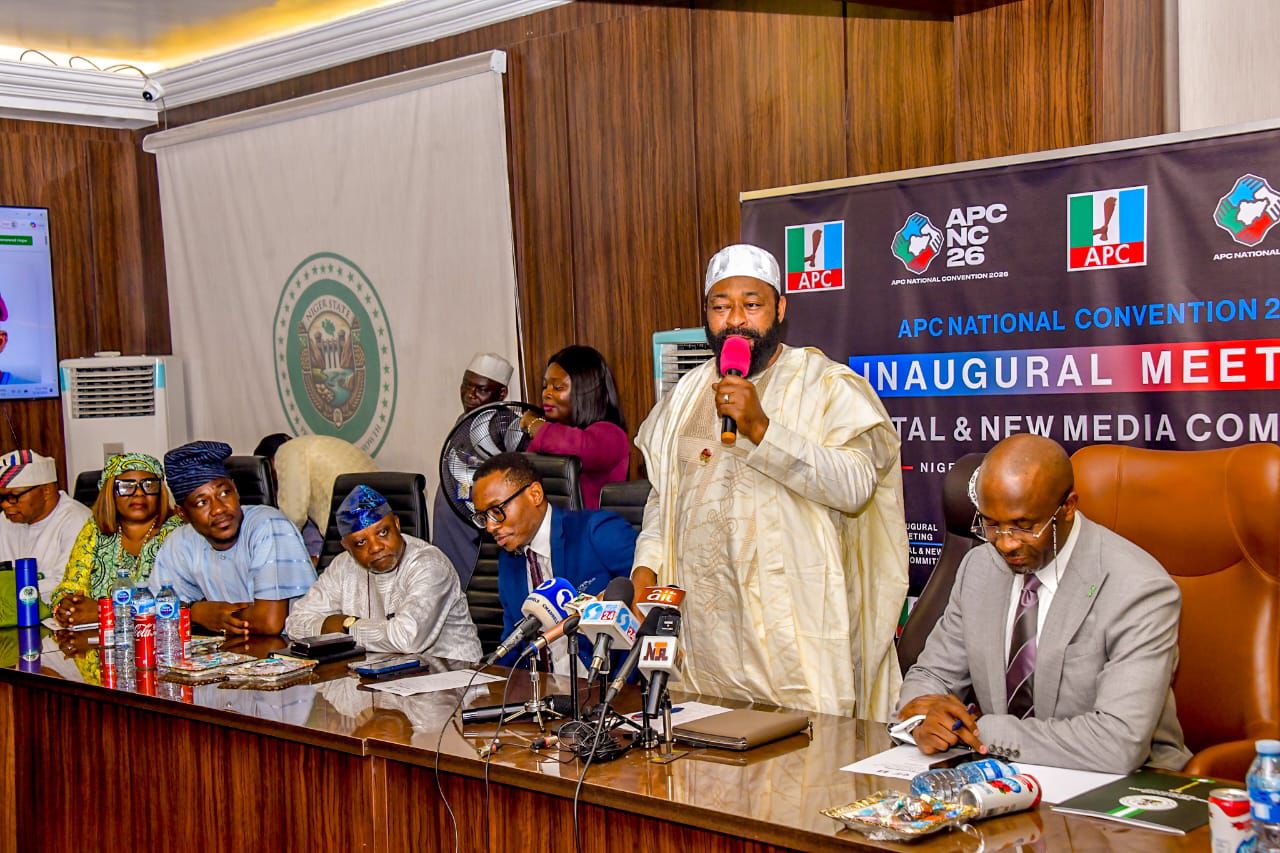
Governor Bago Inaugurates APC Digital Media Sub-Committee Ahead of National Convention.
Governor Umaru Bago has inaugurated the Digital Media Sub-Committee for the forthcoming National Convention of the All Progressives Congress (APC), scheduled to hold on March 27 and 28, 2026 in Abuja.
Chairing the sub-committee, Governor Bago tasked members with the responsibility of effectively communicating the party’s manifesto to the public.
He emphasized the need to leverage social media platforms to highlight the achievements and ongoing efforts of President Bola Ahmed Tinubu, noting that communication gaps have posed challenges that must now be decisively addressed.
The Co-Chair of the sub-committee, Hon. Benjamin Kalu, Deputy Speaker of the House of Representatives, echoed the Governor’s position, urging members to project the activities of both the party and the government to a broader audience.
He called for a deliberate and coordinated effort to showcase the party’s achievements and policy direction, stressing the importance of shaping a compelling and consistent narrative across all digital platforms.
Delivering a presentation to the committee, Otega Ogra, SSA to the President on New Media, who serves as Secretary of the sub-committee, outlined strategic focus areas to guide the team’s operations.
His presentation highlighted communication priorities and actionable steps to achieve the committee’s mandate and strengthen the party’s digital engagement.


-

 society6 months ago
Religion: Africa’s Oldest Weapon of Enslavement and the Forgotten Truth
-

 news4 months ago
WHO REALLY OWNS MONIEPOINT? The $290 Million Deal That Sold Nigeria’s Top Fintech to Foreign Interests
-

 society6 months ago
“You Are Never Without Help” – Pastor Gebhardt Berndt Inspires Hope Through Empower Church (Video)
-

 celebrity radar - gossips2 months ago
Dr. Chris Okafor Returns with Power and Fire of the Spirit -Mounts Grace Nation Altar with Fresh Anointing and Restoration Grace on February 1, 2026