
Uncategorized
We Are Not Poor; We Are Being Robbed: Africa Must Unite and Reclaim Her Future

We Are Not Poor; We Are Being Robbed: Africa Must Unite and Reclaim Her Future.
Written by George Omagbemi Sylvester | Published by SaharaWeeklyNG.com
Africa stands at a critical crossroads. The continent that gave the world mathematics, medicine, music and metallurgy is today mocked and marginalized on the global stage. We, the inheritors of Mansa Musa’s gold, the architects of the pyramids, the descendants of Shaka Zulu’s discipline and Queen Nzinga’s resistance, now beg for aid, sell our birthrights for political appointments and worse; enslave ourselves to modern colonialists through debt traps and deceptive foreign investments.

The time for SLAVE TRADE is over. Africa must RISE. We must REBUILD, we must believe in OURSELVES and above all, we must stop selling OURSELVES as ECONOMIC, POLITICAL and INTELLECTUAL SLAVES to a world that profits from our downfall. The chains of yesteryears may no longer be iron, but they are now woven into neo-colonial economics, corrupt leadership, exploitative trade agreements and systematic brain drain.
A Continent of Gold, Governed Like Dust
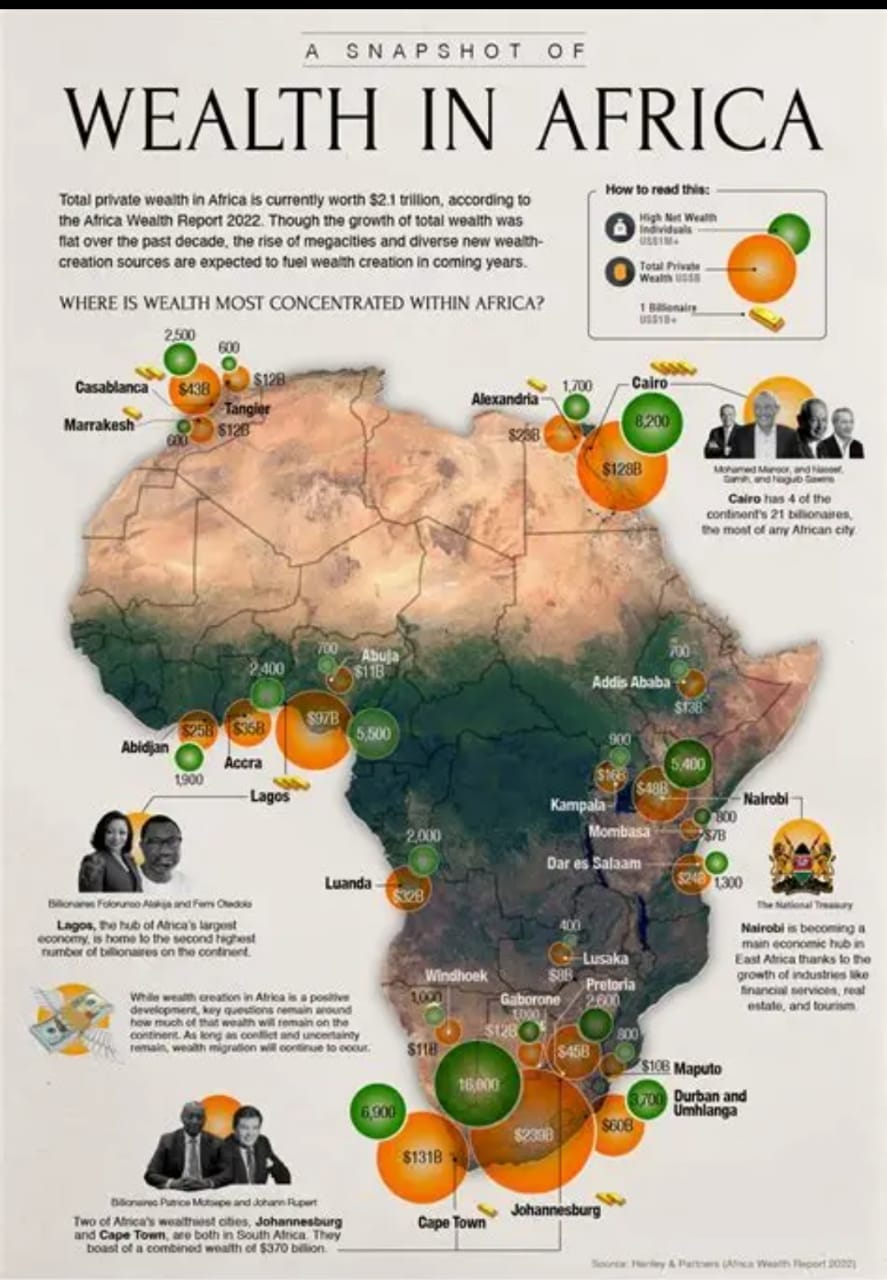
Africa is arguably the richest continent in terms of natural resources. We possess over 30% of the world’s mineral reserves, 40% of global gold and 90% of chromium and platinum. The Democratic Republic of Congo alone is considered the richest country in natural resources, holding an estimated $24 trillion worth of untapped raw minerals. Nigeria sits on vast oil reserves, Ghana on gold and South Africa on diamonds. Yet, more than 430 million Africans live in extreme poverty. This paradox is not only shameful; it is criminal.

The world does not pity a weak man and AFRICA has been weak for too long. For decades, foreign corporations have exploited our lands while leaving our children to die in poverty and our youth to drown in the Mediterranean seeking greener pastures. Enough is Enough!
The Betrayal of Leadership. We must tell ourselves the truth; our biggest enemies are not in Washington, London, Paris or Beijing. They are seated in our parliaments, palaces, and presidential villas. African leaders have become auctioneers of our destiny, selling critical assets to China, the EU and the Middle East under the guise of development.

How do we explain African presidents flying abroad for medical treatment while their citizens die in poorly funded hospitals? How do we justify leaders who build schools and industries only in the West while their own countries rot in illiteracy and joblessness?
As Kenyan scholar Prof. P.L.O. Lumumba rightly said, “We have become a continent of MOURNERS; we mourn every day. We mourn POVERTY, we mourn HUNGER, we mourn DISEASE, we mourn BAD GOVERNANCE and yet WE DO NOTHING.”
Modern Slavery in New Garments. Make no mistake, the slave trade is not over; it has simply changed form. Today, it’s disguised as debt diplomacy, visa lotteries, talent poaching and foreign ‘aid’ riddled with imperial strings. Young Africans are being trafficked into Europe and the Gulf, exploited as domestic workers, prostitutes and cheap labour, while our governments turn a blind eye.

China now builds roads in exchange for strategic minerals. Western tech giants loot our data while paying no taxes. The IMF and World Bank prescribe economic poisons and then offer aspirin as loans. This is modern slavery and we must reject it with the same force our ancestors resisted colonial invaders.
The Gaddafi and Sankara Blueprint. Africa once had visionaries who dared to dream of unity and independence. Muammar Gaddafi of Libya called for a UNITED STATES of AFRICA; with a single military, one currency and one passport. He was silenced through foreign-backed war and betrayal. Thomas Sankara, the revolutionary president of Burkina Faso, denounced foreign aid, cut government luxury and empowered mostly women. He was assassinated by Western interests aided by African hands.
Kwame Nkrumah said it best: “The independence of Ghana is meaningless unless it is linked up with the total liberation of Africa.”
These heroes were not perfect, but they believed in Africa. They were hated, hunted and killed; because they refused to be pawns in global chess games. We must pick up the broken pieces of their dreams and rebuild the continent they died for.
The Role of the Youth and Diaspora. Over 60% of Africa’s population is under 25. This youth bulge is not a threat; it is a WEAPON, a BLESSING and a chance for REBIRTH. It must be sharpened with KNOWLEDGE, UNITY and PATRIOTISM. African youth must stop worshiping the West and start building the Africa of our dreams.
Our teachers, doctors, engineers and artists in the diaspora must look homeward. The West will never love us more than we love ourselves. Every African child who escapes poverty through a scholarship owes the continent a duty to return and rebuild.
As Julius Malema of South Africa said, “We are not poor. We are being looted.” And truly, Africa is not poor; it is MISMANAGED, MISLED and MENTALLY ENSLAVED.
Faith Without Fear, Unity Without Borders. Religion has become a weapon of mass deception in Africa. Pastors fly private jets while their members trek to church. Imams preach about paradise while ignoring the hell on Earth we live in. We must begin to measure spirituality by development not donations.
Africa must rise above the tribal, religious, and political lines that divide us. Rwanda rose from genocide through unity. Ethiopia once beat back colonial powers through solidarity. NIGERIA, SOUTH AFRICA, EGYPT and KENYA must lead a CONTINENTAL REVIVAL.
The African Union (AU) must stop acting as a toothless elite club and become the engine of our rebirth. ECOWAS, SADC and other regional blocs must break the chains of foreign influence and put Africa first.
As Gaddafi once warned, “If we do not unite now, we will all fall one by one.”
A Call to Conscience and Courage. The time has come to build African-owned industries, fund African tech, protect African women and empower African minds. The world respects strength and if Africa must be respected, we must first respect ourselves.
We must also rewrite our education system. Our children must be taught about the empires of Mali, Songhai, Zulu and Benin; not just Shakespeare, Columbus and Napoleon. A people without historical pride will always seek validation from their oppressors.
We must prioritize made-in-Africa products, music, films, apps and ideas. If we don’t consume our own, why should the world do so?
It is no longer enough to pray or protest; we must produce, protect and prosper as one Africa.
The Final Word: Destiny Is Calling. The age of betrayal must end. The time of rebuilding must begin. From Cairo to Cape Town, Lagos to Nairobi, Dakar to Addis Ababa; we must unite. No more selling out. No more begging. No more silence.
As the great Kenyan writer Ngũgĩ wa Thiong’o once said, “Africa’s problem is not the absence of knowledge but the betrayal by those who know.”
Let us rise in truth, rise in unity and rise in courage. Africa is not a problem to be fixed; it is a giant that must be awakened.
Let history remember this moment not as another lamentation, but as a declaration of a new dawn. Africa must rebuild. And that rebuilding begins with YOU and ME.
By George Omagbemi Sylvester
Published by SaharaWeeklyNG.com





FOPCHEN Calls for Dialogue as Court Fixes May 28 for Continuation
OTA, OGUN STATE — Proceedings in a widely followed legal case resumed on March 24, 2026, at the High Court of Ogun State, Ota Division, ending with a fresh adjournment as the court fixed May 28, 2026, for continuation.
During the session, legal representatives for all parties restated their positions and addressed preliminary matters, laying the groundwork for more substantive arguments at the next hearing. Observers noted that the case continues to attract significant public attention due to its perceived implications for law, culture, and societal values.
The Foundation for the Protection of Cultural Heritage in Nigeria (FOPCHEN) used the occasion to reiterate its call for constructive national dialogue. The group emphasized that while the judicial process must be respected, broader societal engagement remains essential.
According to the organization, issues relating to values, responsibility, and cultural identity should not be confined solely to courtroom deliberations but should involve active participation from various sectors of society.
Legal analysts present at the proceedings described the matter as one with far-reaching implications, noting that arguments advanced in court could shape future interpretations surrounding sensitive cultural and moral questions.
The presiding judge subsequently adjourned the case to May 28, granting all parties time to refine their submissions and respond to issues raised during the hearing.
As anticipation builds ahead of the next court date, Nigerians across different sectors continue to monitor developments closely, keen to see how the judiciary navigates the delicate balance between constitutional rights and cultural expectations.
Uncategorized
CRG: Politicians Must Stop Witch-Hunting, Focus on Nation Building — Says NYSC Cleared Deputy Speaker Since 2023
CRG: Politicians Must Stop Witch-Hunting, Focus on Nation Building — Says NYSC Cleared Deputy Speaker Since 2023
By: Boye Ola
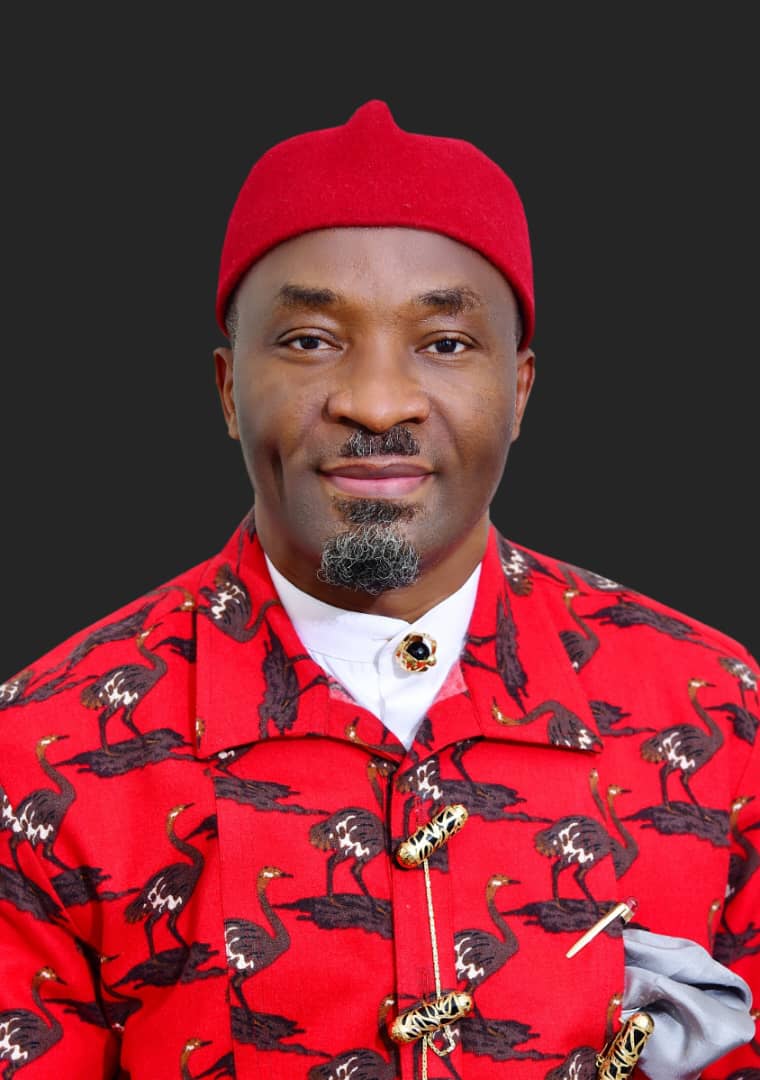
The Centre for Responsible Governance (CRG) has called on political actors and interest groups to desist from what it described as needless witch-hunting of the Deputy Speaker of the House of Representatives, Benjamin Okezie Kalu, following renewed controversies surrounding his National Youth Service Corps records.
The organisation noted that the clarification by the National Youth Service Corps (NYSC) regarding the matter is not a recent development, as a formal verification letter had already been issued as far back as May 23, 2023.
The letter, referenced NYSC/CCD/VER/10/5.1/VOL1/02, had already addressed and cleared the questions surrounding the Deputy Speaker’s NYSC records.
Reacting to the renewed debate, the spokesman of the Centre,
Obande George, said it was troubling that issues which had already been clarified by a competent national institution were being resurrected for political purposes.
According to him, the time has come for political actors to move away from destructive engagements and concentrate on building the nation.
“It is important to note that the NYSC had already issued a verification letter dated May 23, 2023 addressing the matter.
Reopening issues that have already been clarified by a competent authority suggests that some individuals are more interested in political witch-hunting than in national progress,” George said.
The CRG stressed that democracy thrives when institutions are respected and their determinations are accepted in good faith rather than constantly questioned for political advantage.

George also commended the Deputy Speaker for demonstrating maturity and composure throughout the controversy, despite what he described as sustained provocations.
“Honourable Benjamin Kalu has shown remarkable calm and maturity in the face of intense public scrutiny and political provocation.
Instead of engaging in unnecessary public confrontation, he allowed institutions to speak through their records.”
The Centre warned that Nigeria’s political culture must evolve beyond constant character attacks and sensational allegations, which often distract public officials from their responsibilities.
According to the organisation, the country’s development requires constructive engagement among political actors rather than continuous attempts to discredit opponents.
“Nigeria cannot move forward if political energy is constantly spent on digging up allegations and amplifying rumours. Our leaders and political actors must redirect their focus to governance, policy and nation building.”
CRG therefore urged Nigerians to rely on verified information from credible institutions and avoid spreading speculative claims that could damage reputations or destabilise public discourse.
The organisation reiterated that respect for due process and institutional integrity remains essential for strengthening Nigeria’s democracy.

@The Centre for Responsible Governance, Email: [email protected], Instagram: crgngo6, Twitter: crgng06, Threads: crgngo6
Uncategorized
IWD 2026: Ajadi Celebrates Women, Urges Them To Seek More Elective Positions In Future Elections

IWD 2026: Ajadi Celebrates Women, Urges Them To Seek More Elective Positions In Future Elections
A Leading People’s Democratic Party, (PDP) Governorship Aspirant in Oyo State, Ambassador Olufemi Ajadi Oguntoyinbo has felicitates with women in the country on the occasion of this year’s International Women’s Day.
The international Women’s Day is celebrated on 8 March, commemorating women’s fight for equality and liberation along with the women right’s movement. It gives focus to issues such as gender equality and reproductive rights. International Women’s Day originated from labour movements in Europe and North America during the early 20th century.
In a statement issued on Sunday to commemorate this year’s edition of the International Women’s Day, Ajadi said the role of the women in nation building cannot be over emphasised.
He recalled the role played by prominent Nigerian women like Mrs Funmilayo Ransome- Kuti, Margaret Ekpo and Wuraola Esan towards the liberalization and the growth of the country and urges women to follow their footsteps by not only participate in the political process but seek more elective positions.
He urges the political leaders to encourage and give more chances to women for them to contest and occupy elective positions in the country.
Ajadi also called for more respect for women, saying they are definitely behind whatever success recorded by the menfolk.
He said domestic violence against women should be stopped, saying they deserves respect for their role in moulding the future leaders.
According to the statement, “I celebrate and congratulate our women on this year’s occasion of International Women’s Day. We cannot underestimate the role played by our women both at home, in the social circle and in politics. They deserve more respect.
“I equally called on them not only to be a passive participants in politics but to determine to seek more elected positions in future elections. They should aspire more from the position of dancing and singing at campaigns to seek more elective positions. The ratio of men to women in elective positions in the country is embarrassing. Women should stand up and fight for more elective positions.
“I also use the occasion of this year’s Women’s Day to appeal to Nigerians to stop domestic violence against the women. If we treat our women well, our country will witness unprecedented developments”.


-

 society7 months ago
Religion: Africa’s Oldest Weapon of Enslavement and the Forgotten Truth
-

 news4 months ago
WHO REALLY OWNS MONIEPOINT? The $290 Million Deal That Sold Nigeria’s Top Fintech to Foreign Interests
-

 society6 months ago
“You Are Never Without Help” – Pastor Gebhardt Berndt Inspires Hope Through Empower Church (Video)
-

 celebrity radar - gossips2 months ago
Dr. Chris Okafor Returns with Power and Fire of the Spirit -Mounts Grace Nation Altar with Fresh Anointing and Restoration Grace on February 1, 2026