
society
3rd stimulus check: House passes Covid relief bill with $1,400 payments

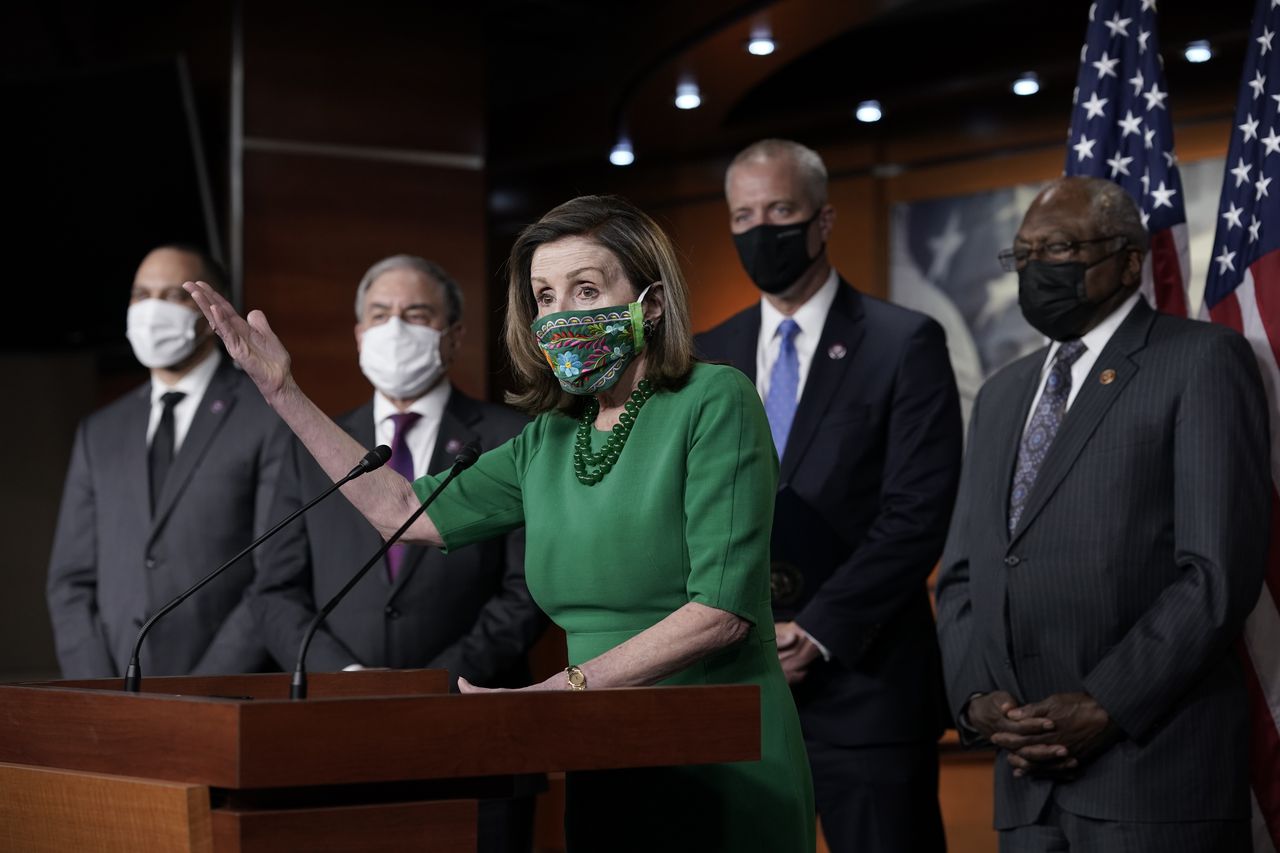
The House approved a $1.9 trillion pandemic relief bill that was championed by President Joe Biden, the first step in providing another dose of aid to a weary nation as the measure now moves to a tense Senate.

The new president’s vision for infusing cash across a struggling economy to individuals, businesses, schools, states and cities battered by COVID-19 passed on a near party-line 219-212 vote early Saturday. That ships the bill to the Senate, where Democrats seem bent on resuscitating their minimum wage push and fights could erupt over state aid and other issues.
Democrats said that mass unemployment and the half-million American lives lost are causes for quick, decisive action. GOP lawmakers, they said, were out of step with a public that polling finds largely views the bill favorably.
“I am a happy camper tonight,” Rep. Maxine Waters, D-Calif., said Friday. “This is what America needs. Republicans, you ought to be a part of this. But if you’re not, we’re going without you.”
Republicans said the bill was too expensive and said too few education dollars would be spent quickly to immediately reopen schools. They said it was laden with gifts to Democratic constituencies like labor unions and funneled money to Democratic-run states they suggested didn’t need it because their budgets had bounced back.
“To my colleagues who say this bill is bold, I say it’s bloated,” said House Minority Leader Kevin McCarthy, R-Calif. “To those who say it’s urgent, I say it’s unfocused. To those who say it’s popular, I say it is entirely partisan.”
The overall relief bill would provide $1,400 payments to individuals, extend emergency unemployment benefits through August and increase tax credits for children and federal subsidies for health insurance.
It also provides billions for schools and colleges, state and local governments, COVID-19 vaccines and testing, renters, food producers and struggling industries like airlines, restaurants, bars and concert venues.
Moderate Democratic Reps. Jared Golden of Maine and Kurt Schrader of Oregon were the only two lawmakers to cross party lines. That sharp partisan divide is making the fight a showdown over whom voters will reward for heaping more federal spending to combat the coronavirus and revive the economy atop the $4 trillion approved last year.
The battle is also emerging as an early test of Biden’s ability to hold together his party’s fragile congressional majorities — just 10 votes in the House and an evenly divided 50-50 Senate.
At the same time, Democrats were trying to figure out how to assuage liberals who lost their top priority in a jarring Senate setback Thursday.
That chamber’s nonpartisan parliamentarian, Elizabeth MacDonough, said Senate rules require that a federal minimum wage increase would have to be dropped from the COVID-19 bill, leaving the proposal on life support. The measure would gradually lift that minimum to $15 hourly by 2025, doubling the current $7.25 floor in effect since 2009.
Hoping to revive the effort in some form, Senate Majority Leader Chuck Schumer, D-N.Y., is considering adding a provision to the Senate version of the COVID-19 relief bill that would penalize large companies that don’t pay workers at least $15 an hour, said a senior Democratic aide who spoke on condition of anonymity to discuss internal conversations.
That was in line with ideas floated Thursday night by Sens. Bernie Sanders, I-Vt., a chief sponsor of the $15 plan, and Senate Finance Committee Chair Ron Wyden, D-Ore., to boost taxes on corporations that don’t hit certain minimum wage targets.
House Speaker Nancy Pelosi, D-Calif., offered encouragement, too, calling a minimum wage increase “a financial necessity for our families, a great stimulus for our economy and a moral imperative for our country.” She said the House would “absolutely” approve a final version of the relief bill because of its widespread benefits, even if it lacked progressives’ treasured goal.
While Democratic leaders were eager to signal to rank-and-file progressives and liberal voters that they would not yield on the minimum wage fight, their pathway was unclear because of GOP opposition and questions over whether they had enough Democratic support.
House Ways and Means Committee Chair Richard Neal, D-Mass., sidestepped a question on taxing companies that don’t boost pay, saying of Senate Democrats, “I hesitate to say anything until they decide on a strategy.”
Progressives were demanding that the Senate press ahead anyway on the minimum wage increase, even if it meant changing that chamber’s rules and eliminating the filibuster, a tactic that requires 60 votes for a bill to move forward.
“We’re going to have to reform the filibuster because we have to be able to deliver,” said Rep. Pramila Jayapal, D-Wash.




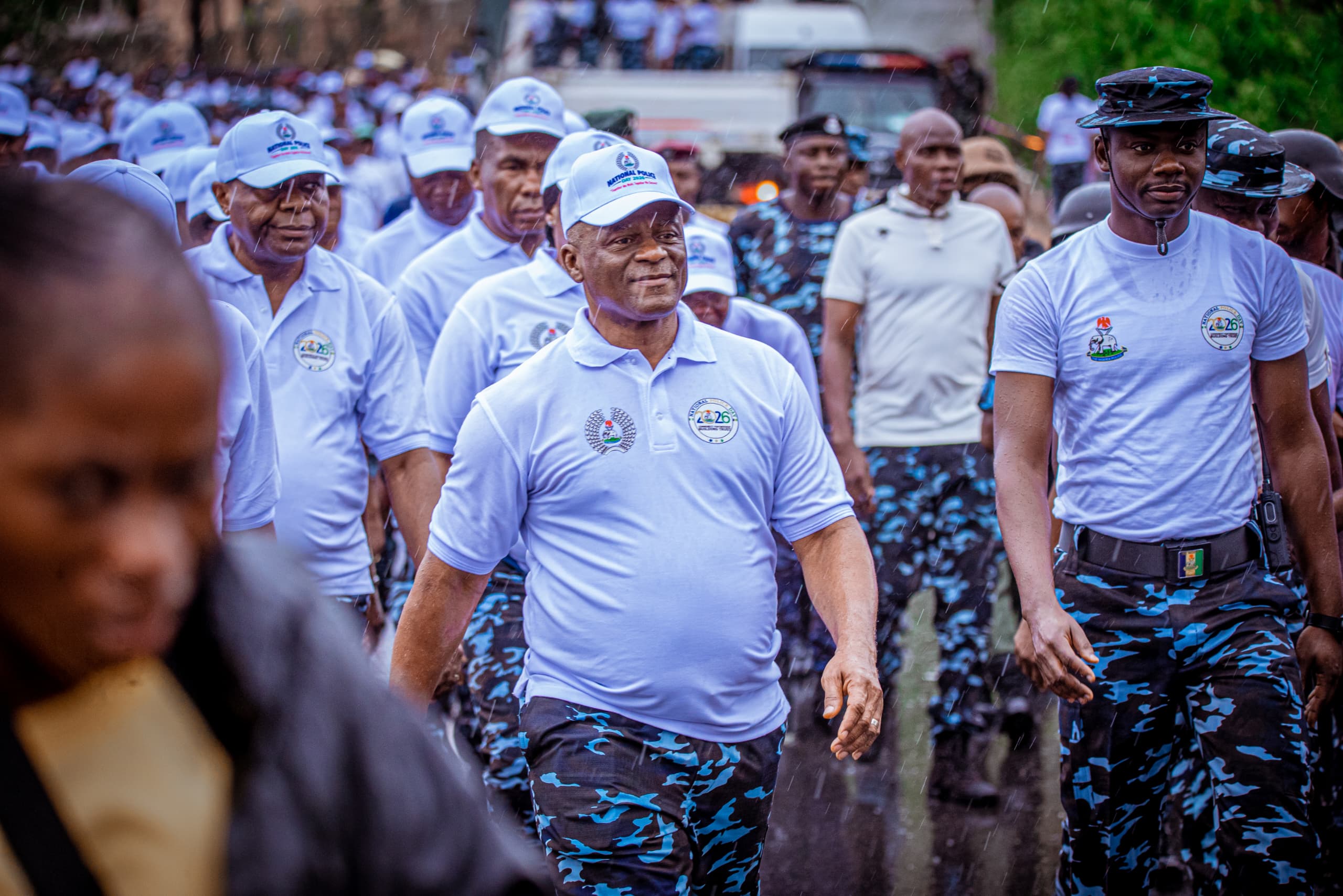
Police Day 2026: IGP Disu Leads Nationwide Walkathon To Strengthen Community Trust
The Inspector-General of Police, Olatunji Disu, on Tuesday led the management team, alongside officers and personnel of the Nigeria Police Force, in a nationwide walkathon to commemorate the 2026 National Police Day.
The event, held across state capitals and the Federal Capital Territory, formed part of activities marking Day Two of the annual celebration, themed “Community Partnership: Building Trust.”
The symbolic exercise, which drew participation from both police personnel and members of the public, was aimed at showcasing unity, discipline, and a renewed commitment to community policing and public safety.
According to the Force leadership, the walkathon underscores the Nigeria Police Force’s resolve to strengthen public trust, deepen engagement with citizens, and enhance collaboration in tackling security challenges across the country.
Participants described the initiative as a practical step toward bridging the gap between law enforcement and the communities they serve, while also promoting physical fitness and mental well-being among officers and civilians alike.
With the theme reflecting a shared responsibility for safety, the Police reiterated that sustainable security can only be achieved through active partnership with the public.
The event concluded with a renewed call for collective action under the banner: “Together We Walk, Together We Secure,” emphasizing unity of purpose in building a safer and more secure society for all Nigerians.


society
Dr. Chris Okafor invokes divine retribution upon individuals blackmailing the Grace Nation church
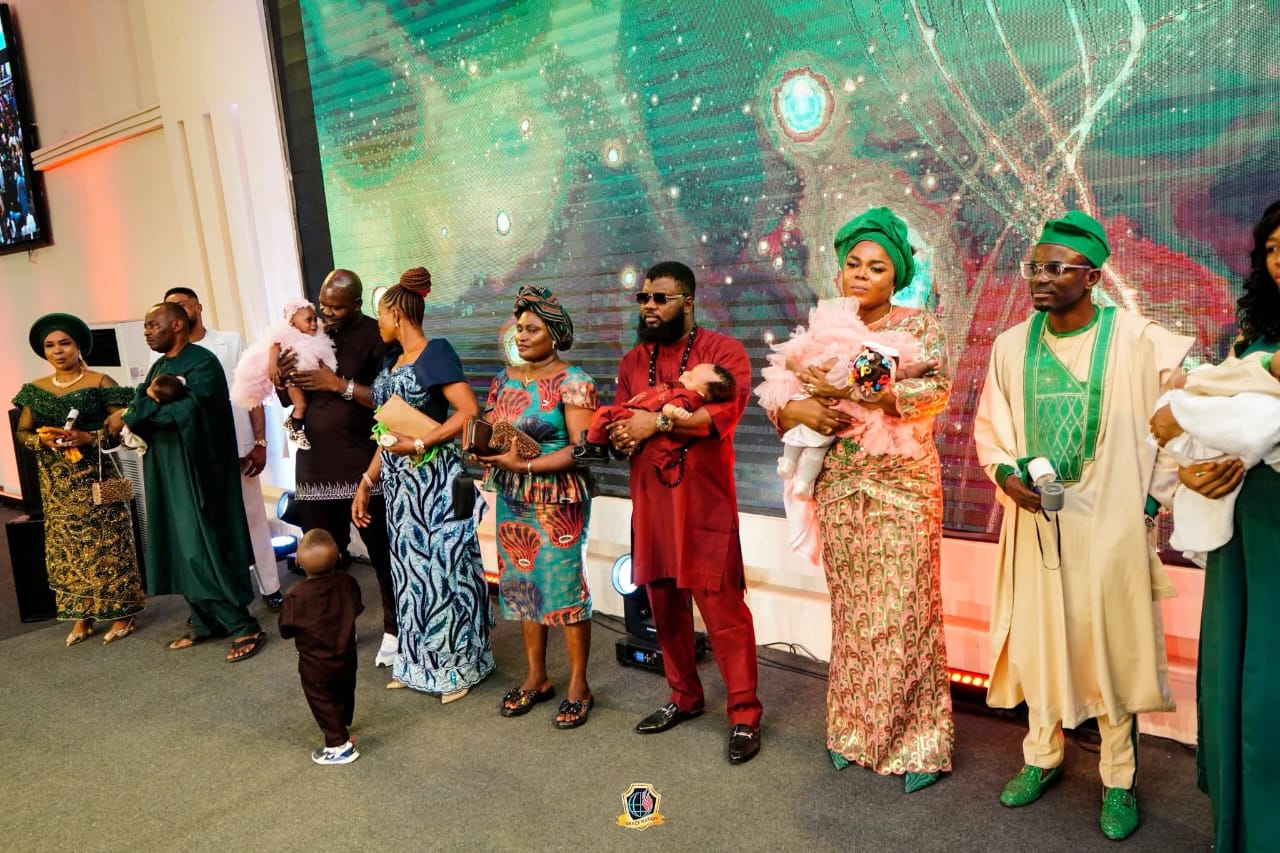
Dr. Chris Okafor invokes divine retribution upon individuals blackmailing the Grace Nation church
… Affirming God’s omnipotence to unveil malicious schemes.
To be frank, the ability of Doris Ogala and her associates to withstand the arduous challenges set by Senior Pastor Dr. Chris Okafor of Grace Nation Global at the culmination of the Harvest of Babies 2026 conference, the church’s flagship event, continues to elude me.
It’s advisable not to offend a powerful spiritual leader like Prophet Chris Okafor to avoid potential consequences, as seen in the situation with Doris Ogala, who was rebuked by the prophet; can she rectify the situation through confession?
Insiders close to the man of God claim that despite relentless online bullying and blackmailing, the Generational Prophet remains resolute, stating that God’s power has been evident throughout the commission’s existence. The reason for this wonderful statement is found in the scriptures, “Upon this rock I shall build my Church, and the gates of hell shall not prevail.” The more falsehoods are spread about the church and its leader, the more God elevates the church and propels him to greater heights, he asserted. He emphasized that blessings and fruitfulness are antidotes to curses, noting that God continues to bestow blessings upon the church, including miracles and the gift of children, which is one reason for the grand finale of the annual family liberation program, The Harvest of Babies.
However, the man of God issued a curse on each person speaking ill of the church, blackmailing, and uttering all sorts of falsehoods against the church, declaring that if they refused to repent within a few days, the earth would swallow them and their family members, stating that they would be of no use to themselves, their families, or society at large.
The spiritual leader cautions his followers to beware of such individuals including Doris Ogala who may taint their faith, and urges them to treat these persons as emissaries of the devil, avoiding them altogether.
Recall that the 2026 harvest of babies concluded with a remarkable birth of a miracle baby boy to a woman on the third day of the conference, accompanied by the dedication of several other miracle babies, all to the glory of God.
Christopher Sunday David writes from
Austria
“Together We Walk, Together We Secure”: Police Launch 2026 Walkathon In Abuja
The Nigeria Police Force has announced plans to host a walkathon in commemoration of the 2026 National Police Day, aimed at promoting unity, peace, and stronger community partnership.
The event is scheduled to take place on Tuesday, March 31, 2026, with participants expected to converge at the Force Headquarters Abuja by 6:00 a.m., where the walk will commence.
According to the organisers, the walkathon is designed to bring together members of the public, stakeholders, and security personnel in a show of solidarity and shared commitment to national security.
With the theme, “Together we walk, together we secure,” the initiative underscores the importance of collaboration between the police and citizens in maintaining peace and safety across the country.
Members of the public have been encouraged to participate in the exercise, which forms part of activities lined up to mark this year’s National Police Day celebration.
It is believed that the walkathon would not only foster closer ties between the police and the communities but also serve as a platform to promote awareness on collective responsibility in ensuring a safer society.


-

 society6 months ago
Religion: Africa’s Oldest Weapon of Enslavement and the Forgotten Truth
-

 news4 months ago
WHO REALLY OWNS MONIEPOINT? The $290 Million Deal That Sold Nigeria’s Top Fintech to Foreign Interests
-

 society6 months ago
“You Are Never Without Help” – Pastor Gebhardt Berndt Inspires Hope Through Empower Church (Video)
-

 celebrity radar - gossips2 months ago
Dr. Chris Okafor Returns with Power and Fire of the Spirit -Mounts Grace Nation Altar with Fresh Anointing and Restoration Grace on February 1, 2026