
society
Nigeria in Flames: How the Kidnapping of a Kwara Monarch Exposes the Government’s Failure to Tackle Insecurity

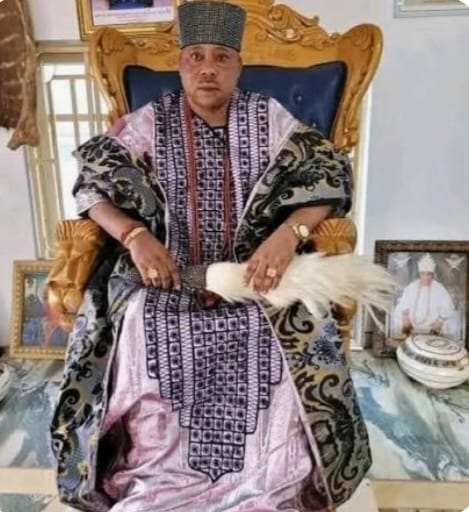
Nigeria in Flames: How the Kidnapping of a Kwara Monarch Exposes the Government’s Failure to Tackle Insecurity.
By George Omagbemi Sylvester | saharaweeklyng.com
“A Nation Held Hostage by Criminal Networks While Leadership Watches.”
On the evening of December 31, 2025, a chilling reminder of Nigeria’s descent into ungovernable chaos played out in Kwara State. Armed men (suspected terrorists and bandits) stormed the royal palace in Aafin, Ile-Ere, Ifelodun Local Government Area, shooting sporadically and seizing control with ruthless precision. In what should have been a festive New Year’s Eve, gunfire replaced celebration as Oba Simeon Olaonipekun, the traditional ruler of Aafin and one of his sons, Olaolu, a serving NYSC member, were abducted by hoodlums. The queen, Felicia Olaonipekun, was shot in the arm but survived the brutal onslaught.

This audacious palace invasion is not a distant headline, but it is a searing indictment of the Nigerian state’s paralysis in the face of a mounting insecurity crisis that stretches from the North-East insurgency to apparently peaceful Yoruba heartlands. The fact that both royal leadership and families are now targets signifies a decay in the social contract between the government and the people.
A Nation Under Siege: The Facts on the Ground. According to eyewitness accounts, about eight armed men arrived around 8:00 p.m., firing shots and breaking down palace doors. They demanded to see the traditional ruler and his wife, demonstrating a predetermined and chilling intent. With only two local vigilantes on duty, the palace was defenseless, resulting in the horrifying kidnap of both monarch and son.
The attackers spoke fluent English, a detail that suggests a level of organisation and sophistication beyond ordinary criminals. In a nation where even elite institutions like palaces are vulnerable, it is painfully clear that whatever security architecture exists has collapsed at the grassroots.
Government Inaction: The Root of a National Catastrophe. Nigeria’s security crisis isn’t an isolated event, it is a systemic failure repeated in community after community. Critics have long warned that criminals, bandits and terrorist networks exploit weak governance, corruption and fractured intelligence systems to operate with virtual impunity.
One security analyst noted, “When you cannot protect a village, you cannot protect a capital.” This is no longer rhetorical; it is a stark reality. The abduction of a traditional ruler (a symbol of community stability and heritage) is not just criminality. It is a testament to a government that has surrendered terrain to terror and lawlessness.

Since the start of the Tinubu administration in 2023, insecurity across Nigeria has expanded, with kidnappings, raids and shootings reported from the Northeast to the Northwest, Central Belt, and now Kwara South. Scholars point out that 3,964 abductions were recorded during this period, a number so staggering that it defies rational governance.
The Kwara attack echoes earlier incidents where monarchs were targeted with lethal brutality and also including a February 2024 attack where a Kwara monarch was killed and his wife abducted.
Why the Government Must Be Held Accountable?
1. Security Architecture Has Collapsed
Nigeria’s security architecture, once conceived to safeguard communities, is now fragmented and ineffectual. Local vigilantes, constitutionally limited and under-equipped, are overpowered by heavily armed gangs. Police response is slow and often reactionary, not preventive. The result: citizens are left isolated, unprotected and afraid.
Prominent Nigerian sociologist Dr. Akin Oyebode has argued, “A government that cannot safeguard its people forfeits its primary obligation.” In this case, the Kwara palace attack makes Oyebode’s point not abstract but devastatingly real.
2. Poor Intelligence and Corruption Are Enablers.
A recurring theme in Nigeria’s security failure is the absence of reliable intelligence and rampant corruption within security institutions. When intelligence is commodified or manipulated, criminal networks gain early warning and manoeuvrability, making police and military forces perpetually reactive, never proactive.
A senior retired general once said, “You can have the best army in the world, but if you don’t know where the enemy sleeps, you’ll fight perpetually with one eye closed.” Nigeria’s intelligence blind spots have become battlefields where terrorists win ground every day.
3. Lack of Political Will and Clear Strategy.
Instead of a coherent national security strategy, successive administrations have offered rhetoric rather than results. There are isolated successes (yes) but no sustained, nationwide plan to tackle the root causes of insecurity: unemployment, poverty and marginalisation.
Political will is not shown in press releases; it is shown in boots on the ground, empowered community protection systems and accountable security institutions. In Kwara, ordinary citizens have had to pay ransoms for kidnapped traditional rulers without meaningful government intervention which is a humiliation of the state that must shake every Nigerian to the core.
The High Price of Insecurity. The human cost of this crisis is incalculable: families shattered, communities in fear and cultural institutions desecrated. Economically, insecurity chokes investment, cripples agriculture, discourages tourism and diverts precious resources from development to survival.
Every market stall that closes early, every farmer too afraid to tend his land at dawn and every youth who chooses flight over fight is a nation unravelling.
Renowned African security expert Professor Funmi Adewale once said, “Security is more than the absence of war; it is the presence of justice, opportunity and protection.” By this measure, Nigeria is failing catastrophically.
What Must Be Done To stem this tide, Nigeria needs urgent, bold and radical reforms:
Reform and empower community security with oversight; equip vigilantes with training, arms and proper integration with formal forces.
Rebuild intelligence networks and also invest in technology, human intelligence and anti-corruption within security agencies.
Address root causes; launch national employment and education programs targeting youth susceptible to recruitment by criminal networks.
Restore public trust; transparent investigations, accountability for failures, and justice for victims must become non-negotiable.
The Way Forward: A Call to Action. The abduction of Oba Simeon Olaonipekun and his son is not simply another headline. It is a symbol of Nigeria’s unraveling and a wake-up call demanding courage, honesty and decisive leadership.
If a king’s palace can be invaded under the nose of law enforcement, what hope does the common citizen have? The government must know that inaction is complicity and that Nigeria’s future depends on the ability of its leaders to protect the vulnerable, secure the peace, and restore the confidence of the people.
The time for empty words has long passed. Nigeria must act (boldly, honestly, and swiftly) before the fire of insecurity consumes the very soul of the nation.





society
Dr. Chris Okafor invokes divine retribution upon individuals blackmailing the Grace Nation church
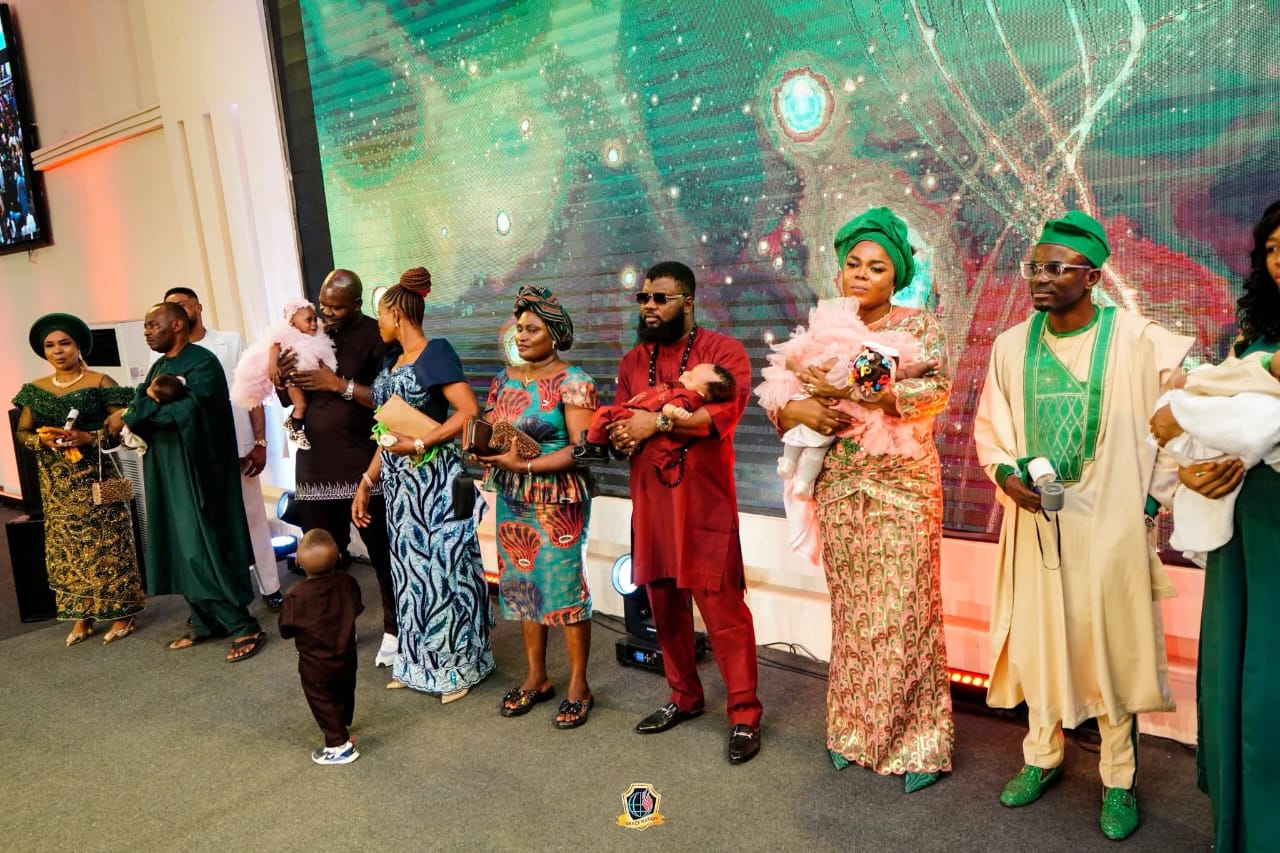
Dr. Chris Okafor invokes divine retribution upon individuals blackmailing the Grace Nation church
… Affirming God’s omnipotence to unveil malicious schemes.
To be frank, the ability of Doris Ogala and her associates to withstand the arduous challenges set by Senior Pastor Dr. Chris Okafor of Grace Nation Global at the culmination of the Harvest of Babies 2026 conference, the church’s flagship event, continues to elude me.
It’s advisable not to offend a powerful spiritual leader like Prophet Chris Okafor to avoid potential consequences, as seen in the situation with Doris Ogala, who was rebuked by the prophet; can she rectify the situation through confession?
Insiders close to the man of God claim that despite relentless online bullying and blackmailing, the Generational Prophet remains resolute, stating that God’s power has been evident throughout the commission’s existence. The reason for this wonderful statement is found in the scriptures, “Upon this rock I shall build my Church, and the gates of hell shall not prevail.” The more falsehoods are spread about the church and its leader, the more God elevates the church and propels him to greater heights, he asserted. He emphasized that blessings and fruitfulness are antidotes to curses, noting that God continues to bestow blessings upon the church, including miracles and the gift of children, which is one reason for the grand finale of the annual family liberation program, The Harvest of Babies.
However, the man of God issued a curse on each person speaking ill of the church, blackmailing, and uttering all sorts of falsehoods against the church, declaring that if they refused to repent within a few days, the earth would swallow them and their family members, stating that they would be of no use to themselves, their families, or society at large.
The spiritual leader cautions his followers to beware of such individuals including Doris Ogala who may taint their faith, and urges them to treat these persons as emissaries of the devil, avoiding them altogether.
Recall that the 2026 harvest of babies concluded with a remarkable birth of a miracle baby boy to a woman on the third day of the conference, accompanied by the dedication of several other miracle babies, all to the glory of God.
Christopher Sunday David writes from
Austria
“Together We Walk, Together We Secure”: Police Launch 2026 Walkathon In Abuja
The Nigeria Police Force has announced plans to host a walkathon in commemoration of the 2026 National Police Day, aimed at promoting unity, peace, and stronger community partnership.
The event is scheduled to take place on Tuesday, March 31, 2026, with participants expected to converge at the Force Headquarters Abuja by 6:00 a.m., where the walk will commence.
According to the organisers, the walkathon is designed to bring together members of the public, stakeholders, and security personnel in a show of solidarity and shared commitment to national security.
With the theme, “Together we walk, together we secure,” the initiative underscores the importance of collaboration between the police and citizens in maintaining peace and safety across the country.
Members of the public have been encouraged to participate in the exercise, which forms part of activities lined up to mark this year’s National Police Day celebration.
It is believed that the walkathon would not only foster closer ties between the police and the communities but also serve as a platform to promote awareness on collective responsibility in ensuring a safer society.


society
Habeeb Okunola Foundation Hosts Visually Impaired Students, Reaffirms Commitment to Educational Development
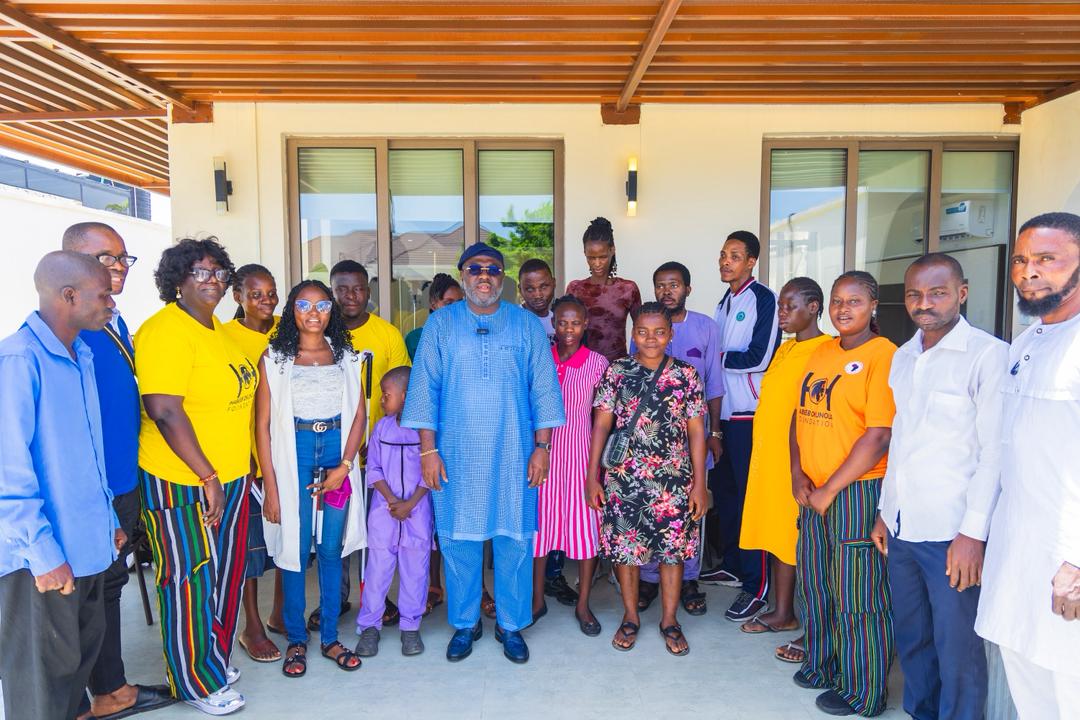
Habeeb Okunola Foundation Hosts Visually Impaired Students, Reaffirms Commitment to Educational Development
The founder of the Habeeb Okunola Foundation, High Chief Dr. Habeeb Olalekan Okunola MON, OFR, has once again demonstrated his dedication to the welfare of the underprivileged. On March 30, 2026, he played host to a group of talented visually impaired students across tertiary institutions in Nigeria whom he is currently covering their tuition fees at the head office of CINI Holdings in Ikoyi, Lagos.
During the gathering, Okunola reaffirmed his commitment to using his God-given resources to uplift humanity through his foundation. According to him, true wealth is proven through empowerment, and supporting the education of visually impaired students ensures that knowledge remains accessible regardless of one’s circumstances.
Addressing the students directly, he said: “I am delighted to host you. I want you to know that my foundation will continue to cover your school fees and provide monthly stipends for your upkeep. Your disability does not diminish your right to education. With your talents, education becomes a platform to showcase your abilities. I am excited that instead of taking to the streets to engage in nefarious activities or begging, you have chosen to do something meaningful and sharpen your talents. Today is not just about support; it is about belief. We see you. We hear you. And we believe in your strength, your talent, and your future. Life may not always be easy. You may face moments where people doubt you or where the path feels difficult. But we want you to remember this: you are not alone. You matter. And you are capable of achieving more than you can even imagine right now.”
He further emphasized that he remains fully committed to consistently covering their tuition fees many of the students are enrolled in various tertiary institutions across the country while also ensuring their overall welfare.
“This support is not just financial,” he added. “It is a promise. A promise that for the rest of this year and beyond, you have the Habeeb Okunola Foundation standing with you, cheering you on, and investing in your journey. Use this opportunity well. Keep learning. Keep pushing. Keep believing in yourself, even on the hard days. One day, when you rise, when you succeed, remember to lift others just as you are being lifted today. We are proud of you. And we are excited to see all that you will become.”
Also present at the event was the founder of the Makemee Elegant Foundation, Mrs. Kehinde Adelaja, who expressed her gratitude to Chief Okunola for covering the students’ school fees and attending to their needs. She noted that if more wealthy individuals took on such responsibilities, Nigeria would be a better place.
“I am excited that you took time to host and dine with them,” she said. “This goes a long way in restoring hope. They did not choose to be in this situation, but seeing someone like you embrace them with love and care is rare. They deeply appreciate your kind gesture.”
During a lunch session held at his office, Chief Okunola further reiterated that philanthropy remains a core part of his lifestyle. He pledged to continue setting aside a portion of his business earnings to impact lives and bring relief to the downtrodden.


-

 society6 months ago
Religion: Africa’s Oldest Weapon of Enslavement and the Forgotten Truth
-

 news4 months ago
WHO REALLY OWNS MONIEPOINT? The $290 Million Deal That Sold Nigeria’s Top Fintech to Foreign Interests
-

 society6 months ago
“You Are Never Without Help” – Pastor Gebhardt Berndt Inspires Hope Through Empower Church (Video)
-

 celebrity radar - gossips2 months ago
Dr. Chris Okafor Returns with Power and Fire of the Spirit -Mounts Grace Nation Altar with Fresh Anointing and Restoration Grace on February 1, 2026